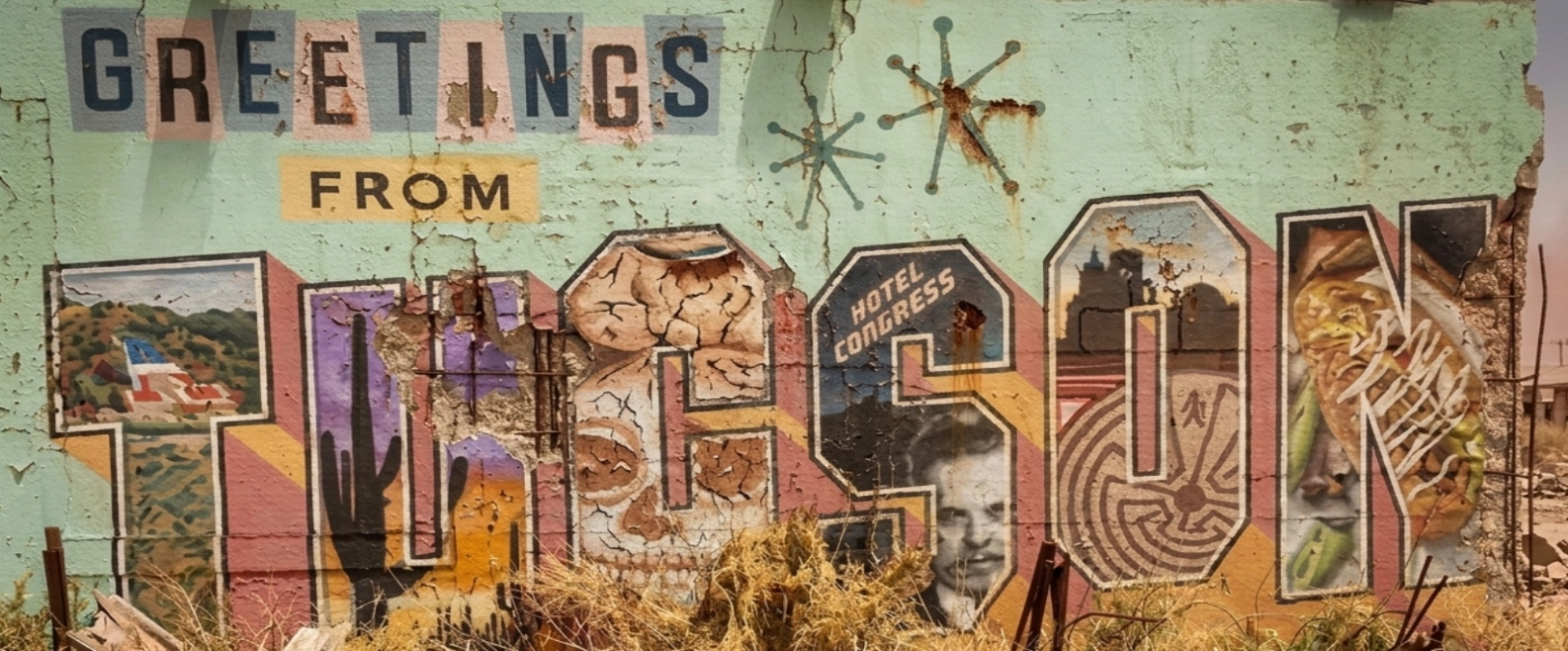
The persistent keepers of the Desert; hardy, inventive, protective. They have called the Sonoran wastes their home for centuries, with a culture that has withstood the difficult test of time.
Their ancestors taught them how to preserve the life that surrounds them so it can preserve them in kind. The Tusconan way of life lasted long enough for the Jhoutigari to take notice.
That first run-in came to be when land-poachers snuck in from Jhoutai, looking to profit off of the rich mineral resources underneath the sandy soil. The Tusconans defended their home from invaders using a methodology that cast them as a vigilant group rather than defenders of the desert.
The Jhoutigari turned up to bring justice to those responsible, and started a several-day-long skirmish that only ended when Tucson and its people bent the knee to the Jhoutigari.
A people forged in burning sand
The Tusconan is used to weeks of temperatures that would force away most. Some enjoy the heat, others despise it, but all have to survive it. Their traditional adobe homes are built underground, relying on passive geothermal to keep cool.
The Days of the Tusconan are spent maintaining the desert agriculture, salvaging the sand-buried technology, and protecting their land from those seeking to harm it.
And Quenched in flood water
The Sonoran Desert is not only unbearably hot, but also comes under seasonal assault by intense super monsoons and occasional haboobs. The Monsoons are the most devastating, bringing several inches of rainfall and hundreds of lightning strikes over the course of an hour or two.
The flash floods from these monsoons can wash the unprepared to their swift demise, and lightning can spark wildfires that spread through the arid brush near the mountain bases.
The flood water is a vital resource for the Tucsonan, where it can be irrigated and funneled into underground cisterns for use throughout the year.
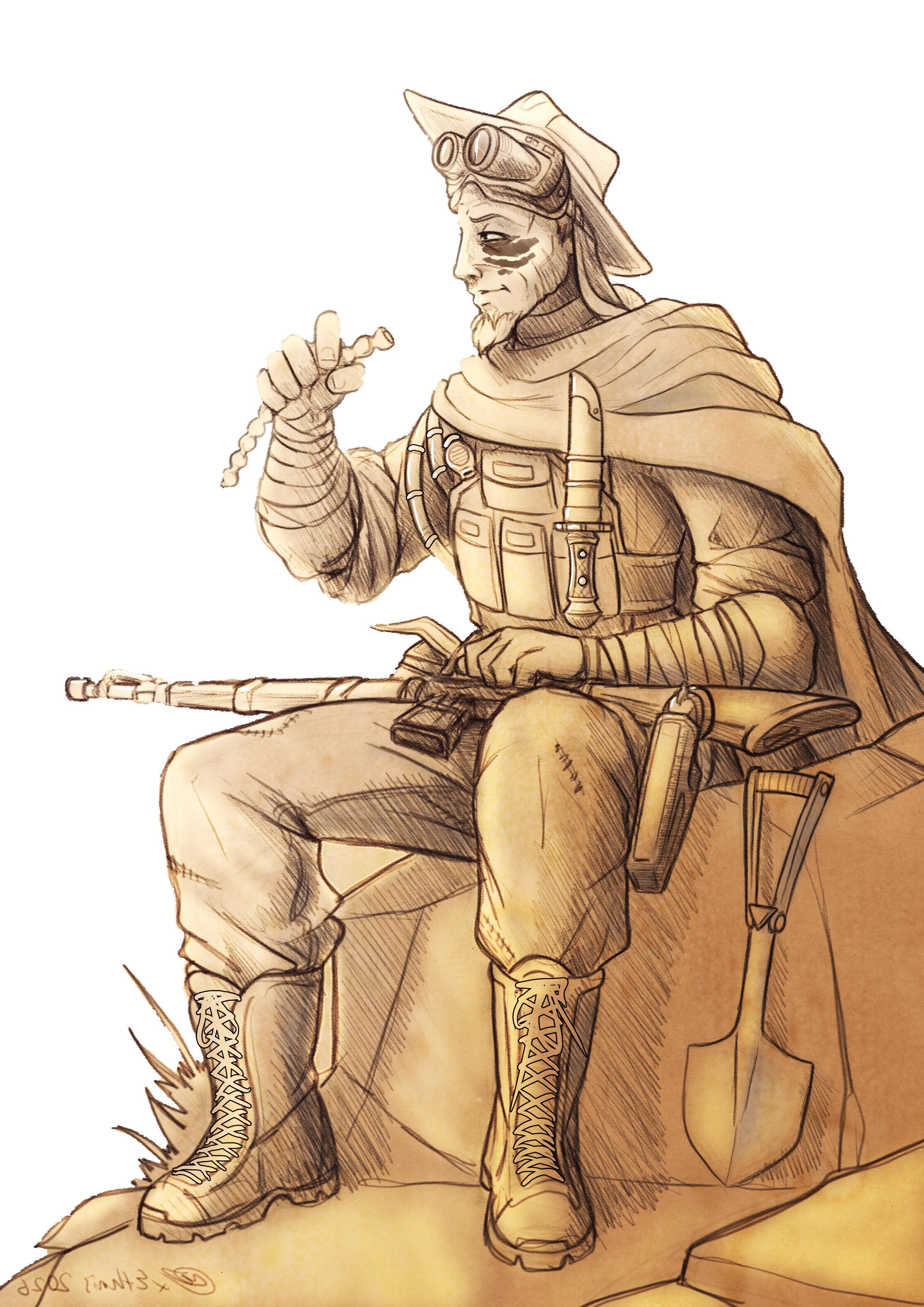
Tucsonan Hats
All Tucsonans have some sort of wide-brimmed hat for use under the pounding sun. Some are made of synthetic breathable material, others are constructed of straw and patience. A neck cover is a common addition to keep the sun off the back of the neck.
Many families will display their family ties on the brim, as a form of identification. Many families will pass their hats down through the generations. The hat is part of who a Tucsonan is, and it's rare to see them not wearing one outside the walls.
Don't disgrace a Tucsonan's hat.
Tucsonan Rifles
For hunting, for utility, and for defense. Tucson, even before the Holocene collapse, has had a special relationship with firearms. During the collapse and into the battles with the Jhoutigari the Tucsonans maintained and forged their own weaponry using parts and equipment left behind in old manufacturing facilities.
Their Rifles were antiquated by the standards of other militaries, but the parts were plentiful, and the rounds still fired and packed more than enough punch to put down most things that walked on two legs.
Many families add ornate engraving to their weapons as a show of pride.
Tucsonan Equipment
Tucsonans maintain their gear and supplies meticulously. They forage and farm local food sources such as Mesquite Beans. They store water for travel in stitched bladders so the water stays cool under the shade of their ponchos.
When outside the walls, they carry a knife, a weapon, and several survival tools. They are adept at using them to survive even in the unbearable heat and chilly desert nights.
We survive because we know what it takes here; we've honed our skills from generation to generation.
No matter what the southern winds or burning sun may burden us with, we will overcome with the help of the desert's native gifts.
Tucsonans have kept to themselves throughout their history; they are a proud people and lament taking help from others even if they are thankful.
When Sazashi & Verin arrived, they were extremely suspect of letting them stay. Until the end of the Second Tusconan war, there were only ten Sazashi and Verin living in Tucson.
After the war, Tucson opened up. At first, the matter was forced by Jhoutigari detachments. Later, it was accepted as desert-loving Kinds such as the Chea & Kajh took up residence.
The Tucsonan people are fiercely dedicated to the preservation of their land. Violence is not off the table, and most Tucsonans are experienced desert hunters and trackers. It's not uncommon for unruly and vandalous travelers to be given a stern warning, often at gunpoint.
Continue to disrespect the desert, and Tucsonans will organize a posse to hunt down the aggressors. Being hunted by Tucsonans is akin to angering the spirit of the Desert itself.
The History of the Tusconan
The first documented era of inhabitation of the Santa Cruz River Valley. Although they are long gone, their history has been preserved in the written and oral history of the Tucsonans.
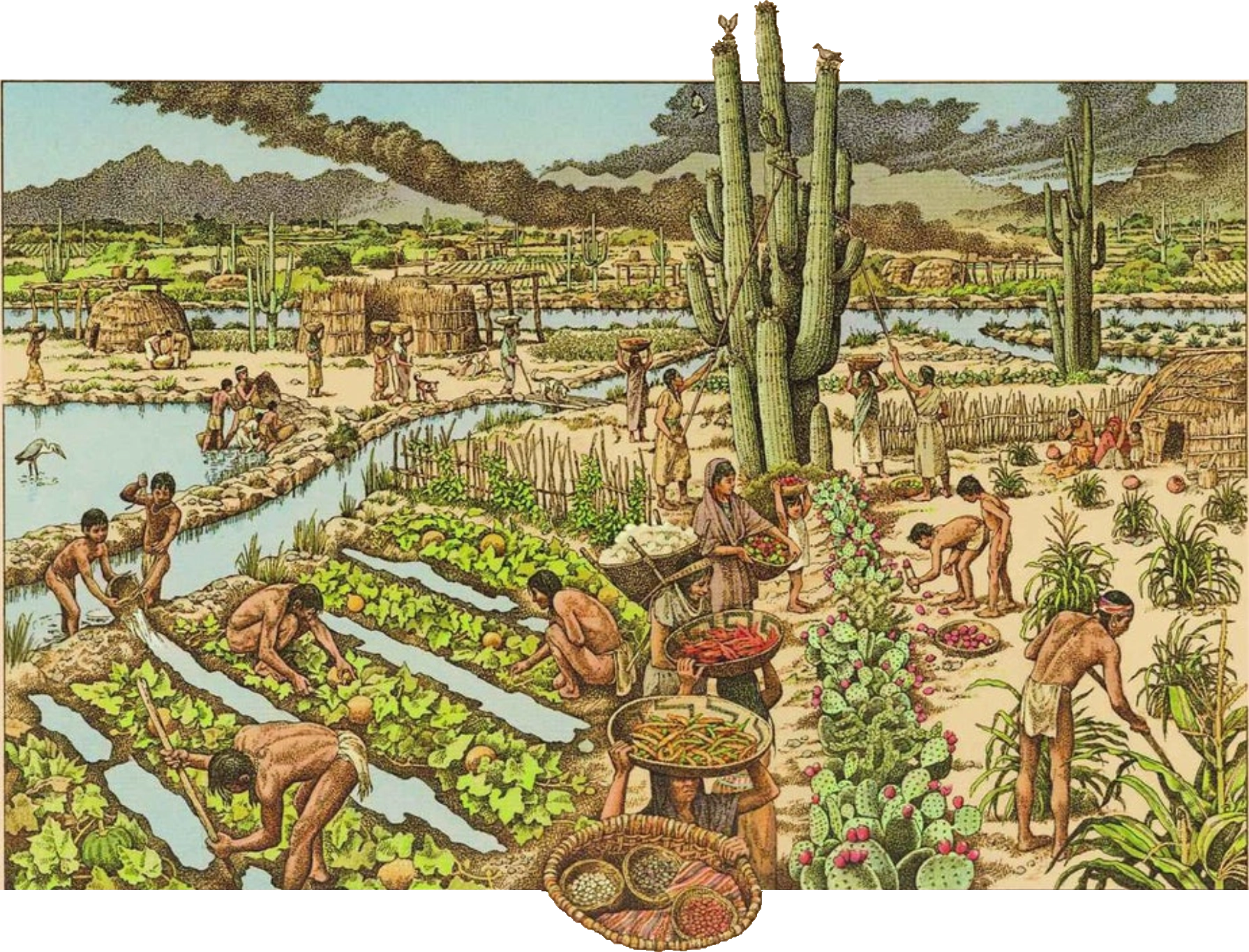
A complex agricultural society known as the Hohokam inhabits the area ranging from the Rio Grande to the northern mountains. Tucson is home to extensive irrigated fields.
The Hohokam then disappeared after a millennium, suspected to have suffered years of drought and flash flooding. Several of the hardy species that fueled the Hohokam fuel the modern Tucsonan, such as honey mesquite and prickly pear fruit.
The Coronado Expedition arrives in Arizona and travels north through Tucson to the Grand Canyon and Kansas.
Catholicism follows, and several missions and presidios are erected to cement colonial control. The region would not be safe for centuries due to tensions between Native Americans and European colonizers.
In the centuries before theHolocene Collapse, the small forts of Tucson turned into a city of ten million people.
The populace expanded through the entire valley, with infrastructure that managed the Flash Floods and assisted in the preservation of meager water sources.
The City built upon and celebrated a bright culture, inspired by the long history of its people.
This is where Established History ends, and Ethnis History begins
As the Holocene Collapse began, the southwestern portion of North America suffered through yearly heatwaves, where the temperature broke 50c for weeks at a time. The sources of water, overtaxed for centuries, dried up. Devastating monsoons tore through the region during the summer, drowning the land in sweeping flash floods.

Tucson and its surrounding metropolis wilted away like a desert flower.
The city never recovered, and for hundreds of years was managed by a fraction of the populace who knew how to survive the new normal.
The only large influx of population came when Irehearts (Pictured Above) escaped to Tucson to avoid military service in the warring nations of the Midwest.
In the tail-end of the Holocene Collapse, Tucson served as home to a cluster of large families. These families descended from the Native and Spanish way of life.
Surviving the wastes of the Sonoran Desert was possible, but it required specialized knowledge and meticulous planning. Only the Tucsonan people could handle it.
The natural location left the people isolated; the families salvaged what remained useful in the town, consolidating themselves around the Presidio San Agustín del Tucsón.
Tucsonans remained isolated through the first month of the Advent War, remaining on neutral terms with the Aempian military.
That lasted until a fateful day when a Jhoutigari Captain and his battalion began digging out a canyon wall for quartz crystals. A confrontation with a band of Tucsonans escalated into a shootout, which left two Tucsonans and ten Jhoutigari dead.
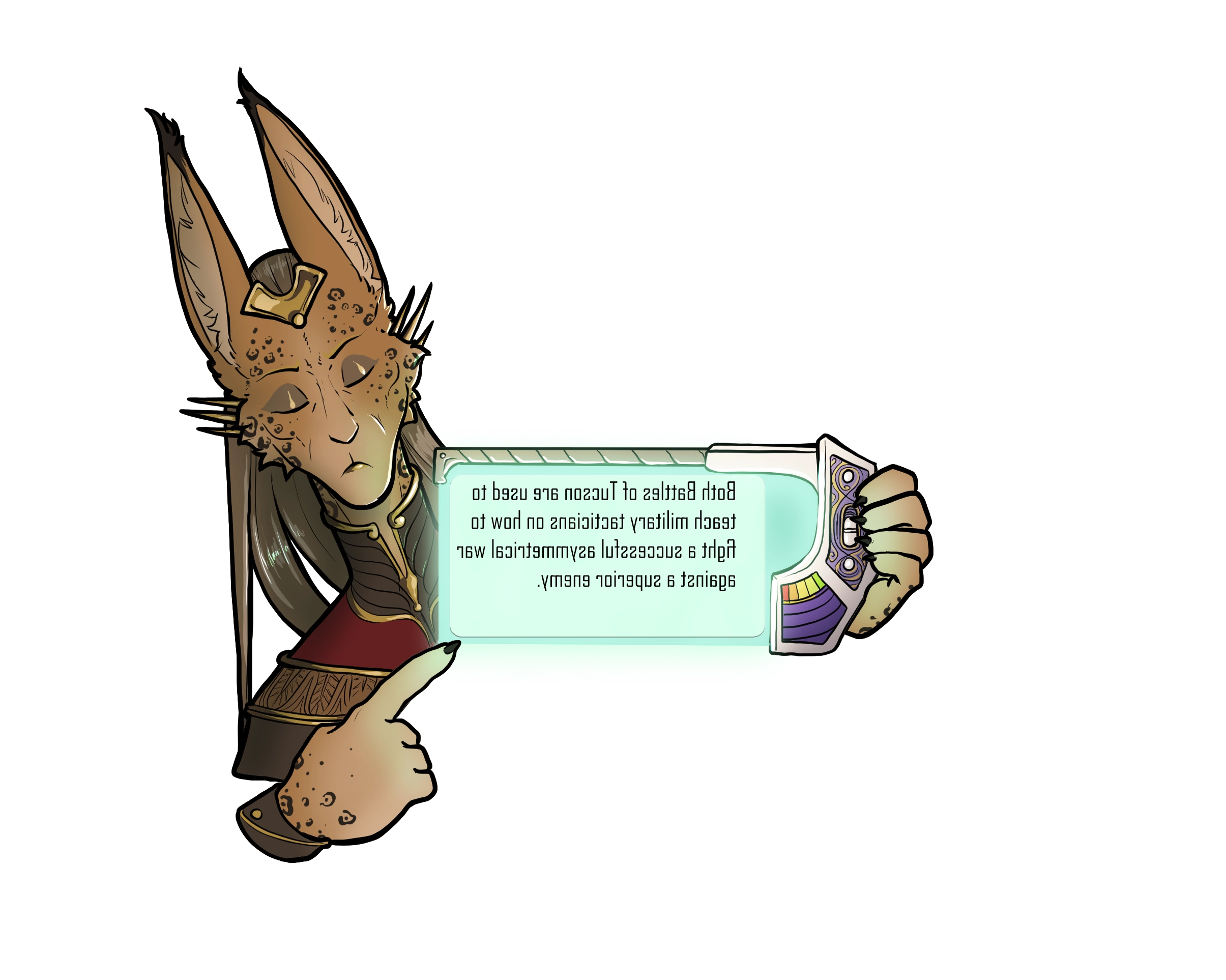
This skirmish evolved into a thirty-day manhunt involving an entire command group, including a pair of mages. The band of Tucsonans dubbed 'the Whispers of Sabino' waged a mire of asymmetrical warfare. For every Tucsonan hurt, five Jhoutigari met their end in the harsh desert.
They ran low on supplies, and even the Kajh struggled through the scorching days. The desert and its people proved too costly to fight, especially when pitted on several other consecutive fronts.
The Jhoutigari signed a cease-fire agreement with the Tucsonan council. Promising the Whispers of Sabino a pardon and a promise to leave their immediate land.
An entire sixty days of fighting on an alien world, against a bunch of superhumans who fight like Nasyk on steroids.
It cost command two months, two mages, and fifty good souls to agree to just go around the bastards as they asked for.
After Aempis' victory in the Advent war, they stuck to their word of leaving Tucson in peace as a neutral city-state. At the end of the war, Aempis had achieved its objectives. Tucson was but a blip on the map in the middle of the desert. In fact, Tucson maintained a semblance of peace and law along its borders, even if the laws didn't match the Jhoutigari's own.
But as the years trudged on, the tentative peace began to break down. With the help of the Tor Jadey, the west coast of North America began to stabilize enough for the resource-hungry Aempians to travel east into the desert.
This led to another drawn-out conflict, started by a mix of illegal and Jhoutigari-sanctioned mining of the valuable quartz and copper buried in the yellow sands.
During this war, the Jhoutigari had no distractions and sent the bulk of its North American divisions to surround and starve out the Tucsonans. The hardy Tucsonans lasted for an entire month surrounded and isolated, but surrendered when a coordinated Jhoutigari offensive captured Tucson's energy supply and threatened its destruction.
The Pact offered a truce that spared the Tucsonans' infrastructure and lives, but stripped them of their independence. Tucson remained, but now had representatives from Aempis playing the major part in its affairs.
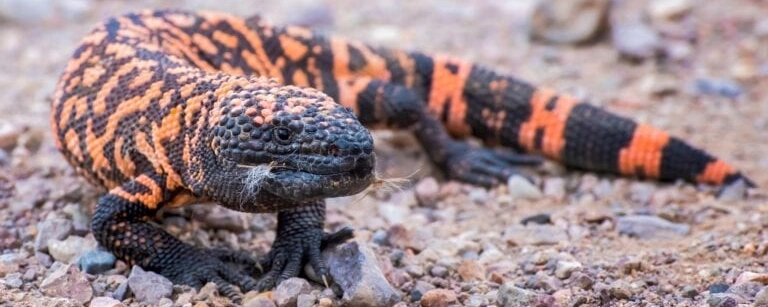
Under the recovery efforts, Tucson has found new life. With the climate returning to a pre-Holocene-collapse state, the desert heat waned, and the rainfall normalized. Many Sonoran species such as the Jaguar and Desert Tortoise, are reintroduced through a collaboration with Tucsonan records and Orga Technology
Among the native blood lines still in Tucson, there are now a significant population of Kajh, Khirmagne, and Chea who enjoy the Sonoran Climate.

Comments