
Rain of Amaars / Deaf Fall
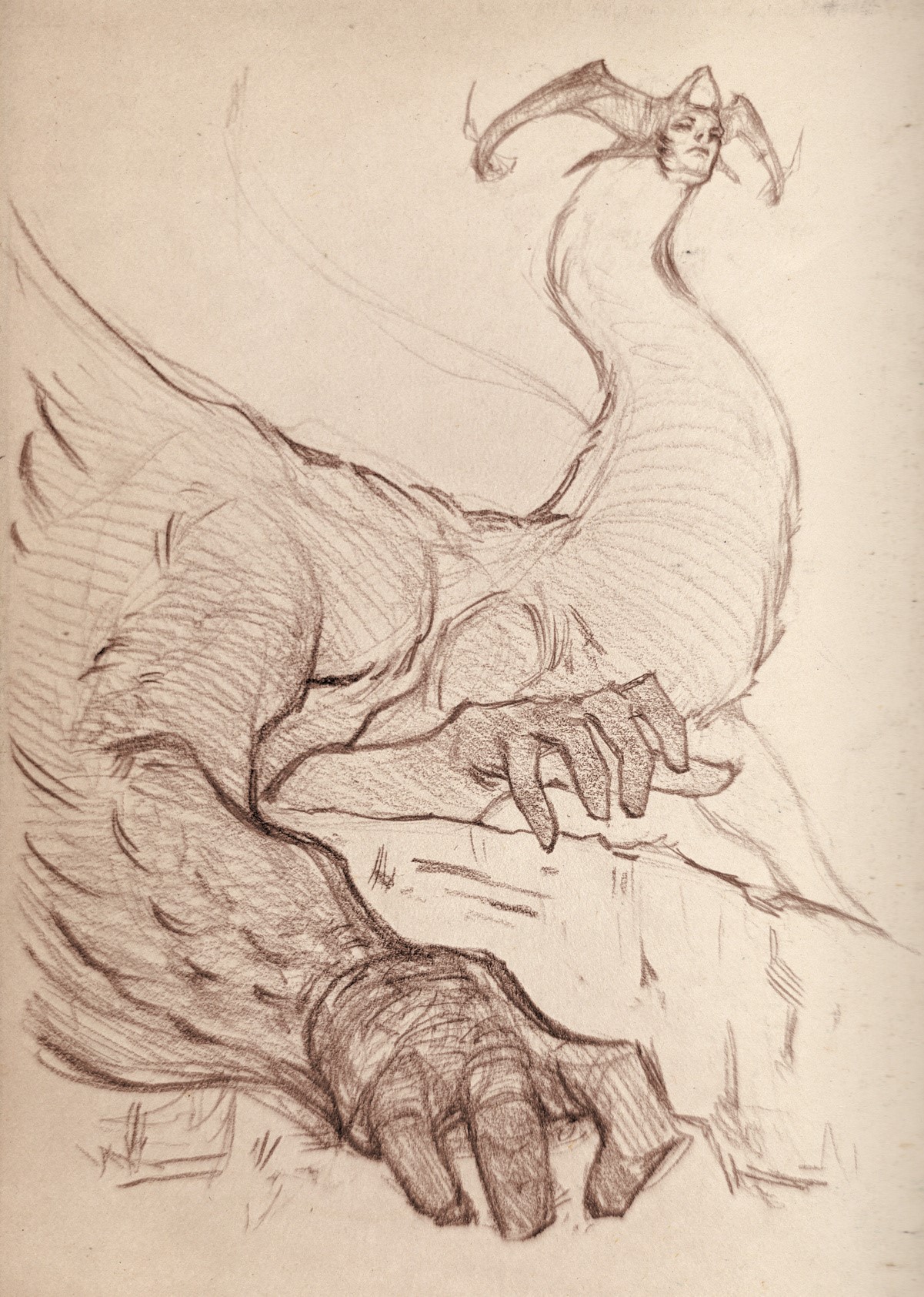
The Sun's temper is fickle, and so, Med'Hea has kept it dormant, unable to birth new Amaars and intervene with her plans. But Shemokmedi doesn’t yield and continuously searches for ways to reclaim freedom. The chance presented itself after the destructive Millenial War of Colours, which pitted powerful Grdzneuli rulers against one another. Med’Hea’s intervention exhausted her and the second her control over Shemokmedi faltered, nearly a score of Amaars plummeted like asteroids. The majority fell into Teokali, a continent many currently know as Amaarion. The cataclysmic event was named the Rain of Amaars.
Amaars descended upon Ayonerra, their breath turning any living creature into monstrous chirakis. But their arrival had another purpose. Shemokmedi wished to announce Ayonerra’s forgotten task so a hska attained godhood. Knowing the Sun’s intention, Med’Hea temporarily silenced the planet, split Amaars’ speech and kept it on the Colchid Isles. Thus, the Rain of Amaars also became known as the Deaf Fall.
Most people fled Amaarion and migrated to safer lands. Those who stayed fought with great vigour and, together with hskaner, opposed the colossal beasts. But as the creatures wreaked havoc, Goddess Apor gathered Amaars, amassed all her strength and turned herself into a powerful eruption. Her martyrdom ended the Rain and ensured Ayonerra’s survival.
Amaars descended upon Ayonerra, their breath turning any living creature into monstrous chirakis. But their arrival had another purpose. Shemokmedi wished to announce Ayonerra’s forgotten task so a hska attained godhood. Knowing the Sun’s intention, Med’Hea temporarily silenced the planet, split Amaars’ speech and kept it on the Colchid Isles. Thus, the Rain of Amaars also became known as the Deaf Fall.
Most people fled Amaarion and migrated to safer lands. Those who stayed fought with great vigour and, together with hskaner, opposed the colossal beasts. But as the creatures wreaked havoc, Goddess Apor gathered Amaars, amassed all her strength and turned herself into a powerful eruption. Her martyrdom ended the Rain and ensured Ayonerra’s survival.
The Aftermath
Countless Ayonerrans lost their homes following the devastation. The Amaarioni dharaats and bahhrayms were especially affected. K'nksh's sudden appearance worsened the scene. The four-armed people attacked settlements and abducted select women as they pleased, forcing most Amaarioni to a nomadic life.
People found refuge in the demi-god Qasim's Bridge Empire. The kingdom linked several crater cities with enormous, impenetrable black walls. Not even k'nksh dared to approach its perimeters. It is said, the walls are made from the same material as the Pillars of the Eternal Sleep, bringing terror to the creaking folk. Yet, the Bridge Empire could support so much, and Qasim shut its doors to any newcomer.
Many fled the continent in hopes of a better life. Some bahhrayms went to the southern island of Tlanxeltli. The runaways deem protecting the Amaarioni from k'nksh their sacred duty and send selected tonemaqi to the mainland. The god-blessed warriors forge the weapons atop the Last Hand and save as many women as they can from the four-armed folk's grasp.
Others sailed towards the Northern Dividing Archipelago and the polar continent, Hayanao. Levitation and higher resistance to extreme temperatures made bahhrayms at home in Hayanao's freezing peaks - the Nine Skies.

Many fled the continent in hopes of a better life. Some bahhrayms went to the southern island of Tlanxeltli. The runaways deem protecting the Amaarioni from k'nksh their sacred duty and send selected tonemaqi to the mainland. The god-blessed warriors forge the weapons atop the Last Hand and save as many women as they can from the four-armed folk's grasp.
Others sailed towards the Northern Dividing Archipelago and the polar continent, Hayanao. Levitation and higher resistance to extreme temperatures made bahhrayms at home in Hayanao's freezing peaks - the Nine Skies.
Dharaats sought refuge in the Northern Dividing Archipelago and the continent of Skneli. They brought four of Martyr Goddess Apor's severed arms and built grand temples atop each, while her two arms remained in Amaarion.
The Dayani ruler Shavleg felt for the refugees and gifted them the western lands. This gesture founded kingdoms of Firoz, Lazhvurd, Iyasp, Badakhsh and Zurkmukh in western Skneli. Their newly crowned golden dharaat kings wished to honour their home. As a sacred pilgrimage, they sent second-born princes to Amaarion, so they prayed in Apor's two temples and earned the goddess's blessings. The tradition has stayed strong to this day.
The Kingdom of Nikophsia welcomed dharaats with open arms. The foreigners swiftly integrated into the ever-diverse trading hubs. Numerous mixed-race families of dharaats, stagyars and dunyars formed throughout the years, resulting in nikophsi's creation.
Many Amaarioni dharaats view the fled population as weak-willed cowards who didn't value Apor's sacrifice. While some believe the goddess would have wished the best for her people, no matter the location.
Amaarion became a source of horrifying legends. Flying islands that dare hover above the continent are swiftly shot down with a powerful beam, the vast majority of curious explorers never return, but those that do speak of a thick mist engulfing the inhospitable lands, enormous pyramids with lamenting noises seeping through and four armed indestructible people kidnapping women as they please.
Rain of Amaars/Deaf Fall became a starting point for most calendars, often abbreviated as BR/AR or BDF/ADF.
The Dayani ruler Shavleg felt for the refugees and gifted them the western lands. This gesture founded kingdoms of Firoz, Lazhvurd, Iyasp, Badakhsh and Zurkmukh in western Skneli. Their newly crowned golden dharaat kings wished to honour their home. As a sacred pilgrimage, they sent second-born princes to Amaarion, so they prayed in Apor's two temples and earned the goddess's blessings. The tradition has stayed strong to this day.
The Kingdom of Nikophsia welcomed dharaats with open arms. The foreigners swiftly integrated into the ever-diverse trading hubs. Numerous mixed-race families of dharaats, stagyars and dunyars formed throughout the years, resulting in nikophsi's creation.
Many Amaarioni dharaats view the fled population as weak-willed cowards who didn't value Apor's sacrifice. While some believe the goddess would have wished the best for her people, no matter the location.
Amaarion became a source of horrifying legends. Flying islands that dare hover above the continent are swiftly shot down with a powerful beam, the vast majority of curious explorers never return, but those that do speak of a thick mist engulfing the inhospitable lands, enormous pyramids with lamenting noises seeping through and four armed indestructible people kidnapping women as they please.
Rain of Amaars/Deaf Fall became a starting point for most calendars, often abbreviated as BR/AR or BDF/ADF.





Ay-yo I— Yo, I didn't realize Amaars had, uh, hands.
To better punch hskaner with.