
HARBOUR DISTRICT
The Working Port · District · Portus Meridiani
"The Harbour District never fully sleeps, which is a thing people say about working ports and which is in this case straightforwardly true. The halfling ferry arrives and departs on a schedule; between those events the harbour's activity is the continuous background noise of a commercial system that does not pause because the sun has gone down. I have walked the wharves at the third hour of the night and found the same organised purposefulness I found at the sixth hour of the morning, adjusted for the different cargoes that move at different times. Some of those adjustments I noted. Some I noted and did not include in this document, on the grounds that what moves through a commercial harbour at three in the morning is not always a matter for general scholarly publication."
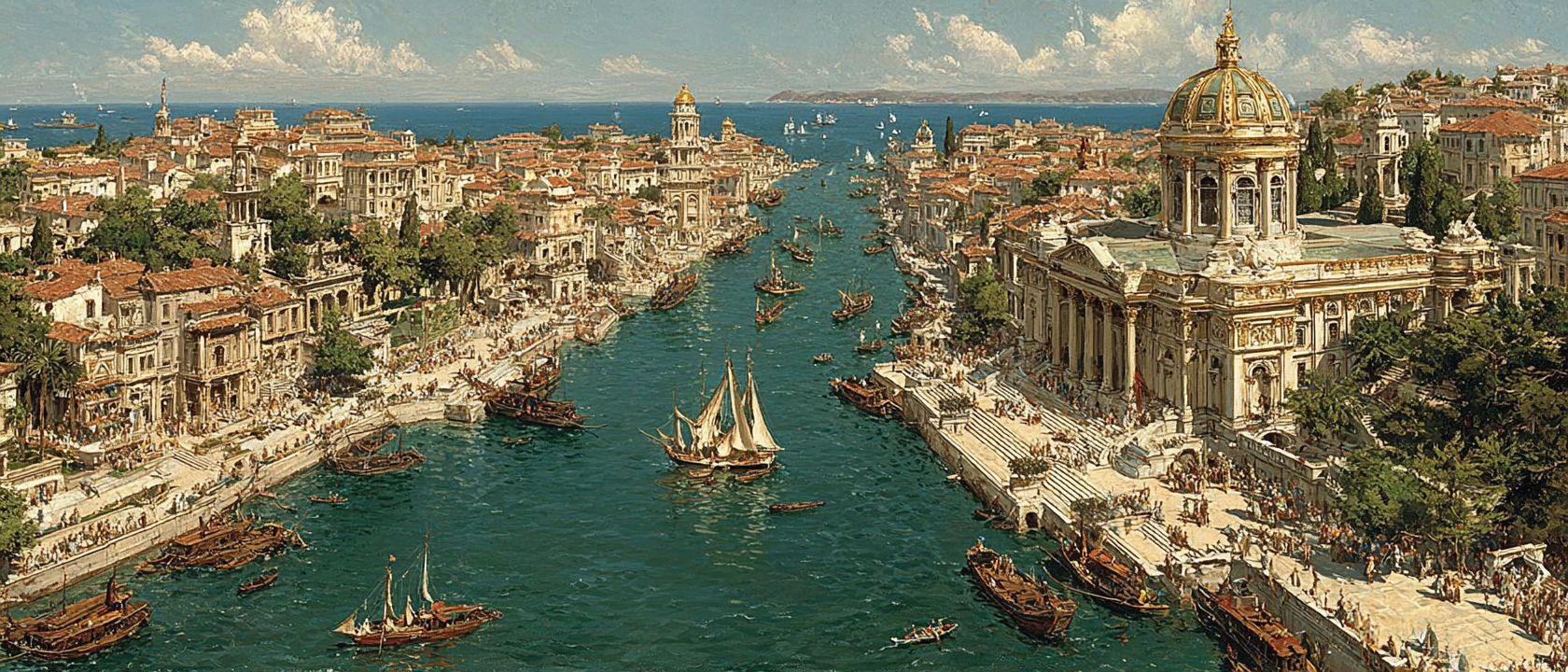
The Harbour District is Portus Meridiani's commercial engine — the wharves, warehouses, customs house, chandleries, repair yards, and the continuous human activity that keeps the southern trade moving. Approximately eight thousand permanent residents live in the district, though the working population during daylight hours is considerably larger as workers come in from the Artisan Quarter and the River District. The district is administered by the harbour master, currently Lucia Portus Magna, fifty-seven, in her twelfth year, whose appointment is officially the governor's and practically the merchant families', and whose management of the harbour infrastructure reflects a professional understanding of who her real employers are that she has never needed to have explained to her.
The customs house is the district's most politically complicated building — the point at which the imperial revenue system makes contact with the commercial activity the merchant families have been structuring around it for three generations. The customs officials, appointed by the Quaestor's office rather than the governor, are the only harbour district employees whose loyalty is formally independent of the families' influence. Their working environment — the physical proximity to cargo that has been classified, by a long history of definitional extension, in ways that their mandate would suggest they should query — is the specific professional context that Titus Computus Minimus has been navigating for fourteen months.
Access
Wharves — commercial access, harbour master oversight.
Customs house — official business.
Warehouses — cargo owner access and licensed agents

Comments