
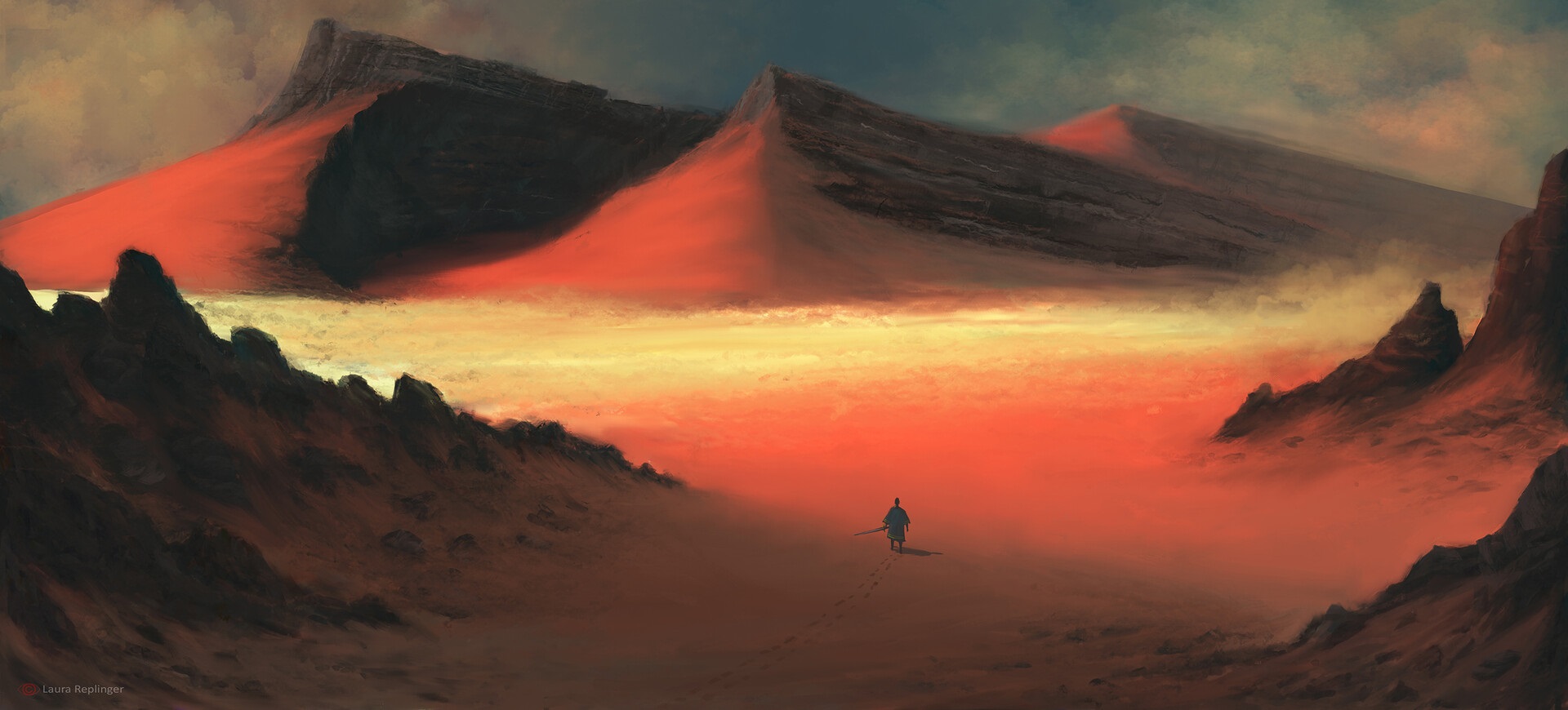
Western Desert
The great and vast Western Desert is an arid and sun-scorched emptiness that covers more than 325,000 square miles of territory, or roughly half again as large as the State of Texas. It is an ill-defined and unexplored region of a much larger desert wilderness that covers much of the interior of the continent.
While many cartographers insist that the Western Desert begins at the western banks of the Caldar River headwaters, many show the wilderness beginning at the western fringes of the Red Mountains of the Junn Steppe. Whichever starting point is taken, the area is a vast and extremely harsh collection of deserts, mountains, dunes, valleys and plateaus with only a very few known oases and flowing rivers.
Geography
Far too vast an expanse of land to describe in a general way. Very arid landscape where rain falls infrequently and causes catastrophic flash floods when it does fall due to the soil's inability to absorb significant quantities of rain. Vegetation is sparse and specifically adapted to desert conditions.
Fauna & Flora
The most dangerous and well-known resident of the Western Desert is the deadly Sand Drake. Undisputed rulers of this harsh region, these dragons live off hunting the few natural herbivores that make their home in the desert, including camels, sheep, oryx, and the many smaller creatures they can catch and consume. Drakes will typically stake out a territory around or near a source of fresh water and will patiently and carefully select individual animals to kill and eat as they travel to and from the water source.
Other apex predators include lions, wolves, and (typically in more northern regions of the desert) even the occasional White Dragon. Transient predators are sometimes encountered but not frequently enough to document.
Non-magical herbivores include camels, wild ponies, oryx, wild sheep and goats, hares, rabbits, squirrels, mice and many varieties of reptiles, tortoises and snakes.
The most populous intelligent creatures known to live within the desert are Goblinoids. Many communities of Goblins and Hobgoblins are known to exist there, especially near the desert's fringe areas and along the very few flowing rivers that cross the landscape. Orcs are known to make extended forays into the desert when hunting Sand Drakes but are not known to have permanent settlements within the region.
History
The Western Desert has many dozens of known ancient ruins of indeterminate origin and date, and probably many dozens more that are still undiscovered. Nearly all are unexplored by scholars or experts and opinions on the builders and inhabitants of these many ruins are wildly varied.
What is known is that at some time in the distant past, probably more than 1,800 years ago and perhaps far, far earlier, an unknown people built huge multi-story structures of stone that cover many acres of land all across the desert. The known and observable techniques used to build these sites are very impressive and have weathered the intervening ages with remarkable tenacity. All that is known of these prolific builders of massive stone structures is from reliefs and statues located in and around the hundreds of ruins scattered throughout the vast region. These images depict humanoid figures that all wear elaborate headgear and have oddly shaped faces. Some have suggested that these oddities associated with faces are actually stylized beards, but there is very little consensus on this topic. The two best examples of such ancient images are the reliefs located on the entrance facade of the Pyramid of the Sky and the colossal statues and busts collectively known as the Bearded Colossi.
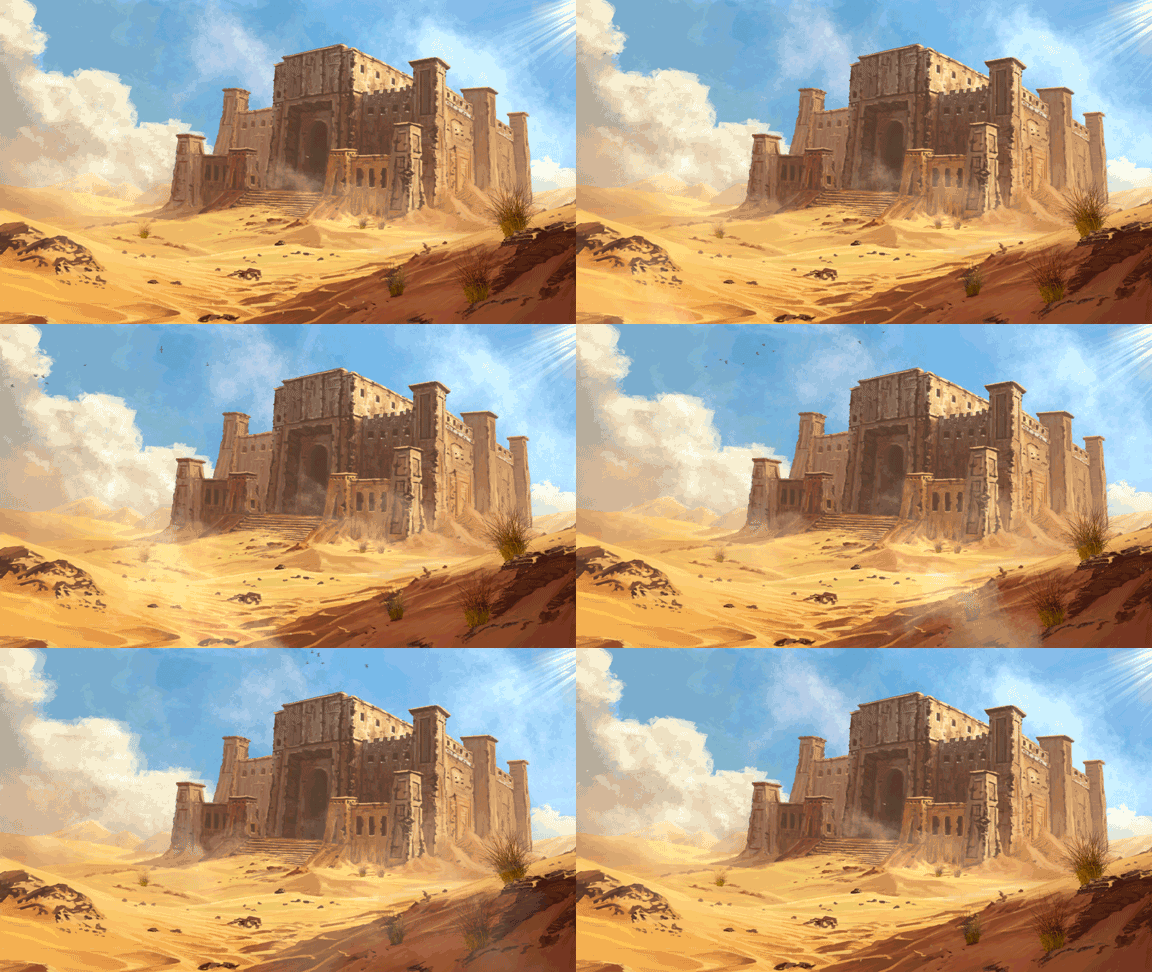
One of the countless ruins of the great Western Desert
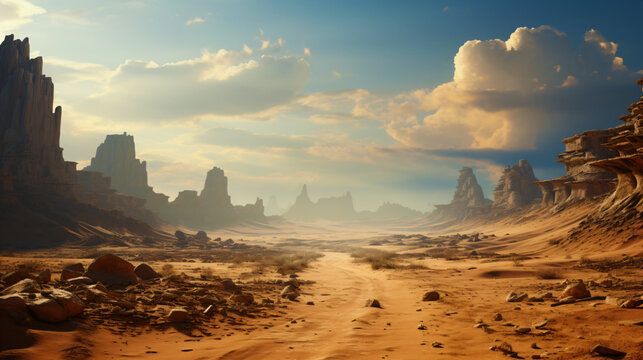
One of thousands of dry riverbeds leading into the heart of the Western Desert
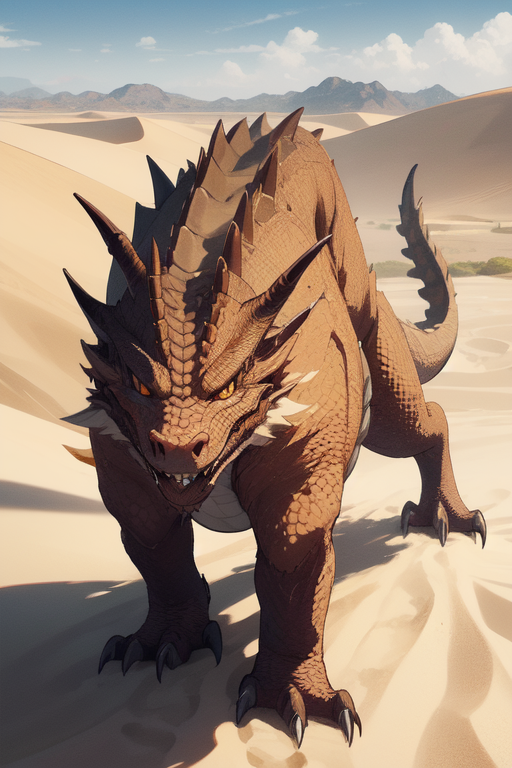
A painting of one of the deadly Sand Drakes that hunt the desert
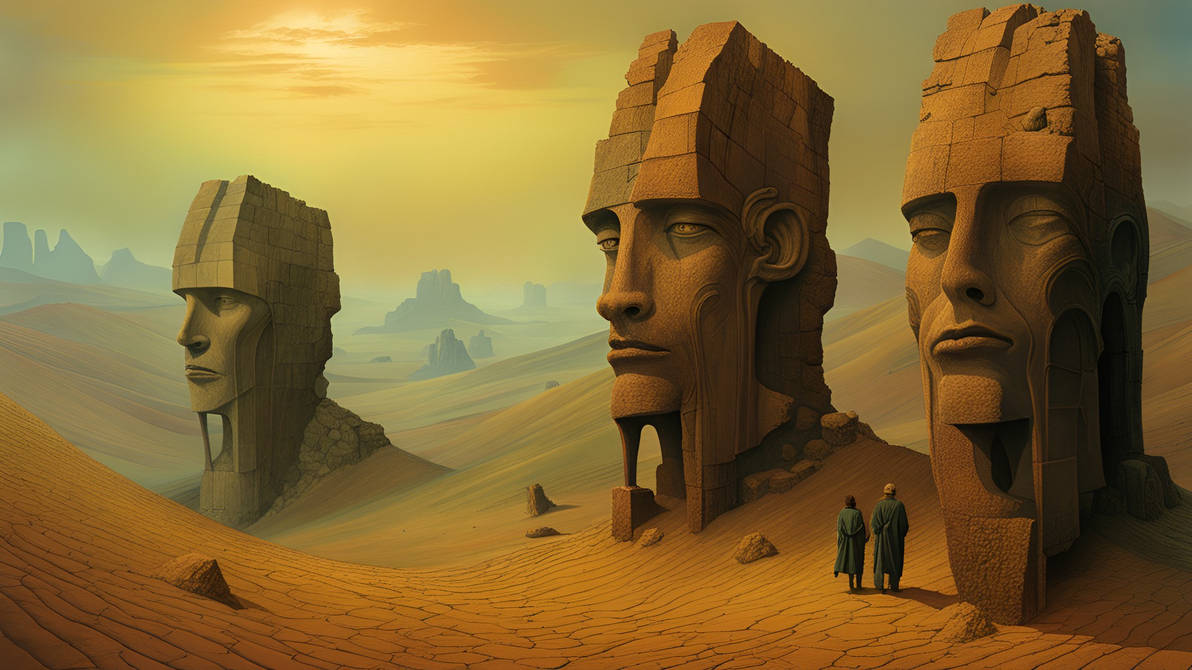
A painting of the Bearded Colossi of the desert. It is thought that these statues were erected by the same beings that constructed the Pyramid of the Sky.
