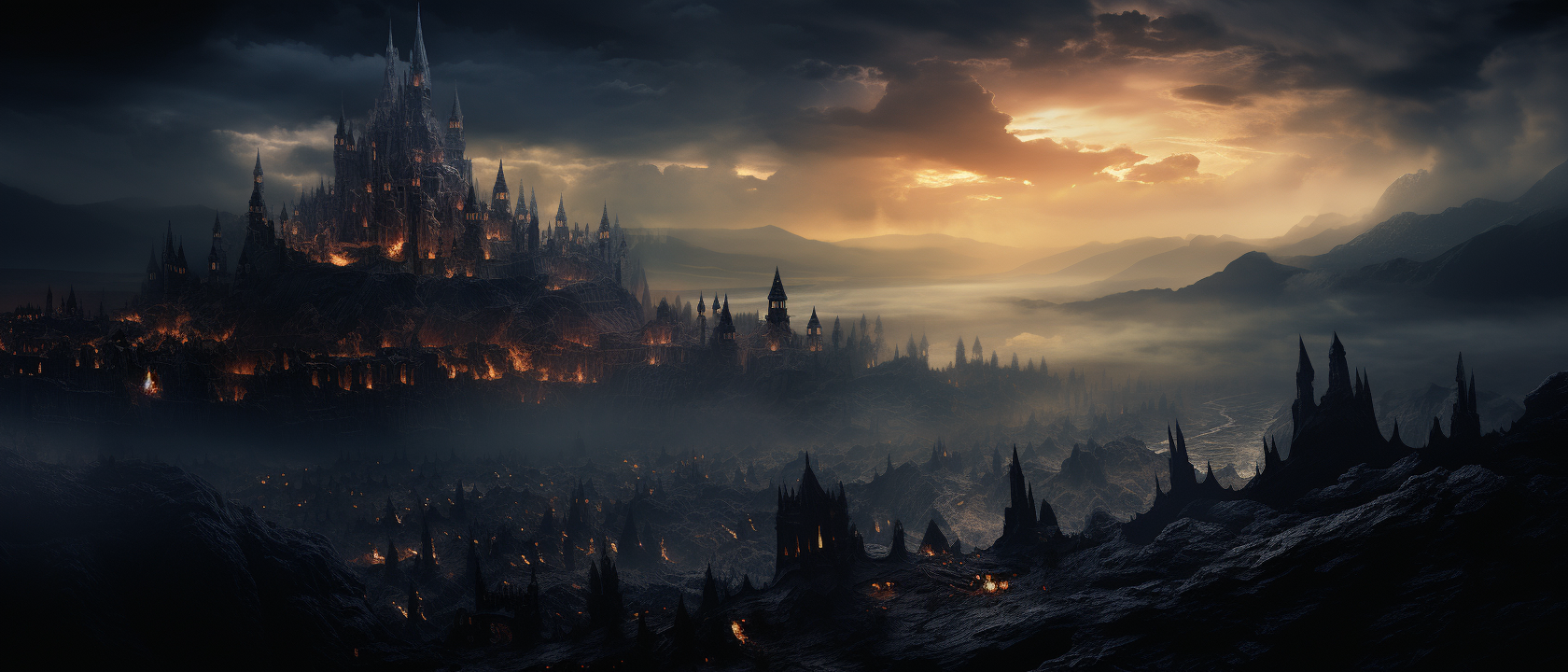
Crúor
Overview
Crúor is located on a promontory in the south-east of Koria. The town is not as old as one would imagine with a reputation like Crúor, but you can feel the age and the memories of the thousands of people who has been born, lived, and died here. Even when located way off Eldurfaðir, the sleeping volcano of the Pebblekin dwarves, it still benefits off its features.
Crúor hasn't benefitted from the Spiral incident sixty years ago. It was one of the settlements which were nearly completely wiped out from the demon hordes which came out of that damn hellhole hundreds of kilometres up north. Its population was diminished, its buildings burned, but as the armies arrived and eliminated the hordes, Crúor got back on its feet. There is still much to do, still work needs to be done, births have to continue, but Crúor survived.
Crúor is the birthplace of Zúe, part of my Cult Stories.
Only click if you are sure to read mature stuff
Zúe is part of my mature, partly explicit - in a variety of topics - Cult Stories. You can reach them via the Formulist or Inquisition role you can pick up in the Guiding Light of Koria article. But be prepared and sure you want to read that.
Relevance
Crúor itself is a very human settlement. They don't have fancy pottery like Hulwar or excel in armour- or jewellery-making. Their cultural relevance of Crúor is based on its hot springs, the entire relaxing-culture surrounding hot springs, massages, and basically everything to relax body and mind. Oh, did we mention the oil and candles and such? No? Shame, will do that in a bit.
Architecture
Crúor is a town populated mostly with humans, but there are a few Dwarves present, sometimes even a more peaceful Garladan who just wants to live their life, away from the Tower of Magic and their shenanigans.
So a huge part of the city was human architecture, meaning straight lines, sturdy build against the weather from the sea and the land. After the destruction due to the demon invasion the humans rebuild with the help of the various armies and the Pebblekin dwarves nearby. Well, nearby is a stretch, but they are in reach.
This means that the architecture is more playful now, incorporates the dwarvish style of straight lines, small canals and tunnels for fluids, and the human practicability infused with a pinch of flowery style. That also means that the buildings could siphon off water from the public lines to grow all kinds of plants on their windowsills, roofs, balconies, whatever they seem fit. It helps for growing stuff for yourself, and for cooling off the house and the city in general. That helps brilliantly during the summer and late autumn, and also prevents a lot of strong and cold wind to wipe through the city unhindered.
Most buildings use a narrow roof which is slightly angled to one side, or use the default triangle roof humans tend to like. Most human buildings have normal rectangle doors and windows, but some humans like the oval ones of the Garladans or even the dwarven square doors and windows. There is also a lot of influence coming from the colder Vraitha where they use thicker walls to keep the cold out and the heat in and vice versa. Sometimes with stone, sometimes with wood or straw or a combination of them all.
Most roofs are used for growing plants, some for eating, some for smoking, some just because they are pretty. Veins, ivy, grapes, whatever people find handy, beautiful, or just practical, even versatile. Some people - mostly dwarves - use the public waterline to fuel their entire house with water for showering, bathing, watering their plants, drinking, some even use it for a brewery or destillery.
Crúor wasn't thought out from the start, it didn't have a big plan for its structure. It began as a small settlement with a few hot springs, then got destroyed by a huge tidalwave - more to it later - and got rebuild where they could. It is slightly round, but houses are build side-by-side, not line-to-line like some streets in Manvongr, but not as chaotic as the smaller elven villages in Aeloria.
So one finds various style of architecture in Crúor, some in living quarters, some incorporated in a single building, sometimes just bits and bops here. Architects are trying to cover every aspect of life and every influence, but sometimes it is better to contract two or three architects for one project who then work together. It is very common and there is rarely any quarrel between them.
As a fun side-note: you don't pay thrice the price for three architects. Because of the demon invasion and the need for rebuilding, Crúor created a law where you pay for the service during your project, and not for the initial manpower you need to pull it off, so you don't pay for three architects, but one. Yes, that can cause a a financial loss for the individual architect, but if they refuse and are "hard to work with", worgeysird gets around and they don't get contracts anymore. Its a business decision, you can still accept contracts and be the one and only architect in the project, but it can be that you have a hard time to find some. At least for private people.
History
Crúor is not as old as Manvongr or other cities and towns around the continent. It began as a small village as some travelling folks found "holes" in the ground which spewed hot air and even hotter water. They decided it was a good place for a village and to put up some farming grounds, so they did.
Over the years they found it very helpful that there were holes in the ground which spit out an insane amount of hot water with enough pressure to fuel an entire village. So they thought they could utilise it to a degree and used it as a watering system and then, after a brilliant idea from a woman, build the first public geyser bathhouse.
A decade went by, the village grew, and two more bathhouses were added, while the mayor contracted a few adventurers to explore the caves and tunnels beneath the village. An accident - including some lethal wounds - had shown that the village stood on a large system of tunnels, caverns, and caves.
The first wave of adventurers did not survive, because they underestimated the pressure and timings of the hot geysers. A lot of them popped like overheating sausages and only bits were found. Others survived and were rinsed out the tunnels by steaming hot water into the ocean, since one of the tunnels opens up into the cliffs. Some bodies were found, others not.
Other expeditions charted the tunnels, the way the high-pressured water took, and they found out that the origin of the water was the volcano up north (which at some point got claimed by the Pebblekin dwarves and named Eldurfaðir). They couldn't get any further, but that was fine for most people. Nobody messes with a more or less active volcano, not even dwarves.
So Crúor opened up another public bathhouse, now they had four public bathhouses where even guests could enjoy the pleasure of a hot bath. Word got out and so travellers and other curious people from around Koria started to visit the small city. Tourism pulled enough money from outside to give private investors and business-people the idea to open up a few bathhouses near the cliffs.
Tourism got bigger, like-minded people opened up massage studios, smaller bathing areas, more private baths, houses were build, markets established, streets paved. From above the city looked like a spiderweb. A botched one, torn by wind and weather, but still a spiderweb.
Import was established. Materials, plants, pottery, whatever was needed. Exports were massage oils, skincare products, massage therapy and therapists. At some point it was even special parchment and ink, because at the bottom of the cliffs all kinds of shells and octopuses were found and since a few people hunted them for food, they sold parts to the ink-makers.
For Crúor war was a distant thing. The city was not important enough in a tactical sense, it was not near any vital trading routes, and it hadn't had a large port for fleets. The city itself had guards, but only to keep the peace and defend themselves if needed. The few skirmishes with bandits and raiding parties from the Garladans and other nasty things aren't really worthy of being mentioned more than briefly.
Then the tidal wave hit. It was huge enough to dwarf the cliffs, destroyed the entire port, leveled at least a third of the city, ruined three of the four public baths and nearly every private one, and caused a lot of chaos. Disease followed shortly because of the hundreds of not buried corpses, from standing water, or both combined. The resulting plague was called Bluewave, because of the colour of the water and the corpses afterwards.
Fire was a solution, they burned a lot of bodies and houses, just to make sure. Then they started to rebuild and erected a wall which served as a wave breaker and a normal defence, way before the city. The new city of Crúor was build on the ruins and foundations of the old city. It was way easier to bury everything and restart anew.
The port was also rebuild and Crúor started with their shipyards. They are at the bottom of the cliff, supported with huge man-powered elevators to bring wood and other materials down. Carpenters are offering their services, clothmakers and ropemakers as well.
It took a few years, but the shipyards got some reputation because of their designs and their fast ships. Crúor isn't building a lot of ships, but every ship is a work of art, a testament to the craftsmanship of the city, and their love to the water surrounding them. There are four cloth-makers who are supplying the shipyards with their specialised canvas made from the Rotav fruit. The canvas is durable, it is lightweight, has a slightly beige colour, and not that expensive.
Crúor grew over the decades, and then got hit by the demon invasion coming out of the Spiral. Most demons didn't care for buildings or bathhouses. They snatched people from the streets, from out their houses, from out their bathtubs, before ripping them apart. Crúor was drowned in blood and suffering, and nearly wiped off the map. Their resistance was strong, but futile. The city was doomed, wouldn't it had been for the dwarven army emerging from... well, everywhere underground. They suddenly appeared, did not even bother with a war camp, they just started to attack in waves after waves of angry dwarves with axes, shields, and heavy crossbows. Their large trebuchets were set up during the initial attack and they drove the demon hordes away. The rage of dwarves was not to be trifled with.
This time Crúor did not need to do all of the rebuilding alone. This time they had help. This time the dwarves and humans helped with rebuilding, restructuring. They still need a lot of time, for building and healing, and their healers have a reputation to be very well-versed around infectious diseases.
Culture
The culture of Crúor is centered around physical well-being. This is noticeable in their healthy food, in their strong variants of ale, the abundance of massage therapists, the offerings for private and public bathhouses, oils, scents, and just bodycare in general. A healthy body falls ill from time to time, so Crúor has a small school for all kinds of nurses to provide the need for healers, with or without magic. Aside from a few scholars and teachers there is not much to learn in terms of magic, one has to find a school and then a university to get considerable knowledge in the arcane arts.
Crúor is a city of many beliefs. Some believe in the deities of Hulwar, others in the deities of Pisocenia, some even found themselves in the followership of the two gods of Vraitha. There are a few smaller currents as well, originating from the Garladans and the smaller kingdoms surrounding the Daveldare Mountains.
The people of the city work hard, but they life, laugh, love hard as well. They try to live their life to the fullest, because they know it can be over in a heartbeat.
I want some hot baths later this evening...
Crúor is well-known for its geyser-fueled bathhouses. The public ones are large, have multiple basins, are mixed gender and species. The guards inside the bathhouses don't joke around. If you disturb the peaceful bathing - and fun-having - then you get thrown out. With or without your clothes.
Every public bathhouse has their own colour-coded wristband to signal your motive. Some want to bath, some want to have fun, some want to have time alone. The public baths also offer a variety of services like massages or a sauna. The same goes for the private bathhouses where the services range from a private bathtub to "happy" services.
While the public bathhouses offer mostly basic ingredients for bodycare, private ones can have a range of products - and people - to choose from. The private ones don't have any opening times, normally they are open night and day, with different staff of course. So even late-night events, parties, or just a few hours of peace and relaxing after a very long and exhausting shift are possible.
Population
- 89% human
- 6% dwarves
- 3% Garladans
- 2% others
Type
Large town
More or less clean Tales
"Nothing beats peach oil with hot water..."
"Wait, you say, for one gold coin I can get everything on your menu?""Correct.""Including company of my choosing?""Is it stated on our menu?""Yes.""Then yes."
"Hello friend, I have your shipment with me.""Oh, finally. We are already running on our reserves; please don't tell the customers, they expect...""No worries, I won't if you don't tell my boss that I enjoyed an hour here in one of your hot baths.""You did?""I do now.""Ah, well, I guess you do."
"For how long are you a massage therapist now?""Full-time? Two years now.""What made you... uh, yes, that is the...hmmm...""Your muscles are all tensed up, hard as a rock. If it hurts too much, give the word. - What made me choose to be a massage therapist? To be fair, I like beautiful people and I don't like that they are in pain or stressed. So I try my very best to give them an hour or more where they can relax and take a deep breather.""Gnh, fuck me, you are really good...uh yes... but don't go without my...our...urgh, thats good... the happy ending.""I would never leave a paying customer without their utmost satisfaction.""Such a good handsome boy...""Y'all ha'e a bath for dwarves?""Of course we have. Do you want a group bath or private ones?""Group is fine, lad."
Entry for Worldbuilding Summer Camp 2026
Answering: "A city that grew out of the ashes of a ruin"


All text, ideas, plots and articles in this world are created by CrazyEddie & Morbvs. All media (pictures, videos, music and all variants of it) belongs to their respective owners unless stated otherwise. (Version of 1st January
2026
)
Cover image:
Koria Main Header
by
CrazyEddie via Midjourney
Comments