
The Nimbian Peninsula
Region of Ruin and Renewal
The Nimbian Peninsula
The Nimbian Peninsula extends from the southeastern edge of Anuk, a region shaped by centuries of prosperity, a single moment of devastation, and the long aftermath that followed. Once unified under the luminous influence of the city of Nimbus, the peninsula now exists in a state of fractured recovery. Its landscapes range from fertile coasts to windswept plateaus and shifting deserts, while its people navigate lives marked by resilience, memory, and quiet determination.
Geography
The northern coast of the peninsula opens toward the Brightlyle Sea in rolling stretches of green, where river-fed plains give rise to farmland and weathered villages. To the south, the climate hardens into arid coastal flats, where hardy vegetation clings to dust-dry soil and herders move with the seasons.
A modest mountain chain, known as the Verdant Spine, enters the peninsula from the west. Its foothills cradle deep lakes and winding waterways, including rivers that supply the region’s agriculture and nourish its inland communities. Beyond these fertile corridors lies the Central Expanse, a wide stretch of dunes, semi-desert, and rocky plateaus shaped by relentless winds. Throughout the peninsula, sheltered bays and hidden inlets form a rugged, varied coastline that has long supported both trade and piracy.
Culture and Society
Life on the Nimbian Peninsula bears the imprint of the Cataclysm that destroyed Nimbus. Without a central authority, communities evolved along divergent paths, shaped by ancestry, necessity, and the character of the land around them. Some retain echoes of classical architecture and ancient traditions, while others have adopted more rustic or adaptive ways of life.
Agriculture, small-scale craftsmanship, and regional trade remain the core of the peninsula’s economy. Though poorer than in ages past, the region is known for its artisans: potters, stonemasons, silversmiths, and herbalists whose work still carries the aesthetic influence of the old city.
Caravans move between independent communities under hired protection, and a culture of cautious cooperation has grown.
Political Landscape
The fall of Nimbus left behind a vacuum that has never been resolved. No single power dominates the peninsula, and authority is diffuse and localized. Townships and clans govern themselves, often forming temporary alliances to secure trade, defend territory, or advance shared interests.
Beyond these internal dynamics, the region (specifically the ruins of the city Nimbus) attracts outside attention. Religious orders, arcane scholars, foreign merchants, and opportunistic warbands all maintain a presence, each seeking to interpret or influence the peninsula’s fate. Though conflict is rarely large-scale, tensions run beneath the surface, and the balance of the peninsula can shift abruptly with the rise of a charismatic leader or the discovery of a new resource.
Mystical Character
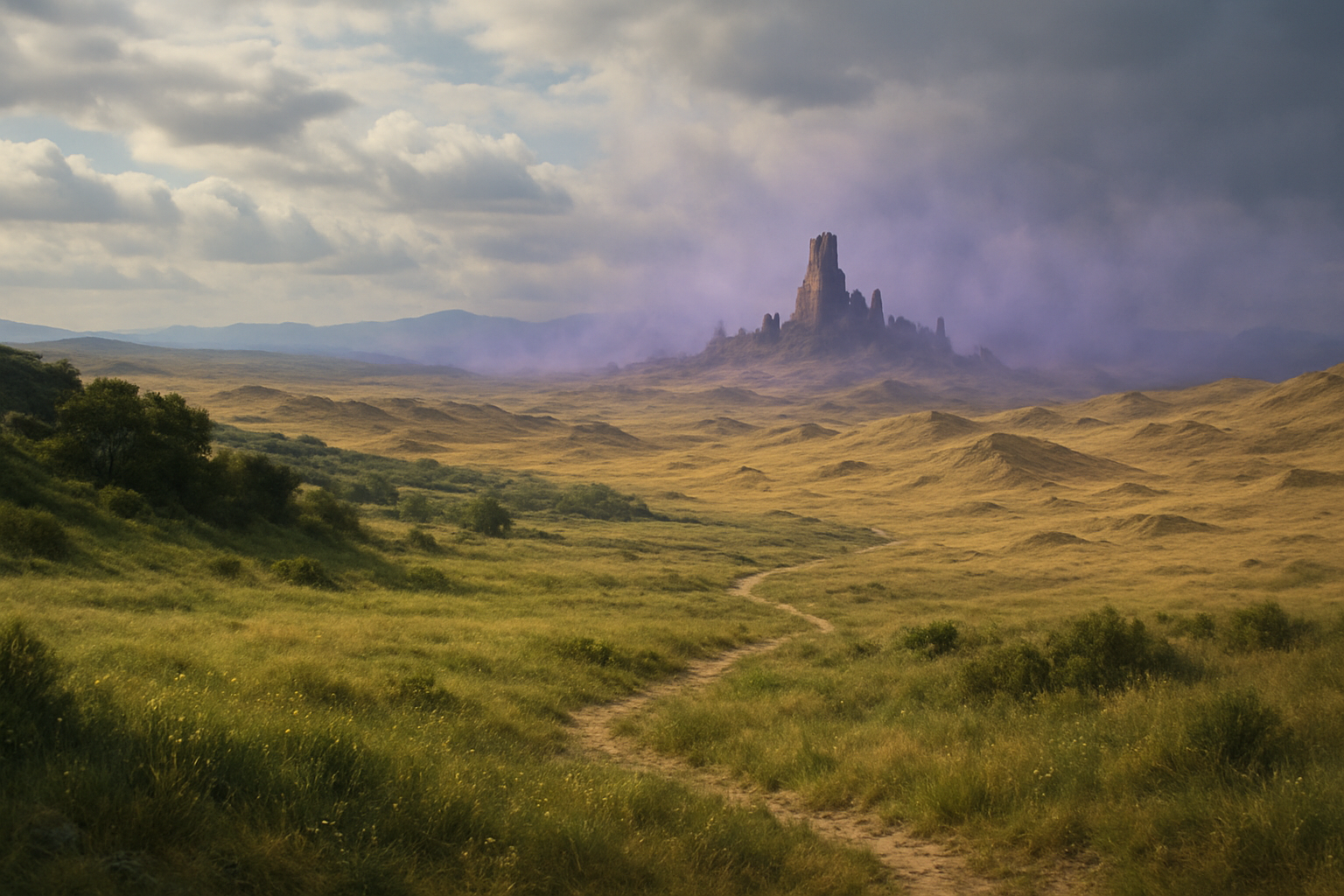
At its center lies the wound of Nimbus itself. A faint, shimmering haze clings to the broken heart of the ruined city. Travelers speak of altered senses, strange visions, and transformations within its reach. Whether the phenomenon is a remnant of ancient magic or something more unpredictable remains the subject of endless debate.
A fractured Obelisk, once the towering emblem of Nimbus, still stands amid the devastation. Even reduced to a broken spire, it dominates the horizon and serves as both warning and beacon.

Comments