
Tundrin
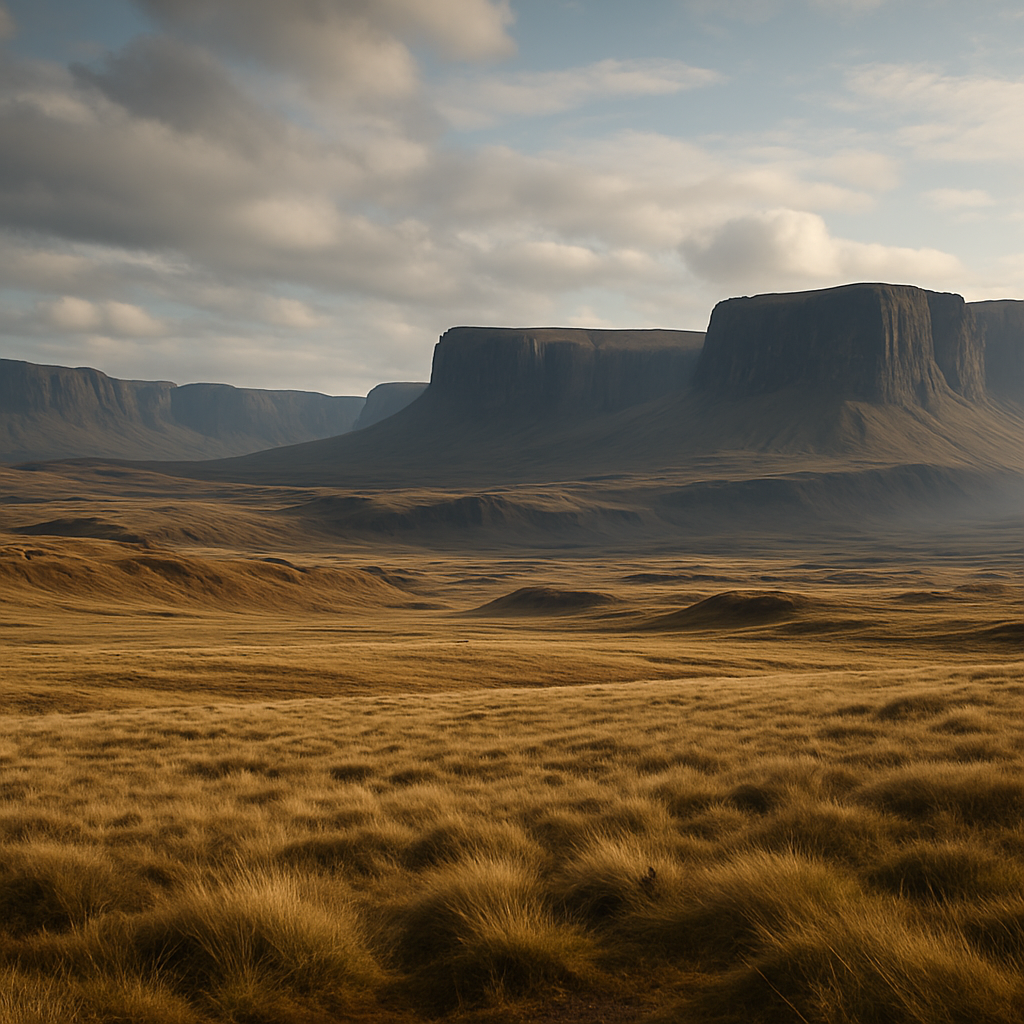
Tundrin occupies the southwestern peninsula of Anuk, a land of towering stone plateaus, wind-scoured plains, and two restless oceans that hammer its shores. It is a region defined by scale and severity. Storms roll in from the Sagapal Ocean to the west; the Azure Expanse stretches to the south; and along its northern edges it meets the lands of Thrix and the contested frontier between Verdantia and Krashnakhul. Few places feel as old or as unmoved by the passage of ages as Tundrin.
Geography
The heart of Tundrin is the great plateau spine, a colossal uplift of stone whose flat summits rise above the clouds. This natural bastion divides the region into two distinct realms: the high plateau, shrouded in mist and thunder, and the outer lands that stretch down toward the plains, forests, and rugged coasts. The plateau is marked by sheer escarpments, deep crags, and colossal totems carved by hands far larger than those of mortals. Storms build and break against its edges, creating an ever-present rumble that has become synonymous with the region’s name.
The outer territory consists of broad grasslands, stony tundra, and dense patches of pine that cling to the plateau’s lower slopes. The western coast is jagged and unforgiving, while the southern shores feature long black-sand beaches shaped by volcanic remnants deep beneath the peninsula. Seasonal migration routes cross the plains, carved by generations of nomadic movement and the wanderings of great beasts that thrive in Tundrin’s harsh climate.
Peoples and Society
Tundrin is shaped by two closely related peoples: the giants who rule the high plateau and the Goliaths who inhabit the lower lands. Their relationship forms the cultural backbone of the region.
The giants are the ancient stewards of the plateau heights, rarely glimpsed by outsiders. Their presence is felt more often than seen: in the distant silhouettes moving across the skyline, in the thunder that rolls down the cliffs, and in the great stone markings that designate sacred ground.
Below them live the Goliath clans, who act as both interpreters and guardians. They consider themselves younger kin to the giants, shaped from the same primordial forces yet made to walk the lower world. It is the Goliaths who manage the boundaries of Tundrin, respond to threats, and negotiate with neighboring realms. Their settlements dot the plains and coasts, sparse yet resilient, built to endure storms and shifting seasons.
Goliath tradition holds that only a few among them may ascend the plateau to treat directly with the giants. Outsiders rarely witness these meetings, and much of the relationship between the two peoples is preserved through ritual, myth, and long-held custom.
Culture and Belief
Tundrin’s culture is rooted in reverence for storm, stone, and sky. Thunder is regarded as both history and prophecy, a sign of the giants’ presence and the world’s shifting moods. Carved markers and weathered runes line ancient paths, declaring boundaries or honoring past events, and serve as a shared script between the peoples of the plateau and the lands below.
The Goliaths maintain traditions of strength, endurance, and custodianship. They view themselves not as conquerors of the land but as its necessary guardians. Seasonal gatherings mark transitions in climate, the movement of great herds, and the occasional rare descent of a giant to the lower world.
Life in Tundrin is communal, pragmatic, and infused with ritual significance. Each storm is met with respect; each crag and cliff face holds stories older than any surviving record.
Political Dynamics
Tundrin has long remained independent, not through politics but through implacable geography and the authority of its native peoples. Outsiders rarely attempt conquest. Verdantia has made repeated efforts to probe the mineral wealth near the northeastern border, but these incursions are swiftly met by Goliath wardens. Kobold tunneling efforts from Krashnakhul occasionally threaten the lowlands, requiring constant vigilance along the eastern approaches.
To the north, Tundrin’s contact with Thrix remains limited but amiable. Trade is sparse but steady, carried out through Goliath intermediaries. Most neighboring realms recognize that any dealings with Tundrin must go through the clans of the lower slopes; access to the plateau itself is strictly forbidden without invitation.

Comments