
Brim
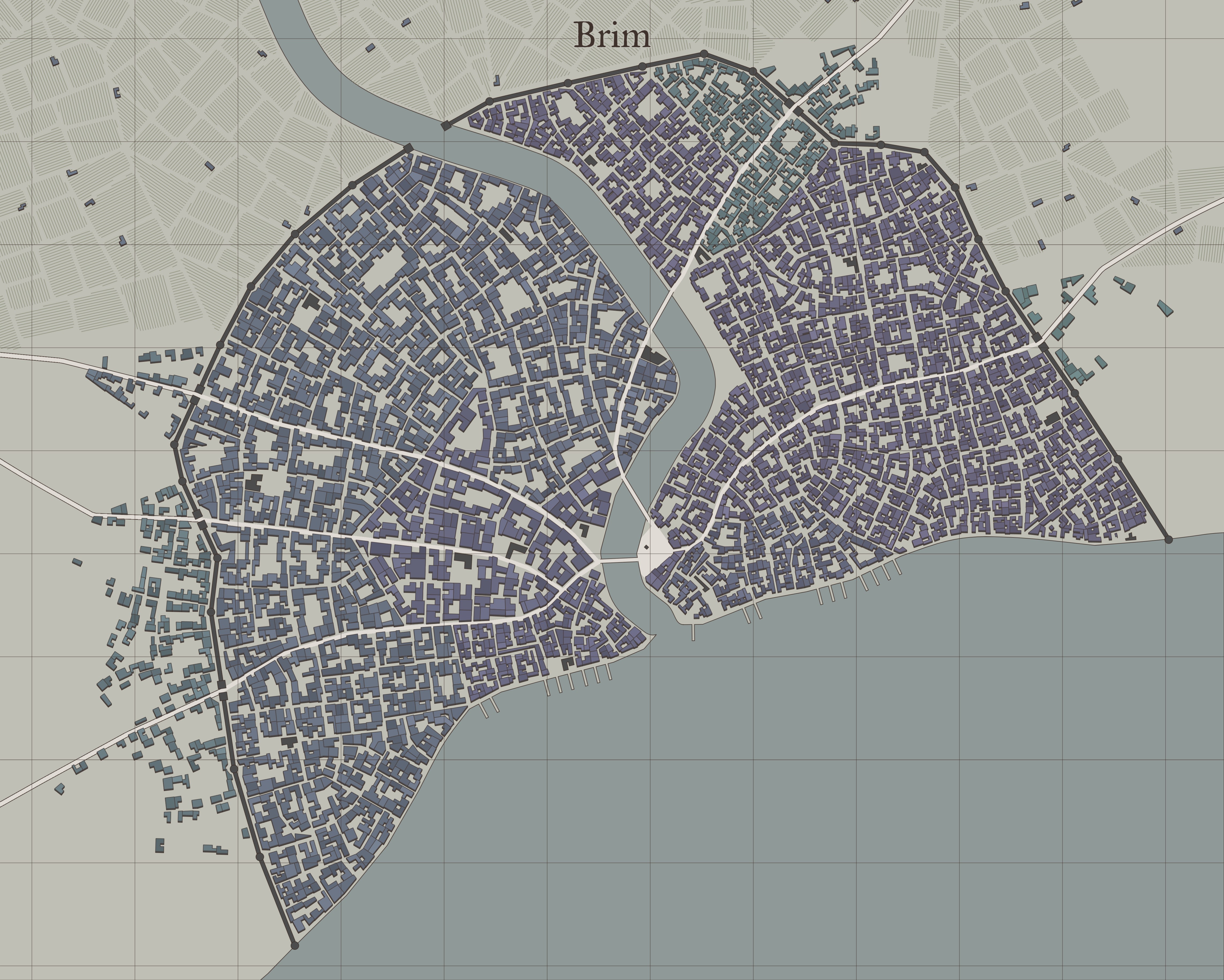
Brim, a bustling city located in Hjartaland along the south coast, thrives at the confluence of a major river and the sea. Founded in 912, it has grown into a vibrant hub of culture and commerce, renowned for its exquisite glass orbs crafted from Tass and mental impressions. Governed by a city council and led by Mayor Alaric Stone, Brim is a melting pot of diverse demographics, with humans making up the majority. The city's economy is bolstered by its strategic river trade routes, artisan guilds, and a thriving glassmaking industry. Visitors are drawn to its rich cultural heritage, scenic Riverwalk Promenade, and the grand Orbarium. Despite tensions with the Aethervox Regnum, Brim remains a beacon of resilience and creativity, its architecture a harmonious blend of traditional and modern styles, adorned with intricate glasswork and mosaics.
Humans: 85%
Elves: 5%
Dwarves: 5%
Others: 5%
Type: City Council
Description: Governed by a council of elected representatives from various districts, with a focus on trade, culture, and defense.
Title: Mayor
Current Leader: Mayor Alaric Stone
Main Faction: The Orbweavers' Guild, a prestigious organization dedicated to the creation and preservation of the city's renowned glass orbs.
City Walls: Strong fortifications encircle the city, providing protection against external threats.
Bridges: Several stone bridges span the river, connecting different parts of the city.
Glass Workshops: Numerous workshops dedicated to the crafting of glass orbs.
River Docks: Facilities for trade and transport along the river.
Glassmakers' Quarter: The heart of the city's glassmaking industry, filled with workshops and galleries.
Riverfront District: A bustling area along the river, home to markets and trade.
Old Town: The historic center with narrow streets and ancient buildings.
Merchant's District: A vibrant area for trade and commerce.
Glass Orbs: Unique to Brim, these orbs are both cultural artifacts and valuable trade items.
River Trade: The river provides a vital trade route, facilitating commerce with inland settlements.
Artisan Guilds: Skilled craftsmen and artisans contribute to the city's wealth and reputation.
City Walls: Robust stone walls with watchtowers provide security against external threats.
Militia: A well-organized city militia ensures internal peace and order.
River Patrols: Boats patrol the river to prevent smuggling and piracy.
Glassmaking: The primary industry, with workshops producing the city's famous glass orbs.
Textiles: A secondary industry, with local weavers creating sought-after fabrics.
Trade Goods: Imports include metals and spices, while exports focus on glassware and textiles.
The Orbweavers' Guild: Dominates the glassmaking industry and holds significant political influence.
The Merchants' Alliance: Represents the interests of traders and negotiates trade agreements.
The River Wardens: A faction dedicated to maintaining the safety and security of the river trade routes.
Founding: Established in 912, Brim grew rapidly due to its strategic location at the river's mouth.
Cultural Renaissance: In the late 900s, the city became a cultural hub, renowned for its glassmaking.
Recent Developments: Tensions with the Aethervox Regnum have led to increased fortifications and a focus on self-reliance.
The Orbarium: A grand gallery showcasing the most exquisite glass orbs, attracting artists and collectors from afar.
The Riverwalk Promenade: A scenic path along the river, lined with cafes and shops, offering stunning views of the water.
The Old Lighthouse: A historic structure now serving as a museum, detailing the city's maritime history.
Visitors: Art enthusiasts, historians, and traders are drawn to Brim for its cultural heritage and vibrant markets.
Attractions: Tourists often visit the Orbarium, explore the Riverwalk Promenade, and attend glassmaking workshops.
Accommodations: The city offers a range of inns and guesthouses, from luxurious establishments to cozy lodgings.
Style: Brim's architecture is a blend of traditional and modern styles, with buildings featuring intricate glasswork and elegant facades.
Materials: Structures are primarily built from local stone and timber, with roofs often adorned with colorful tiles.
Adornments: Glass orbs and mosaics are common decorative elements throughout the city.
River Access: The river provides water for the city and supports its trade and transportation needs.
Forests: Nearby woodlands supply timber for construction and crafting.
Sand Deposits: Essential for glassmaking, these deposits are a key resource for the city's primary industry.
Demographics
Government
Ruler/Leader
Faction/Organization
Infrastructure
Districts
Assets
Defences
Industry and Trade
Guilds and Factions
History
Points of Interest
Tourism
Architecture
Natural Resources

Comments