Yearning and Sin
Religious Foundation and the Wound of Creation
All gods yearn. All mortals yearn. From this longing, the world moves forward. From its fracture, sin is born.
In Erenel, existence itself is shaped by a longing placed into creation at its first breath. This longing is known as Yearning, and it was born by Al'Madoon, the Architect when he shaped the world during creation. Yearning was meant to drive growth, purpose, and becoming, ensuring that creation would never become stagnant or fall silent.
Yearning touches every part of existence. Mortals feel it as hope, ambition, fear, love, and the desire to leave something behind when they die. The gods feel it as the pull toward influence, restoration, and fulfillment of divine purpose. It is the engine that moves history forward and the pressure that bends fate into new shapes.
Yet the world is broken. The Architect is gone, sacrificing himself to save the creation from the Vyse Tyranal, the Fallen Elf. The mechanism that once allowed existence to resolve itself has failed. From this fracture arose sin and the many ways Yearning falters in a reality forever shaped by divine loss.
The Creator God
Dive into the Story of Creation.Al’Madoon was the Creator God and the first Architect of Erenel. From him came the shape of the universe, the rhythm of time, and the principles that governed Erenel’s existence. His greatest creation was arguably the Yearning, a force meant to ensure that the world would always move forward rather than collapse into stasis. Yearning was not intended to be hunger alone. It is momentum given form, a pressure that encourages growth, renewal, and change. Through it, mortals seek meaning and gods seek fulfillment. A means to keep the universe flourishing.
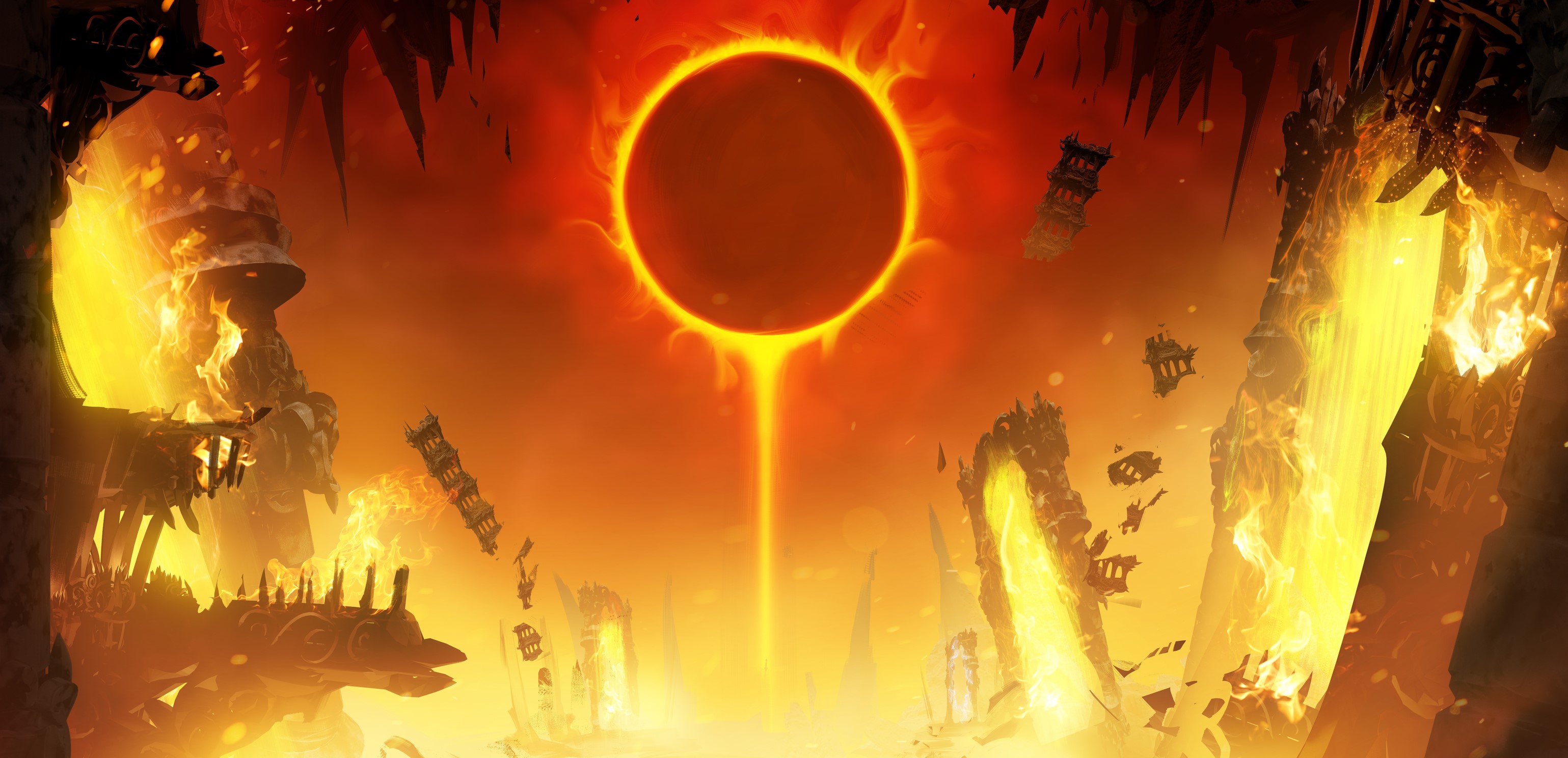
When Vyse Tyranal, the Fallen Elf attacked the Architect above the Tree of Aymara, Al’Madoon understood the cost of preserving his creation. To cleanse the corruption and spare Erenel, he sacrificed his celestial body in a blinding apotheosis of divine light. This act saved the world, but it shattered the order that sustained it.
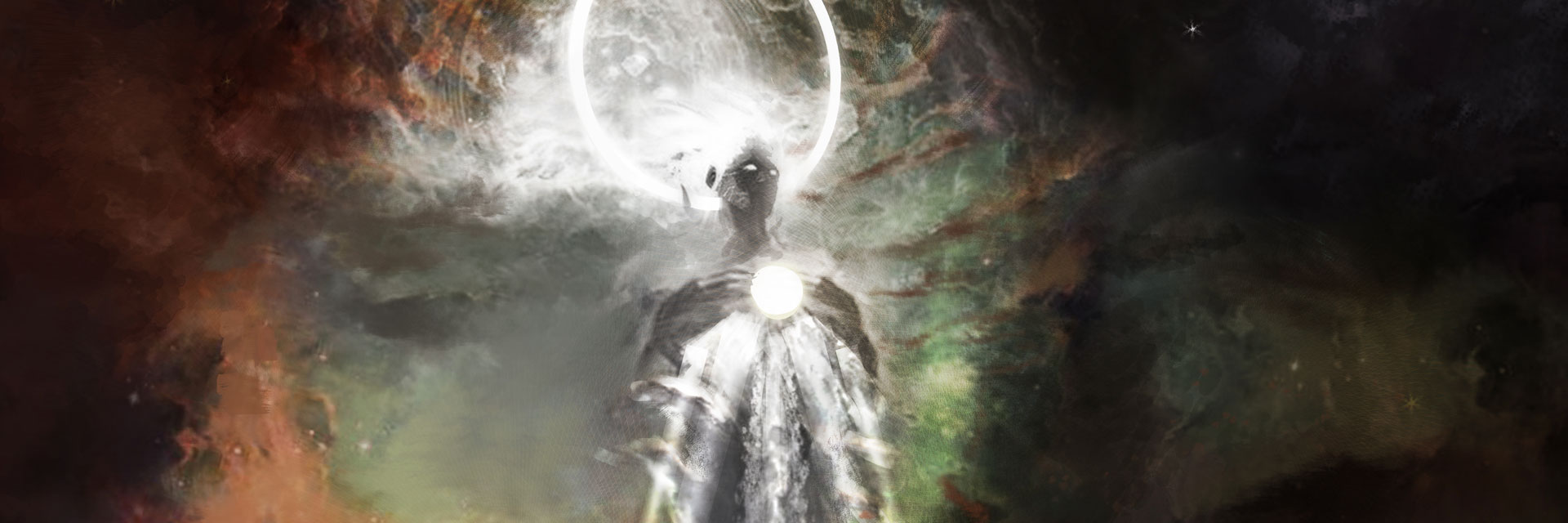
The Yearning did not end with Al’Madoon’s sacrifice. It remains embedded in the universe, shaping gods and mortals alike. Unfortunately, without an Architect to guide it, the Yearning has become more dangerous and unstable. Every god feels the pull of Yearning as it drives them to seek influence, restoration and fulfillment. Most gods retain a physical form and can act directly upon the world, shaping events through presence and divine power.
The three Deities of Light do not. Asanna, the Blazing Dawn, Luniwyn, the Silver Maiden and Rezmir, of Light and Law exist without physical forms following the events of the Great Sacrifice. Their shared disembodiment marks them as wounded as they persist through worship, principle, and influence alone. This loss defines the Era of the Inner Flame and explains why light must be maintained rather than assumed.
Together, the Deities of Light form a unified response to the darkness left in the Architect’s wake. Each represents a way to endure a world that cannot yet heal itself until a new Architect takes form.
Deities of Light
Dive into the Illuminated Church.
Asanna the Blazing Dawn
Asanna embodies warmth, continuity, and shelter. Her followers, the Hearth Keepers, wield sunlight and the sacred flame to preserve their homes, sanctuaries, and communities. Asanna’s light sustains rather than judges, offering refuge against the encroaching dark.
Without her physical form, light does not linger on its own. Hearths must be tended and sanctuaries must be renewed. When care falters, darkness returns and takes root.
Asanna’s Yearning often manifests as endurance. Through her, mortals learn that survival itself can be an act of love.
Luniwyn the Silver Maiden
Luniwyn embodies both vigilance and understanding. Her followers, the Midnight Eyrie, draw upon moonlight and starlight to uncover hidden threats and discern uncertain futures. They value restraint, secrecy, and careful observation.
Without her physical form, prophecy is fragmented. Visions warn more often than they command as knowledge reveals danger, but certainty remains elusive.
Luniwyn’s Yearning often manifests as awareness. Through her, mortals learn that survival depends upon knowing when and how to act when threatened.
Rezmir of Light and Law
Rezmir embodies judgment carried within. His followers, the Lantern Priests, draw holy light from conviction rather than sky or flame. Where external authority has failed, inner law must suffice.
Rezmir’s physical form was found and twisted into the demigod Edictor, Toll of Light's End. Justice was denied and as a result, law often persists without closure, and punishment remains where resolution cannot be found.
Rezmir’s Yearning often manifests as restoration of order. Through him, mortals learn discipline, obligation, and restraint, even if true justice remains out of reach.
The Six Sins of Light’s End
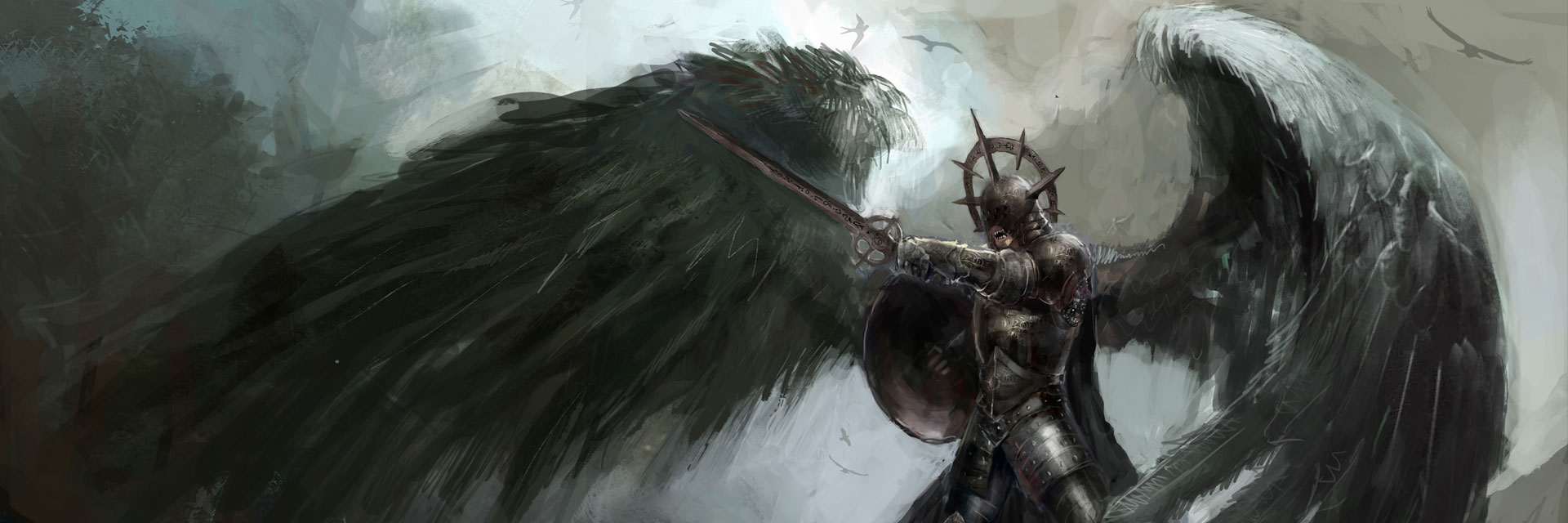
Following the Great Sacrifice and creation of The Below, the universe's ability to resolve Yearning was fractured. From this failure arose the Six Sins of Light’s End. These sins are patterns by which Yearning fractures rather than heals, afflicting both gods and mortals alike. These sins endure because the world itself remains unfinished without an Architect.
Acedia
Blasphemy
Covetousness
Miserliness
Sadism
Treachery

True Law and the Six Virtues
The Six Sins of Light’s End bend the Yearning away from restoration and toward collapse. In response, Rezmir’s True Law teaches six virtues. These virtues do not erase sin. They exist to oppose it long enough for the world to endure. Each virtue stands in deliberate tension against a specific sin.
Benevolence
Diligence
Forbearance
Modesty
Obligation
Patience
Rezmir's True Law does not claim to heal the world. It exists to prevent collapse while justice remains unfinished. The Six Virtues do not promise salvation. They offer structure, discipline and restraint in a reality shaped by loss. Lantern Priests teach that to live by True Law is to carry justice within oneself, knowing it cannot yet be made whole. Until that day comes, order must be maintained by choice rather than force.
Yearning and Fulfillment
Yearning is the force that drives gods forward. It is not desire alone, nor ambition in isolation. Yearning is the pull toward coherence, the pressure to become whole. Every god feels it, whether embodied or diminished, whether worshiped openly or feared in silence.
For most gods, Yearning expresses itself as influence. Worship spreads, symbols take root, and belief shapes the world in small but meaningful ways. For a rare few, Yearning runs deeper. It seeks restoration, embodiment, and the fulfillment of a purpose left incomplete. Fulfillment occurs when a god’s Yearning aligns fully with reality. Influence, belief, purpose, and consequence converge as reality reorganizes itself around that fulfillment.
This is what it means to become the Architect. The Architect is not a ruler in the mortal sense. The Architect is the stabilizing principle of existence, the being whose coherence defines how reality holds together. Al’Madoon filled this role once. His absence is felt everywhere the Yearning strains against unresolved consequence.
Only one Architect can exist at a time. The Realms of Remembrance barely endured the loss of the last Architect and multiple fulfillment could tear reality apart. For this reason, divine conflict is inevitable. Gods pursue fulfillment knowing that only one may succeed. Alliances form and fracture as worship often becomes contested ground. The Deities of Light under the Illuminated Church occupy a unique position within this struggle. Their Yearning is bound first to restoration, not ascension. Without bodies, they cannot fulfill the deeper pull that would lead to Architecthood. Until their forms are recovered, their influence remains indirect, their actions restrained, and their unity necessary. Fulfillment waits as the universe holds its breath.
Comments