

Arawai
(a.k.a. Rowa of the Jungle Leaves (Giants of Rushemé Rowa of the Enduring Trees (Eneko of Syrkarn Aarakti, the Goddess of Abundance and Storms (Adar Arra'ai (sahuagin))
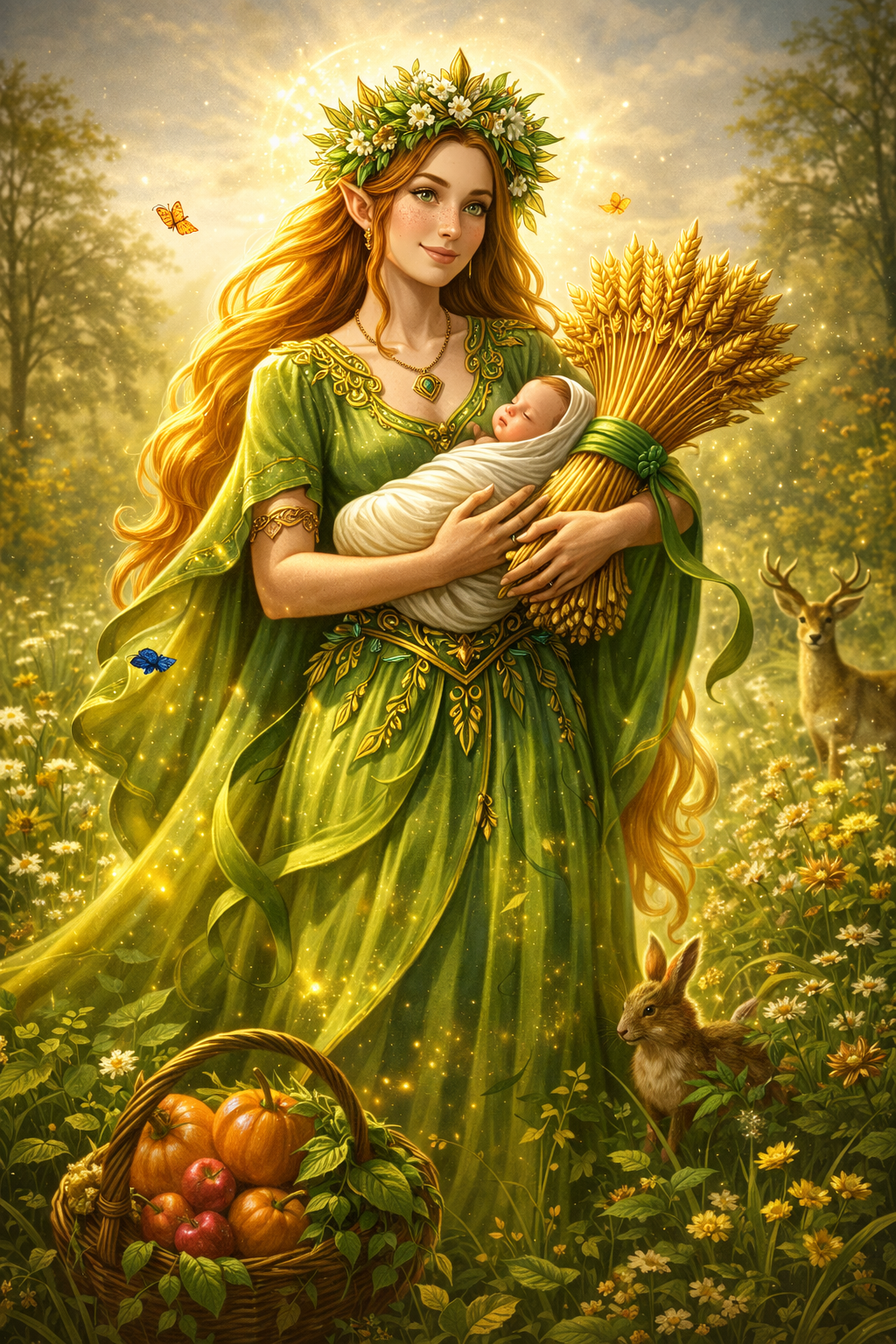
Arawai is the goddess of fertility, abundance, and life (particularly plant life). She teaches that the wilderness holds great resources that empower civilization. The sister of Balinor and The Devourer, Arawai is also the mother of The Fury (as a result of her rape at the hands of the Devourer, according to Sovereign Host religious texts). She finds followers among parents, farmers, druids, rangers, sailors, and others who place great importance on nature, fertility, or the weather. Iconography usually depicts her as a half -elf female, sometimes as a Human or a Halfling, and occasionally as a bronze dragon.
Arawai is worshiped primarily through work. Planting is a prayer. Midwifery is a sacrament. Sharing food is a rite. Travelers leave offerings at forest shrines before entering wild lands. Farmers bless their tools. Parents whisper her name over newborns. Rangers knot cords around branches. Herbalists burn the husks of their harvest. Formal services are usually held outdoors or in garden-temples, featuring seed offerings, bread-breaking, fertility blessings, and invocations for gentle weather.
Divine Domains
Arawai’s influence touches all expressions of life that are nurtured rather than merely endured. She presides over fertility, agriculture, cultivated land, weather as it sustains growth, birth, and the safe passage of travelers through the wild. Unlike Balinor, who embodies the untamed hunt, or the Devourer, who represents nature’s wrath, Arawai governs the living world as it is tended, protected, and integrated into mortal society.
Her priests often teach that Arawai does not rule the wilderness itself, but the thin green line where mortal hands meet soil, seed, and storm.
Artifacts
Few artifacts are universally attributed to Arawai, but many local traditions preserve relics said to carry her blessing. These commonly include:
- Harvest-crowns woven from everliving grain, said to prevent blight
- Birth-stones placed beneath birthing beds to ensure safe delivery
- Verdant vessels that keep what is placed within eternally fresh
- Staves of greenwood that cause springs to rise or soil to renew itself
Such relics are usually humble in form—baskets, cups, cloaks, sickles—reinforcing the belief that Arawai’s miracles work quietly, through sustenance rather than spectacle.
Holy Books & Codes
The Sovereign Host has no unified scripture, but most temples of Arawai preserve collections of seasonal rites, planting calendars, herbal codices, and birth-blessings. These are often practical documents as much as sacred ones: guides to soil health, midwifery, forest stewardship, and the reading of skies.
Some regions maintain “Green Registers”, books recording births, successful harvests, and notable survivals in the wild, treated as living testaments to Arawai’s presence.
Divine Symbols & Sigils
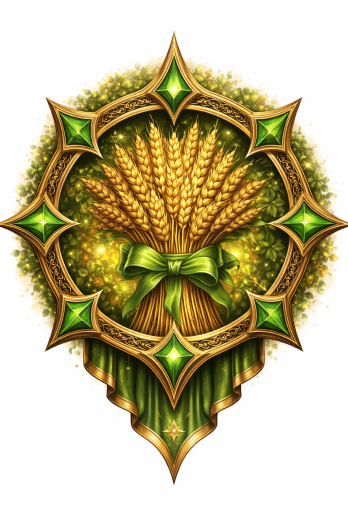
Arawai is most often represented by a stalk of wheat, a flowering branch, or a sheaf bound with twine. In Host iconography, her aspect of the octogram is frequently worked in bronze, copper, and green enamel.
Shrines often incorporate living elements: vines trained over frames, small gardens, bowls of seed, or ever-burning hearth lamps sheltered by leaves.
Tenets of Faith
Followers of Arawai are taught:
- Life must be nurtured, not merely preserved.
- Growth demands patience, humility, and protection.
- Civilization has a duty to the living world, and the living world in turn sustains civilization.
- Love—familial, communal, and romantic—is the soil in which all other virtues take root.
- Destruction of life without purpose or balance is an affront not only to Arawai, but to the Host entire.
Her priests often summarize her doctrine simply: “What you would harvest tomorrow, you must protect today.”
Holidays
Arawai’s holy days are almost always seasonal
- Firstplant, marking the beginning of the sowing season
- Highharvest, a festival of abundance, feasting, and community offerings
- Blessing of Births, held on locally determined dates
- Greenwake, honoring those who died so others might live
These celebrations are commonly joyful, communal affairs centered on food, music, marriages, and the dedication of new fields or hearths.
Divine Goals & Aspirations
Arawai is believed to labor ceaselessly toward the continuation of life in all its gentle forms: thriving populations, fertile land, stable climates, and the preservation of places where growth can occur.
Mystics of the Host teach that she opposes not only famine and blight, but the creeping advance of spiritual barrenness—despair, isolation, and cultures that consume without tending.
Some esoteric traditions claim that Arawai quietly works to heal the ancient wound in the world left by the Devourer’s excesses, seeding renewal where devastation once reigned.
Relationships
Titles
- Sovereign of Life and Love
- The Lady of the Harvest
- She Who Tends the World
Alignment Neutral Good
Areas of Concern
- Fertility and birth
- Crops, agriculture, and abundance
- Cultivated wilderness and safe passage through the wild
Anathema Blight crops or poison the land, destroy life without cause, allow famine or sickness to spread when it can be prevented, despoil places of natural growth
Follower Alignments NG, LG, CG, N
Domains Creation, Good , Healing, Plant, Weather
Subdomains Seasons, Growth, Renewal, Fertility, Storms, Thorns
Favored Weapon Sickle
Symbol A sheaf of wheat bound with green ribbon; the octogram worked in bronze and green
Sacred Animal Deer, cow, songbird
Sacred Colors Green, gold, soft brown