
Balinor
The lord of beasts is one of the most violent of the Sovereign Host. He is neither cruel nor bloodthirsty, but simply represents the cycle of life, the eternal hunt of predator and prey. He begrudges none the right to kill for survival, but holds great malice toward those who hunt for sport or trophies. He is patron of rangers, hunters, and trappers, and is constant companion to his sister, Arawai. The two of them together represent all aspects of the wild that can be tamed—to an extent, at least—by civilization.
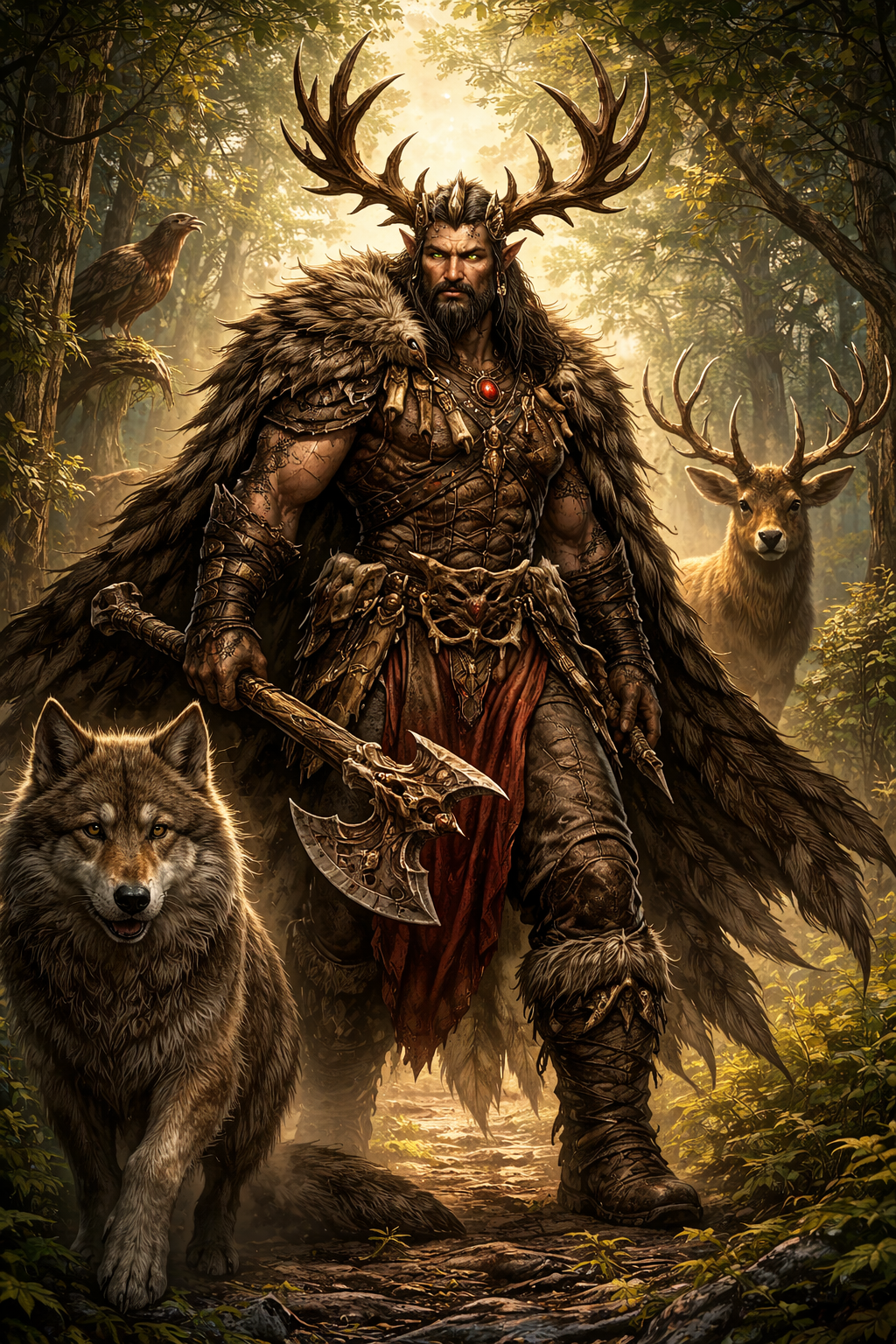
In Host myth, Balinor is the eternal pursuer, clad in hide and antler, striding through storm and forest alike. He is portrayed as powerful but not monstrous, fierce but not cruel—a god who knows both hunger and restraint. He is brother to Arawai and the Devourer. With Arawai, he represents the living world as it may coexist with civilization. With the Devourer, he embodies the thin line between necessary violence and annihilation. Many tales place Balinor between them, forever pulling one back from gentleness that would weaken life, and the other from savagery that would end it. He appears variously as human, half-orc, great-horned hunter, or massive beast-lord, but always marked by antler, fang, or wind.
Divine Domains
Artifacts
Relics attributed to Balinor are almost always weapons, horns, cloaks, and trophies that were never taken for display alone. Common legendary forms include:
- Great-horns said to summon or scatter beasts
- Cloaks of the First Hunt, stitched from many creatures and granting preternatural stealth
- Axes and spears that never dull against living flesh
- Fang-talismans believed to steady the heart and sharpen the senses
Balinoran relics are rarely ornate. They are practical, scarred, and frequently passed from hand to hand.
Holy Books & Codes
Balinor’s temples preserve few formal books. Instead, they maintain hunt ledgers, wilderness journals, and oral traditions recording great hunts, notable beasts, and survival lore.
Some sects keep collections known as The Red Paths—scrolls or carved boards describing sacred hunts, proper methods of taking life, and rituals of thanks to fallen prey. These are less scripture than instruction.
Divine Symbols & Sigils
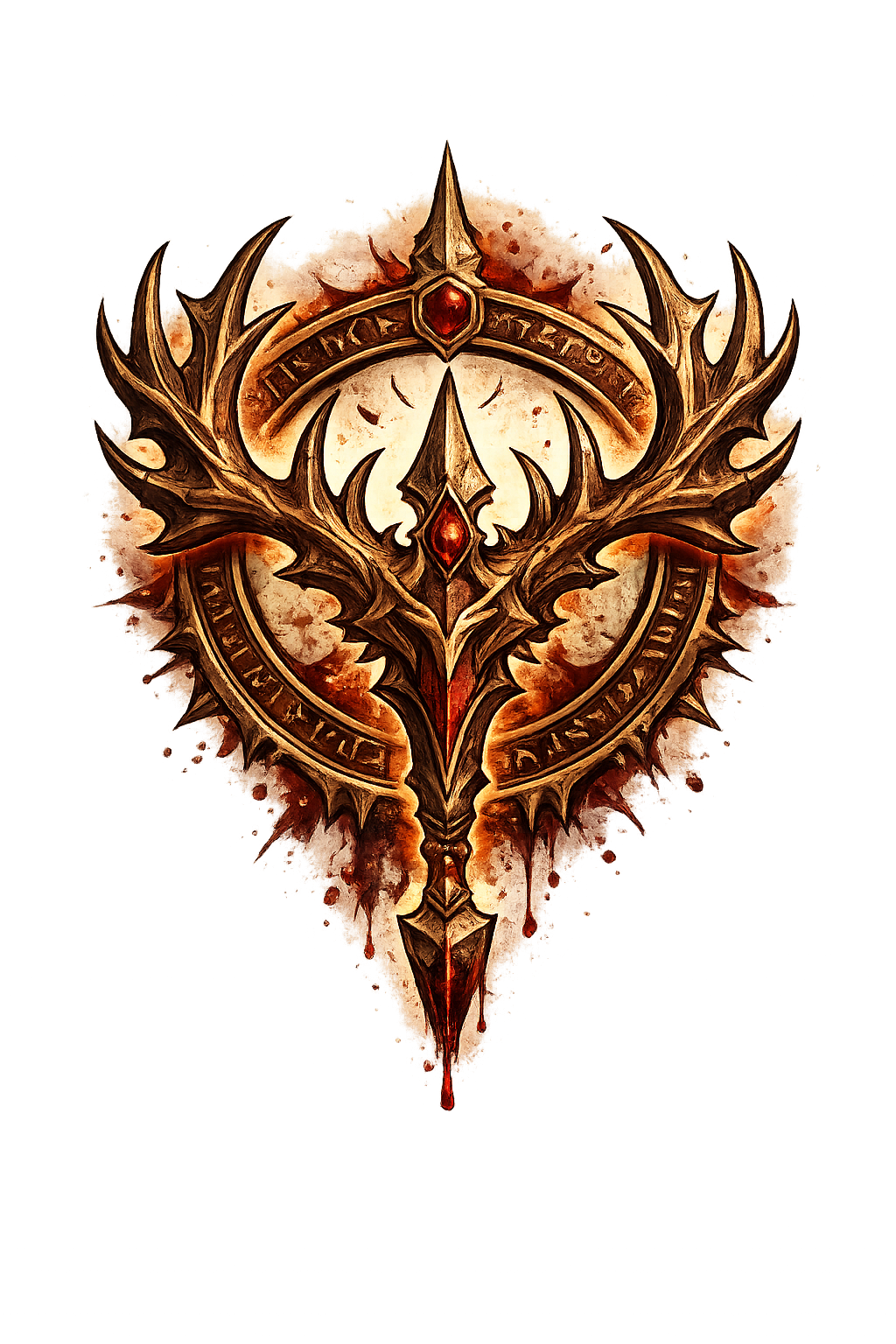
Balinor is most often represented by a pair of antlers, a clawed footprint, or a blood-marked spearhead. Within Host iconography, his aspect of the octogram is commonly worked in brown, umber, and deep red.
Shrines typically feature bones, horns, hides, or simple wooden frames hung with tools of the hunt. Living branches, furs, and wind-chimes of tooth and stone are common.
Tenets of Faith
Those who honor Balinor are taught:
- The hunt is sacred only when it serves need.
- Strength exists to test and be tested, not to dominate without cause.
- Every life taken must have purpose.
- Predator and prey are bound together; contempt for either is ignorance.
- To waste flesh, to kill for vanity, or to deny respect to the fallen is to offend the Sovereign of Horn and Hunt.
Balinor’s followers often repeat a simple maxim: “Take only what you can honor.”
Holidays
Holy days of Balinor usually coincide with seasonal hunts, migrations, or dangerous passages. Common observances include:
- The First Blood, marking the opening of the major hunt
- The Long Chase, honoring endurance and perseverance
- The Winter Taking, a solemn festival of survival
- The Hunt (4 Barrakas): This holiday in honor of Balinor features communal hunts of dangerous creatures.
- The Feast of Horns, where communities share meat from a great communal hunt
These rites often involve ritual hunts, shared meals, storytelling, and the crafting of tools from what was taken.
Divine Goals & Aspirations
Balinor is believed to labor to preserve the balance between abundance and restraint. He opposes both the rot of unchecked civilization, which forgets the cost of survival, and the excess of destruction, which delights in killing without need.
Mystics of the Host teach that Balinor’s true enemy is not the Devourer, but meaningless slaughter—violence severed from survival, courage, or necessity.
Titles
- The Sovereign of Horn and Hunt
- Lord of Beasts
- The Eternal Pursuer
Alignment Neutral
Areas of Concern
- Animals and beasts
- The hunt and survival
- Strength, endurance, and instinct
- Hunters and trappers
- Rangers and wilderness guides
- Barbarians and frontier warriors
- Druids who honor the hunt
- Scouts and outriders
- Frontier settlers and herders
Anathema Kill for sport or trophies, waste what is taken, torment animals, despoil the wilderness, hunt the helpless without purpose
Follower Alignments N, NG, CN, LN
Domains Animal, Air, Earth, Strength, Celerity
Subdomains Feather, Fur, Cloud, Wind, Ferocity, Resolve
Favored Weapon Battleaxe
Symbol A pair of antlers in silhouette; the octogram worked in brown and deep red
Sacred Animal Stag, wolf, great cat
Sacred Colors Brown, crimson, forest green