
SCHOLARS' QUARTER
The Archive's Neighbourhood · District · Nova Conspectus
"The Scholars' Quarter has grown up around the Mission's public archive in the way that scholarly communities always grow up around archives: attracted first by the material, then by each other, then by the specific intellectual culture that develops when people who study the same difficult subject live in close proximity and argue about it regularly. The difficult subject here is the Hava'keth, which makes this the only scholarly community in the empire whose primary object of study can, and occasionally does, walk through the neighbourhood's streets and be asked directly whether the scholars' theories are correct. The centaur cultural liaisons who live in the plains quarter have been known to wander into the scholarly quarter's discussions when invited, and sometimes when not. The quality of the scholarship has improved measurably since this began. The quality of the scholars' confidence in their own theories has declined in the same period, which Hessa considers a positive development."
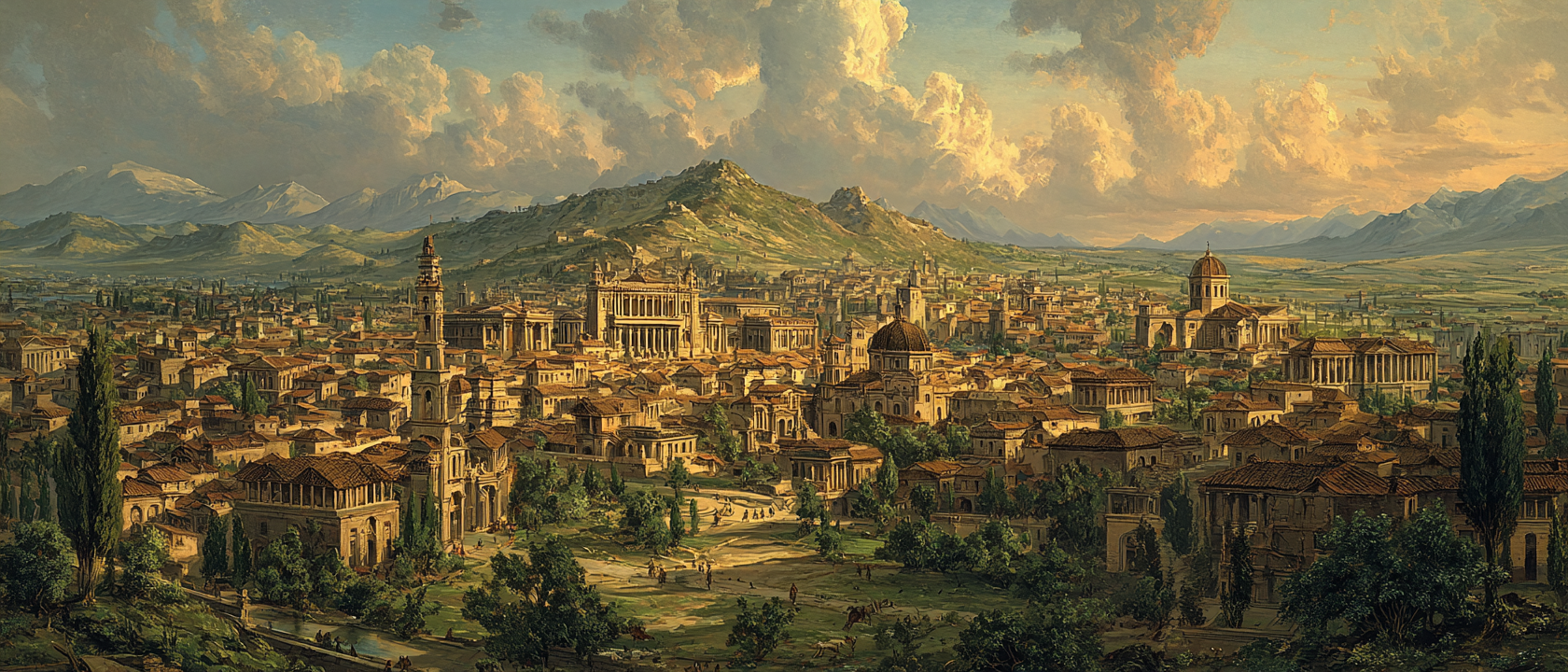
The Scholars' Quarter occupies the western section of the city between the Forum Quarter's edge and the Fluminis Campi's eastern bank — a district of residential streets, research lodgings, eating establishments that stay open late, and the institutional buildings that have grown up around the Mission's public archive and the scholarly community it has attracted. The quarter has approximately eight thousand residents: the permanent scholarly staff of the Mission archive, the visiting researchers who come for access to the centaur diplomatic record, the independent scholars who have chosen to base themselves here for extended study, and the residential and service community that supports them. It is the most intellectually active district in the province and the one with the least clear institutional hierarchy — the scholarly community is organised around the work rather than around any single institution's authority, and the Mission's attempts to formally structure its relationship with the independent scholars has produced the predictable result of a scholarly community that cooperates with the Mission when it finds this useful and ignores the Mission when it does not.
Demographics
The Mission's centaur scholar works from the Scholars' Quarter rather than the Mission compound — a locational choice that reflects her institutional position as simultaneously a Mission employee and the province's most independent intellectual authority on her subject. Her working space is two rooms above an eating establishment on the quarter's central street, its shelves holding the most complete private collection of Hava'keth cultural documentation in existence outside the Mission's own holdings and two items that are not in the Mission's holdings: the partial centaur text describing the Sixth Permutatio site, and the correspondence from the three shamans who have stopped writing back. The partial text is the reason the shamans stopped writing back, though Hessa has not yet confirmed this connection. She suspects it. She has been working toward confirmation for four months. In four months she has not heard from the shamans and has not been able to reach them through the indirect channels the Stonehoof Clan's cultural liaison network provides. The silence has the specific quality of a deliberate choice rather than a practical obstacle, and the difference matters more than it might appear to.
Points of interest
The Mission's public archive — nine hundred and seventy-five years of the Rome-centaur diplomatic record, in both Roman and centaur-translated form — is the most significant scholarly resource in the southern provinces and the institution around which the quarter has organised itself. The archive is managed by Quintus Memoria Veteris, who has been in the post for twenty-seven years and who has developed, across that time, the specific relationship with a document collection that archivists develop when the collection is large enough to be genuinely inexhaustible and important enough to justify that inexhaustibility. He knows every document the public collection contains. He knows the documents that the public collection does not contain — the internal Mission correspondence, the sensitive diplomatic assessments, the reports that Fides Camporum has written and the Foreign Office has not acknowledged — and he knows the difference between what the public record shows about the relationship's health at any given moment and what the internal record shows. The gap between those two accounts has been widening for two years. Memoria Veteris has not told anyone this. He has begun leaving the internal correspondence files in an order that would allow a sufficiently attentive researcher to notice the gap without being told where to look.
The archive's most-requested materials are the earliest documents — the first-century diplomatic contacts from before the Ninth Permutatio, when Rome was already in cautious preliminary contact with a people who had not yet arrived, which is a chronological anomaly that the archive's founding documents address with the careful vagueness of people who understood that the explanation was not something that could be written down simply. Researchers who work through the early material carefully enough always eventually ask Memoria Veteris what the anomaly means. He tells them what the official explanation is. He does not tell them that the official explanation has always struck him as incomplete, which is as much honesty as his institutional position permits and which several researchers have found, in retrospect, to have been a more informative answer than it appeared at the time.
Show SpoilerThe Mission's centaur scholar works from the Scholars' Quarter rather than the Mission compound — a locational choice that reflects her institutional position as simultaneously a Mission employee and the province's most independent intellectual authority on her subject. Her working space is two rooms above an eating establishment on the quarter's central street, its shelves holding the most complete private collection of Hava'keth cultural documentation in existence outside the Mission's own holdings and two items that are not in the Mission's holdings: the partial centaur text describing the Sixth Permutatio site, and the correspondence from the three shamans who have stopped writing back. The partial text is the reason the shamans stopped writing back, though Hessa has not yet confirmed this connection. She suspects it. She has been working toward confirmation for four months. In four months she has not heard from the shamans and has not been able to reach them through the indirect channels the Stonehoof Clan's cultural liaison network provides. The silence has the specific quality of a deliberate choice rather than a practical obstacle, and the difference matters more than it might appear to.
Access
Public archive — open to researchers by registration.
essa's working space — private.
Archive internal correspondence — Mission staff only (theoretically).

Comments