
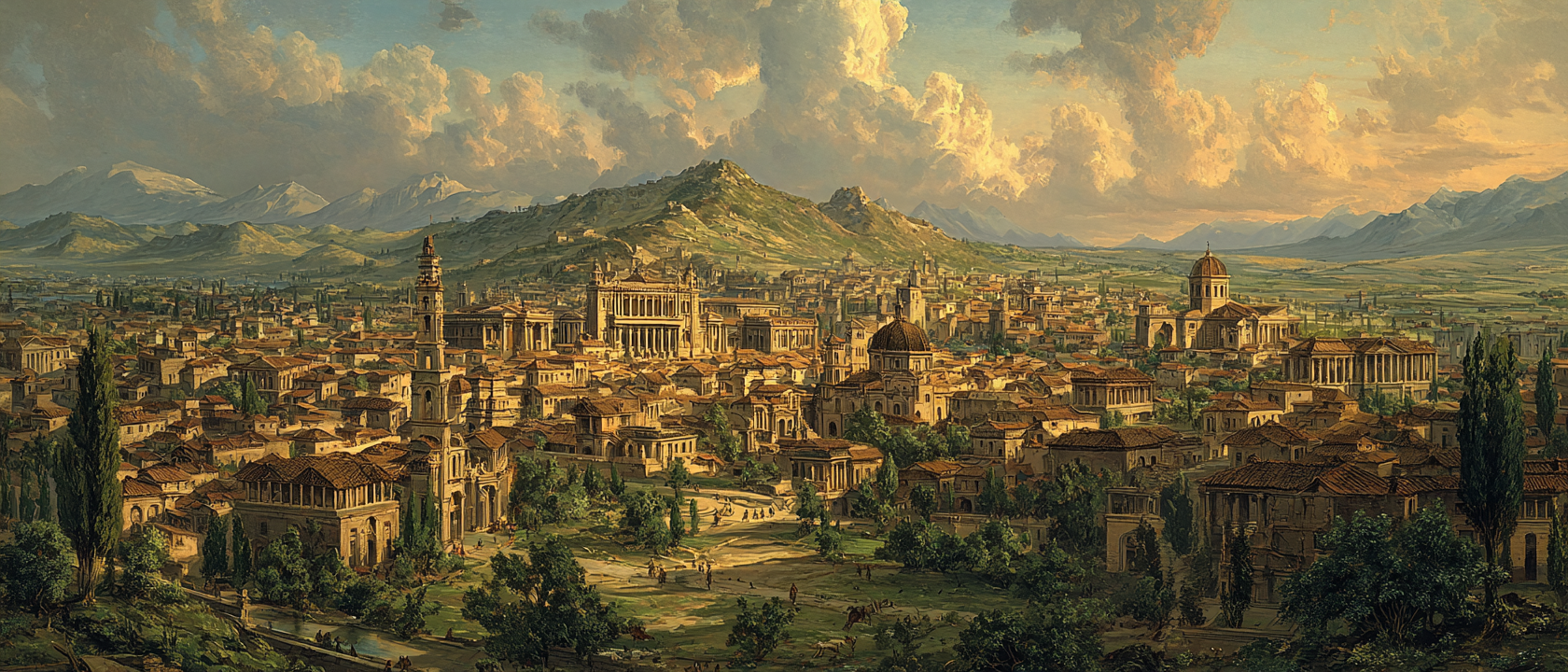
FORUM CONSPECTUS
The Forum · Public Square · Forum Quarter, Nova Conspectus
"The Forum at Nova Conspectus is not attempting to be the Forum Novum. It knows exactly what it is: the place where a frontier diplomatic city does its public business, sized for the city it serves and for the specific additional function of receiving centaur elder visitors in a public setting with some dignity. The result is a forum that is more generous in its dimensions than a city of this size strictly requires and more thoughtfully organised than most forums of any size. I found it affecting in a way I did not entirely anticipate."
The Forum Conspectus is Nova Conspectus’s civic centre: a public square wider than most provincial forums, its dimensions reflecting both the city’s diplomatic function and the practical reality that centaur elder visits to the city involve movement through civic space and that civic space designed without this in mind creates the kind of awkwardness that damages relationships. The Forum is where Senate vote results are posted, where market days operate, where public announcements are made, and where, several times a year, the specific event occurs of a centaur elder delegation arriving at the Forum’s southern entrance and being received by the Mission’s diplomatic staff in public view. This event has been occurring for roughly three centuries. It has not become routine. The residents of Nova Conspectus who stop to watch when it happens are not watching out of novelty. They are watching because they understand what the arrival means.
The Forum’s eastern goods section — the dedicated market area for centaur-adjacent craft trade — operates on market days and attracts specialist buyers from as far as Nova Romae. The Mission monitors it carefully. The trade exists because the Hava’keth clans permit it, and its continuation is contingent on Roman behaviour in the broader relationship. The Forum’s regular market vendors know this. Most of them understand it better than most senators do.
Design
The Forum is rectangular, approximately two hundred metres by one hundred, with the Mission compound’s eastern gate on the western side, the Governor’s Mansion to the north, the market colonnade on the eastern and southern sides. The paving is wide-set limestone, chosen for the same reason as the Mission courtyard’s: it provides a stable, non-echoing surface for centaur visitors and is straightforward for Roman foot traffic. The Forum’s central space is kept clear of permanent structures — no golden milestone, no Rostra in the Nova Romae sense, no triumphal monument. A single raised stone platform on the northern side serves for public announcements. The Forum’s visual focus is the Mission compound’s gate to the west: from the Forum’s centre, looking west, the gate is the frame through which the grassland plains are visible on clear days beyond the city’s western extent.
Sensory & Appearance
The Forum on a market morning: the overlap of ordinary provincial commerce and the specific quality of a city that is aware of its context. The eastern goods section’s materials have a distinct character from the standard market goods — the colours, textures, and scale of objects produced for a plains life are visibly different from Roman manufacture, and visitors who have not seen the eastern goods section before often stop there longer than they planned. The smell of grassland that arrives on the steady western wind, present every day and noticed only by visitors from the interior provinces who have not yet stopped noticing it. The Forum’s particular quality of open space — generous by provincial standards, kept deliberately uncluttered at its centre — that communicates its additional function without stating it.
History
The Forum was established with the city’s formal founding in the fourth century, its dimensions set from the beginning to accommodate the Mission’s diplomatic function. The eastern goods section has operated since the fifth century, when the centaur cultural liaison programme was formally established. The Porta Australis widening was completed in the fourth century. The public briefing tradition was established by the Mission’s eighth Lead Diplomat in the ninth century and has been maintained by every Lead Diplomat since, with the specific argument that the city’s informed consent is a diplomatic resource rather than a security risk. For full chronological detail, see: Annales Mundi.
Access
Fully public at all times.
Eastern goods section: market days, vendor access arrangements through liaison network.

Comments