This workflow is designed for worldbuilders getting started on World Anvil that aren't worldbuilding primarily for writing a story or running a campaign. The steps are not in a strict order (you're doing this to have fun!) so feel free to skip around the workflow. But it is designed to help you put the first concepts of your world together, create articles to expand them, and then dive deeper into the time and space of your world! If this is your first time worldbuilding, consider following the steps to get started.
Are you worldbuilding for a novel or a game? Check the writer's workflow or GM's workflow instead!
Contents
Create your world
On World Anvil, a "world" is not necessarily a planet. If the narrative of your worldbuilding is just a city, that city will be your world. Similarly, if your worldbuilding spans an entire multiverse, that will also be a single world on World Anvil. Think for your world as your worldbuilding project, not as a geographical location.
You're worldbuilding, so you need a world! You probably created a world after signing up, but if you want to create a new one:
- Click on the switcher at the top of the right sidebar.
- Click the "+ World" button.
- Fill in the fields to your taste (only the world name is required, and you can change it later on).
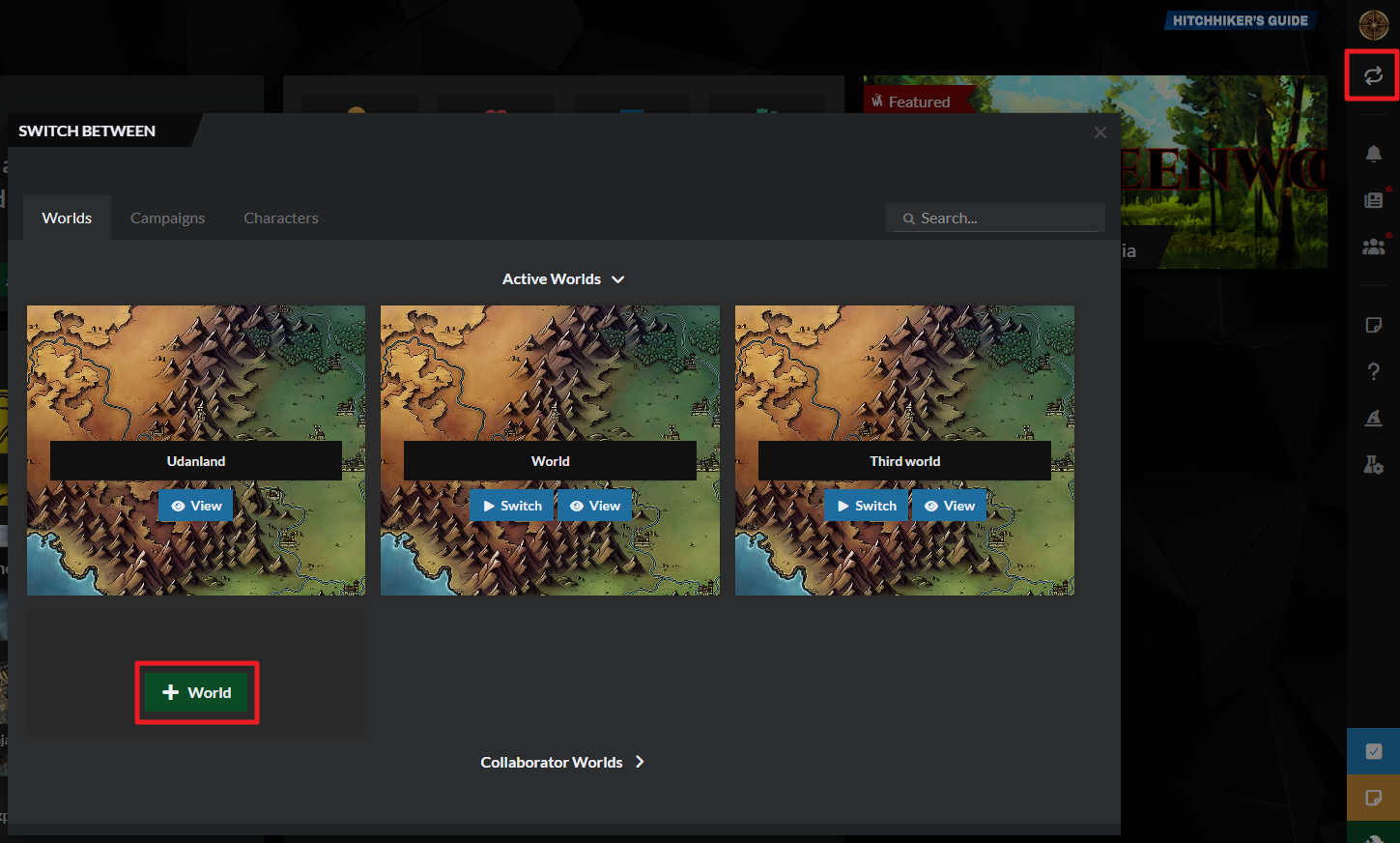
Once you have your world, you're ready to follow all the other steps! Remember, this is just a suggested workflow, so feel free to skip any steps that don't sound as interesting to you.
1. The Worldbuilding 101 Course
If you've never built a world before, we recommend you take our free Worldbuilding 101 course! To access it, log in to World Anvil and click on the wizard hat icon on the right sidebar:
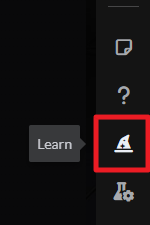
This course will walk you through the first steps building your world. When you finish the course or feel like you want to keep going, you can skip to step 2 of this page!
Use the meta
If you didn't follow the "How to Start Worldbuilding" course, you might want to check out the Worldbuilding Meta!
On World Anvil, “worldbuilding meta” is your setting’s basic information—like its DNA. It's a place to record the behind-the-scenes stuff your players might never know (or might learn much later), like themes, core conflict, and inspiration, and it's a great way to keep you on track and motivated long-term.
Click the following button to learn more about this, or skip to the next section if you just want to start writing articles!
Why create a Worldbuilding Meta?
Not only does the Worldbuilding Meta give a solid base for your worldbuilding, but whenever you hit writer’s block, you can revisit it to find your inspiration and motivation again! You can also skip this section—although we recommend the meta section to everyone.
If you're building a new world:
Fill in the meta to help you create the big concepts of your new setting.
If you already have a world:
Use the meta to define your world concept more clearly.
It may contain areas you haven’t thought of before that will help you going forward!
To create your world meta, follow these steps:
- Click the gear icon at the bottom of the sidebar, and then the icon, as shown below.
- Fill in the tabs and answer the questions, and remember to click save when you’re done.
- Write in short sentences and bullet points (believe me on this one—it’ll be so much quicker to reference later!).
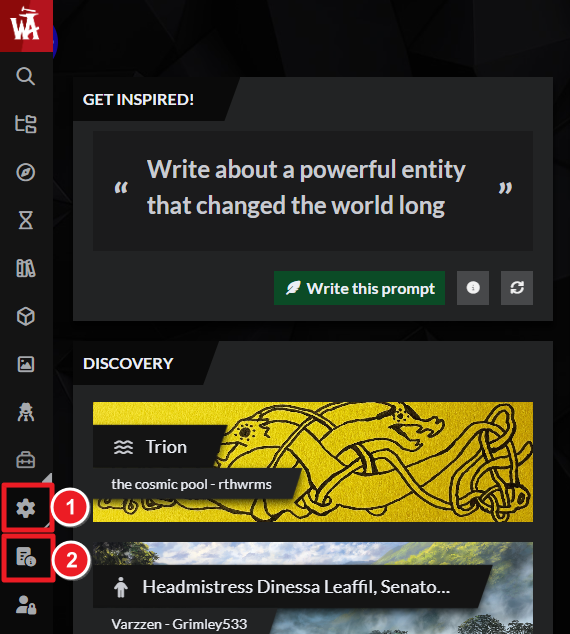
If you need more help, follow our guide: How to fill in the Worldbuilding Meta on World Anvil.
2. Create some articles
Articles are the core of most World Anvil worlds, as they let you organize and write about any type of information about your world, such as locations, cultures, magic systems, and more. To create an article:

- Click the Create button at the bottom right corner of the screen.
- Select the type of article you want to create. If none of the templates apply, choose "Generic".
- Give the article a title and start typing! All text fields are optional, so use only the ones that are useful to you.
If you don't know where to start, use the meta to understand which are the most important parts of your world.
To learn more about article, check the guide to the article editing interface.
3. Add images to make your world pretty
Images are a great way to explain how things in your world look without having to write detailed descriptions, and they will make your articles easier to read and nicer to look at. To add an image:
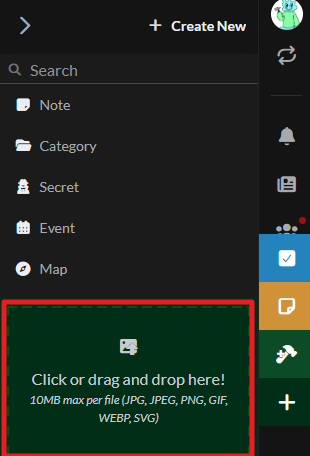
- Click the plus button at the bottom right and use the upload area.
- After the image is uploaded click the "Copy BBCode" button.
- Paste into an article to insert the image. Check this quick how-to for more information about embedding images.
Want more help with images on World Anvil? check the guide to images!
4. Maps are fun! (and interactive)
Maps are a super useful resource because, similar to images, they can express a ton of information that would be otherwise difficult to convey in a text-only format. Maps on World Anvil are interactive, so you can have multiple layers with different kinds of information, markers for important locations, and much more!
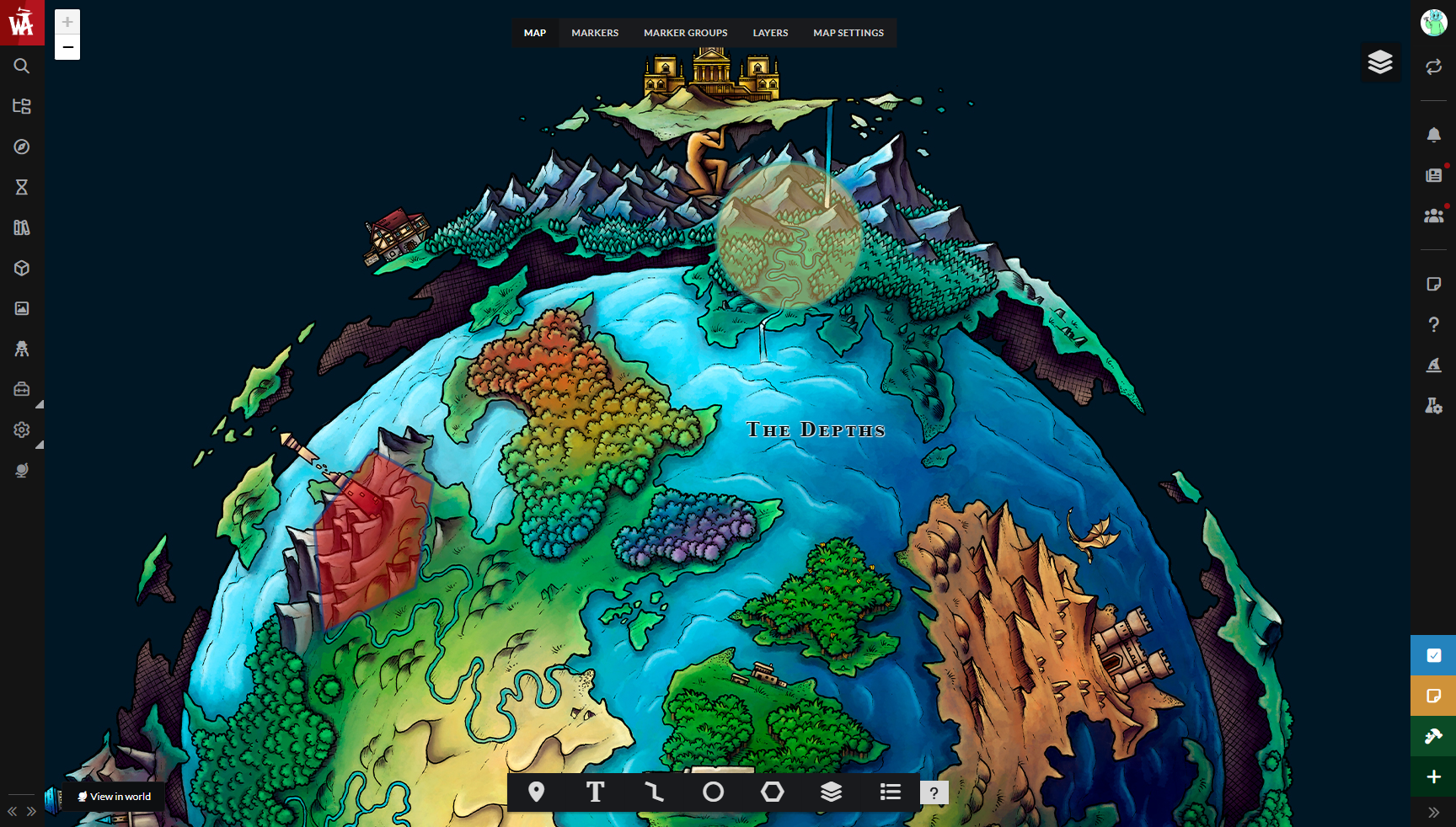
Note that World Anvil is not a mapmaking software; you'll need a map image already made before creating an interactive map:
- Click the Maps option on the left sidebar.
- Use the "+ Map" button at the bottom and give it a name. You'll then need to upload the map image.
- Once the map is created, you can use the toolbar at the bottom to create new interactive map markers.
There are many options to discover in Maps, so check out the guide to maps to learn all about this feature!
5. Keep track of time with timelines and chronicles
When you're ready to create some history for your world, take a look at timelines and chronicles! Use timelines if you simply want to show all your world's events in order, and chronicles if you want a timeline that is fully integrated with an interactive map. Check this guide if you're not sure which type of timeline you should use.
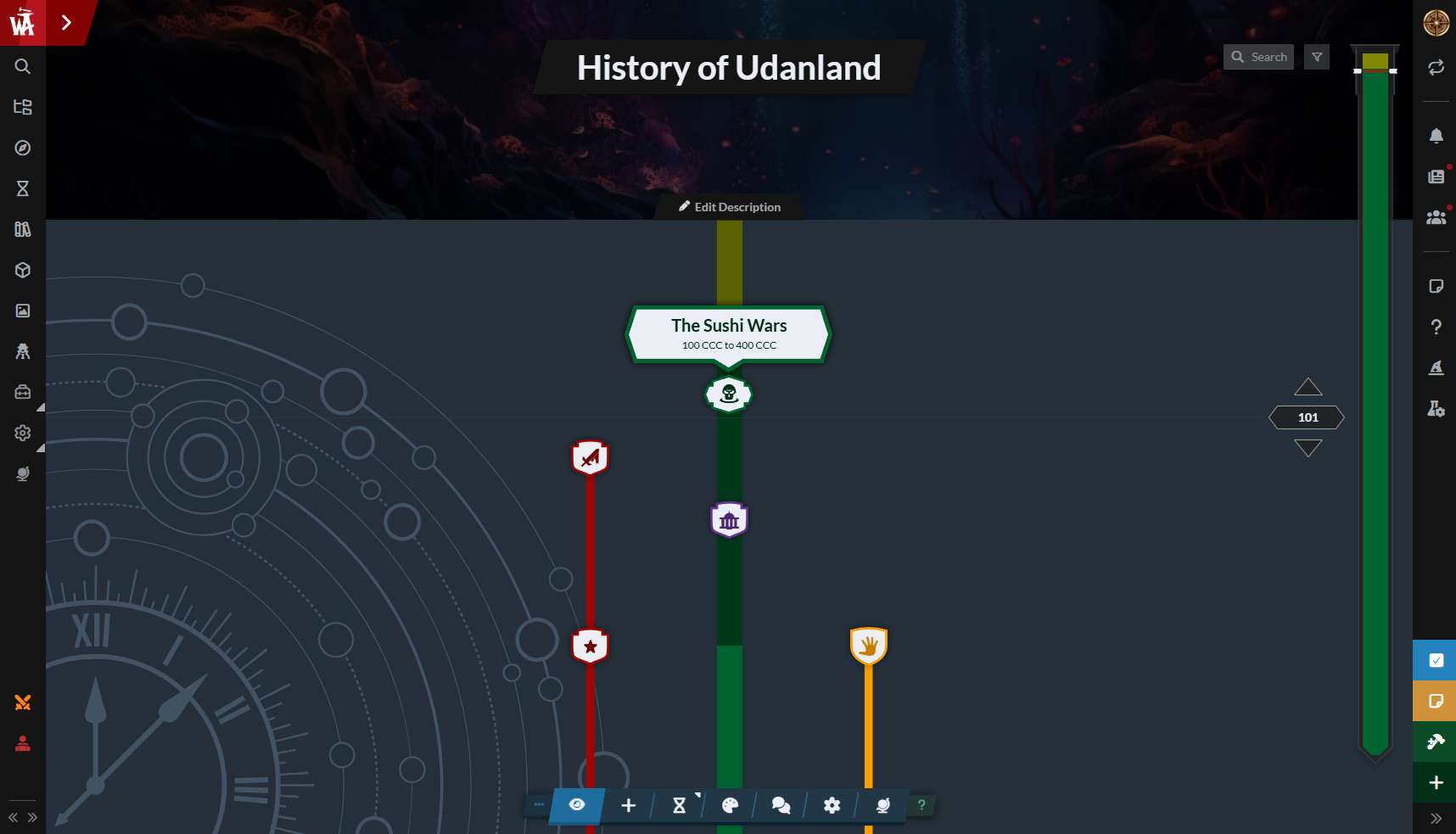
To create a timeline or chronicle:
- Click the Timelines icon or the Chronicles icon (under Advanced Tools).
- Click the create button to get started.
- Begin adding events!
Both Timelines and Chronicles are pretty deep features; check the guide to timelines or the guide to chronicles for more information!
6. Make your stuff even prettier!
Images make things pretty; but there are so many other ways to improve the look of your world! You can use pre-made themes, paragraph layouts, and more. There is also a specific styling settings page:
- Click the gear icon in the sidebar.
- Then select the art palette icon.
- Use the various settings in the "Basic" tab to tweak how your world looks!
For more tips to style your world, check the styling workflow!
7. Explore other useful features
There are so many other features you can use to expand on your world. Here are a few!
- Content trees, tables, diplomacy webs, and family trees: those are all amazing features to organize and showcase different aspects of your world in visual and interactive ways.
- Whiteboards: if you need a virtual canvas to brainstorm, whiteboards are for you! You can use them for visual representations too.
- Discussion boards: if you're looking to create a community around your world, you can use discussion boards to create a forum integrated with your world.