
Penitium (peh-NIH-tee-um /pɛˈnɪ.ti.əm/)
Transcendent Punishment and Divine Censure
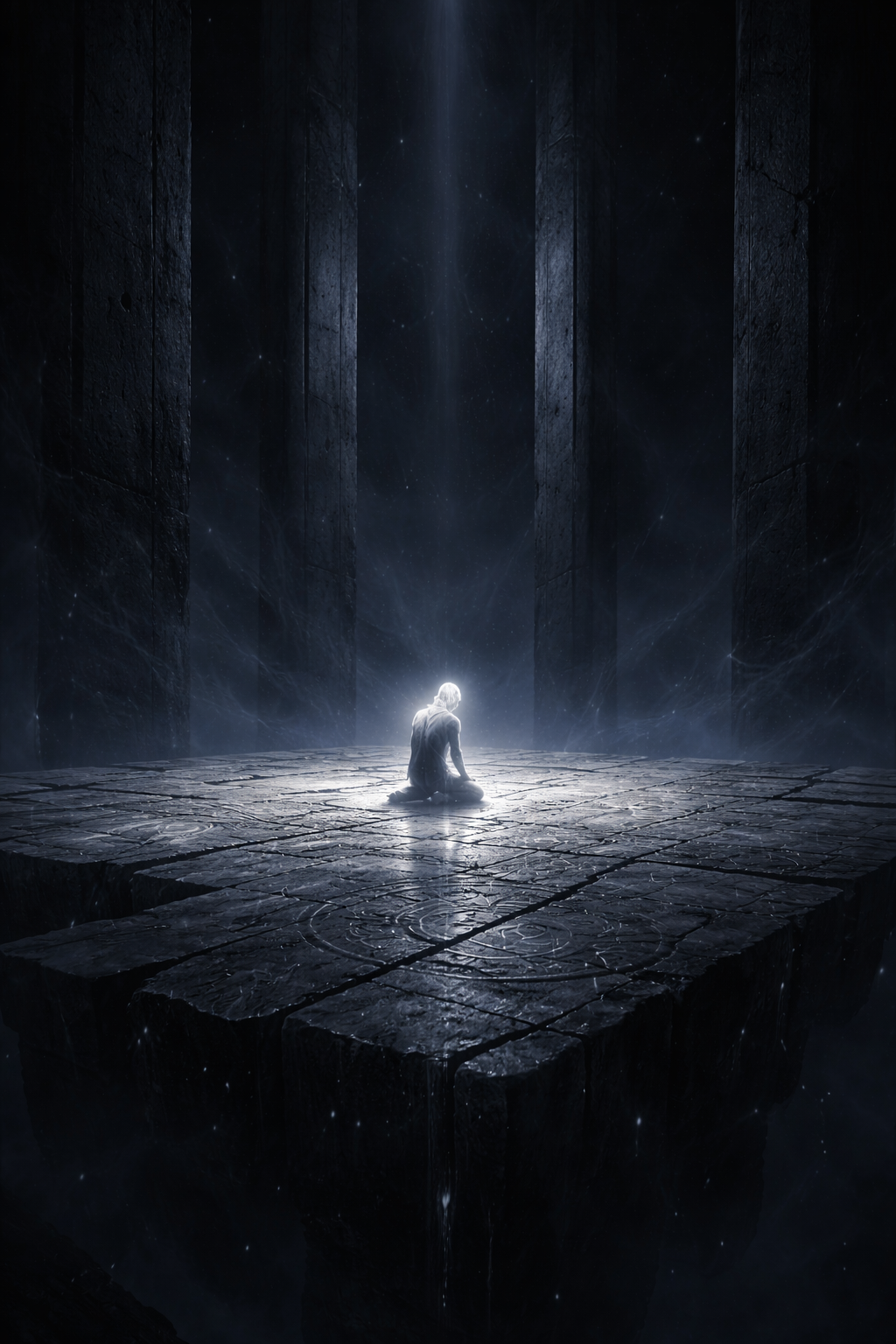
Penitium is a Transcendent Realm of judgement and correction, reserved for souls whose actions were so extreme that no mortal reckoning could meaningfully address them. It is not a realm of cruelty enacted for its own sake, nor a place of endless torment without purpose. It exists to impose consequence where ordinary justice, memory, and suffering are insufficient.
Within Penitium, isolation is absolute. Souls are stripped of status, legacy, and distraction, left only with the weight of what they have done and the knowledge of why it cannot be ignored.
Divine Authority
Penitium is a realm claimed by Tavia, whose doctrine holds that justice must remain coherent across all scales of existence. Tavia is known to assert claim over souls whose actions violate her ideals to an irreconcilable degree, even when such souls are otherwise spoken for by other transcendent beings. This assertion is rare, but absolute when invoked.
Aurelian doctrine further records that Aurelia will consign souls to Penitium when her Laws of Magic are violated with reckless abandon. Where lesser infractions are met with denial of power, censure, or limitation, Penitium is reserved for acts that endanger the integrity of magic itself or undermine the structures that make spellcraft possible.
The shared use of Penitium by these two goddesses has led to considerable theological debate, though no formal contradiction has ever been recorded between their claims.
Nature of Punishment
Punishment within Penitium is neither arbitrary nor uniform. The realm does not present a single landscape or mode of suffering. Instead, it manifests in forms that compel direct confrontation with culpability. Environments, conditions, and isolation are shaped to deny evasion, justification, or reinterpretation of past actions.
Suffering in Penitium is sufficient to alter the soul itself. The experience leaves a lasting metaphysical mark, not as memory alone, but as a structural change to the soul’s disposition. This mark persists beyond the soul’s time within the realm and cannot be removed by intercession or forgetfulness.
Time within Penitium is not measured in any consistent way. Duration is irrelevant. Completion is determined not by endurance, but by transformation.
On Claim and Conflict
That Tavia may override the claims of other transcendent beings has made Penitium a source of unease among divine hierarchies. Such intervention is viewed as an accusation not merely against the soul, but against any power that would shelter it.
The Simulacrium has, on several recorded occasions, adjudicated disputes arising from such claims. In every known case, Penitium has been upheld as a legitimate exercise of transcendent authority, though never without consequence to divine relations.
Scholarly Controversy
Among arcane scholars, a persistent theory holds that repeated or severe violations of Aurelia’s laws may result in permanent forfeiture of a soul’s remaining potential for return to the Prime Materium. This belief has led to the widespread, if unofficial, doctrine that magi who attain extreme levels of power walk a narrowing path, where mastery carries not only risk, but finality.
Aurelian texts neither confirm nor deny this interpretation.

Comments