

Cormyr
The Kingdom of Cormyr
“From forest and flame we rose — and from our own fire, we shall be remade.”
— Inscription over the western gates of Suzail
Overview
Once called The Forest Kingdom, Cormyr has stood for over thirteen centuries as one of the most stable human nations in Faerûn. Founded amid the ancient forests that once stretched from the Dragonmere to the Stormhorn Mountains, it weathered dragons, dynastic intrigue, and divine cataclysm alike.
But the end of the Second Sundering (1484 DR) and the discovery of Magistone changed Cormyr forever. Within a single generation it transformed from a proud, disciplined monarchy into a fractured, paranoid state — until civil war tore it apart.
Today, Cormyr remains a nation scarred by the pursuit of power and the lingering wounds of the Magistone Age.
Early History (–205 DR – 26 DR)
The lands that would become Cormyr were once dominated by elves — first the realm of Cormanthyr, then Esparin, and the fey enclave of The Wyvernwater Court. Human tribes, primarily the Obarskyrs and Thargate clans, settled in the cleared valleys during the decline of Netheril’s successor states.
In 26 DR, the chieftain Faerlthann Obarskyr united the human tribes under his banner and founded the Kingdom of Cormyr, crowning himself its first monarch. His alliance with the local elves of the Hullack and Cormanthor secured Cormyr’s borders and began the royal line that would last for over a thousand years.
The Age of Expansion (26 DR – 600 DR)
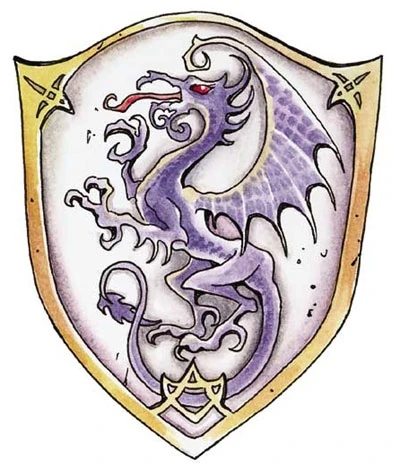
Cormyr’s early centuries were marked by territorial consolidation. The War Wizards were founded to counter magical threats, and the Purple Dragons became the kingdom’s elite standing army.
King Duar Obarskyr and his successors expanded Cormyr’s reach westward to the Dragonmere and southward to the Vast Swamp. Suzail, once a modest port, grew into a bustling capital renowned for its white stone, purple banners, and well-ordered streets.
Relations with neighboring nations — especially Sembia, the Dalelands, and the Dragon Coast — alternated between trade and tension, setting the stage for centuries of political maneuvering.
The Dragon Wars (600 DR – 900 DR)
During this era, dragons plagued the realm. The greatest of these conflicts, the Great Dragonfall War, saw dozens of wyrms descend upon Cormyr’s countryside. The royal line nearly fell, but with the help of the elves and dwarves, the kingdom survived.
It was during this period that House Crimson rose to prominence — first as dragon-slayers, then as protectors of the western marches near the Dragonspine Mountains. Their stronghold, the Citadel of the Raven, became both fortress and symbol: a bastion guarding the realm’s western approach.
The Age of Intrigue (900 DR – 1350 DR)
For nearly four centuries, Cormyr thrived — a rare beacon of stability in a volatile Faerûn. The royal family’s careful governance and the watchful eyes of the War Wizards prevented both external conquest and internal decay.
Yet the cost of peace was control. The Swords Coast became a bureaucratic monarchy; its noble houses wielded immense influence. This era saw the quiet rise of the Houses of the Eight Banners, a set of noble families — among them House Crimson, House Brightwood, House Silvershield, House Amcathra, House Stormweather, and House Vaelcrest— whose allegiances would shape the kingdom’s fate centuries later.
The Time of Troubles (1358 DR)
The gods themselves fell to Toril, and magic faltered across the land. Cormyr endured — but not without scars. The death and rebirth of Mystra destabilized the Weave, weakening the War Wizards’ control over magic. The kingdom survived the chaos through discipline and luck, but faith in divine institutions waned, leaving a void that would later be filled by arcane ambition.
The Spellplague and the Era of Shadows (1385 DR – 1484 DR)
When Mystra perished again in 1385 DR, the Spellplague ripped across the world, unraveling magic and merging fragments of Abeir with Toril. Cormyr lost territory to shifting lands and planar storms but endured under King Foril Obarskyr and his successors.
By the mid-1400s, with the Weave stabilized and Mystra restored, the kingdom entered what historians call the Era of Reconstruction — a brief golden age of prosperity that masked the slow rot of ambition beneath.

Comments