
Havaral (Have-A-Rall)
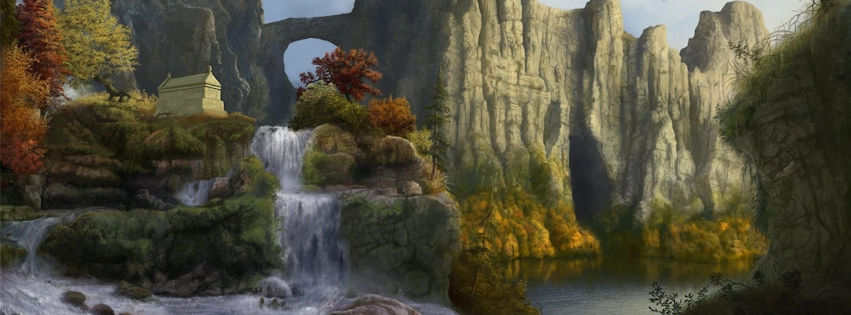
Havaral is a fortified trade city situated along the southern reaches of the Gemfire Mountains, guarding the only reliable caravan route that passes through the rugged mountain barrier separating the Empire of Therengia from the Velaken Desert. The city occupies a narrow corridor where the mountains give way to a passable valley, allowing traders, miners, and travelers to cross between the fertile imperial lands to the east and the vast desert territories to the west. What began centuries ago as a modest trading post between Therengian merchants and the dwarven clans of the Gemfire range has since grown into one of the most important frontier cities of the empire.
Today Havaral serves as the primary gateway for commerce moving between the empire and the distant desert cultures beyond the mountains. Caravans laden with spices, rare minerals, exotic fabrics, and desert curiosities pass through its gates on their way eastward, while imperial goods—steel, timber, grain, and manufactured wares—flow west toward the desert markets. The wealth generated by this constant movement of trade, combined with the rich mineral resources of the surrounding mountains, has transformed Havaral into a bustling hub of commerce, mining, and caravan traffic.
Because of its position at the empire’s western threshold, the city has also grown increasingly fortified over the years. Stone walls, watchtowers, and fortified gates now surround the settlement, protecting the warehouses and caravan yards that store immense quantities of valuable goods awaiting transport. Havaral stands not only as a center of trade, but as a strategic stronghold guarding one of the few reliable passages through the Gemfire Mountains—a city where imperial authority, mercantile ambition, and frontier vigilance meet at the edge of the desert.
Today Havaral serves as the primary gateway for commerce moving between the empire and the distant desert cultures beyond the mountains. Caravans laden with spices, rare minerals, exotic fabrics, and desert curiosities pass through its gates on their way eastward, while imperial goods—steel, timber, grain, and manufactured wares—flow west toward the desert markets. The wealth generated by this constant movement of trade, combined with the rich mineral resources of the surrounding mountains, has transformed Havaral into a bustling hub of commerce, mining, and caravan traffic.
Because of its position at the empire’s western threshold, the city has also grown increasingly fortified over the years. Stone walls, watchtowers, and fortified gates now surround the settlement, protecting the warehouses and caravan yards that store immense quantities of valuable goods awaiting transport. Havaral stands not only as a center of trade, but as a strategic stronghold guarding one of the few reliable passages through the Gemfire Mountains—a city where imperial authority, mercantile ambition, and frontier vigilance meet at the edge of the desert.
Demographics
Havaral’s population reflects its position at the crossroads of empire, mountain, and desert. Humans make up the clear majority of the city’s permanent residents, particularly among the merchant houses, caravan masters, laborers, and administrators who oversee the steady flow of trade through the mountain corridor. Dwarves from the nearby Gemfire Mountains maintain a significant presence as well, many serving as miners, engineers, smiths, and representatives of the various guilds that control the extraction and transport of the region’s mineral wealth. Goliaths from the high peaks are also frequently encountered in the city, often working as caravan guards, laborers, or guides for expeditions moving deeper into the mountains.
A smaller but visible population of gnomes has grown in recent decades, drawn to the city by opportunities in mining, engineering, and trade accounting. Travelers from the Velaken Desert—primarily human traders and caravan crews—pass through the city regularly, though relatively few settle permanently. Elves are rarely seen within Havaral, both because of the Empire’s longstanding suspicion toward them and because few choose to remain in a city so closely tied to imperial authority. As a result, the population of Havaral reflects the practical realities of its frontier role: a predominantly human trade city shaped by the influence of mountain peoples and the steady movement of desert caravans through its gates.
A smaller but visible population of gnomes has grown in recent decades, drawn to the city by opportunities in mining, engineering, and trade accounting. Travelers from the Velaken Desert—primarily human traders and caravan crews—pass through the city regularly, though relatively few settle permanently. Elves are rarely seen within Havaral, both because of the Empire’s longstanding suspicion toward them and because few choose to remain in a city so closely tied to imperial authority. As a result, the population of Havaral reflects the practical realities of its frontier role: a predominantly human trade city shaped by the influence of mountain peoples and the steady movement of desert caravans through its gates.
Defences
Havaral’s defenses are built around its most important strategic feature: the narrow mountain corridor that serves as the only reliable passage between the Empire of Therengia and the Velaken Desert. Over time the city’s walls and fortifications have grown into a layered defensive system designed to control and, if necessary, completely seal the pass. Thick stone walls encircle the city proper, reinforced with square watchtowers that overlook both the surrounding valleys and the main caravan road entering the settlement. The eastern and western gates are heavily fortified choke points where caravans must pass through inspection yards before entering the city, allowing imperial officials to monitor both trade and travelers.
Beyond the city walls, a series of outer watchposts and signal towers dot the surrounding ridgelines, providing early warning of approaching forces or hostile creatures emerging from the mountains or desert. The Emperor’s Militia maintains a permanent garrison within Havaral, supported by heavy ballistae and other stationary defenses mounted along the walls and towers to counter threats both on the ground and in the air. While the city’s prosperity stems from trade and mining, its defenses reflect the Empire’s deeper concern: that the same corridor carrying wealth through the mountains could just as easily serve as the path of an invading army. Havaral therefore stands not only as a marketplace at the edge of the desert, but as the Empire’s western gate through the Gemfire Mountains.
Beyond the city walls, a series of outer watchposts and signal towers dot the surrounding ridgelines, providing early warning of approaching forces or hostile creatures emerging from the mountains or desert. The Emperor’s Militia maintains a permanent garrison within Havaral, supported by heavy ballistae and other stationary defenses mounted along the walls and towers to counter threats both on the ground and in the air. While the city’s prosperity stems from trade and mining, its defenses reflect the Empire’s deeper concern: that the same corridor carrying wealth through the mountains could just as easily serve as the path of an invading army. Havaral therefore stands not only as a marketplace at the edge of the desert, but as the Empire’s western gate through the Gemfire Mountains.
Industry & Trade
Havaral’s economy is driven by its position as the primary gateway between the Empire of Therengia and the Velaken Desert. Caravans moving east from the desert bring spices, rare minerals, exotic textiles, glassware, and other luxuries seldom found within the imperial heartlands. In return, merchants departing westward carry steel, timber, finished tools, weapons, and agricultural goods produced throughout the empire. Large caravan yards and warehouse districts dominate the city’s outer quarters, where goods are weighed, taxed, and repacked before continuing their journeys across the mountains or into the desert.
In addition to caravan trade, Havaral serves as the logistical center for numerous mining operations scattered throughout the southern Gemfire Mountains. Silver, copper, and other valuable ores are transported down from the surrounding peaks to be refined, traded, or shipped east toward the imperial markets. In recent years, prospectors exploring the mountains south of the city have reported the discovery of promising gemstone veins—most notably deposits of emerald-bearing rock in the high valleys where the Gemfire Mountains begin to merge with the Himhineldar Shel. Though still under early development, these discoveries have already drawn increased attention from mining guilds and imperial authorities alike, further cementing Havaral’s growing reputation as both a commercial crossroads and a center of mineral wealth on the empire’s frontier.
In addition to caravan trade, Havaral serves as the logistical center for numerous mining operations scattered throughout the southern Gemfire Mountains. Silver, copper, and other valuable ores are transported down from the surrounding peaks to be refined, traded, or shipped east toward the imperial markets. In recent years, prospectors exploring the mountains south of the city have reported the discovery of promising gemstone veins—most notably deposits of emerald-bearing rock in the high valleys where the Gemfire Mountains begin to merge with the Himhineldar Shel. Though still under early development, these discoveries have already drawn increased attention from mining guilds and imperial authorities alike, further cementing Havaral’s growing reputation as both a commercial crossroads and a center of mineral wealth on the empire’s frontier.

Founding Date
101AV
Type
Trade post
Population
Permanent population of roughly 6,000 residents, swelled regularly by merchants, miners, caravan crews, and travelers. An additional garrison of approximately 1,500 soldiers of the Emperor’s Militia.
Location under
Owner/Ruler
Ruling/Owning Rank

Comments