
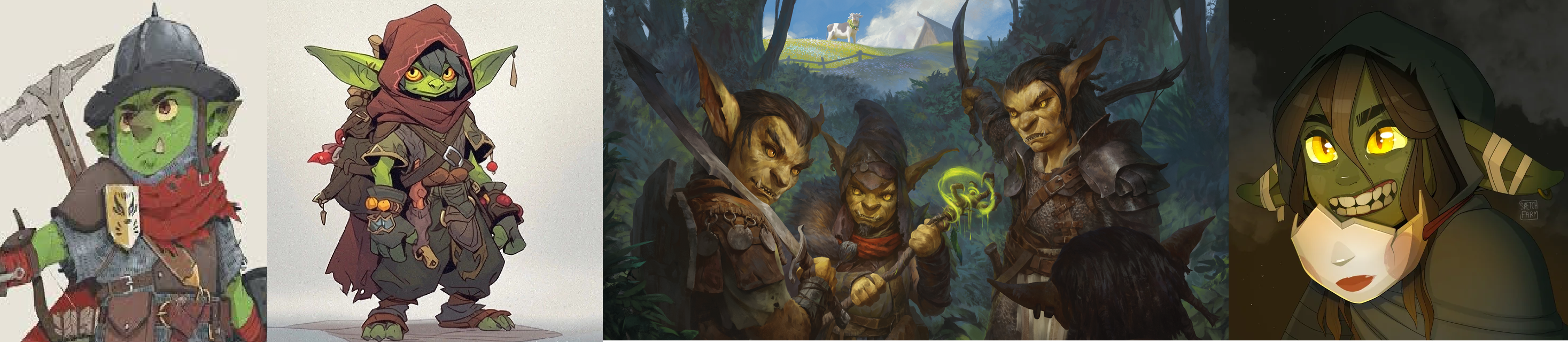
Goblins
General Description
Goblins are an ancient and adaptable people, known for their sharp instincts, quick thinking, and remarkable ability to survive in environments that would crush many others. Small of stature and wiry of build, goblins possess keen eyes, expressive features, and restless energy that reflects a culture shaped by danger, scarcity, and constant change.
To outsiders, goblins often appear nervous, opportunistic, or chaotic—but among their own kind, they are practical, clever, and deeply aware of the world’s many threats. Goblin society values alertness, flexibility, and survival above all else, virtues born from a long history of servitude, conquest, and escape.
Though many goblins still live in tight-knit clans, others have adapted to life in cities, trade hubs, and border settlements across Enderlin. These goblins often retain core cultural habits—such as communal problem-solving, cautious trust, and irreverent humor—while learning to navigate the customs of larger and often more powerful peoples.
All goblins share a tangled origin tied to both the Feywild and the ambitions of dark gods. Yet in Enderlin, goblins are increasingly defined not by where they came from, but by the choices they make to survive and endure.
Origins and the Elder Days
Long before goblins walked the deserts and tunnels of Enderlin, they are said to have lived in the Feywild, serving in the court of the Queen of Air and Darkness, one of that realm’s most dangerous archfey. There, goblins survived not through strength, but through wit—granted a supernatural knack for exploiting weakness, slipping from danger, and turning misfortune into opportunity.
This fey gift allowed goblins to thrive in a realm ruled by cruelty and caprice.
That age ended when the conquering god Maglubiyet rose to power. Through divine warfare and domination, he bound goblins—and their bugbear and Hobgoblin kin—into his growing pantheon of conquest. Under Maglubiyet’s rule, goblins were driven from the Feywild and spread across the Material Plane, urged to serve in endless wars and divine ambition.
In Enderlin, goblins are counted among the oldest known peoples, present since the earliest eras remembered in myth and story. Whether they arrived during the same primordial migrations as other ancient races or were drawn here by Maglubiyet’s will remains debated among scholars.
What is certain is this:
Goblins brought their fey-born cunning with them, even as memory of the Feywild itself faded into half-remembered fear and superstition.
Goblins of the Great Desert
The largest and most culturally traditional goblin populations of Enderlin dwell within the Great Desert, among the Clans of Varrak-Khul. Here, goblins live alongside Orcs, Bugbears, Kobolds, and Ogres in harsh lands shaped by wind, stone, and ancient bloodshed.
Desert goblins are typically:
- Strongly clan-oriented, with loyalty rooted in survival pacts
- Skilled scavengers, tunnelers, scouts, and trap-makers
- Pragmatic, suspicious of outsiders, but rarely foolishly hostile
Among these clans, worship of Maglubiyet remains common, particularly among goblins whose ancestors were bound into his wars. Rituals honoring him often emphasize endurance, fear, and obedience rather than devotion or love.
However, centuries of shared territory have also led to forced or voluntary conversion among some goblin clans to the worship of Gruumsh, the orc god of creation and battle. These goblins often serve under Orcish leadership, adopting aspects of orc culture while remaining distinctly goblin in outlook and behavior.
Even among those who still honor Maglubiyet, fear often outweighs reverence. His name is spoken cautiously, his symbols respected more out of dread than faith.
Goblins Beyond the Desert
Far from the Great Desert, goblins have increasingly found places among other peoples of Enderlin.
In frontier towns, trade cities, mining settlements, and border regions, goblins may be found as:
- Traders, guides, messengers, and scouts
- Tinkerers, alchemists, and problem-solvers
- Mercenaries or adventurers seeking independence
These goblins are far more likely to have rejected Maglubiyet outright, turning instead to gods aligned with their adopted cultures, personal philosophies, or ideals of freedom and survival. Some embrace gods of luck, knowledge, trickery, or protection; others abandon divine worship entirely.
Yet even among the most integrated goblins, Maglubiyet’s shadow lingers. Old warnings, inherited fears, and half-remembered stories ensure that few goblins ever truly forget the god who once ruled their fate.
Goblins and the Wider World
Goblins occupy an uneasy position in Enderlin.
- To desert peoples, they are ancient survivors—small, clever, and dangerous to underestimate.
- To settled civilizations, they are often viewed with suspicion, prejudice, or outright fear.
- To themselves, goblins are simply those who endure.
Their long history of servitude has left many goblins deeply wary of authority, hierarchy, and promises of protection. As a result, goblin communities tend to be flexible, decentralized, and fiercely pragmatic, preferring survival over ideology.
Despite this, goblins have played quiet but important roles throughout Enderlin’s history—as scouts in ancient wars, guides through deadly lands, and intermediaries between peoples who would otherwise never speak.
Goblins and Mixed Heritage
Goblins rarely form lasting mixed-heritage bloodlines, but cultural integration is common.
Goblins living among other peoples often adopt local customs, dress, and even naming traditions, while retaining goblin patterns of speech, humor, and caution. Children raised in mixed communities may feel pulled between goblin instincts for survival and the expectations of larger societies.
Such individuals often become natural mediators, explorers, or wanderers, able to move between worlds but never fully belonging to any single one.
Mixed heritage has no mechanical effect unless otherwise agreed upon with the DM. For rules purposes, the character uses the Goblin species traits. Any cultural or social consequences are determined through roleplay.
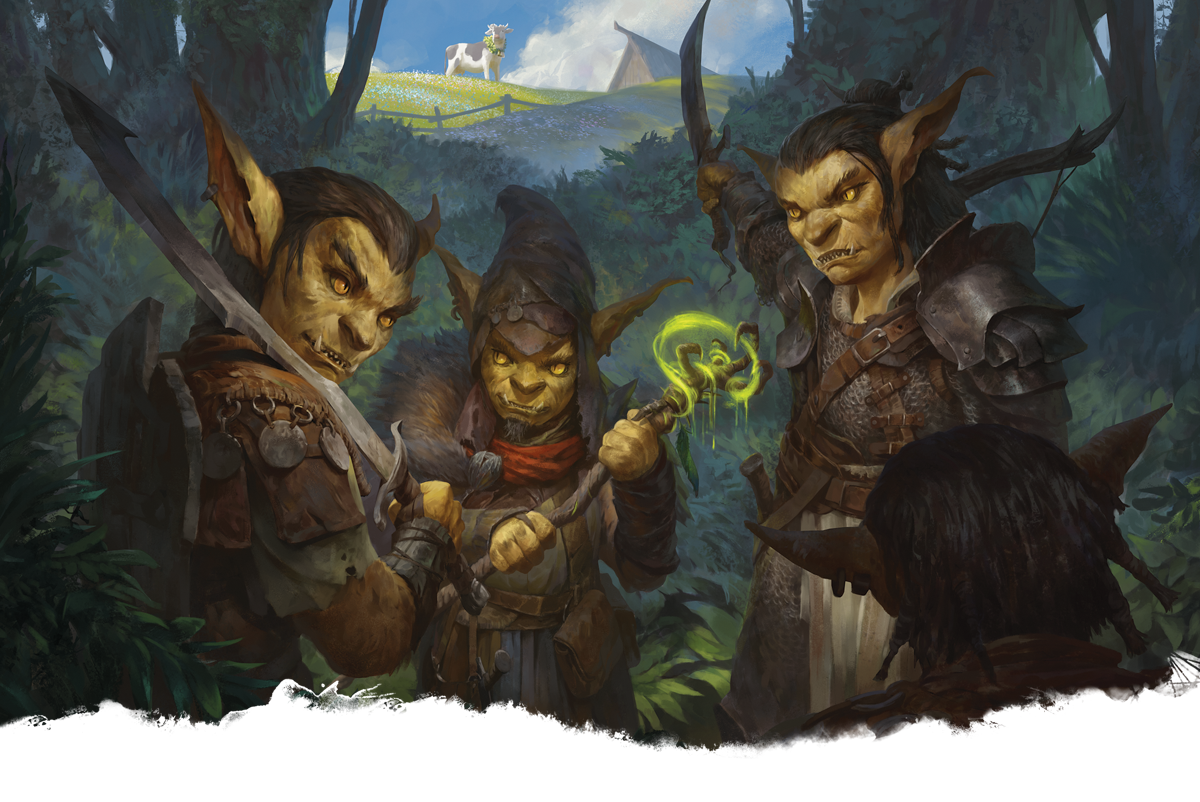
General Traits:
Creature Type: Humanoid (Goblinoid)
Size: Small (typically about 0.9–1.2 meters tall). Goblins are wiry and compact, with lean builds well suited to tight spaces and quick movement.
Speed: 9 meters per round (30 feet)
Average Lifespan: 50–60 years, though goblins living safer lives among settled peoples may live somewhat longer.
Languages: You can speak, read, and write Common and Goblin.
Goblin is a sharp, rapid language filled with slang, clipped phrases, and expressive gestures. While often dismissed as crude by outsiders, it is well suited to quick communication, coded meaning, and survival-focused storytelling. Many goblins also learn additional languages through trade, servitude, or life among other peoples.
Ability Scores: Goblins do not grant ability score increases. These are determined by your Background.
Goblin Special Traits:
Darkvision
Accustomed to subterranean tunnels, desert ruins, and shadowed settlements, you have Darkvision with a range of 18 meters (60 feet).
You can see in dim light within this range as if it were bright light, and in darkness as if it were dim light. You discern colors in darkness only as shades of gray.
Fey Ancestry
You have Advantage on saving throws you make to avoid or end the Charmed condition.
This reflects the lingering influence of goblin fey origins, even among those who no longer remember the Feywild or its rulers.
Fury of the Small
When you damage a creature with an attack or a spell and the creature’s size is larger than yours, you can cause the attack or spell to deal extra damage equal to your Proficiency Bonus.
You can use this trait a number of times equal to your Proficiency Bonus, regaining all expended uses when you finish a Long Rest.
You can use this feature no more than once per turn.
This trait represents a goblin’s instinctive talent for striking at weak points, exploiting overconfidence, and turning size disadvantage into lethal opportunity.
Nimble Escape
You can take the Disengage or Hide action as a Bonus Action on each of your turns.
This ability reflects goblins’ natural talent for slipping away, vanishing into clutter, and surviving encounters that should—by all logic—have killed them.

Comments