

Gith
Gith
Gith, sometimes referred to by planar scholars as the Astral Tongue or by its users as The Tongue of Freedom, is the ancestral language of the Githyanki and Githzerai—a people born in bondage, forged in rebellion, and scattered across the planes. Unlike most mortal languages, Gith did not evolve on the Material Plane, but in the lightless dominion of the illithid empires, where thought, fear, and obedience shaped speech as much as sound.
To the Gith themselves, the language has no separate name; it is simply the speech of their people, inseparable from identity, memory, and survival. Among outsiders, it is most often encountered in fragmented form through planar texts, astral projections, or the rare utterances of Gith travelers.
Harsh, clipped, and precise, Gith is a language of command and intent. It favors direct statements, layered meanings, and rigid structure—reflecting a culture shaped by psionic discipline, war, and absolute hierarchies.
Origins and Development
The Gith language originated during the long ages of illithid enslavement, when the ancestors of the Gith were forced to communicate under constant mental domination. Early Gith incorporated elements of Deep Speech, but over time deliberately purged many illithid concepts, reshaping the language into a tool of resistance and unity.
Following the rebellion led by Gith, the language became a cultural weapon—used to preserve history, transmit tactics, and reinforce shared identity. After the great schism, both Githyanki and Githzerai retained the core structure of the language, though subtle differences in emphasis and usage emerged.
- Githyanki dialects emphasize command, hierarchy, and martial terminology.
- Githzerai dialects favor precision of thought, abstraction, and philosophical nuance.
Despite these differences, the two groups remain fully mutually intelligible, and the shared language stands as one of the few remnants of their common past.
Script and Written use
The Gith language is written using Tir’su, an angular, rune-like script composed of sharp lines, breaks, and interlocking sigils. Tir’su is designed to be both written and mentally visualized, allowing psionic reinforcement of meaning when read by a trained Gith mind.
Each symbol represents not only sound, but conceptual weight—intent, authority, or emotional emphasis. As a result, Tir’su inscriptions often carry layers of meaning inaccessible to non-psionic readers.
Written Gith is typically used for:
- Military orders and tactical doctrines
- Astral navigation records
- Oaths of loyalty or rebellion
- Philosophical treatises (primarily Githzerai)
- Edicts and decrees issued under Vlaakith’s rule
Among the Githyanki, Tir’su inscriptions are often carved into stone, metal, or the bones of dead gods drifting through the Astral Plane. Githzerai favor precise, minimal inscriptions stabilized through psionic focus rather than physical permanence.
To outsiders, Tir’su is notoriously difficult to translate, as literal renderings often miss the intended authority or threat embedded in the script.
Examples of Tir’su stored in the Imperial archives:
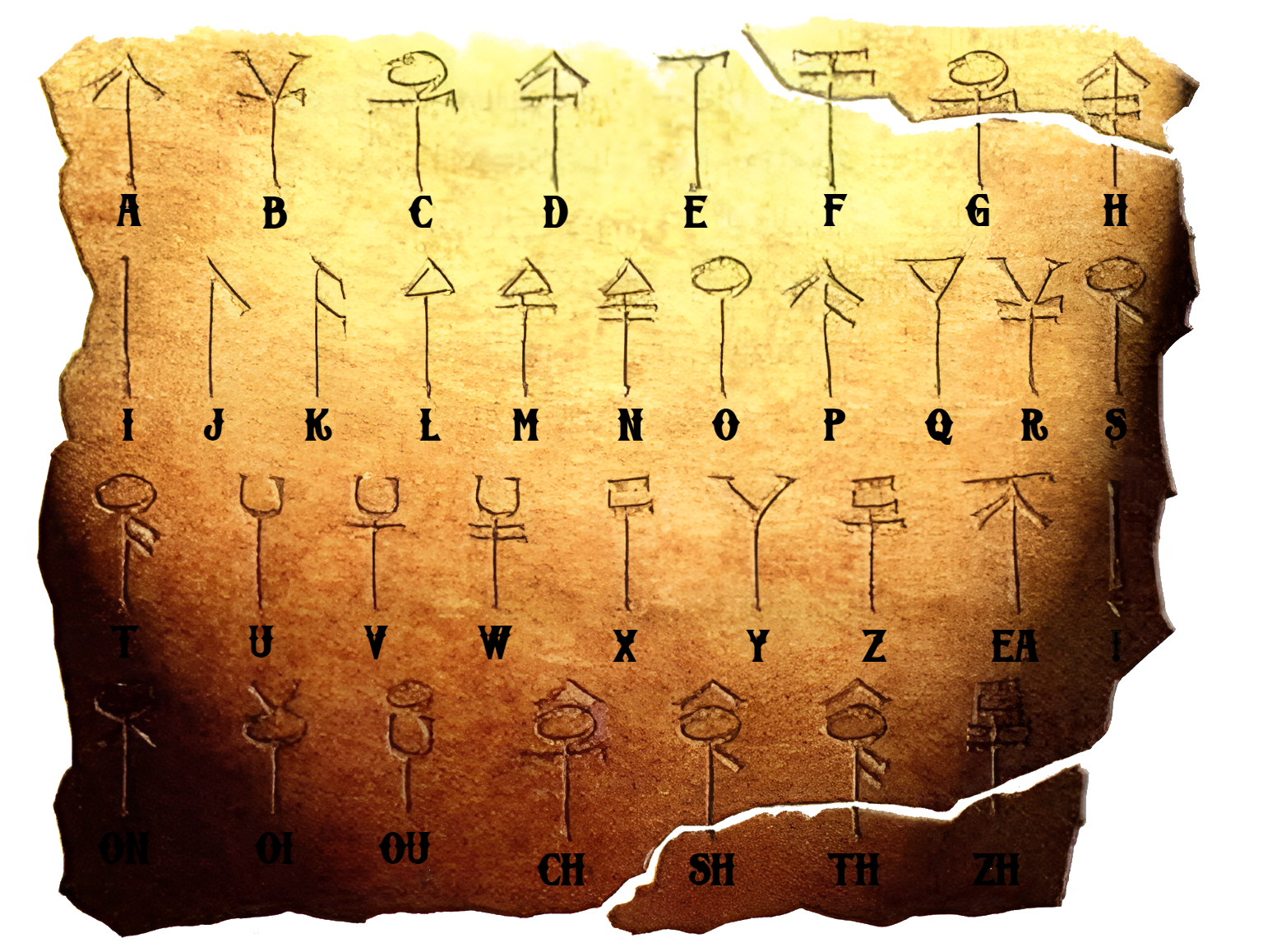
Example of Tir’su to Common translation carried by a Githyanki scout.
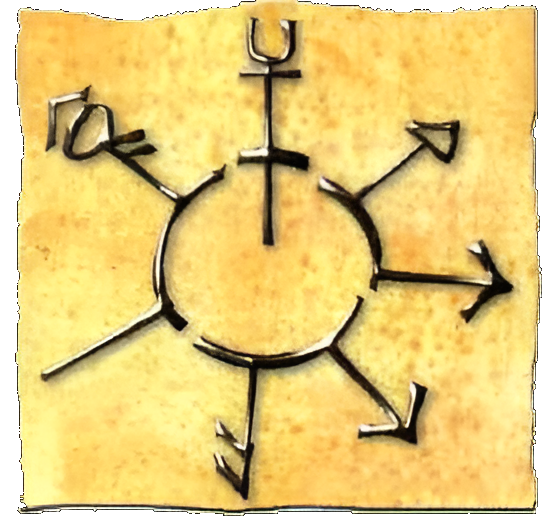
The tir'su for the word "Vlaakith", githyanki dialect.
Use Beyond the Astral Plane
On the Material Plane—including Enderlin—the Gith language is virtually unknown. No native population speaks it, and no confirmed Tir’su inscriptions exist outside planar archives or extraplanar ruins.
Knowledge of Gith is limited to:
- High-level planar scholars
- Astral travelers and projectionists
- Forbidden or incomplete arcane texts
- Accounts from rare Gith exiles
When encountered, Gith speakers often shift to Common for practicality, reserving their native tongue for private communication, commands, or expressions of identity. Speaking Gith openly among non-Gith is rare and often deliberate—either as intimidation or as a marker of defiance.
Cultural Significance
To the Gith, language is survival.
Speaking Gith affirms freedom from illithid domination and honors the memory of rebellion. Many Gith believe that certain words, when spoken in their native tongue, carry psionic resonance, reinforcing willpower, loyalty, or hatred—particularly toward Mind Flayers.
Among the Githyanki, Tir’su is sacred in a martial sense: to carve an order in Tir’su is to bind oneself to its execution. Among the Githzerai, the language is a tool of mental discipline, a way to impose structure upon chaos—mirroring their mastery over Limbo itself.
To abandon the language is seen as a rejection of history. Even Gith exiles often retain private fluency, clinging to it as the last tie to their people.
Names and Vocabulary
Gith names are typically short, sharp, and consonant-heavy, reflecting the harsh cadence of the language. Names often signify rank, personal history, or martial achievement rather than lineage—especially among the Githyanki, who are raised in communal creches rather than traditional families.
Common Githyanki Names
- Male: Baht, Elak, Kar’hi, Miklos, Quort, Terth, Zagh
- Female: Fenli, Ja’reith, Madrat, Quilla, Varyl, Vyth, Zephick
- Honorifics: While Vlaakith is the name of their eternal Queen, most Githyanki avoid using it as a personal name out of fearful reverence.
Common Githzerai Names
- Male: Arshir, Dak’kon, Kraystar, Vilquar, Zerth
- Female: Adrak, Eva’lyn, Imilzin, Kareth, Radama
- Note: The name Zerthimon is reserved for their greatest prophet; it is rarely used as a personal name, though "Zerth" is a common title derived from his legacy.
Selected Gith Vocabulary
The People and the Enemy
- Gith: The people; the children of Gith; those who are free.
- Ghaik: Mind Flayer. The ultimate slur and the primary focus of Gith hatred.
- Istik: "Outsider" or "Meat." A derogatory term used for any non-Gith race (Humans, Elves, etc.).
- Hshar’lak: Traitor. Specifically the Githyanki word for Githzerai (and vice-versa).
- Zhak: Slave. Usually refers to the "thralls" kept by Mind Flayers.
Military and Social Rank
- Kith’rak: A high-ranking military commander or war-captain.
- Sarth: A sergeant or leader of a small tactical squad (approx. 10 soldiers).
- Varsh: A caretaker or teacher within a Githyanki creche.
- Mlar: A Githyanki who specializes in magic for construction or artistry.
- Hr'a'cknir: A specialist who "mines" or manipulates the astral energy of the Silver Void.
Philosophy and Power
- Zerth: A Githzerai Monk who has mastered the bridge between psionics and martial arts.
- Tir’su: The angular, circular script used to write the Gith language.
- Vlaakith: The name of the Lich-Queen; used as a title of absolute authority.
- Sha'adral: "Shadow-gift." Often refers to the Githyanki's pact with red Dragons.
- Gith'ka: The signature double-bladed polearm used by Gith warriors.
Geography and Planes
- Tu’narath: “The City of Death” or “Fortress of the People,” the Githyanki capital built upon the floating corpse of a dead god.
- Shra'kt'lor: The capital city of the Githzerai in the chaotic plane of Limbo.
- The Silver Void: The Gith term for the Astral Plane.
- Creche: A hidden military academy on the Material Plane where Githyanki are raised.
Slang and Curses
- Tsk’va: An exclamation of disgust or frustration (equivalent to "Shit").
- K’chakhi: A sharp insult for someone being an idiot or a fool.
- Shka’keth: A harsh term for a person who is useless or a nuisance (equivalent to "Asshole").
- Kainyank: "Cursed child." A deep insult suggesting one is a disgrace to their ancestors.
- Vin’iisk: A belittling term for a lackey or someone with no personal willpower.
- Fagh wo’h chox: A vulgar imperative to leave one's presence (equivalent to "Fuck off").
Native Name: Gith (occasionally "The Tongue of Freedom")
Script: Tir’su (An angular, rune-like script often arranged in circular, interlocking patterns to represent the timelessness of the Astral Plane).
Primary Speakers: Githyanki and Githzerai.
Geographic Spread: Primarily the Astral Plane (Githyanki) and Limbo (Githzerai scattered across the Material Plane in hidden military creches or monastic outposts.
Status: Living language; used for military command, psionic focalization, philosophical debate, and the preservation of history.
Origin: Developed in the heart of the Illithid Empire during the eons of Gith enslavement. It began as a secret tongue of rebellion—purging Mind Flayer concepts and replacing them with sharp, guttural sounds of defiance. Following the rebellion of the liberator Gith, it became the unifying identity of her people.
Dialects:
Githyanki: Martial, clipped, and heavy with military titles and threats.
Githzerai: Measured, precise, and abstract; focused on internal mental discipline and philosophical nuance.
Note: Despite the deep cultural schism, the two dialects remain mutually intelligible.
Ease of Learning: Difficult. While the grammar is rigid and logical, the language is often spoken with psionic resonance. For non-psionic "Istik" (outsiders), capturing the correct emotional weight and the sharp, glottal stops of the tongue is physically and mentally taxing.

Comments