
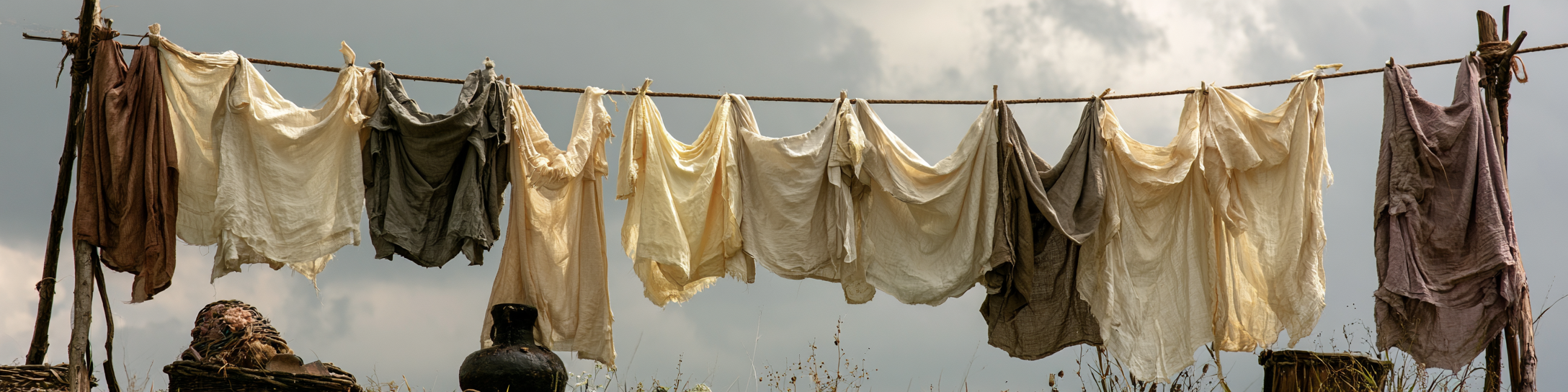
linen
In the 21st century, linen is considered something of a high end or luxury fabric, but in medieval Earth, it was a commodity used by all, and it is much the same way in Scarterra.
Linen is a commodity in Scarterra. "Commodity" does not mean "cheap", it means "necessary".
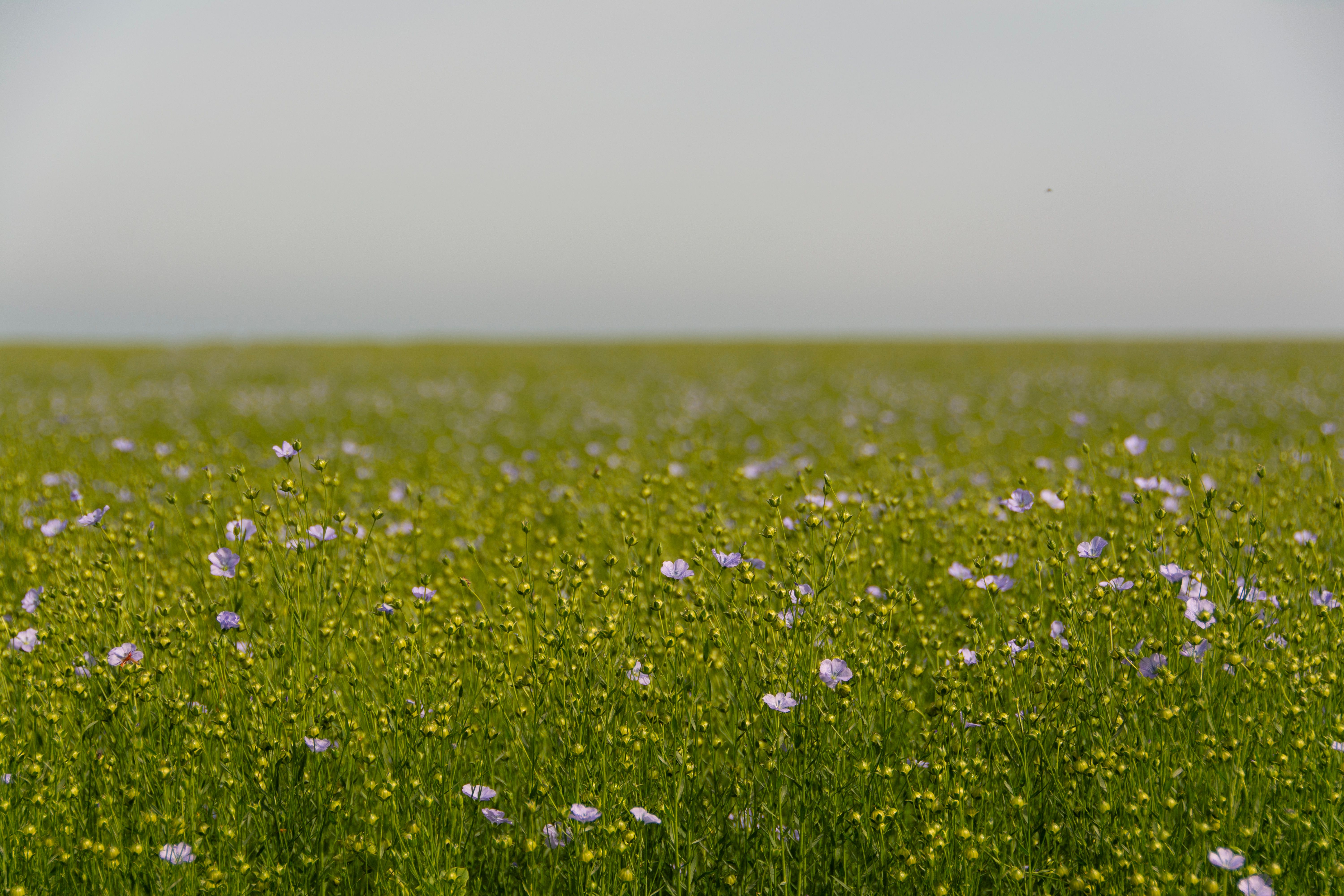
Flax needs to be grown, and any acre of land growing flax is an acre of land not growing food.
The process of turning flax into linen is very labor intensive and labor is the primary driver of costs in Scarterra, so linen is not cheap. Because of this, linen garments (like pretty much most other garments) are made to last and be reworn several times.
History & Usage
History
On Earth, flax cultivation predates civilization itself and was one of the first crops domesticated in the Fertile Crescent.
On Scarterra flax cultivation goes back at least to the dawn of the dawn of the the Second Age. Dragons have no use for linens, but it's possible other First Age mortals made linen.
But in event, Second Age elves certainly wore linen a lot and this linen continued to be widely used in the Third Age. It's simply too useful not to.
Everyday use
The main benefit of linen is that it breathes and wicks moisture.
In cold and temperate regions, Scarterrans dress in layers and the norm for is to wear linen underclothes as the base layer, an insulating wool garment on top, and a weather resistant wool outer layer relying on the wool's natural lanolin or a synesthetic lanolin substitute if the lanolin is stripped by repeated washing.
When it's cold, an insulated body still sweats and linen's wicking prosperities help survival by making sure a person's base layer stays dry.
When it's warmer, layers are shed. Linen is still useful in hot weather because the wicking effect means a worker or soldier's garments don't get as wet, so they don't collect as much dirt and grime and don't get as stinky as fast.
The three layer system with a linen under clothes as a base crosses classes and divide. Both men and women commonly wear linen underclothes. Both peasants and princes commonly wear common linen underclothes.
Because you usually don't see a person's linen underclothes, it doesn't need to be fancy. Rich people and poor people wear pretty much the same underclothes most of the time.
Even with the wicking properties of linen, linen underclothes need to be washed fairly often, but linen is surprisingly durable, so it can take repeated washing. Economically, changing under linens frequently is a good way to reduce soiling of outer garments, so both peasants and princes can preserve their fancier dyed outer garments longer.
Just because linens are the main utilitarian under garment of Scarterra, doesn't mean you never see fancy linen outer garments, especialy in warmer climates or seasons. Like other fabrics, linen garments can be dressed up with fancy designs and dyes.

by Eron 12 with Hero Forge
Linen is also commonly used in bedding, both as base layer sheets and as quilts.
The same quilting process in bedding can be used to make gambeson. Layers of Linen are alternated with wool to make gambeson armor, the most common armor in Scarterra. Gambeson armor is a lot cheaper than metal armor and it can be surprisingly effective at stopping slashes and piercings. A lot better than nothing.
Even when people wear metal armor, there is usually a layer of gambeson beneath it.
Cultural Significance and Usage
Linen is so ubitquitous that many Scarterrans take it for granted, but others recognize it for the gift it is.
As the god of plants and agriculture, flax plants and by extension linen are commonly associated with Korus' benevolence and wisdom.
Many areas practice veneration rituals in Korus's honor during the planting and harvesting of flax seeds.

Korus, named by Zeta Gardner
Refinement
Turning flax into linen is a multi-step process.
First, you got to grow the flax. Which isn't particularly hard, different varieties of flax grow in a wide variety of soils and climates. The hard part is separate the weave-able fibers from the rest of the flax plant.
Retting is the beginning of this process. "Retting" is similar to "rotting" or "wetting". The goal is to soften the plants so it's easier to separate. The harvested flax is either soaked in vats of water or it's piled in feels and repeatedly exposed to morning dew.
The flax is broken (beaten), scutched (scraped), and then heckeled or hackled (combed). Then you have spinnable fiber which still requires weaving and sewing.
Distribution
Trade & Market
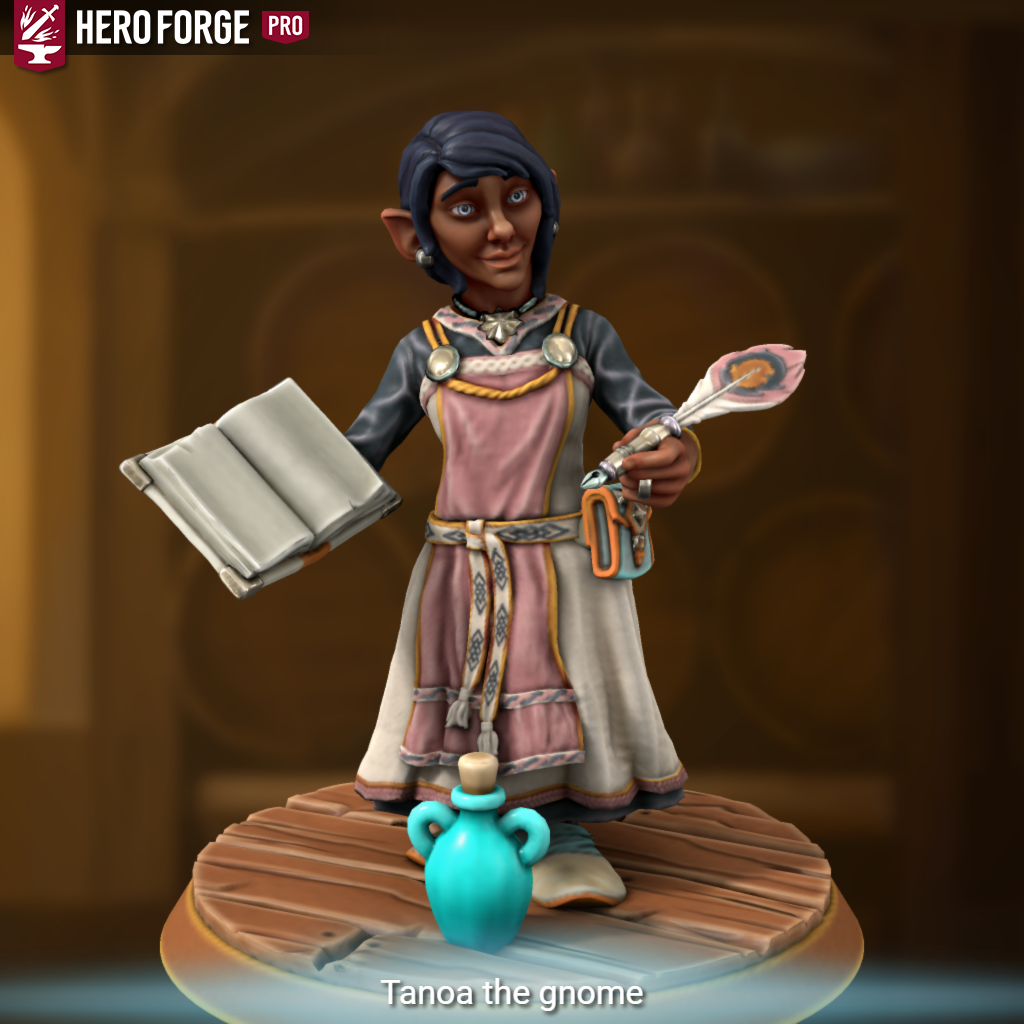
Farmers rotate small patches of flax into their fields alongside their normal cereal grains and after harvest farmer's wives and daughters weave them into simple but functional clothes. Normally these linens are made solely for the family's personal use but of course if a family is fortunate enough to have surplus linen, they can sell it at market along with their other surplus goods. The linen undergarments worn by most non-farming townsfolk is usually grown on nobles' estates and sewn by the nobles' servants., but even then it's on a relatively small scale. Something barons do rather than dukes."Tanoa, gnome tailor's wifeby me with Hero Forge"My husband makes many fine garments and I sell them at our family's store front. Given how common linen is, we don't sell nearly as many linen garments as you would guess. Most linen is made into undergarments and most linen undergarments are sewed in-house by peasant families and not by professional tailors. You don't normally see vast fields or plantations of flax plants. Most linen comes from cottage craftsmen...or rather craftswomen.
Law & Regulation
Linen trade is perfectly legal of course.
Peasants are not normally taxed on the flax they grow, only owing a portion of their grain crops to their lords, not their flax.
Linens are taxed indirectly via tolls on merchants. Merchants wagons of all sorts are subject to tolls when crossing bridges or passing through city or fortress gates. But these tolls only apply when linen clothss are moved, not when they are made or owned.
And relatively speaking, linen shipments are subject to smaller tolls than most other goods.
Type
Biomaterial
Value
Linen cloth is moderately more expensive than woven wool
Rarity
common

Comments