The archetypal form of "black magic" used across many civilizations as the most common instance of forbidden research and practices, necromancy is a sect of magic whose practitioners seek to command, control, commune with, or otherwise subvert life in its natural forms. A sister-school and inverse of
sanamancy, it too uses the very life-force which exists within all living things not only as a channel for the mystic arts to flow through, but as a very point of manipulation itself; while sanamancers bolster and repair the souls of those they influence, necromancers instead siphon and bind them — whether to the shells of their once-living bodies or to the necromancer's own will.
Soulbinding
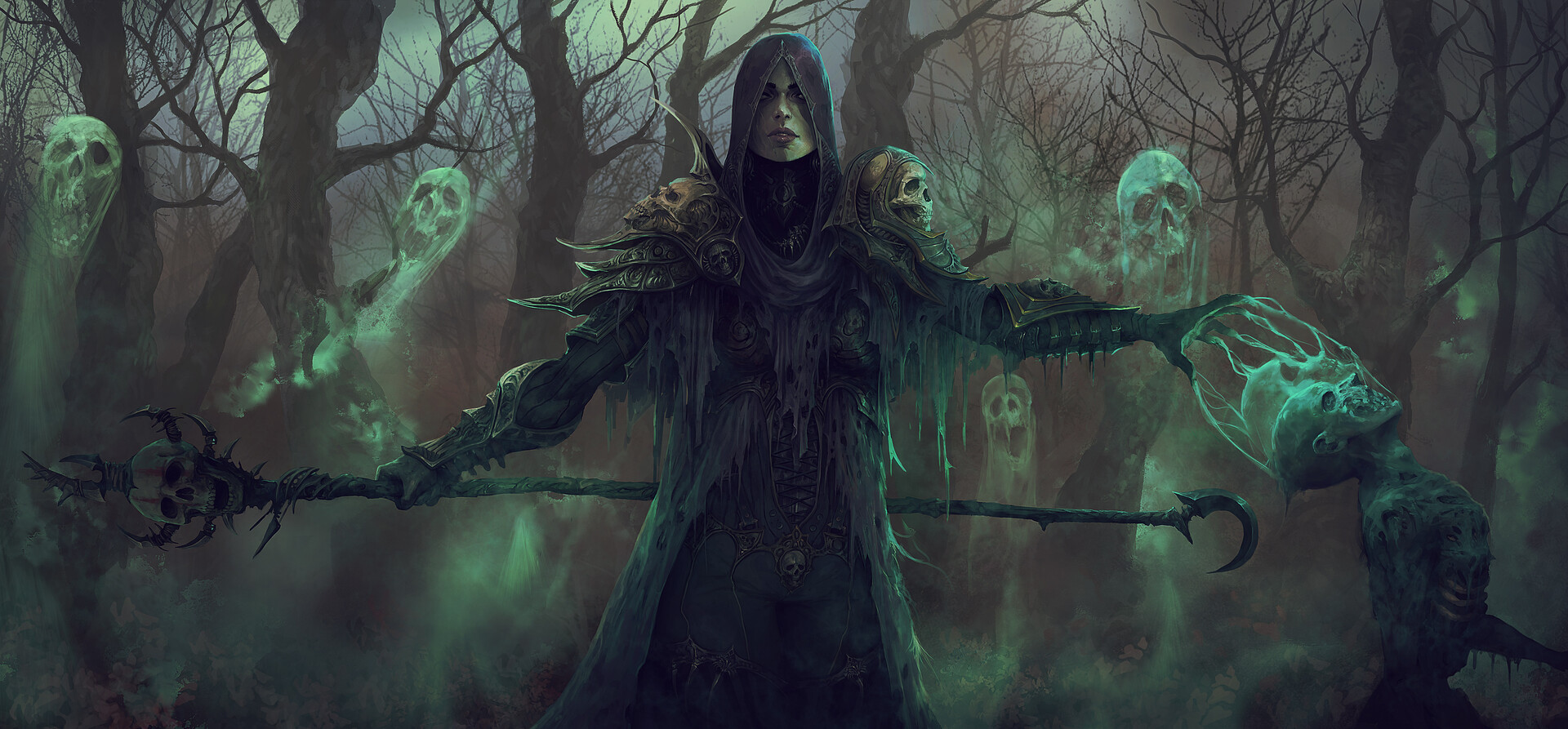
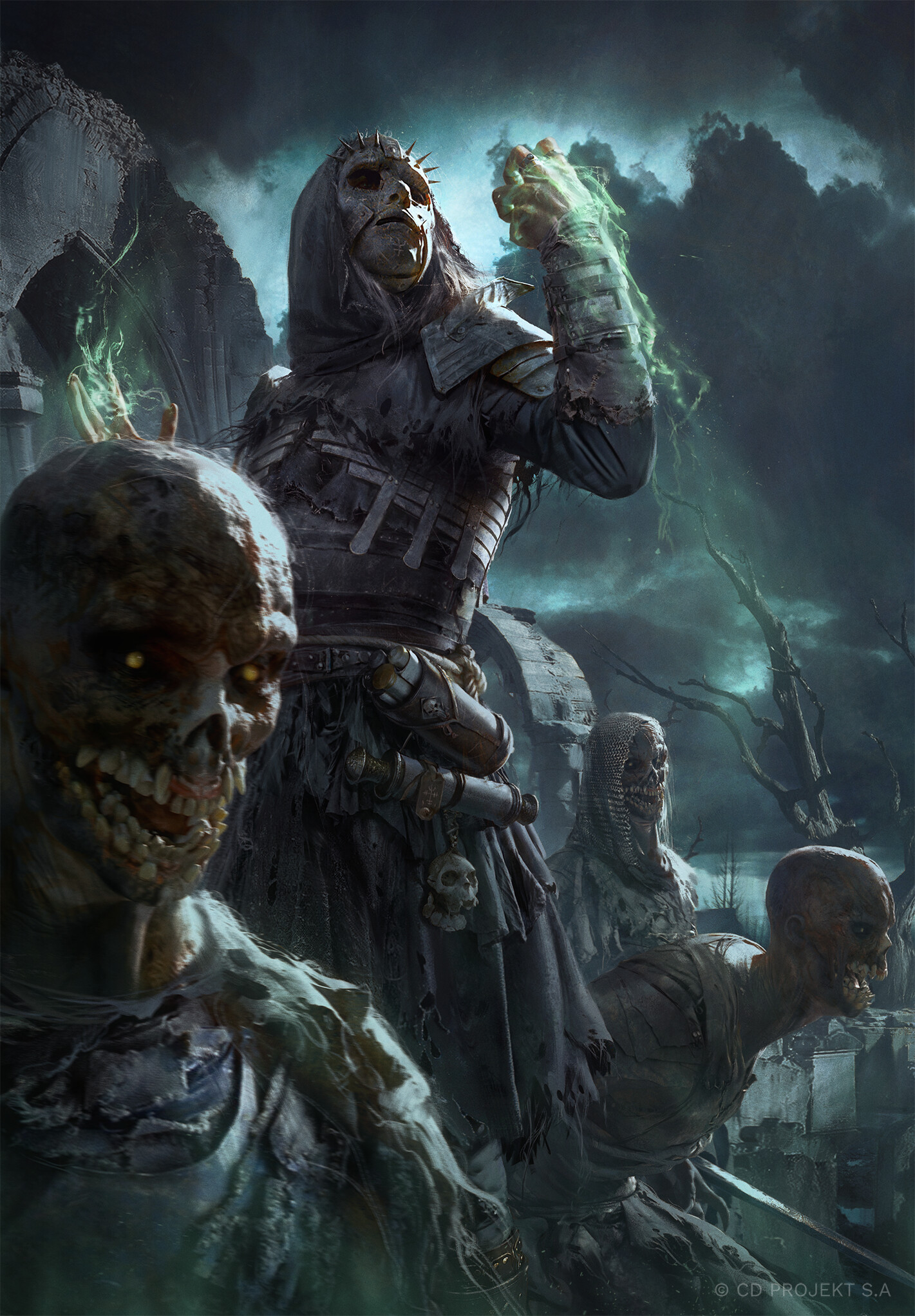
The most common use of necromancy by far – to the extent that the action has become synonymous with the name of 'necromancy' to many of those who do not study magic – is the creation, binding, and command of undead. Performed by compelling a once-living being's soul to remain connected to the living, physical realm by either binding and tethering it to a host body or (in the case of spectral undead) forcing the soul itself to manifest a semi-corporeal form. A skilled (and appropriately driven) caster will do so in a way that binds the resultant undead to their will, leaving the necromancer in question able to command their risen followers by will alone – and, to examplary practicioners, even connect themselves to the senses of the risen dead in question, able to see through the rotting eyes of their thralls – but this is not a necessary step. The general assumption that a reanimated corpse will follow the will of its creator automatically has lead to the untimely death of many an unlisenced and under-trained fledgeling necromancer.
Despite the best efforts of necromantic scholars, wherever they may find themselves to exist, the wholesale resurrection of an intact soul is among the more difficult tasks that students of the sects could attempt, and has only ever seemed to increase in difficulty once the being to which the soul belonged has passed on. The vast majority of resurrections, then, are completed with the use of shattered, decayed, and half-formed souls — those which retain enough of the awareness they held in life to function as a sentient being free to act without the necromancer's immediate and direct control, but unable to exist as an individual in its own right with its psyche so horribly absent. It is exactly these malformed souls which the more ambitious necromancers bind to the shambling masses which are likely to comprise the most of their labor force, saving more timely and powerful projects to use with the souls of the recently-slain that may be bound more fully intact.
Sanguimancy
Of course, the focus of necromancy on direct manipulation of the soul itself does not begin and end with the binding thereof to otherwise inanimate vessels. Though it has been long debated amongst scholars whether the practices collectively known as 'sanguimancy' – blood magics – should be categorized into their own school or viewed within the greater purview of necromancy itself, most modern academics would classify them as a subsection of the necromantic arts at most.
Also referred to by 'soul siphoning', 'soul puppetry', and other such monikers, these spells attempt to manipulate the souls of living beings unwillingly rather than restore in patchwork the souls of the dead. In a manner that once again acts as a direct mirror to the techniques employed by sanamancers, who may channel their magics to bolster or reinvigorate a being's soul directly, a necromancer may steal that life essence from another being unwillingly and add it to their own or transfer it to another.
Attempts to hold command over blood itself is a 'research' in its most early stages — and most researchers and lawmakers alike intend to keep it that way.


Comments