

Faith of the Primal Force
The Faith of The Primal Forces is the state religion of The Empire of Mori, an institution that shapes the spiritual, political, and cultural life of the Empire. Founded by the prophet Mori, who first communed with the Primal Forces after a hundred days of meditation, the faith was codified when Mori crowned the first Emperor, Gregorix the First, in a ritual that bound the divine and the imperial together forever.
Mori’s revelation was simple yet revolutionary: the universe is governed not by capricious gods, but by two fundamental, neutral forcesCreation (Zerith) and Destruction (Kossoth). These forces are not deities to be worshipped as personalities, but eternal principles to be understood, respected, and channeled. Mori’s teachings rejected the pantheon of The Lost Gods, declaring them false idols, parasites who fed on the Primal Forces, whose time had passed. In their place, he established a new divine order, one that mirrored the unyielding structure of the Empire itself.
The Faith teaches that neither force is good nor evil they simply are. They are impersonal and essential to the balance of the universe. To honor them is to accept the natural order of existence.
The Codex is strict and unyielding, and heresy against it is punishable by law. Debates over the interpretation of divine aspects (such as healing or justice) are common, but the official doctrine is enforced by the Empire’s Inquisitors.
This sacred coronation set a precedent: every Emperor since has since been crowned in a ritual overseen by the Hiearch of the Faith, symbolizing the eternal bond between the Primal Forces and the Empire.
The Hiearch presides over the coronation of Emperors, leads the Grand Convocation of the Faith, and commands the Inquisition, the arm of the Faith tasked with rooting out heresy.
He is assisted by the Council of the Faith, a body of advisors made up by high priests, monks, theologians and scholars.
Morning Offerings. A moment of silence or a small offering (such as a drop of water or a pinch of soil) to Creation, acknowledging the gift of life and growth.
Evening Reflections. A brief meditation on Destruction, accepting the inevitability of endings and the necessity of justice.
Funerary Rites. The deceased are honored with blood offerings (a drop of blood from the mourners) and burning of personal effects, symbolizing the return to the cycle.
A Devout Inquisitor. You serve the Faith as a hunter of heretics, but what happens when you discover a truth that challenges the Codex?
A Healer of the Order of Creation. You tend to the sick and injured, but the Empire demands you deny care to heretics. Will you obey or defy?
A Noble’s Confessor. You advise a noble family, but they secretly fund expeditions to restore the Lost Gods. Do you report them or join them?
A Heretical Text. The players find a forbidden scroll that claims the Primal Forces are not what they seem. The Inquisition is closing in—what do they do?
A Crisis of Faith. A high-ranking cleric begins questioning the Codex after a vision of the Lost Gods. The players must decide whether to help or betray them.
The Emperor’s Secret. The current Emperor does not believe in the Primal Forces but dares not speak against them. The players are drawn into a conspiracy that could shatter the Empire.
"In the beginning, there was only the cycle. In the end, there will be only the cycle. All else is illusion."The Codex of Divine Right
Mori’s revelation was simple yet revolutionary: the universe is governed not by capricious gods, but by two fundamental, neutral forcesCreation (Zerith) and Destruction (Kossoth). These forces are not deities to be worshipped as personalities, but eternal principles to be understood, respected, and channeled. Mori’s teachings rejected the pantheon of The Lost Gods, declaring them false idols, parasites who fed on the Primal Forces, whose time had passed. In their place, he established a new divine order, one that mirrored the unyielding structure of the Empire itself.
Doctrine and Beliefs
The Primal Forces
The Faith of the Primal Forces centers on the duality of Creation and Destruction, which are seen as complementary and necessary aspects of existence.| Force | Domains | Symbolism | Worship and Rituals |
|---|---|---|---|
| Creation (Zerith) | Life, light, knowledge, trickery, building, creation, clans | A sprouting seed, a tree, a hammer and chisel | Planting festivals, building rites, birth ceremonies, healing rituals |
| Destruction (Kossoth) | Death, war, order, decay, war, justice, the Empire | A faceless figure in black robes, a skeletal hand, a black flame | Blood offerings at funerals, burning offerings before court, war blessings |
The Faith teaches that neither force is good nor evil they simply are. They are impersonal and essential to the balance of the universe. To honor them is to accept the natural order of existence.
The Codex of Divine Right
The Codex of Divine Right, penned by Mori himself, is the sacred text of the Faith. It codifies the aspects of the Primal Forces, defining which domains belong to Creation and which to Destruction. The Codex is not just a religious text but the legal and moral foundation of the Empire, enforced by both clergy and state.The Codex is strict and unyielding, and heresy against it is punishable by law. Debates over the interpretation of divine aspects (such as healing or justice) are common, but the official doctrine is enforced by the Empire’s Inquisitors.
The Prophet Mori and the First Emperor Gregorix
The Crowning of Gregorix
Mori’s revelation was not just spiritual, it was political. When he crowned Gregorix as the first Emperor of Mori, he united divine authority with imperial power, creating a theocratic state where the Faith and the Empire were inseparable. Gregorix was not just a ruler, he was the first mortal to be blessed with the Primal Forces, his reign legitimized by divine mandate.This sacred coronation set a precedent: every Emperor since has since been crowned in a ritual overseen by the Hiearch of the Faith, symbolizing the eternal bond between the Primal Forces and the Empire.
Mori’s Legacy
Mori is revered as a prophet, a lawgiver, and the father of the Empire. His teachings are dogma, and his name is invoked in oaths, trials, and coronations. The Temple of the First Revelation, built on the site where Mori communed with the Primal Forces, is the holiest site in the Empire, the center of the Temple District in the capital and pilgrims travel from across Morea to pay homage.Structure of the Faith
The Clergy
The Faith of the Primal Forces is hierarchical and rigid, mirroring the structure of the Empire itself. The clergy is divided into three main orders:- The Order of the Codex
- Scholars and judges who interpret the Codex of Divine Right.
- Enforcers of orthodoxy, rooting out heresy and ensuring compliance with divine law.
- Overseen by the Hiearch, who serves as the supreme religious authority in the Empire.
- The Order of Creation (Zerith’s Clergy)
- Healers, builders, and scholars who tend to the growth of the Empire.
- Run hospitals, schools, and workshops, blending magic and science under the banner of Creation.
- Led by the Archmagister Cultivator, who oversees the nurturing of life and knowledge.
- The Order of Destruction (Kossoth’s Clergy)
- Judges, executioners, and soldiers who enforce justice and order.
- Oversee funerals, courts, and battlefields, ensuring that endings are honored.
- Led by the Archmagister Reaper, who embodies the stern and unyielding nature of Destruction.
The Hiearch
The Hiearch of the Primal Forces is the supreme religious leader of the Empire, answering only to the Emperor. They are both a spiritual guide and a political power, advising the Emperor on divine matters and ensuring that the Faith’s doctrine aligns with imperial rule.The Hiearch presides over the coronation of Emperors, leads the Grand Convocation of the Faith, and commands the Inquisition, the arm of the Faith tasked with rooting out heresy.
He is assisted by the Council of the Faith, a body of advisors made up by high priests, monks, theologians and scholars.
The Faith and the Empire
A Theocratic State
The Empire of Mori is not just ruled by an Emperor, it is ruled by the Primal Forces. The Faith is woven into the fabric of the state, influencing laws, education, warfare, and daily life. To oppose the Faith is to oppose the Empire itself, a crime punishable by exile, imprisonment, or execution.The Inquisition
The Inquisition is the enforcement arm of the Faith, tasked with hunting heretics, suppressing dissent, and ensuring orthodoxy. They are feared and respected, answerable only to the Hiearch and the Emperor. Their methods are ruthless but systematic, and their judgments are final.The Grand Convocation
Every ten years, the Grand Convocation is held in the capital city in the Temple District within the halls of the Temple of the First Revelation. Clergy from across the Empire gather to reaffirm the Codex, debate interpretations, and receive the Emperor’s decrees. It is a spectacle of divine and imperial power, reinforcing the unity of Faith and State.Worship and Rituals
Daily Life
The Faith of the Primal Forces is not just a Sunday devotion—it is a way of life. Every citizen of the Empire participates in rituals that honor the cycle of creation and destruction:Major Festivals
| Festival | Significance | Rituals |
|---|---|---|
| The Festival of the First Seed | Celebrates the beginning of the planting season and the power of Creation. | Planting of sacred seeds, feasts, and blessings from the clergy of Zerith. |
| The Day of the Black Flame | Honors Kossoth and the necessity of destruction and justice. | Bonfires, mock trials, and offerings of broken items to symbolize acceptance of endings. |
| The Coronation Anniversary | Commemorates the crowning of the first Emperor Gregorix by Mori. | Parades, reenactments of the coronation, and oaths of loyalty to the Emperor and the Faith. |
| The Night of the Veil | A solemn night where the boundary between life and death is acknowledged. | Vigils, storytelling of the Scarring, and offerings to the Primal Forces for protection. |
Heretical Movements and Challenges
The Cult of the Lost Gods
Despite the Faith’s dominance, heretical movements persist, particularly among those who long for the return of the Lost Gods. Groups like the Daughters of Emura and the Eldar Shadows are hunted by the Inquisition, but their ideas spread in secret, undermining the Faith’s authority.The Veilwalkers
Mystics who dare to pierce The Veil are seen as dangerous heretics, for they seek knowledge beyond the Codex. The Faith condemns their practices, but some nobles and desperates still seek their guidance.The Faith’s Influence on Society
Education and Knowledge
The Faith controls education in the Empire, ensuring that all learning aligns with the Codex. Schools teach the history of Mori’s revelation, the principles of the Primal Forces, and the duties of a citizen. Dissenting ideas—particularly those regarding the Lost Gods or the Scarring—are suppressed.Law and Justice
The legal system of the Empire is an extension of the Faith. Courts are presided over by clergy of Destruction, and justice is meted out with stern finality. The Codex of Divine Right serves as the highest law, and heresy is treated as treason.War and Conquest
The Empire’s military might is blessed by the Faith. Soldiers invoke Destruction before battle, accepting death as a natural part of war, while clergy of Creation heal the wounded and bless the weapons of conquest. The Faith sanctifies the Empire’s expansion, framing it as the spread of divine order.Roleplaying the Faith of the Primal Forces
For Players
For Game Masters
"In the beginning, there was only the cycle. In the end, there will be only the cycle. All else is illusion."
Structure
- Hiearch
- Archmagister
- Magister
- Diacon
- Ordinator
- Laity
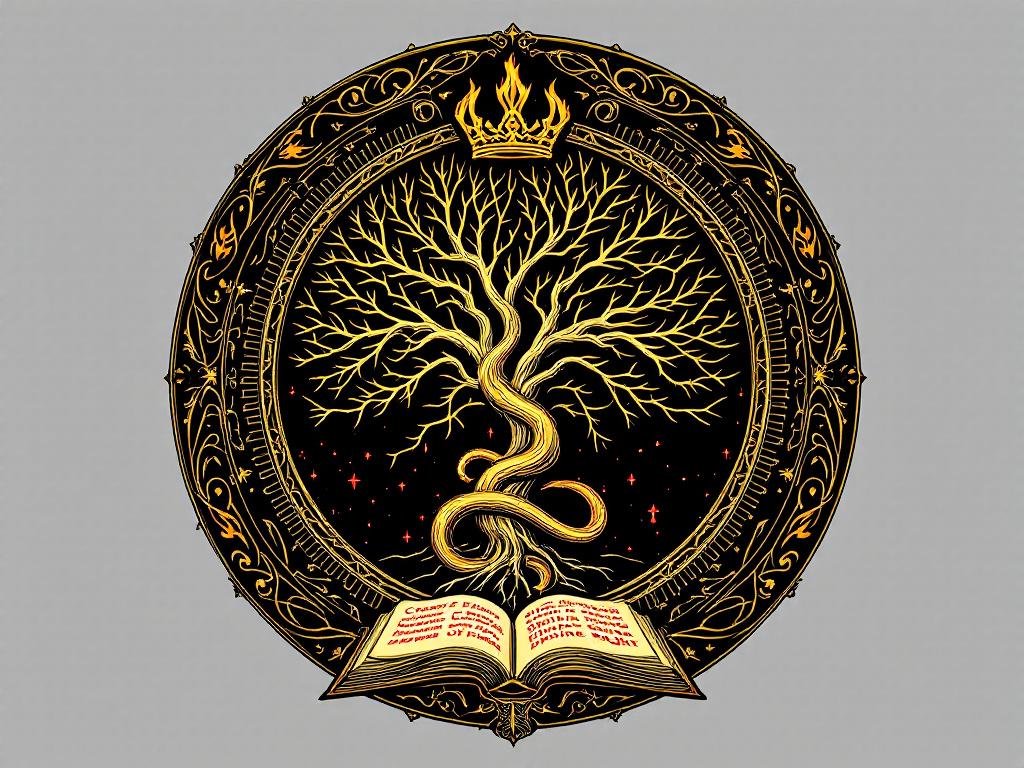
The Cycle Never Ending
Type
Religious, Organised Religion
Alternative Names
The Faith
Demonym
Primes
Leader Title
Parent Organization
Deities
Location
Related Ethnicities
Please support us if you like the content! Your contribution is much appreciated and goes towards building community and creating more content: Support Us!


Comments