"You have earned no less than the full measure of retribution for your injuries and atrocities against us. We are tired and re-casting sprues into ball, so lest you come to deliver us more lead or coffee, you may speak only to the mouths of our cannons. No free man in Vasmark shall hear you."
—Karl Vaningen
Vasmark, officially the
Gothic Commonwealth of Vasmark (
Vessian Gothic: Гоѳиске Гемеенѳинг Васмаркс, [ˈgoðɪskɪ gɪˈmeɪnθɪŋ ˈvɔsmɑrks]), is a country in northern
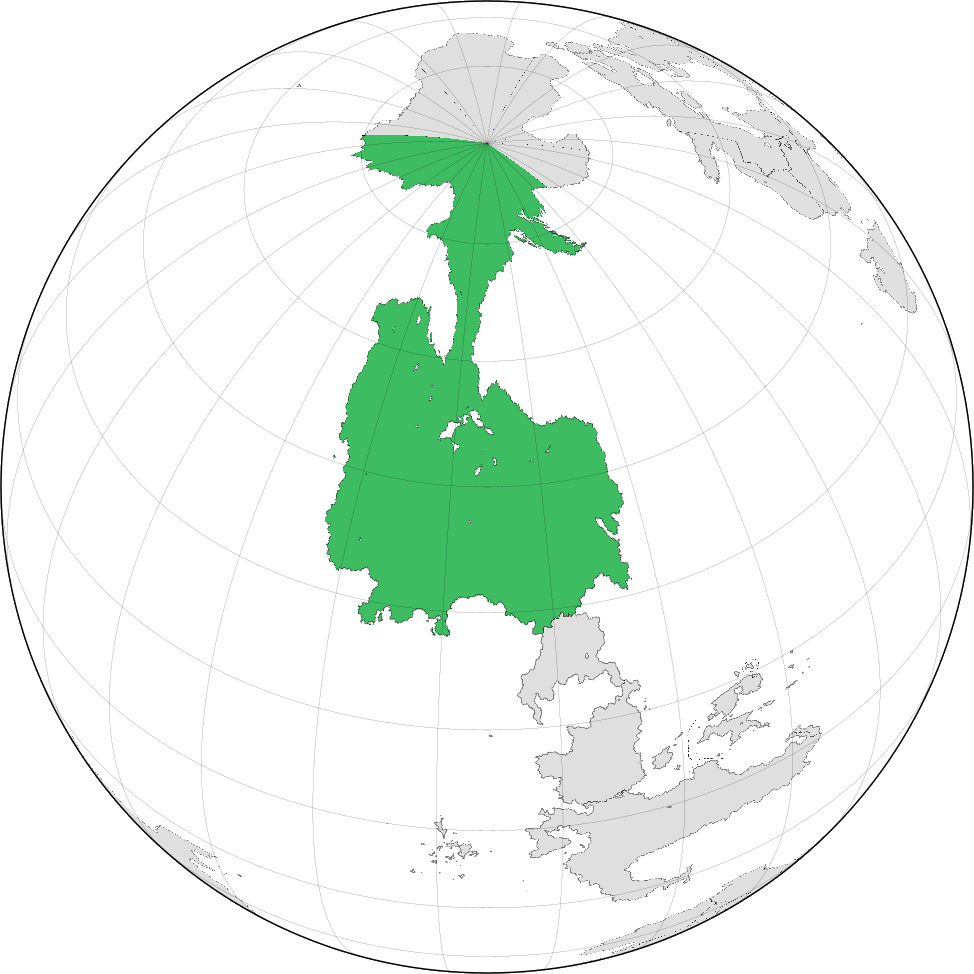
Ulera. It is a federal republic made up of 36 states, a federal district, and several unincorporated territories in its far north and the island collectivities of Seltame and the Society Islands to its southwest. It borders the Tira Vellan and Rossan polar territories to its north, Lariat to its south, and is bounded by the Tuma- nian and Malagar oceans to its east and west respectively. It is the largest sovereign country by area and second largest by population. When accounting for dependent territories it is the third largest by area and fourth largest by population.
Ulera was inhabited by
elves in most of its area and
orcs in its furthest northern reaches above the Line of Eternal Demarcation on the Split Neck. The Oecumenian discovery of Ulera by
Ros in 2601 led to the establishment of colonies, mostly by Ros, fighting for independence from the
Dominion of Dvekmenia in the
Fifty Years' War, which would end in 2620 and as a result of which, Ros would be recognised as independent of the dominion and the dominion relinquished all rights to influence west of 30°W, leaving Ros with free rein in the territory, though
Tira Vella and
Taminily would colonise parts of southern Ulera. The north was much less economic- ally valuable, and most colonists arriving from Ros were Goths, a Salic people native to the west coast of Ros. Several factors combined to create dissatisfaction with Rossan rule in the northern, Gothic colonies, such as Enlightenment ideas, clashes with the crown over taxation, criminal justice, and perceived abuses of power, linguistic and cultural discrimination by the Rossans against the Goths, and softness towards the native elves. This dissatisfaction led the northern "Gothic colonies" to declare independence from Ros in 2744 and create an indepen- dent nation for the Gothic people. Victory in the following war for independence led to international recognition in 2754.
Following independence, Vasmark quickly expanded westward and northward, settling and conquering lands inhabited by the native elves. Vasmark would engage in a series of wars with Ros over land disputes between 2760 and 2836, eventually settling its southern border to its current shape. By the late 29
th century it had established itself as a great power. It remained officially neutral in the
Great War, the only great power to do so, though it materially supported the Western Powers, with many considering its massive manufacturing capabilities crucial to the eventual Western victory in the conflict. Vasmark assisted the independence movements of its southern neighbours in Ulera in the
Rossan-Uleran Wars of Independence that followed the Great War and has expanded its sphere of influence as a
guarantor of those nations.
History
Pre-colonial
Before the arrival of the Oecumenians, northern Ulera was split between
elvish and
orcish peoples, divided by the Line of Eternal Demarcation, a border along peaks on the Split Neck that separates northern Ulera from polar Ulera. The Line was a mythical treaty line supposedly established between the elves and orcs in time immemorial just after
the Caliemhan. Ulera, along with
Nagain, is often assumed to be the "Land of the Sunset" referred to in various Old World traditions as where one third of the
primaeval elves fled following the Caliemhan.
Orcs, being a
Chilovakian race, arrived into polar Ulera sometime after the Caliemhan, likely travelling from far northern Sossis to Ulera either by canoe or over the ice that fuses the conti- nents in the winter. As they spread further south, they came into contact with the elves, leading at some point to the establishment of the Line of Eternal Demarcation. Unlike in
Oecumene
Gothic Commonwealth of Vasmark
Гоѳиске Гемеенѳинг Васмаркс
"Вит енн стандаѳ"
"We yet stand"
Government
Federal presidential republic
Capital
Vytburg
Independence from Ros
Declaration: 1 Deadfire, 2744
Recognition: 3 Riverflood, 2754
Constitution: 14 Sunmarch, 2759
Languages
Gothic (Official)
Nordic languages, Uleran Elven languages
Demonym
Vessian
Currency
Vessian snejth, ₵
Preceded by
Colonial Vasmark
where war between orcs and humans was common until recently, the boundary was apparently respected by both sides with a mystical reverence.
While conflict between elves and orcs was rare and both sides seemingly respected the boundary on the Upper Neck, war between elvish peoples was quite common. Warfare among the elves was a highly ritualised affair throughout most of the continent.
Colonial Era
Rossans discovered Ulera in 2601. Colonisation began shortly after, with the town of Kaldhaum in the Holvegk Colony being established the following year. The elves initially had a massive advantage in population over the arriving Oecumenians, but their populations would be devastated in the wars that followed. Oecumenians were eager to trade with the Uleran elves, and the elves valued firearms above all else. Matchlock and early snaphance, doglock, and flintlock muskets along with powder and lead were traded in great quantities to the elves of Ulera, and their state of constant, ritualistic warfare using magic and stone and wood weapons, which inflicted relatively few casualties on combatants, devolved into an orgiastic wave of violence that spread across the continent. This left communities devastated and provided an opportunity for Oecumenian settlers to create permanent settlements from their trading posts and expand inland. Further compounding the problem for the elves was their long lifespans, which cause long gestation and adolescent periods; making a devastated population slow to recover.
Despite the first colony established being in the north, northern Ulera was largely overlooked by Ros in favour of expansion into and exploitation of southern Ulera, in particular for growing spices and tobacco. Ros nonetheless claimed northern Ulera, but its disinterest in the region made it an attractive site for some, particularly the Goths. The Goths had been living along the west coast of Ros with few ethnic rights and little recognition for centuries, frequently subjected to varying attempts at “Rossinisation”. This led many Goths to leave for northern Ulera, where they were allowed to set up colonies by the crown. As more Gothalian colonies were founded, the Gothalians began to refer to northern Ulera as “Vasmark”, the “
West-march”.
Vessian War for Independence
2744 to 2754
Inspired both by the Taminil Revolution and their Declaration of the Rights of All Men, as well as
Skorbund history of democratic or semi-democratic things/folkmoots, but equally tempered by having witnessed excesses of revolutionary government under the first provisional Taminil republic
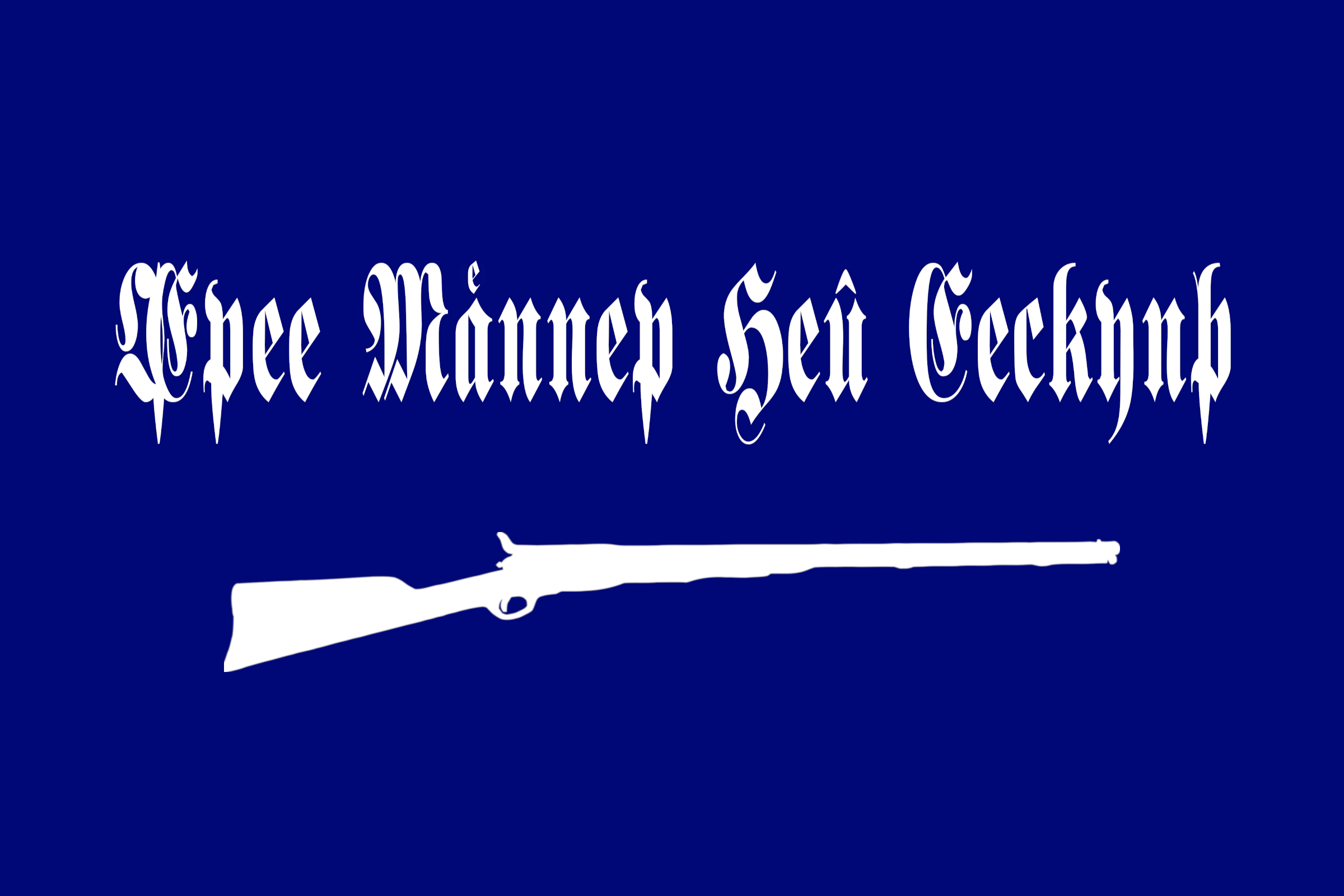
The Vessian flag, often referred to colloquially as the musket banner (
Gothic: мöскет-банд [ˈmøːskɪtˌbɔnd]), is highly unusual for its usage of text and depiction of a musket. Flags with swords are not uncommon in
Aresra or southern
Eussis, but Vasmark’s is unique among national flags in depicting a firearm.
The blue and white were the dynatic colours of the Lodovigians, a
Skorbund dynasty which ruled the state of
West Dvekmenia from 923 to 1101. They were chosen to represent the ancient heritage of the Goths, and also their power and defiance against the Rossans, as the Lodovigians ruled over a mostly
Dvekmenu polity in much of modern Ros. The words “Фрее Мäннер Ней Еескунѳ”, meaning "Free men don't ask", were adapted from a reply Armond Gehler gave to Admiral Scharhenko before the Battle of Kaldhaum in response to Scharhenko’s demand that they surrender due to the illegality of their actions ("Закона знаю, ілі свободни чоловіки не прохотають.", "
I know the law, but free men do not ask.". Gehler's words were themselves adapted from
Moterâc: “Free men owe none but their Creator ask of leave for their own defence.” The text is written in fraktur as that was the common style of writing at the time in both Gothic and
Rossan, though the thita (ѳ) at the end of Еескунѳ was replaced with a thorn (þ), adapted from the Skorbund runic alphabet to further illustrate their heritage and distance from Ros and the Dvekmenu peoples. An early version of this banner without the musket was flown from the fort at New Telos (Friskstath) during the siege of the city during the Vessian Revolution. When Rossan forces shot down the flag, a militiaman named Jan Frisk raised the banner back up tied to his own musket. Frisk himself was killed during the siege, but the banner remained flying from his musket through its end. Frisk and his bravery became a martyr for the rebels (New Telos would later be renamed Friskstath after him), and his musket was added below the words to represent the colonists' perseverance and sacrifice, and to symbolise what they were willing to do to be the free men Gehler’s words above proclaimed them to be; the words are a declaration, and the musket represents their willingness to back up their declaration.

Comments