
Is Nagain
Is Nagain (Othian: Îс Нагеун /ˈiːs ˈna.geɨn/) is a country comprising the continent of Nagain, the island of Otha, and numerous surrounding smaller islands. Is Nagain has also administered Revel (formerly the New Spice Islands) off southwestern Ulera since 2903. It is the third lar- gest sovereign country in the world behind Vasmark and Then, as well as the only sovereign and independent majority-elven country. Nearly the entire country lies within the tropics and subtropics, with only the southern tip of Otha and a few small islands lying below 40°S. Much of the country is either arid or semi-arid and sparsely populated, with most of the population living in the south and east of the country.
The country united over the course of the first half of the 29th century under the Othians from the southern island of Otha, who allied and conquered the entirety of Nagain before unilaterally declaring the formation of Is Nagain in 2846. Following its unification, the country undertook a series of reforms intended to modernise the country and ensure it remained competitive with Oecumene.
Is Nagain is a middle power and maintains close ties with Vasmark, formerly its closest sove- reign neighbour. Vessian traders were the first outsiders to begin trade with Otha, and during the Time of Tumult, Vessian trade was instrumental in the Othian expulsion of Oecumenian colonial projects from Nagain. Is Nagain was involved in the Rossan-Uleran Wars of Indepen- dence alongside Vasmark and the independence movements. Is Nagain is party to the Western Oceans Naval Treaty.
It appears that after the discontinuity following the Caliemhan, the inhabitants of Nagain re- verted to a palaeolithic hunter-gatherer mode of existence, unlike both Oecumeno-Davania and Ulera, which retained agriculture. During this time, the once-unified polity fractured into nu- merous states or tribes and different languages began to develop. Most languages spoken on Nagain belong to the Trans-Naganian family (which some scholars believe is related to prim- aeval Elvish), though some languages spoken in the north belong to other families, potentially descended from the refugees that fled following the Caliemhan. There is evidence for cold-working of bronze after the Caliemhan, though it has been suggested this was merely a recy- cling of existing metal, and that the technology of smelting was lost. The transition to a settled, agrarian lifestyle likely happened sometime around 1 CA, with bronze working resuming short- ly after.
Again owing to the lack of archaeological exploration of Nagain, the next oldest inscription is a name inscribed on a gold brooch, dated to around the 14th century, recovered from a marsh in Darnau.
Over the next several centuries, several states arose across the east and southeast of Nagain.
The country united over the course of the first half of the 29th century under the Othians from the southern island of Otha, who allied and conquered the entirety of Nagain before unilaterally declaring the formation of Is Nagain in 2846. Following its unification, the country undertook a series of reforms intended to modernise the country and ensure it remained competitive with Oecumene.
Is Nagain is a middle power and maintains close ties with Vasmark, formerly its closest sove- reign neighbour. Vessian traders were the first outsiders to begin trade with Otha, and during the Time of Tumult, Vessian trade was instrumental in the Othian expulsion of Oecumenian colonial projects from Nagain. Is Nagain was involved in the Rossan-Uleran Wars of Indepen- dence alongside Vasmark and the independence movements. Is Nagain is party to the Western Oceans Naval Treaty.
History
Prehistory
Nagain has been inhabited since before the Caliemhan, though archaeology is a young field on the continent, and made difficult by the political situation. Writing in runic Elvish survives from the pre-Caliemhan, and suggests that, like Ulera, it was integrated into the same polity as the rest of Geshkara. It’s likely that, also like Ulera, after the Caliemhan, Nagain saw an influx of elven refugees fleeing Oecumeno-Aresra. While monument building and stone working were common before the Caliemhan, it appears the chaos and disruption caused by the Calie- mhan caused a break in the tradition. It’s still unknown how the Caliemhan affected magic, but it’s likely a disruption in the function of magic had a catastrophic effect on the existing civili- sation on Nagain.It appears that after the discontinuity following the Caliemhan, the inhabitants of Nagain re- verted to a palaeolithic hunter-gatherer mode of existence, unlike both Oecumeno-Davania and Ulera, which retained agriculture. During this time, the once-unified polity fractured into nu- merous states or tribes and different languages began to develop. Most languages spoken on Nagain belong to the Trans-Naganian family (which some scholars believe is related to prim- aeval Elvish), though some languages spoken in the north belong to other families, potentially descended from the refugees that fled following the Caliemhan. There is evidence for cold-working of bronze after the Caliemhan, though it has been suggested this was merely a recy- cling of existing metal, and that the technology of smelting was lost. The transition to a settled, agrarian lifestyle likely happened sometime around 1 CA, with bronze working resuming short- ly after.
Pre-contact
The first known writing from after the Caliemhan was discovered at a grove (a term for an el- ven place or worship or religious significance) in the eastern foothills of the Penllyn mountains, tentatively dated to the 12th century, and with a terminus ante quem of 1406. The inscription is a dedication of the site, erected at the behest of a patron named as “Murdoc”, and calling for a communion between the elves of the material world and the fey of the Feywild (hence the ter- minus ante quem placed at the Burning). The inscription was written in a primitive Shandian, so-called “phase A Shandian”, prior to the reduction from a logo-syllabary to a pure syllabary (and later to a semi-syllabary in places).Again owing to the lack of archaeological exploration of Nagain, the next oldest inscription is a name inscribed on a gold brooch, dated to around the 14th century, recovered from a marsh in Darnau.
Over the next several centuries, several states arose across the east and southeast of Nagain.
Is Nagain
Îс Нагеун
꛲ꚩꚷ⋮ꛛꛔꚩꛛ
“Искоера Фѿлгр”
“Our Home Defend”
Government
Federal parliamentary semi-constitution-al monarchy
Empress: Cergoth
Capital
DunvervollyLargest city
IllismeneFormation
Invasion of Darnau: 6 Frostfall, 2823Treaty of Sappercoily: 11 Hierarch, 2845
Edict of Unification: 19 Sun's Coming, 2846
Constitution: 8 Widow's Tear, 2847
Languages
Official: Othian (federal), Caersian,Darnian, Iledrian, Gemenian, Jetty,
Merthenian, Ponian, Udrian
Regional: Naganian languages
Demonym
NaganianCurrency
Naganian lem, лʼPreceded by
Kingdom of OthaNaganian states and tribes
Oecumenian Naganian colonies
Modern History
Elven refugees fleeing Oecumenian colonisation of Ulera riding the westerly ocean currents began arriving on Nagain in the 28th century, along with the first Oecumenians. Word travelled quickly of the ruin befalling the elves of Ulera. In the wake of this, a Grand Cooperation (Cywnu Hen) was convened, a semi-mythical rite likely descended from a pre- or just post-Caliemanh defensive pact. The various states of Nagain all agreed to a closing of the land in 2740, enforced independently by each coastal state, and entailing the scuttling of any arriving vessels and kill- ing of any arriving people, human or elven. While during this period the Oecumenian powers had enough technological edge to likely easily conquer Nagain, it was judged that Nagain was not worth conquering in the face of local hostility and arid climate. As such, no officially sanc- tioned landings on Nagain were attempted during the continent’s closure, with only sporadic landings by pirates, smugglers, refugees, wrecked ships, etc., the occupants of which were killed by wbedriom caeth tewrenthym, “human hunters”, and their ships scuttled.Items recovered from the ships became objects of fascination for the elves that recovered them, particularly iron objects like nails, hinges, gun barrels and locks, blades like knives, swords, and razors, pens, belt buckles and compasses. Ornamental objects like jewelry and watches were also highly valued, as were photographs. Iron objects were initially thought to be made of silver, until it became clear they were much harder and unable to be melted. Writing and inscriptions such as logs and letters, but also things like the numbers on a clock face were sometimes decipher- ed magically, especially in the state societies of the east and southeast. Maps were also valuable sources of information about the outside world.
Cergoth, queen of Otha, was fascinated with the outside world, and attempted to piece together a picture from the items recovered. She ordered that any that landed on Otha’s shore be taken alive; so when the Vessian vessel Gemeenþing wrecked off the east coast of Otha in the Dusk of 2816, its surviving crew of 7 were taken into captivity in Dunvervolly. They were interviewed extensively with the aid of magical translation about the world beyond Nagain. Cergoth grew only more interested in the world beyond Nagain, particularly its technologies, which she thought could help her exact revenge on Darnau for the death of her sister the year prior. The Vessians were made a boat and bid to return to where they came from and make known that the port of Reth Aran on a natural harbor near the southeast tip of Otha was open to them. The Vessians mira- culously made their way safely in the Othian boat to southern Amaru, from which they then travelled back to Vasmark.
Nagain’s isolation was now ended, as Vessian ships began sailing to Reth Aran, initially just the brave and foolhardy, trade picked up, and even- tually sailors from other countries, Ros particularly, but others as well, began to make port in Reth Aran. Fortunately for the Othians, elves and humans are distant enough that illnesses do not easily cross the species gap, meaning devastation like the Great Plagues that ravaged Oecumene and Aresra when contact was made between them did not occur in Nagain. Reth Aran itself was a closed city, and the dockworkers sworn to secrecy on pain of death to prevent word of Cergoth’s breaking of the closing from spreading. Cergoth and the Othian nobility spent years plan- ning, draining the state’s coffers and stockpiling, particularly guns and powder. The bronzeworkers were taught to work iron and the operations in the lead mines expanded greatly.
In 2823, the Othians crossed the Cone Toin to invade Darnau. The Darnians, armed with bronze spears, axes, and swords, were easily defeated by Otha’s guns and cannons. The Darnians quickly figured out the Othians had broken the oath to close the land made at the Cywnu Hen, and while attempting to stall during peace negotiations with the Othians, queen Lennox reached out to her neighbours for assistance, which they were obli- gated to give by the terms of the Cywnu Hen. The response from Otha was to invade these kingdoms of Ponu, Iledor, and Gemen as well. At this point, word of the opening of the land had reached most of Nagain, as had Otha’s conquests, and a mad race began among the Naganians to trade and equip themselves like the Othians to defend against them. At this point, Nagain had passed the point of no return and could no longer be kept closed.
Over the next 22 years, Nagain entered the Time of Tumult (Yllus Womheniw), as the Othians, armed with their muskets, began a campaign to conquer all of Nagain, and the Oecumenians began a wave of attempted conquests and colonisation. Otha had crucially also acquired the requi- site knowledge of making guns in addition to the guns themselves, and had also become a popular destination for elves leaving from Ulera. Na- gain never had any indigenous ironworking nor gunpowder; thus this was a crucial advantage for the Othians. The Othians also quickly aban- doned the use of armour, ineffective against gunfire, favouring only a light, short tunic. By 2826 the Othians had conquered every remaining independent elven state on Nagain, with Ros, Taminily, Tira Vella, and their elven Naganian allies controlling significant portions of Nagain’s territory.
At this point, the Vessians began heavily supplying and tacitly aiding the Othians in their drive to conquer the remaining territory from the Oecu- menians, crucially providing them with the newer percussion cap rifles of the same type now used by the Oecumenian states. The Vessian aid to the Naganians was done largely out of economic concerns, the current trade being quite lucrative, and a future independent Nagain would simi- larly be more open to trade than if it were colonised by the Oecumenians. Many Uleran elves also joined the Othians to drive the humans out of Nagain, driven by a sort of elven chauvinism. In 2845, the Treaty of Sappercoily affirmed Othian rule over all of Nagain. Of the Naganians, only the Othians were party to the treaty, and it wasn’t until the subsequent Edict of Unification the following year that the country of Is Nagain was officially created, as up until that point, the other states of Nagain were all in some sort of personal union with or state of conquest/occupation under the Othians. Much of the leadership and nobility outside of Otha was either absorbed into the Othian state apparatus, imprisoned, or exe- cuted. Total losses from the wars are unknown, but it’s estimated the population of Nagain in 2845 when the Treaty of Sappercoily was signed was 80–90% of what it had been in 2812.
The Othians quickly embarked on a series of reforms for the new country, including reforms to government, land use and agriculture, education, language, and industrialisation efforts, to modernise it and ensure its continued survival and independence, prioritising Otha itself and those re- gions which had allied with them for development. Despite Otha’s attempts to create a unified national culture and identity, centred largely on being the only independent elven country in the world, resentment and resistance to Othian rule continues in many regions, with guerilla resis- tance in parts of the centre and west of the country. Resentment towards the Othians and resistance to “Othianisation” is also particularly strong in Darnau, Otha’s neighbour and traditional rival to the north across the Cone Toin.
Is Nagain maintains close relationships with Vasmark, its main trading partner, and several other countries, including Ros, Tira Vella, and Anti- podia. It joined the Great War on the side of the Western Powers in early 2893, due mostly to Ros' use of submarine warfare against neutral ships. Their operations in the war were minimal and entirely naval. Following the Great War, Is Nagain intervened in the Uleran independence move- ments which sought to remove Rossan rule over its colonies there, seeking to expand its influence and ensure protections for elves in the terri- tories. In 2903, Is Nagain annexed the former Viceroyalty of the New Spice Islands as part of the Treaty of Beligatan, becoming organised as the Territory of Revel in 2906.
Othian History
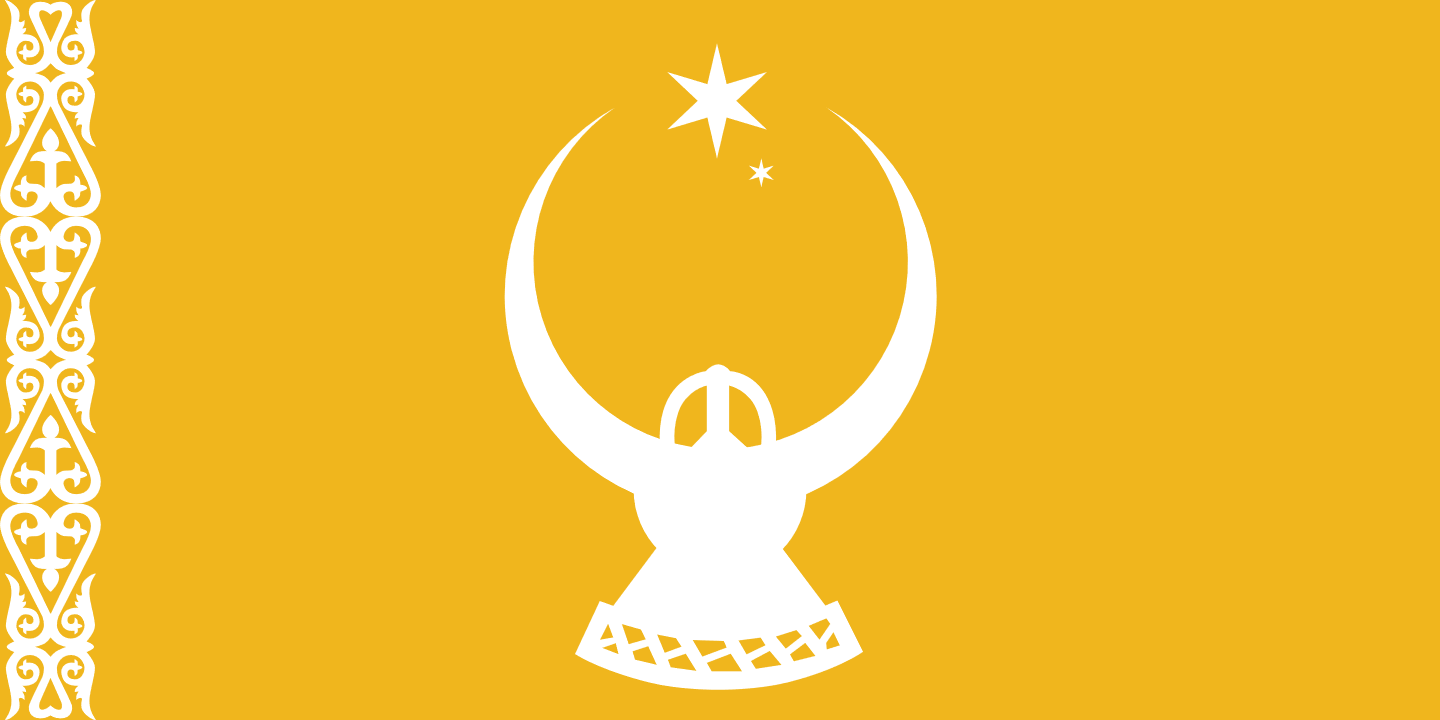
During this period the most famous artefact from Nagain, the Mun Uriel Armillary, a magical brass armillary sphere, was commissioned by queen Herhenny. Notably, the armillary sphere contains a band for Mhenwm Gês, or antichthon, a hypothetical planet always opposite Geshkara and from which humanity and the Chilovakian species supposedly originate. A simplified Mun Uriel Armillary is depicted on the flag of Is Nagain cradling two six-pointed stars representing Nagain and Otha. During Herhenny's reign, she began an invasion of Darnau across the Cone Toin (Кôн Тоін, “the Moat”, the strait separating Otha from mainland Nagain), conquering large swathes of productive land on the mainland.Herhenny's daughter Elmere ruled until her death in 2351, and her daughter Aluvy ascended to the throne. Her reign was short, dying of illness in 2400. She did not have children, and so was succeeded by her sister, Shennog. During her early rule, the Darnians invaded to reconquer the terri- tory lost to them under Herhenny’s reign. Shennog’s rule was unconventional and unpopular, combining personal decadence with failure to ade- quately address several crises, and the loss of the Darnian conquests. She was assassinated in a conspiracy of the nobility in 2419 at the age of only 96. She was replaced by Llobr, placed there by the nobility and expected to be responsive towards them. The Othian Diet grew out of this coup, with queen Llobr frequently summoning the nobility for counsel, which developed over the course of her reign to become an instituted le- gislative body. She ruled until 2678 and was succeeded by her daughter Umarel.
Umarel took part in the Cywnu Hen in 2748 which established the closing of the continent.
Umarel died in battle 2807 against the Darnians. Umarel was childless, so the throne passed to her sister Cergoth. She had ambitions to continue the war her sister had begun, but in the meantime, with her sister dead, the army retreated back to Otha, and she was made to agree to a punitive peace with Darnau. To get her revenge on the Darnians, she broke the covenant closing the country, and opened the southern port of Reth Aran to outside trade. Reth Aran became a closed city to both prevent the Vessians now trading with them from being able to gain a foothold in the coun- try and to prevent word of her broken oath from reaching other states on Nagain, likely triggering a military intervention to enforce the closure.
Geography
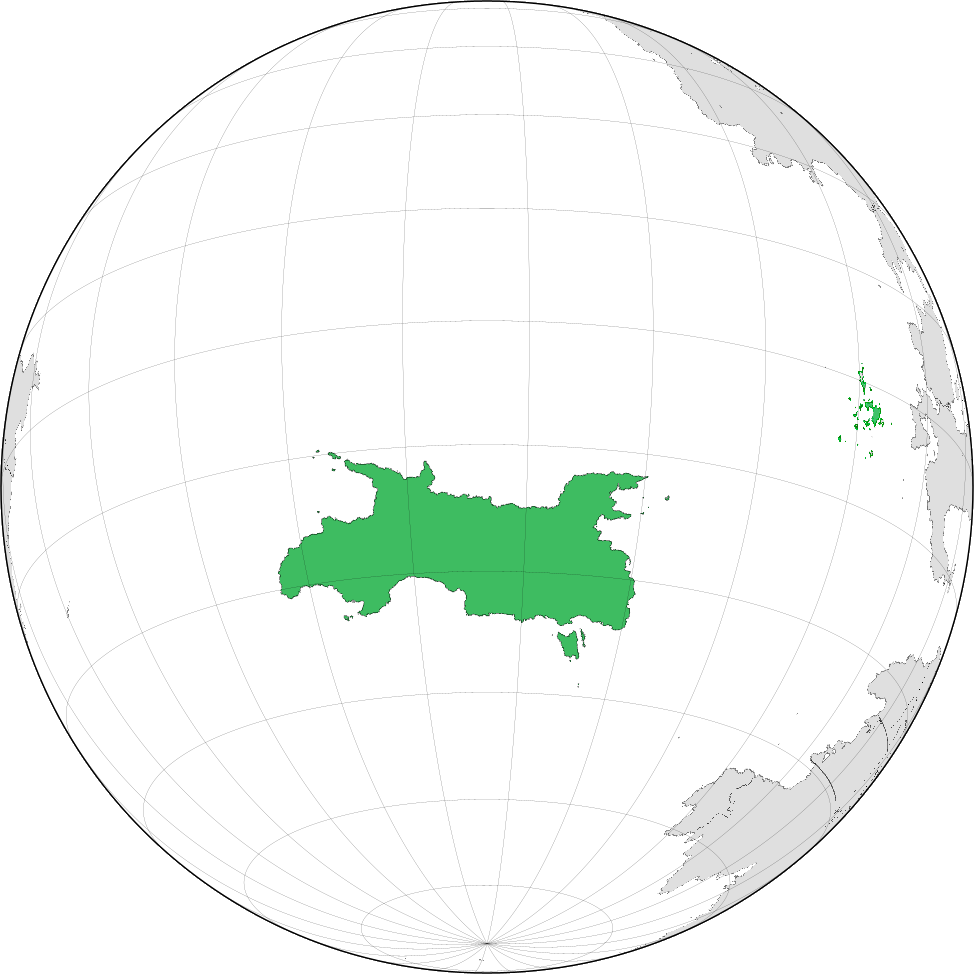
Is Nagain consists of the mainland continent of Nagain, the island of Otha, and numerous smaller islands, and it controls the New Spice Islands archipelago, though it is not considered a constituent territory. It lies entirely in the southern hemisphere and mostly in the western, with a small portion of its west lying in the eastern hemisphere. The mainland stretches from about 16° to 36° south, placing the whole mainland in the tropics and subtropics. The Batton Islands extend to about 13°S off the Batton Peninsula, and the Serny Islands lie at about 43°S. The large island of Otha lies between about 36° and 40° south. Nagain is bounded by the Malagar Ocean to its north and west and the Venian Ocean to its south and east. The nearest major landmass to Nagain is the Antipodal Free State about 3200 kilometres southwest. The mainland is the smallest continent on Geshkara, and the country is the sixth largest by area.Physical Features
The highest mountain in the country is Tith Ubel at 3719 metres in the Penllyn mountains in the east of the country. The most prominent and third highest is Tith Abuver in northwestern Otha at 3250 metres.Climate
Much of the continent is dominated by hot arid and semi-arid climates, with savanna and tropical monsoon climates in the north, mediterranean climates in the east, a humid subtropical climate in the southeast, a more temperate oceanic climate in parts of Otha, and subtropical highland and alpine climates in the Penllyn and Llobriu mountains.Flora and Fauna
Introduced Species
Various food crops have been recently introduced to Nagain following its opening, including staples like potatoes, wheat, and lentils; fruits and vegetables like citrus, chilis, and onions; and herbs and spices like parsley, turmeric, and cardamom.Rats were introduced to Nagain with the refugees from Ulera in the 28th century and devastated several plant and animal species. Horses, don- keys, and mules were introduced by the Oecumenian colonies, and continue to be used by the Naganians as draft animals due to their increased strength over the native genny bird. Dogs, cattle, pigs, and sheep were also introduced by the Oecumenians, but the Naganians have since extir- pated them. The import of non-native flora and fauna is very heavily restricted, particularly of mammals, which are not native to Nagain except for bats and marine mammals.
Government
Is Nagain is a semi-constitutional monarchy under the rule of the House of Otha. The constitution of Is Nagain was enacted in 2847, shortly after the Edict of Unification, creating the modern federal state. There are 15 federal subjects within Is Nagain, mostly in the southeast of the country: the Kingdoms of Darnau, Gemen, Iledor, Lun Udria, Otha, Merthene, and Sarven; the Principalities of Caersu and Ponu; the Diarchy of Jetty, the Territory of Elsun; the Realm of Lun Rhythyn; and the Collectivities (cities) of Eshmun, Leir, and Sash. Aside from the 15 federal subjects, there is a large Directly Administered Territory under the direct control of the federal government and without its own constitution or government. De- spite its large size (about three-fourths of Is Nagain’s territory), it only hosts about 16% of the population. Much of it is sparsely populated desert.The monarch and their court, commonly referred to as a cabinet, form the executive, while legislation is carried out by the Imperial Diet (Cywnu Ddevys), expanded from the previous Othian Diet (Wôthiw Ddevys), and the Imperial Assembly (Cywnu Geivyl). The Diet, considered the upper house, is composed of the country’s nobility, with members being granted lifetime appointments by the federal subject, and therefore only the federal subjects are represented. Membership in the Diet is generally held by the nobility. The Assembly, the lower house, is elected country-wide at least every 5 years and apportioned by proportional representation. There were originally 115 seats, with no legally established minimum vote threshold (effectively 0.87% for one seat). A 5% minimum threshold was introduced in the 2862 election. All subjects over 75 (or 6 months for dynitian subjects) are able to vote for the Assembly. Legislation must be passed by simple majorities in both houses and then receive imperial assent. Constitutional amendments require a two thirds majority in both houses.
The first federal election in 2847 proved chaotic and accusations of voter fraud, suppression, and general inconsistencies abounded. This chaos provided some of the impetus for the Status of Foreigners Act and Census and Family Register Act, both in 2849, establishing uniform criteria for the status of a full, enfranchised subject and a national census and voter roll.
The federal subjects are each individually defined within the constitution, with their own status and reserved powers, making each a sui generis entity, and why they are referred to collectively as “federal subjects” rather than “provinces”, “states”, or some other such term. Each federal subject is allowed their own constitution, governmental structure, and suffrage regime for internal elections. 10 of the 16 federal subjects have a monarch at the subject level (the empress of Is Nagain is also queen of Otha). Imperial law takes precedence over the laws of the federal subjects, but the federal subjects are responsible for enforcement of many imperial laws, which creates inconsistencies. Federal subjects are also respons- ible for determining the selection of their Diet members.
As each federal subject is individually defined in the constitution, a constitutional amendment is required for the admission of a new federal sub- ject. There have as of yet not been any additional federal subjects added since the enactment of the constitution in 2847.
The official programme of the government is "Harmonious Governance" (Yncollw Helyf), which in practice and application has meant increasing integration and "Othianisation". Impositions of the programme include the use of the Othian language for all official communications, public in- decency codes (mostly enforced in the towns and cities; including fines for shirtlessless and barefootedness), the banning of polygamy (polyan- dry having been common in parts of Nagain) and consanguineous marriages (first cousins or closer), the outlawing of private prostitution, crea- tion and imposition of a unified tax and legal code, the introduction of the census and family register, and various infrastructure projects.
Crime and Justice
Is Nagain mantains a federal police force, the Imperial Security Service (ISS, or Cywnu Mhêrsw Wnevyt, КМН, in Othian), under the Ministry of Justice, while each federal subject maintains their own police service as well. Local police forces are subordinate to their federal subjects, while the ISS often requires attachment to federal subject police services in order to operate. In addition to the ISS, the federal government also oper- ates the Tribal Police (Pôlis Wwoechu), which has jurisdiction over the Directly Administered Territory, and handles its internal police needs. The Revel Police operates as the police service in the territory of Revel. Besides these “ordinary” police services, the federal government operates the Customs and Border Service (CBS, or Mhêrsw Wyddelch Ewondrith, МИО, in Othian), responsible for enforcement of customs and immigration enforcement. CBS is responsible for external (goods and people entering) enforcement, while the ISS is responsible for internal (those already within Nagain) enforcement of customs and immigration law. The ISS also maintains the Narcotics and Weapons Division, responsible for inves- tigation of use, manufacture, possession, and trafficking of controlled weapons and substances.Carceral punishments are rare in Is Nagain, with most crimes begetting pecuniary, corporal, or capital punishment. Forced labour is used as an alternative to financial punishment for those unable to pay the incurred fine. In cases of forced labour, the state pays the restitution and the con- victed party performs labour for the state, which is the only body still legally allowed to employ unfree labour. Most mutilatory punishments have been abolished, but caning and lashes remain on the books. Under a controversial law passed in 2890, certain crimes (notably treason) carry with them, beyond just capital punishment, the capital punishment of the convicted’s immediate family. A suitable amount of non-capital felony convictions will eventually result in a capital sentence under a “repeat offenders” law.
Alcoholic drinks (defined as those above 7 proof/3.5% ABV) and most mind-altering substances derived from non-native species or artificially produced (i.e. coca/cocaine, nicotine/tobacco, opioids, amphetamines, qat, sassafras) are illegal or restricted to medical use. Notable exceptions are cannabis and caffeine-containing plants such as tea and coffee. Psilocybin mushrooms are also legal, but they are not considered non-native as several species are native to Nagain and have a long history of use and religious significance. Notably banned is sassafras due to its psycho- active effects in elves. Alcoholic drinks and tobacco are allowed on foreign-registered ships in port so long as they do not leave the ship. Despite this ban, there is still significant trade in illicit substances, particularly in high-proof alcohol and sassafras oil. The Darnians in particular are lax in their enforcement, and most illicit substances enter Nagain through the port of Illismene. Alcohol, tobacco, and safrole remain legal in Revel, and trade between Revel and Is Nagain proper is still subject to inspection, though tariffs were abolished between the two in 2906.
Demographics
The population of Is Nagain is overwhelmingly elvish, with the vast majority being indigenous. Only about three quarters of a per cent of the permanent population is non-native, with about 80% of that being elves. Not counted is the “temporary population”, including those who live in the country on short-term stay visas. Including those on short-term stays visas (mostly agricultural workers from southern Ulera), the non-native population is about 4.5%. The two cities with the highest proportion of non-natives are Illismene (6.8%) and Velaw (9.5%), with the latter having a large population of Goths brought in to develop the petroleum industry in Lun Udria.The largest ethnic groups in the country are Othians, who also hold much of the political power in the country, Darnians, Iledrians, Gemenians, Holedians, and Udrians, combined making up just over half the population, with the other half being a mosaic of over a hundred other ethno- linguistic groups. Only those languages which are official in any federal subject have any legal protected status, and there has been a concerted effort to erase or weaken non-recognised ethnic and linguistic identities, either assimilating them into a closely related recognised group or into a larger Naganian identity. The largest immigrant group in Nagain is Vessians.
The federal government has largely taken to a strategy of non-intervention in the Directly Administered Territory (DAT), though, leaving the tribes of the interior largely to themselves, with the major exception of intervening to stop slave raids among the tribes. Settlement of the DAT is highly regulated, with development of potentially profitable lands being largely done with economic and material aid to the native population of the region. These regions are often sparsely populated, and outside labour is still often employed, largely from within Nagain due to the very restrictive immigration regime.
The Census and Family Register Act 2849 established a national census to be taken every ten years. It also created a naming law through the creation of the family register. Previously, in Otha, hereditary surnames were rare, only in use among the nobility, and were generally uncommon outside Otha as well. The act required all persons recorded in the census have a surname. Those without a surname would be recorded with a surname based on the name of the matriarch of the household. These surnames were initially for household apportioning and would not be made legally hereditary until 2861.
Culture
Is Nagain is a large, diverse, and diffuse place. It has been described as "a country of a hundred nations." While the country is under explicit overlordship of the Othians, their rule and influence over various parts of the country varies wildly, with especially parts of the interior being de facto autonomous. The Othians, for their part, are largely tolerant of local autonomy so long as it doesn't threaten their rule or legitimacy else- where.Besides the conquest by the Othians, the decades following the opening of the country have seen enormous changes, going from in some cases tribal groups with bronze technology (and magic in its current very weak state) to a modern, industrialised country. There is a pervasive sense of culture shock and often longing, with only the youngest adult elves not remembering a time before Nagain was connected with the wider world.
Traditional Othian dress consists of the cherlludw, a pleated sleeveless robe similar to the classical Eussian stola or peplos. It is traditionally made of linen cloth produced from the Naganian flax lily. It can be worn with or without an under-tunic, often depending on the season. It is worn by both men and women. In recent times it has been fashionable to wear a shorter garment, often with slits in the sides to expose the thigh. Traditionally, loincloths (amiodyth) have been worn by slaves, with the cherlludw being worn without underwear. Amiodyth are worn during menstruation and also as swimwear (sarashi ŵddech), with women also wearing ambyrôn, a type of chest wrap. Traditionally these garments have been made from linen, the same as the cherlludw, but recently sarashi ŵddech is being made increasingly from modern materials such as rayon or nylon. Due to the stigma associated with loincloths due to their association with slaves, there is significant resistance to underwear in Naganian society, though use is increasing due to changing fashions. Traditional footwear is a sandal made either from genny leather or cloth with a wooden or bark (cork) sole, though Oecumenian-style footwear is increasing in popularity. Despite official efforts from the Othian gov- ernment to discourage the adoption of Oecumenian fashion, it is becoming increasingly popular, particularly among the working class for whom work in a modern, industrial economy makes the cherlludw impractical.
Tattooing, piercing, and other body modifications are rare and considered uncivilised in Otha and southeast Nagain. In other parts of the country, they are more common and accepted, considered a compulsory part of coming-of-age in some cultures. In one anecdote, several men from the Brandy tribe in central Nagain, known for fighting nude and relying on magical wards for physical protection, had the Mun Uriel Armillary, the national symbol of Otha, tattooed on their backsides, which they presented to the Othians in a show of disrespect before a battle.
Those in the southeast have traditionally lived in relatively small accommodations with a single room. As such, much of their traditional furn- iture is designed to be easily packed up and put away to make use of their space in different ways throughout the day. For example, traditional Othian beds (fŵtôn) will be folded or rolled up in the morning and a table and sitting cushions brought out for breakfast. Southeast Naganians have traditionally not used chairs. However, despite official discouragement from the Othian government, Oecumenian-style living spaces with separate bedrooms and more permanent, upholstered furniture are becoming increasingly common, especially in the cities. The biggest driver of adoption of multi-room living arrangements has been indoor plumbing, which practically requires a separate bathroom.
Slavery
Slavery likely dates back thousands of years on Nagain, and Is Nagain only recently outlawed the practice as part of its modernisation efforts in 2860. Historically there has been no slave caste, with most slaves being war captives. The status of the children of slaves has varied across the continent, with some being considered slaves owned by the same owner as the mother, some considered property of the enslaved mother, and some considered free. In the wake of the Othian conquest of the continent, the main engine of further enslavement, warfare, has been suppressed, but slavery, despite its illegal status, continues in places. Slave raids between tribes in the interior of the continent continue despite the govern- ment’s efforts to curtail them.Religion
There is no single unified religion across Is Nagain, but the various religious traditions across the continent share certain traits. Naganian religion is animistic and shamanistic. In those places that saw more organised states and kingdoms develop (the east and southeast), religion became in- creasingly organised as well, with priestly classes and a relationship between religion and the state.In following traditional Naganian animistic beliefs, manufactured goods have historically been marked by their makers in the first person; some sort of “Caraddog made me” inscribed into a bronze axe for example. Even today, factory produced items still often receive this treatment. For example, the receiver marking on a Nagnanian Marin rifle might read:
Гєвир танєх Марін ѡ.с. 35 гуміш
Гєʌьєнδрах міш
РИΛЬО. БИ. ѠМИН ѠРІЄΛ
Рîс Нагєун, у.с. 46
Гис ʌьôнԁр мє
АΛѾВУ
which means: “I am a model of 35 (2880 CA) Marin rifle, I was made in the Mun Uriel Weapons Factory (Llohena Byrythiw), Is Nagain, in 46 (2891 CA). My maker was Aluvy”. The stock and barrel, being made separately from the action, each get their own maker’s stamps. The barrel is additionally marked “Гєгаєні бора мм-ѡ-7”, meaning “I have a calibre of 7мм”. Naganian-produced ammunition is similarly headstamped in first person, for example a 7мм D&L rifle cartridge might be headstamped: “мм7 Т. 3 Г.М. | Ѡ.С. 48 Λ.Б.М.Ѡ.”, meaning “I am a 7мм Mk III, made in 48 (2893 CA) (by/at the) Mun Uriel Weapons Factory”.
Гєʌьєнδрах міш
РИΛЬО. БИ. ѠМИН ѠРІЄΛ
Рîс Нагєун, у.с. 46
Гис ʌьôнԁр мє
АΛѾВУ
The Naganians seem to have had a positive working relationship with the fey prior to the Burning, though the exact nature of that relationship is unknown, or if said relationship was uniform across the continent. The Naganian reaction to the Burning is also unknown, though by the time of Oecumenian contact with the Naganians, there was a vague recollection of the fey and the Feywild before the Burning, followed by a great fire, and the downfall of the fey. A great deal of fey seem to have taken refuge in Nagain after the Burning, and indeed today fey are still active across the continent. The fault of the Burning was traditionally ascribed to humanity, which, while actually accurate (the Burning being initiated by Va- rani mages at the end of the Fey Wars), the Naganians had no evidence of humanity’s culpability, and this is more reflective of the place human- ity held in the Naganian consciousness prior to Oecumenian contact as a sort of spiritual evil, like a race of otherworldly demons.
Proselytising of any kind is outlawed in Is Nagain, and the dedication of any public space to any god or religion on the register of “foreign faiths” (Furanism, Shant Karotu, and Octonism) is forbidden. Freedom of conscience is protected, and private worship and practice are allowed, though anyone holding any sort of public office may not be an adherent of a religion on the register of foreign faiths.
Marriage
Nagain has traditionally been host to a wide variety of marriage traditions, however, the Othian government has taken steps to either criminalise or otherwise discourage marriage traditions not in line with their own. Polygamy, once widely practised by various peoples across Nagain was outlawed by the Othians. Dowries and widow-burning, practised by some peoples in the northwest of the country, were also outlawed. Tradition- al relationships in Otha are similar to those in Oecumene, though more egalitarian in accord with general elven practice. They are also, of course, matrilineal. There is no general expectation for one sex to initiate courtship with the other. Unlike in Oecumene, married couples do not wear rings or any sort of token displaying their married status.Marriage is viewed through a religious lens in Nagain, much like in Oecumene, though the exact nature of this religious significance is rather dis- tinct due to the nature of Naganian religion. In Naganian religious beliefs, the souls of a married couple become entwined in unison, rendering them a single soul of two natures. Divorce is uncommon and grounds for legitimate divorce are rare, even moreso than Oecumene, as extramari- tal affairs are generally tolerated so long as they are not consistent and with the same person.
Historically, Naganian religion has had no special moral code for sex and has regarded homosexual acts as natural, unlike incest or bestiality. Nu- merous literary references to same-sex love exist in Naganian literature, and numerous historical figures are known to have engaged in homo- sexual activities. Traditionally, the view on homosexuality in Nagain has been one that it is an activity one partakes in rather than an inherent character trait, though modern Oecumenian views have begun to influence Naganian views and culture around homosexuality.
There has been some recognition of the idea a person may have predominantly or exclusively homosexual tendencies. Among the nobility, same-sex so-called “petite marriages” (bech fovyn) have been used as shows of good faith and lesser alliances, as without the possibility of legitimate offspring, they aren’t considered as politically strong as heterosexual marriages. Due to premodern reliance on child labour, these “petite mar- riages” have been exclusive to the nobility and upper classes, but have begun to be seen among the common people in the cities in recent years. As a legal institution, “petite marriages” are similar to heterosexual marriages, but differ in terms of inheritance law and ease of divorce/sepa- ration.
Interspecial marriages (i.e. human-elven) are both rare and not legally recognised, and thus non-elves in relationships with Naganian subjects are ineligible for spousal privileges. During the Time of Tumult, the Othians classified humans as animals, and sexual relations with humans were considered bestiality. This law was never well enforced, however, as the state even tolerated the operation of brothels in the port cities which catered to human sailors. Humans were officially reclassified by the Status of Foreigners Act 2849.
Prostitution is common and fully legal. It is both common and accepted for married persons to solicit prostitutes. It is viewed as fulfilling a phys- ical need, rather than an emotional or spiritual one. Extramarital affairs outside of prostitution are subject to significantly more scrutiny and ta- boo, though are still much more tolerated than in Oecumene.
Brothels targeting foreigners (humans) began popping up, first in Otha, not long after the opening of the country. Following abuses and conflicts with foreign traders, regulations were instituted for those serving foreigners, outlawing private prostitution (only allowing brothels), among other restrictions. The workers of these establishments face significant prejudice, not just because of the nature of their work, but because relations with humans and other Chilovakian species are considered taboo. They are often branded somewhere on their bodies with “ꛝ꛰*ꛌ” (ʷBͤ*Rͧ), short for “wbedrich (fa)rûgân”, meaning “human bedder”, often by their employers. Many elves will refuse to solicit the service of someone who serves humans.
Foreigners
As the country was historically isolated and formally closed for over 60 years, distrust of foreigners is very common, particularly in rural and inland areas. Admission and movement of foreigners within Is Nagain is heavily restricted, and foreigners have been grouped into different classes since 2849, with different permissions within the country. The least restricted are the wnageun swhanach, Naganian elves living abroad and their children, who are treated essentially as natives, but still potentially subject to deportation under certain circumstances. Next are the hynw oluch, “foreign elves” from outside Nagain (mostly Ulera), who are allowed to own property and can become naturalised subjects. Their travel to certain parts of the interior and certain sites of religious or state significance are restricted. The last group are the bedrich, literally meaning “humans”, but including all non-elves. Their movement into the Directly Administered Territory outside of a few specific towns and cities is prohibited without special permission. They cannot own property (though they can lease), and their extended residence in Is Nagain is subject to specific and individual approval. The Status of Indigenous Dynitians Act 2855 clarified the status of dynitians which emerge on the territory of Is Nagain as full subjects, setting their age of majority at six months past their first registration with any Naganian government entity.During the Time of Tumult and Otha's early industrialisation, numerous Northern technical experts were brought in to assist with modernisation. After the creation of Is Nagain, human technical experts still frequently travel to and reside in the country. During their industrialisation, though, the Othians ran into a labour shortage. Rather than invite large numbers of human labourers, fearing importing large numbers of humans would see them quickly outbreed the native elves and agitate for political authority, the Othians instead encouraged internal migration from the rest of Nagain, and later also migration of elves from Ulera in order to meet their labour needs.
Following the annexation of the New Spice Islands, there was debate over the classification of the inhabitants, both elven and non-elven. Of the former Rossan viceroyalties in Ulera, the New Spice Islands had the lowest proportion of non-elven inhabitants, mostly consisting of colonial administrators and businessmen. The Rossan colonial administrators had mostly been ejected by the annexation, and many businessmen had left due to the revolution, leaving a small human population on the islands. In 2903, the Naganian government reorganised the territory into the Ter- ritory of Revel (renaming the New Spice Islands according to a native name) and expropriated the property of non-elves which would be con- sidered illegal for non-elves to possess under Naganian federal law (mostly real estate and businesses). Some hope the move will make the path to integration of Revel as a federal subject in the future easier, while others hold that there are too many cultural differences to integrate the territory into Is Nagain proper. Elves living in Revel remain classified as foreign elves.
Cuisine
Due to the isolation of Nagain, its flora and fauna are quite distinct, and as such, Naganians have a very different native array of crops and live- stock. Perhaps the largest difference is the lack of large, native mammals on the continent (the only native mammals being bats and the elves themselves), with rats and equines being later introduced. As such, there is a general cultural aversion to mammalian meats in Nagain. Poultry is quite common, with a variety of both native (gennies, kivys (Naganian pheasant), and Naganian quails) and introduced (chickens, ducks, turkeys) domesticated birds being raised for consumption. Other animals commonly consumed by at least some sections of Naganian society include: reptiles, fish, arthropods (insects, arachnids, and crustaceans), molluscs, and sea urchins. Other commonly consumed animal products include eggs and honey. Like mammal meat, milk is similarly taboo, being seen as something only for infants.The staple cereals of Nagain are teff and Naganian millet (felsw). The tar yam (corvu) is cultivated for its corms, which contain a thick, dark pur- ple to black sap, hence its common name. Other native crops include the Naganian husk tomato, bellplant, red coriander, long pepper, peanuts, bitterroot, and butter greens. The most commonly used cooking fats are poultry fats and peanut oil.
Traditional dishes include a variety of soups, such as aebel, a thick soup from western Nagain made from tar yams and husk tomatoes, peanut soup, and cava (câvy), an originally Darnian soup of alkaline teff noodles served in hot broth. Recently, cava has exploded in popularity in Illis- mene, as various small shops and stalls serving novel variations on the dish have appeared throughout the city.
Alcohol is heavily restricted in Is Nagain, being limited to beverages at or below 7 proof (3.5% ABV), due to the perceived risks of more alco- holic beverages. Fermented, lightly alcoholic beverages have a long history on Nagain, but drinks on which one could become easily intoxicated do not. Alcohol is still popular among foreigners. Between 2870 and 2872, the “drink boat”, the Vessian ship Ölskip, operated in the port of Malta, in which she would dock for long stretches, leaving port only for a day or two as required before redocking. Taking advantage of a loop- hole in Naganian law, she was converted into a floating bar, and would be resupplied with alcohol by other ships in port over a gangway connect- ing the two ships. Mildly alcoholic beverages like pia, brewed from tar yams (typically 0.5–2.0% ABV), are available, but intoxication from their consumption is difficult to achieve for a normal-weight adult. So-called “sevens”, drinks brewed to the upper legal limit of 7 proof, are available in places catering to foreigners. These drinks are typically more Oecumenian or Aresran styles of beverages like beers, ales, ciders, and rice wines meant to cater to foreign tastes, though some natives enjoy them as well.
Root beer and other foods and beverages containing sassafras, as well as anything containing safrole is banned in Is Nagain as well due to its psychoactive effects in elves. While sassafras is native to Ulera, where the native elves there have used it for millennia, it was banned in Is Na- gain because it was seen as foreign and potentially dangerous.
Comments