

Never
A number of legends explained where the city's name came from, but most believed the city was founded by a sun elf named Halueth Never, who led the elves of Iliyanbruen against an Illuskan invasion in −10 DR. Surrounded by enemies, he chose the site where the river met the sea to make his last stand, naming the place "Never's Winter", believing he would die in the ensuing battle. However, human allies arrived just in time and together they defeated the Illuskans. Never founded the city, keeping the name, and over the years it was shortened to "Neverwinter".
Structure
Formerly a monarchy ruled by the Algondar dynasty, the entire royal family disappeared in 1451 DR. The Alagondar kings and queens ruled justly and kept Neverwinter stable and prosperous even in the dark period after the Spellplague, until the destruction of Neverwinter in the Mount Hotenow eruption, when all members of the family were slain.
As part of his bid to create a mercantile empire in Neverwinter, Dagult Neverember created the title of "Lord Protector of Neverwinter" for himself in 1467 DR. However, it was questioned whether Dagult was the rightful ruler, as many factions vied for Neverwinter and the citizens were divided in loyalties. As he had to fulfill his obligations being also Open Lord of Waterdeep, Lord Neverember left the day-to-day running of the city to both the General and the Mayor.
In the Year of the Warrior Princess, 1489 DR, Lord Neverember was exiled from Waterdeep and replaced as Open Lord by Laeral Silverhand. Afterward, Neverember focused all his attention on Neverwinter. Due to his commitment and help given to Neverwinter, the Neverwintans finally accepted Lord Neverember as their rightful leader. But bitter over being exiled from Waterdeep, Neverember became more despotic and enforced heavy-handed laws. He levied heavy taxes to noble families living in Neverwinter, preventing them from gaining significant power, while enacting harsh laws that prohibited the formation of new guilds and limited the power of existing ones.
Culture
Through the mid-to-late 1300s, Neverwinter was known as a friendly, charming, cosmopolitan, and cultured city, without being quaint, arrogant, or grasping. They displayed good but quiet manners and liked a job done well, with efficiency and dedication. Even merchants from Amn and Calimshan, who had a poor opinion of the cities of the North, considered Neverwinter to be a civilized place. The Neverwintans avoided conflict and controversy, and were considered to be quiet, mannered, literate, efficient, and hard-working folk, who had great respect for deadlines as well as for the property and happiness of others. They believed in "following one's weird", as they put it, a term for whatever odd or even reckless pursuit one took to make them happy. Amid all the weird-following tolerance and variety in the city, there was a great respect for peacefulness, law, and order.
The wealthy circles of Neverwinter were avid readers of Neverwinter Nights and similar periodical chapbooks that collected news, art reviews, musician visit information, reviews of various performances, and, of course, a healthy amount of gossip. Over the course of history, many chapbooks were regularly printed, with some of them existing for decades, while others disappeared under pressure from nobles or the general public.
After the foundation of the Alagondar royal family in the late years of the 14th century DR, the Neverwintans became a very patriotic people, proud of their leaders and their city.
After the destruction of the city in 1451 DR, the Neverwintans showed a new facet: stubbornness and determination. Many survivors remained in the city and, ever since, had demonstrated the resolution to rebuild Neverwinter to its former glory and to defend her from many dangers, both mortal and extraplanar alike.
History
The first settlement in the Savage Frontier was an elven city known as Illefarn, a bustling nation after the time of the Crown Wars. Eventually, Illefarn was divided into three nations, of which Iliyanbruen was the most prominent.26 Iliyanbruen was weakened by orc invasions, which paved the way for Eigersstor, the first multi-racial settlement in the area, which would later be called Neverwinter.27
By 1357 DR, the city was ruled fairly and justly by Lord Nasher Alagondar, an ageing, veteran adventurer and devout worshiper of Tyr.2343457 As such, the Neverwintans followed a Tyrran faith that promoted justice and fairness, with greed frowned upon. Lord Nasher ensured the city was well defended, both physically and magically, against attacks or infiltration from Luskan, Neverwinter's warlike rival. It was forbidden to make maps of the city as part of an effort to thwart Luskan spies. Lord Nasher rejected the position of King of Neverwinter for much of his life, only in old age accepting the title by public acclamation.7 After his death, he was succeeded by his son Bann Alagondar,18 who founded the Alagondar royal family.
The Alagondar kings and queens ruled justly and Neverwinter became a center of civilization, peace, and culture and was widely viewed as a marvel by visitors. This trend lasted, seemingly unbroken since its founding28 until the Year of Wild Magic, 1372 DR when a disease known as the Wailing Death laid low most of the city's inhabitants.29 Then, in the Year of Blue Fire, 1385 DR, the Spellplague struck both Neverwinter and all of Faerûn.30
The century that followed saw the rise in power of a new Netheril. Netherese loyalists infiltrated the power structure of the weakened Neverwinter,28 but their efforts were sidetracked by the eruption of Mount Hotenow in the Year of Knowledge Unearthed, 1451 DR, laying the city to waste and killing the ruling Alagondar family.7
In the Year of the First Circle, 1468 DR,31note 2 Lord Dagult Neverember, seeing an opportunity to add to his financial empire, hired workers to help rebuild the city and Mintarn mercenaries to protect it from monsters and bandits. Claiming to be a descendant of Neverwinter's former rulers and thus the rightful "Lord Protector" of the city, Dagult started the New Neverwinter movement. Lord Neverember invested a great deal of his own fortune to rebuild the city's infrastructure, buy the interest of merchants to send their caravans again to Neverwinter, and even ensure Neverwintan refugees had enough food and gold in hand.32 By 1491 DR, Neverember's efforts to rebuild the city proved successful, and Neverwinter had slowly been restored as a center of civilization in the Sword Coast North.
Territories
Neverwinter stood on the northern Sword Coast, on the High Road between Waterdeep and Luskan, specifically between Leilon and Port Llast.124 To the east lay the Neverwinter Wood and, at its heart, the volcanic Mount Hotenow. Neverwinter River ran through the middle of the city.
Southeast of Neverwinter stood the monastery of Helm's Hold, further south down the High Road stood the village of Vilnask, to the east – the village of Floodblest on the shores of Neverwinter River, and the villages of Windycliffs and Rothé Valley to the north.
Military
Since at least the mid-1300s DR, Neverwinter had a standing army, the Graycloaks, In the mid-to-late 1300s DR, they were composed of 400 archers and spearmen, who served as a city guard at the walls and harbor, operated as a police force, and patrolled the High Road from Port Llast to Leilon. At any one time in peacetime, sixty were on duty, sixty were on leave, and sixty were in training. Much like their city, they had a reputation for quiet efficiency and professionalism.
Religion
The main faiths in 14th-century Neverwinter were those of Helm, Oghma, and Tyr. The temples of the Hall of Justice and House of Knowledge catered to the faithful of Tyr and Oghma, respectively, while those of Helm congregated in nearby Helm's Hold.
In the late 15th century, as Neverwinter slowly restored itself as a cosmopolitan city, temples of many faiths became common in all districts of the city.
Laws
Bitter over being exiled from Waterdeep, Neverember has become more despotic and enforces heavy-handed laws. He levies heavy taxes to noble families living in Neverwinter, preventing them from gaining significant power, while enacting harsh laws that prohibit the formation of new guilds and limit the power of existing ones.
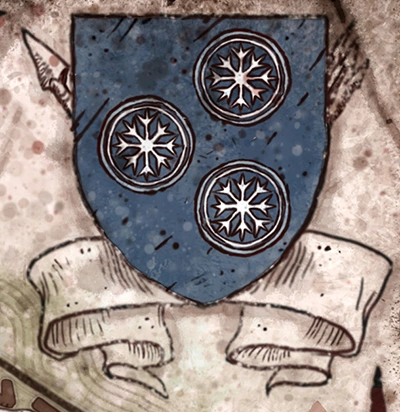
Crafts (especially water-clocks and exotic lamps), fish, horticulture, logging, magical innovations
Crafters, mercenaries

Comments