

Dwarvish
Dwarvish (Khuzdul)
Dwarvish, often called Khuzdul in ancient records, is the secretive and venerable tongue of the dwarves. It is a rune-based language of precision, tradition, and endurance, used in both speech and writing across dwarven holds and settlements. Dwarvish is particularly valued for its ability to convey technical and ceremonial meaning that is often untranslatable into other languages.
Among dwarves, the language is not merely a tool for communication—it is a vital expression of identity, heritage, and divine reverence. Its structure reflects dwarves’ love of craftsmanship, engineering, stonework, and metallurgy, and it is considered sacred, especially when used in rituals, inscriptions, or magical runes.
Origins and Development
Khuzdul is believed to have been gifted to the dwarves by Moradin, the god of creation and craftsmanship, in the earliest days of Enderlin. This divine origin imbues the language with a sense of permanence and gravity, preserved meticulously through written runes and oral tradition.
The core of Dwarvish has remained remarkably consistent for thousands of years. Unlike Common, which evolved through contact with many peoples, Dwarvish retains its ancient grammar, vocabulary, and pronunciation. While dwarves may borrow words from other languages when interacting with outsiders, such terms are rarely incorporated into daily Dwarvish speech.
Some holds, notably Karak Azkahr, preserve Old Dwarvish, a formal and archaic variant used for ceremonial, legal, or ritual purposes. Old Dwarvish retains linguistic forms that have disappeared from common dwarven usage, making it difficult for outsiders—and even some younger dwarves—to fully understand.
Dialects
There are six main dialects within the Dwarvish language, each shaped by geography, history, and isolation. While all surface dialects remain largely mutually intelligible, notable differences in tone, vocabulary, and structure persist.
Northern Dwarvish, spoken in the Dwarven Holds of Dun Kuldihr, is the harshest of the common dialects. Its consonants are heavy and clipped, reflecting life in cold, high mountain halls where speech is often practical and direct.
Middle Dwarvish, used in the holds of Baraz-Dûm and Barak Vhuldar, is considered softer by dwarven standards. It has absorbed the greatest number of loanwords from other languages through trade and diplomacy and is often used as a bridge dialect between holds.
Eastern Dwarvish is spoken by the dwarves of the Jade Mountains on the island of Tetsushima. Little is known of this dialect, as Tetsushima remains highly isolationist. Scholars believe it is closer to Old Dwarvish than to the common surface dialects, though it remains distinct even from Old Dwarvish due to centuries of independent development.
Southern Dwarvish, once common in the southern holds of the Crescent Mountains, fell out of regular use after those holds were ruined twice first during the Dragon Age and later again during the early years of The Shadow Convergence . Today, many dwarfs that live in southern Enderlin still speak it.
Deep Dwarvish, spoken by the gray dwarves (Duergar) of the Underdark, is an even older form of Dwarvish than that preserved in Karak Azkahr. Shaped by millennia beneath the surface, it differs heavily in structure, rhythm, and vocabulary, making it difficult for surface dwarves to understand.
Finally, Old Dwarvish is a ceremonial and highly formalized variant, primarily preserved in Karak Azkahr. It has retained far fewer external influences than any other dialect and is rarely spoken outside ritual, oaths, and ancestral recitation.
Though no single dialect can be considered the “standard” form of Dwarvish, all surface dialects remain mutually intelligible. Old Dwarvish and Deep Dwarvish, however, are far more difficult for speakers of common surface dialects to understand, often requiring formal study or translation.
Written Form
Dwarvish (Khuzdul) is written using a runic script also called Khuzdul, a system specifically designed to be carved rather than written. These runes are most commonly etched into stone, metal, and hardened wood, though inked forms exist for trade records, maps, and personal journals. Permanence is central to dwarven thought, and the written word is expected to endure as long as the stone that bears it.
Khuzdul runes are angular, deep-cut, and deliberate, minimizing wear from time and erosion. The script consists of 24 core runes, with certain sounds sharing a single symbol. Precision in carving is paramount; poorly formed runes are considered a mark of shame or disrespect.
Alphabet and Structure
Khuzdul functions primarily as a phonetic runic alphabet, but it also incorporates logographic elements—single runes or rune-clusters that represent entire concepts, clans, holds, gods, or sacred ideas. These symbols are frequently used on monuments, gates, oath-stones, and official decrees.
Capitalization exists but is subtle. Important nouns, proper names, or the opening word of a sentence may be marked with a horizontal accent line carved above the rune, rather than a separate capital form.

Punctuation is minimal. Words are separated by spacing, while sentences are typically ended with a long horizontal line or diagonal slash carved across the writing line. This system ensures readability even on weathered or damaged surfaces.
Numerals
Khuzdul numerals are written as single combined symbols, constructed from straight-line components representing 1, 5, and 10. These elements are merged logically to form larger values, allowing numbers to be carved efficiently without ambiguity.
- Numbers from 1 to 9 combine the symbols for 1 and 5

- 10 to 99 use layered combinations of 1, 5, and 10


- 100 is formed by inverting the symbol for 10

- 1,000 is created by rotating the 10-symbol and placing it before the hundred marker
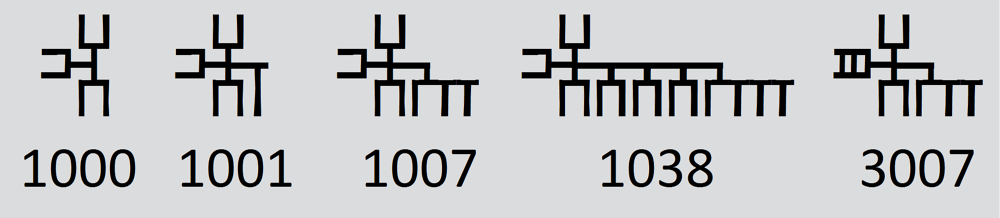
Dates are traditionally enclosed in rectangular rune-boxes, written as day followed by year, a convention used on contracts, tombs, and historical records.
Symbols and Runestones
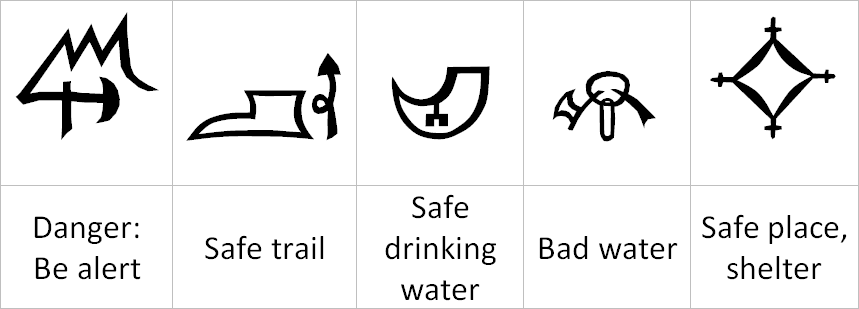
Beyond letters and numbers, Khuzdul includes an extensive system of symbol-runes. Entire clans, holds, races, and commonly understood concepts possess their own glyphs. These symbols are widely used for:
- Waymarkers and underground routes
- Runestones and territorial boundaries
- Clan seals, guild marks, and legal proclamations
Certain symbols serve practical purposes for travelers, such as markings indicating safe paths, fresh water, shelter, or danger. Others are sacred or ceremonial, closely tied to Moradin and the ancient traditions of the dwarven holds.

Artistry and Emotional Expression
Though Khuzdul is rigid in structure, dwarves believe that intent and emotion are expressed through craftsmanship. The depth, angle, and orientation of runes can convey reverence, wrath, grief, or pride. Legendary weapons, armor, and oath-stones often bear runes carved at deliberate slants or with exaggerated strokes to reflect the mindset of their creator.
For clarity and emphasis, runes may be painted or inlaid. By long-standing tradition:
- Names of individuals, clans, and holds are highlighted in red
- General text is left unpainted or marked in black
Such markings are never purely decorative—they carry meaning, memory, and honor.
Use in Modern Enderlin
Khuzdul is primarily used within dwarven communities, from the bustling Dwarven Holds of Dun Kuldihr to the remote strongholds of Baraz-Dûm and Karak Azkahr. It serves as a language of:
- Everyday speech: Communication among dwarves in holds, for clan matters and trade.
- Craftsmanship and engineering: Precise technical terms for stonework, metallurgy, and magical runes.
- Ceremony and religion: Rituals, blessings, and formal oaths are often recited in Dwarvish.
- Secrecy and tradition: Many dwarves speak only a few words of Dwarvish to outsiders, maintaining privacy and cultural continuity.
Despite its secrecy, many dwarves also speak Common to conduct trade, diplomacy, or interaction with other races. However, Dwarvish remains the preferred language among dwarves, even when speaking with outsiders who understand Common.

Example use found in one of the ruined holds of the crescent mountins.
Cultural Perception
For dwarves, Dwarvish is more than a language—it is a symbol of endurance, identity, and sacred heritage. Outsiders often perceive it as guttural, precise, or harsh-sounding, but to dwarves, it carries centuries of history, knowledge, and honor.
Fluent speakers recognize a shared lineage, a connection to craftsmanship, and the presence of Moradin’s blessing in each carefully formed word. Even dwarves who live primarily among other races maintain Dwarvish as a core part of their identity.
Names in Khuzdul
To a dwarf, a name is a binding statement of lineage, craft, and honor. Dwarven names are traditionally given in Khuzdul, often chosen to reflect ancestral deeds, the circumstances of birth, or the hopes of the clan. A dwarf’s true name is considered deeply personal and is rarely shared freely with outsiders.
Most dwarves possess multiple names over the course of their lives:
- A birth-name, given by family
- A clan-name, inherited through blood or oath
- One or more earned names or epithets, granted for notable deeds, craftsmanship, or service
In dealings with non-dwarves, dwarves commonly use simplified or translated Common names, reserving their full Khuzdul names for formal occasions or use among their own people.
Common Dwarven Given Names (Male)
Borin
Dain
Durak
Fundin
Garn
Kazrik
Thorin
Vondal
Gillbert
Common Dwarven Given Names (Female)
Brynna
Disra
Helja
Kelda
Ragna
Sigrun
Tholda
Yrsa
Common Dwarven Clan Names
Ironbeard
Stonefist
Deepdelver
Hammerfall
Bronzeshield
Oathforge
Grimvault
Azgal
of Zorn
Grimsson
These Common forms are often approximations of far longer Khuzdul names, shortened for ease of speech. A clan known in Common as Stonefist might bear a full Khuzdul name meaning “Those Who Broke the Mountain with Unyielding Hands.”
Native Name: Khuzdul
Script: Dwarvish Runes — carved symbols used in stone, metal, wood, and magical inscriptions
Primary Speakers: Dwarves; also studied by scholars, craftsmen, and rune mages
Geographic Spread: Primarily within dwarven holds and settlements across Enderlin; rarely spoken outside dwarves
Status: Sacred and secretive; used for craftsmanship, ritual, and tradition
Origin:
Gifted to dwarves by Moradin in the earliest days of Enderlin; preserves ancient linguistic structures, specialized terminology for stonework, metallurgy, engineering, and magical runes.
Dialects:
Dwarvish has six main regional dialects:
- Northern Dwarvish – spoken in the Dwarven Holds of Dun Kuldihr
- Middle Dwarvish – spoken in the Dwarven Holds of Baraz-Dûm and Barak Vhuldar
- Eastern Dwarvish – spoken by the dwarves of the jade mountains on the Mistarius Island of Tetsushima.
- Southern Dwarvish – formerly spoken in the southern holds of the Crescent Mountains, which fell into ruin around the Dragon Age; many dwarves in southern Enderlin still speak remnants of this dialect
- Deep Dwarvish – spoken by gray dwarves (Duergar) of the Underdark. This dialect of dwarvish is an even older form of dwarvish than what is spoken in Karak Azkahr.
- Old Dwarvish – is a ceremonial and highly formalized variant, primarily preserved and used in Karak Azkahr, and rarely spoken outside that hold.
Ease of Learning:
Difficult — secretive and formalized; largely restricted to dwarves, though some scholars and artisans can study it.

Comments