
Kol Korran
Kol Korran is worshiped wherever hands are extended in trade, wherever contracts are signed, fortunes risked, and bargains struck. He is the Sovereign of wealth not as idle treasure, but as circulation—coin that moves, goods that change hands, risks that birth prosperity or ruin. To his faithful, Kol Korran is not merely the god of gold, but of opportunity, negotiation, travel, and the fragile trust that allows civilization to function at all.
Shrines to Kol Korran stand in marketplaces, counting houses, caravanserais, docks, and crossroads. His priests are bankers, brokers, quartermasters, moneylenders, trade-priests, and caravan factors. Worship of Kol Korran rarely takes the form of formal sermons. Instead, it manifests through sealed agreements, ritualized handshakes, weighed scales, and the offering of a single coin cast into temple coffers before a venture begins. Every gamble, whether of money, reputation, or life, is understood to invite his attention.
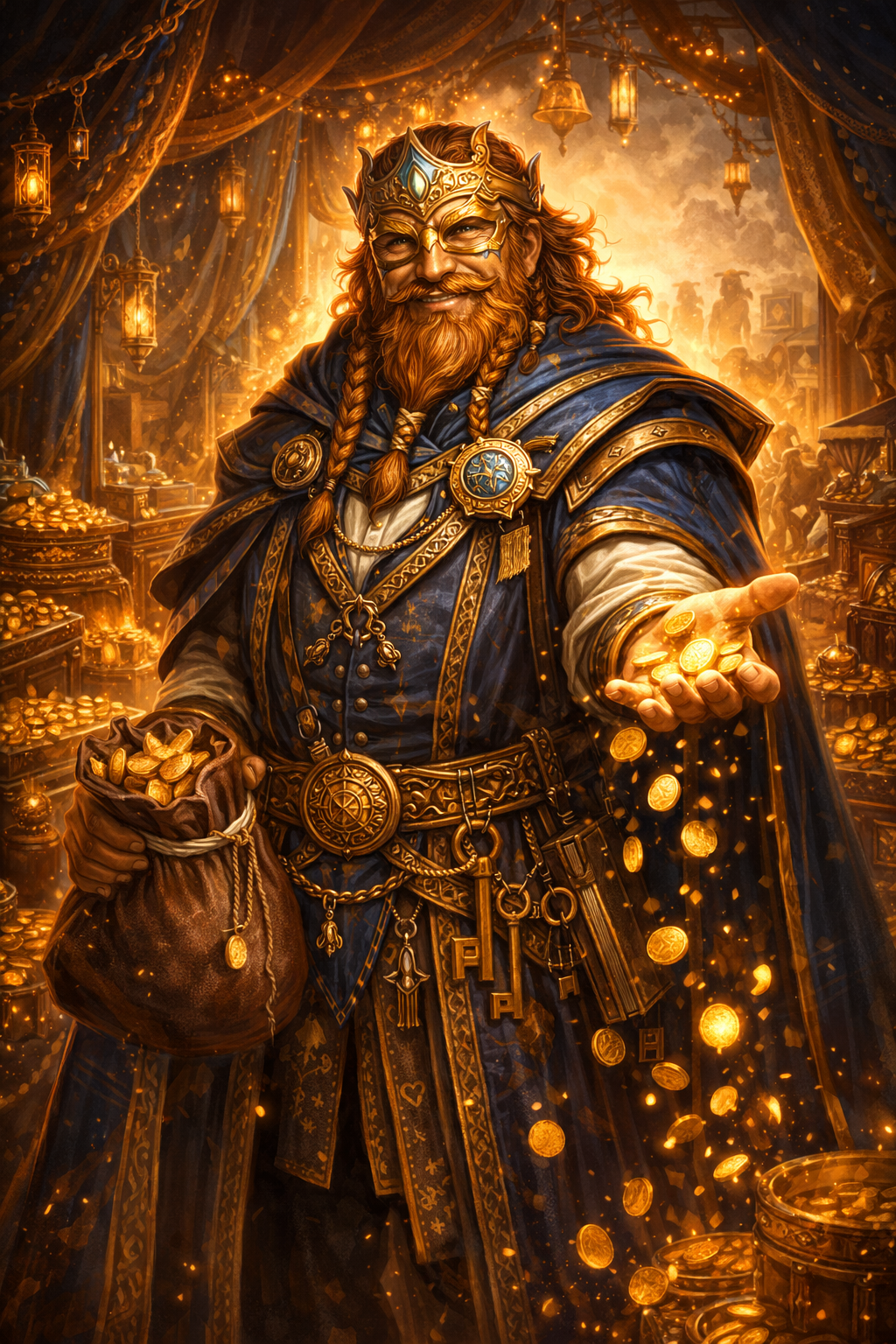
In Host mythology, Kol Korran is the broker among gods, the negotiator who ensured mortals retained free exchange rather than divine allotment. He is portrayed as a well-dressed wanderer, a masked merchant-prince, or a genial host with sharp eyes and carefully empty hands. Where Onatar creates and Aureon defines, Kol Korran distributes. He embodies the truth that value is not inherent, but agreed upon—and that the world is built not only by those who forge and rule, but by those who connect.
He is depicted as a fat, cheerful human or dwarf in fine clothes. A few ancient representations of him show a white dragon lying on a bed of ice-blue gemstones. Said to be the son of Olladra and Onatar and the twin brother of the Keeper.
Divine Domains
Kol Korran presides over wealth, trade, travel, negotiation, contracts, risk, and material fortune. His influence governs marketplaces and sea-lanes, counting houses and caravan routes, vaults and ledgers, ships and shopfronts. He does not rule wealth as possession alone, but as motion—coin spent, goods shipped, favors owed, and fortunes ventured.
He is widely revered by merchants, bankers, sailors, caravan masters, guild factors, moneylenders, explorers, and professional negotiators, as well as by nobles and governments whose power depends upon economic stability. Where Olladra celebrates fortune’s arrival, Kol Korran concerns himself with its management.
Artifacts
Artifacts attributed to Kol Korran often take the form of tools of exchange rather than symbols of authority. Legendary relics include scales that reveal hidden value, coins that return when spent honestly, ledgers that record more than ink alone, and keys that open only when fair terms are spoken. Some tales speak of compacts—contracts said to bind even extraplanar powers, sealed not by magic, but by inviolable accord.
Unlike the relics of Dol Arrah or Dol Dorn, Kol Korran’s artifacts are often portable, subtle, and easily mistaken for mundane objects. Their power lies not in spectacle, but in the quiet shaping of outcomes.
Holy Books & Codes
Kol Korran’s faith preserves account rolls, mercantile codes, trade compacts, travel logs, and annotated treaties. His temples maintain the Ledgers of Accord, immense records cataloging historic bargains, market collapses, legendary ventures, and the rise and ruin of fortunes. These texts are treated both as religious documents and economic instruction, studied by priests and merchants alike.
Rather than commandments, these books emphasize precedent, teaching that wisdom lies in understanding patterns of exchange and the moral weight of obligation.
Divine Symbols & Sigils
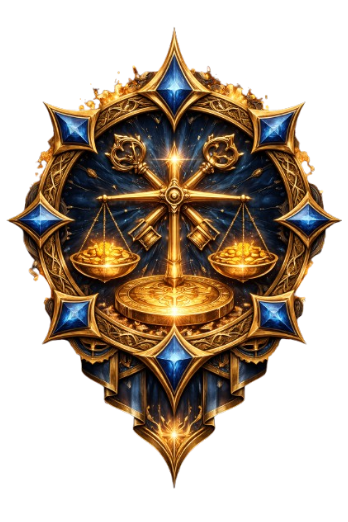
Kol Korran is most often represented by balanced scales, interlocked rings, open purses, crossed keys, or coins marked with shifting sigils. In Host iconography, his aspect of the octogram is commonly rendered in gold, deep blue, and black, representing wealth, distance, and discretion.
His symbols appear on contracts, vault doors, merchant banners, shipping crates, and civic seals. They mark places where trust is extended and value determined.
Tenets of Faith
Followers of Kol Korran are taught that wealth is power only when it moves. His doctrine emphasizes honest negotiation, the honoring of contracts, fair risk, and the understanding that prosperity is born from connection rather than hoarding. The faithful are encouraged to build networks, maintain reputations, and recognize that every bargain shapes the social world.
Kol Korran’s priests teach that greed without circulation is stagnation, and that betrayal of trust poisons every market. A common maxim among his worshipers holds that "coin remembers whose hands misuse it."
Holidays
Kol Korran’s holy days are commonly tied to markets, shipping seasons, fiscal cycles, and trade gatherings. Observances include The Opening of Ledgers, marking the start of new mercantile years; The Coinfall, celebrating profitable ventures and redistributive charity; and The Day of Open Roads, blessing travelers, caravans, and vessels.
These festivals often involve public accounting, ritualized bargaining, redistribution of wealth, and the forgiveness or restructuring of debts, emphasizing that prosperity is healthiest when it flows.
Divine Goals & Aspirations
Kol Korran is believed to labor toward the continuance of exchange between peoples. He resists isolation, economic tyranny, and the collapse of trade networks. In Host theology, he is said to guide routes across seas and borders alike, subtly ensuring that no civilization becomes entirely self-enclosed.
Some traditions claim Kol Korran’s hidden work is the preservation of interdependence, preventing nations, guilds, and species from severing the ties that make war survivable and peace possible.
Titles
- The Sovereign of Worldly Wealth
- The Keeper of Coin
- The Lord of Bargains
Alignment Neutral
Areas of Concern
- Wealth, trade, and exchange
- Travel, negotiation, and contracts
- Risk, prosperity, and material fortune
- Merchants and traders
- Bankers and moneylenders
- Sailors and caravan masters
- Guild factors and quartermasters
- Explorers and prospectors
- Diplomats and professional negotiators
Anathema Break sworn contracts, counterfeit value, hoard to the harm of others, exploit trade through cruelty or tyranny, sabotage honest exchange
Follower Alignments LN, N, CN, NG
Domains Wealth, Travel, Knowledge, Trickery, Earth
Subdomains Trade, Contracts, Exploration, Deception, Industry, Memory
Favored Weapon Light hammer
Symbol A balanced scale over a coin; crossed keys upon a disk; the octogram worked in gold and deep blue
Sacred Animal Raven, camel
Sacred Colors Gold, deep blue, black