
Dol Dorn
Dol Dorn is not honored in quiet chapels. His name is spoken through clenched teeth, shouted across training yards, muttered before the crash of shield on shield. He is invoked in the pounding of feet on stone, in the rasp of steel from scabbard, in the long breath drawn before a charge. To revere the Sovereign of Strength and Steel is not to ask for peace, but to accept the certainty of struggle—and to choose to meet it standing.
His faithful worship him with their bodies. Every bruise is a lesson. Every scar is a record. Every bout, every march, every desperate defense is a form of prayer. Dol Dorn asks not for obedience, but for effort: that one rise when struck down, that one face the stronger foe, that one place themselves between danger and those who cannot endure it alone. In his halls, the clangor of practice never truly ceases, for stillness is the only insult to the god of contest.
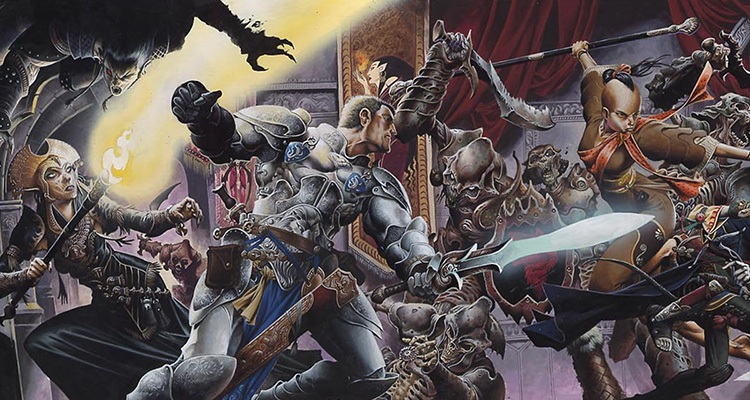
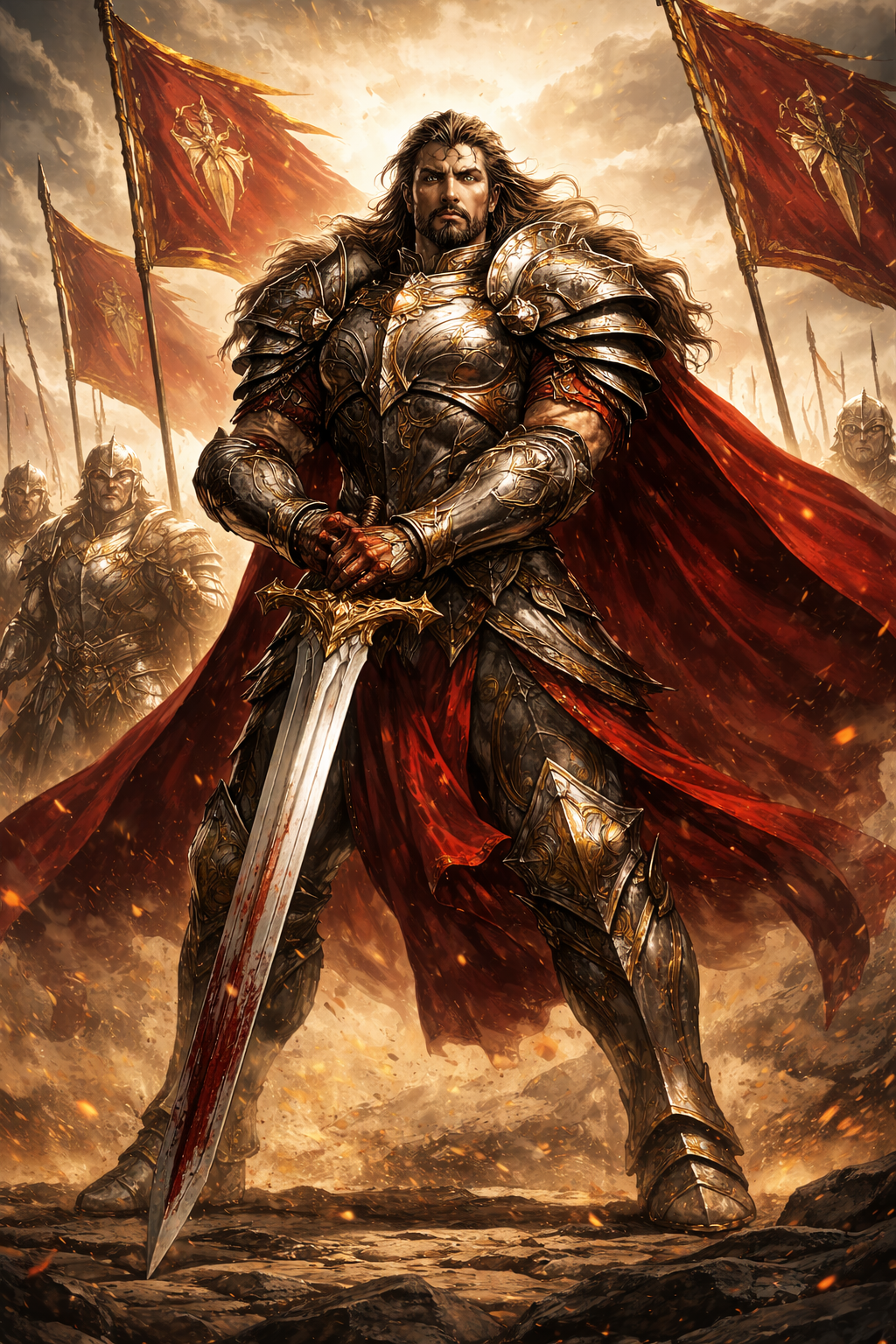
In the stories of the Host, Dol Dorn is the first into the fray, the one who laughed as he broke the Dark Six from the Sovereigns’ ranks and drove them into shadow. He is shown scarred but unbowed, banner streaming, blade red to the hilt—not as a conqueror, but as a challenger. Where Dol Arrah brings light to reveal what must be defended, Dol Dorn becomes the shield and the arm that defends it. Where he walks, the world does not grow safer. It grows sharper.
Said to be the brother of Dol Arrah and the Mockery, texts depict Dol Dorn as a musclebound human, dwarf, or half-orc, and occasionally as a mighty silver dragon.
Divine Domains
Dol Dorn presides over war, physical prowess, competition, endurance, liberation, and the testing of limits. He governs not only battlefields, but training yards, dueling grounds, gladiatorial arenas, mountain ascents, and any place where mortals pit will and body against resistance.
Where Dol Arrah defines why one fights, Dol Dorn defines how one endures the fight. He is invoked by soldiers and mercenaries, but also by athletes, pit fighters, wrestlers, sailors, caravan guards, and rebels. To him, struggle itself is holy—so long as it is not hollow.
Artifacts
Relics of Dol Dorn are almost always weapons, armor, and symbols of contest, bearing the marks of long use rather than ceremonial perfection. Common legendary forms include:
- Blades that never break while wielded for a just cause
- Shields said to grow heavier when protecting the helpless
- Gauntlets of trial, used in sacred contests and ordeals
- Banners of rallying, which strengthen those who stand their ground
Such artifacts are rarely hidden. They are meant to be carried, broken, reforged, and carried again.
Holy Books & Codes
Dol Dorn has few scriptures and many training traditions. His temples preserve manuals of arms, chronicles of famous battles, records of great duels, and genealogies of renowned champions. Some sects maintain the Red Ledgers—accounts of impossible victories, desperate defenses, and underdogs who stood when retreat would have been wiser. These are read aloud before contests and campaigns.
Divine Symbols & Sigils
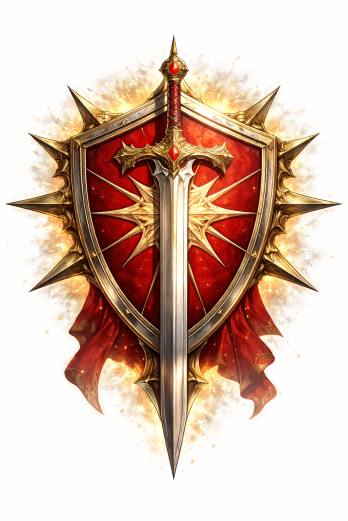
Dol Dorn is most often represented by a longsword crossed over a shield, a raised blade, or a scarred helm. Within Host iconography, his octogram aspect is rendered in iron, silver, and deep red.
His temples are built like keeps: narrow windows, thick doors, visible defenses. Shrines often take the form of weapon racks, training circles, or standing stones marked with blades.
Tenets of Faith
Followers of Dol Dorn are taught:
- Strength is meant to be used, not hoarded.
- Struggle is the crucible of the soul.
- Protect those who cannot stand alone.
- Never glorify slaughter; honor the contest.
- A warrior’s worth is measured by what they defend, not what they destroy.
A common Dornish proverb says: “If the fight is easy, look again. You are missing its meaning.”
Holidays
Dol Dorn’s holy days are marked by tournaments, athletic trials, weapon blessings, and commemorations of great stands. Common observances include:
- Brightblade (12 Nymm): Dedicated to Dol Dorn, this festival is marked by gladiatorial and athletic contests.
- The Day of the First Blade, celebrating the taking up of arms
- The Trial of Iron, featuring contests of endurance and skill
- The Standfast Vigil, honoring soldiers who died holding the line
- The Crimson Challenge, sacred games held between temples
These festivals are loud, physical, and communal—filled with contests, feasting, and the retelling of victories and defeats alike.
Divine Goals & Aspirations
Dol Dorn is believed to labor to keep the world from stagnation. He opposes both tyranny that crushes resistance and decadence that forgets hardship. Many priests teach that Dol Dorn drives mortals toward confrontation not out of cruelty, but to prevent the rot that follows when injustice goes unchallenged. He is said to favor the outnumbered, the besieged, and those who fight not because they will win, but because they must.
Titles
- The Sovereign of Strength and Steel
- The Lord of Battle
- The First Champion
Alignment Chaotic Good
Areas of Concern
- War and battle
- Athleticism, strength, and endurance
- Competition and honorable struggle
- Soldiers and mercenaries
- Gladiators and pit fighters
- Athletes and competitors
- Rebels and freedom fighters
- City guards and caravan wardens
- Those who fight to defend others
Anathema Glorify cruelty, slaughter without cause, abandon those who depend on you, refuse a just challenge out of fear, misuse strength to dominate the weak
Follower Alignments CG, NG, CN
Domains Chaos, Competition, Good, Liberation, Strength, War
Subdomains Resolve, Ferocity, Tactics, Freedom, Heroism, Blood
Favored Weapon Longsword
Symbol A longsword crossed over a shield; the octogram worked in red and silver
Sacred Animal Bear, warhorse
Sacred Colors Red, steel-gray, black