
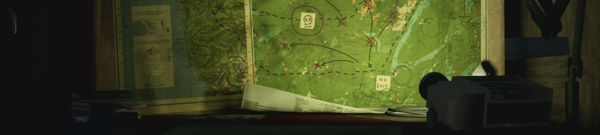
Zaun Exclusion Zone
Zaun, West Virginia is the eponymous and mysterious American rural town serving as the setting for the majority of the Silent Frontier video game. Like much of Appalachia during its heyday, Zaun has an incredibly rich history, especially with the deep roots it has pertaining to its relationship with the Coal Mining industry. In its early history, Zaun was once classified as boomtown or industrial town that underwent significant development due to a coal mining industry that started during the late 19th century and beyond.
Prior to the events of the game it is described to be a small town with a population just below 50,000 and it’s key industry, tourism, in a state of steady decline. However, by the events of the game it is classified as a city in which the town's more conservative residents oppose modernization and the transformation of the town into a tourist attraction.
Like much of the USA at the time, the region of Zaun had originally been settled in 1793 by immigrant fur trappers and only became an official town by at least 1799-1802. In the later years, when mining became popular as a valuable source of income for many; townsfolk began to move away from trapping and instead settled into the new occupation of mining, mostly for coal which around that time was highly valued as a source of fuel.
NOXUS in Silent Frontier's stands not so much different from it’s show-counterpart, however details of the leadership and administrative structure remain largely unknown within the current lore. What is generally known is that region believed to be Noxus is in constant turmoil and plagued by civil conflicts and instability. These conflicts have thus resulted in millions of deaths and widespread suffering due to violence, displacement, and the exploitation of natural resources. However the pivotal aspect of Noxus is its constant attempt at power grabs. Every year the border of Noxus’ shrinks and expands with every battle lost. Numerous armed groups have competed with the central authorities for power and control of the potential fortune in this vast nation, with many states being led by various warlords and military captains, many of who often look toward regions such as Piltover for its vast achievement's, seeing opportunity in their creations to turn the tides of war in their favor.
However, in Silent Frontiers only one part of this is ever actually shown. While the term Noxus is used as a designation for the region, it also is a title given to the militaristic faction and secondary antagonists within the game led by warlord Ambessa Medarda, who along with her group, stands as the secondary antagonist of Silent Frontiers following the revelation that they have intended to weaponize the achievements of Piltover for their own gain, viewing Piltover as a hub of technological advancement with untapped potential for global influence.
The Zaun Exclusion Zone (or simply "The Zone or Zaun") is a multi-sectional cordoned disaster area found in Appalachia established as an restricted area dedicated to the research and development of many of Piltover’s experiments. Per the United States Department of Defense, an exclusion zone is typically defined as territory where an authority prohibits specific activities in a specific geographic area. These temporary or permanent zones are created for control of populations often for safety, crowd control, or military purposes, or as a border zone.
Following Zaun and its surrounding territories containment as a Military Exclusion Zone, private military sectors belonging to both NOXUS and Piltover imposed a highly strict martial law throughout the city and its surrounding towns. During this time, the military prevented anyone from ultimately leaving the city.
Regular checkpoints throughout the portions of the zone were guarded heavily by the military and effectively kept a lot of people trapped within the confines of the city, and anyone caught trying to leave was automatically dealt with in typical totalitarian fashion.
Plagued with starving citizens, rigid work duties and strict curfews placed upon all residents, while the military was eventually left to be abandoned in the Zone by its own leading body, and many ultimately decided to give up and join the citizens or attempt to make their way out of Zaun entirely, many however did not. Some stayed at their posts until the very end, holding fast to their oaths of service, even as it is obvious that all is lost. Many continued exercising their control and ended up transforming many parts of the zone into individual “police states”, exercising absolute power over portions of the zone.
Sometime however after the Martial Law was first established in Zaun, a group of dissident residents enraged by the expulsions, food shortages, and near constant executions the remaining military consistently conducted as well as the apparent tyrannical abuse of power, attempted a coup; notably stealing the military's expansive supplies, to forming protests and riots.
In the following months the remaining military actively fought hard to keep control of the zone’s still under occupation, with many sections deciding to publicly execute people they often branded as traitors to the peace.
Large-scale fighting in many parts of the city soon broke out over the next couple of months until the military was successfully expelled from the city and instead took up small military outposts throughout the outer reaches of Zaun. However, following this series of events and multiple others in the following weeks, attempts to make it out of Zaun/West Virginia into neighboring cities has still proven to be futile and as a result many still remain trapped in the exclusion zone with outside communications proving to be nulled.
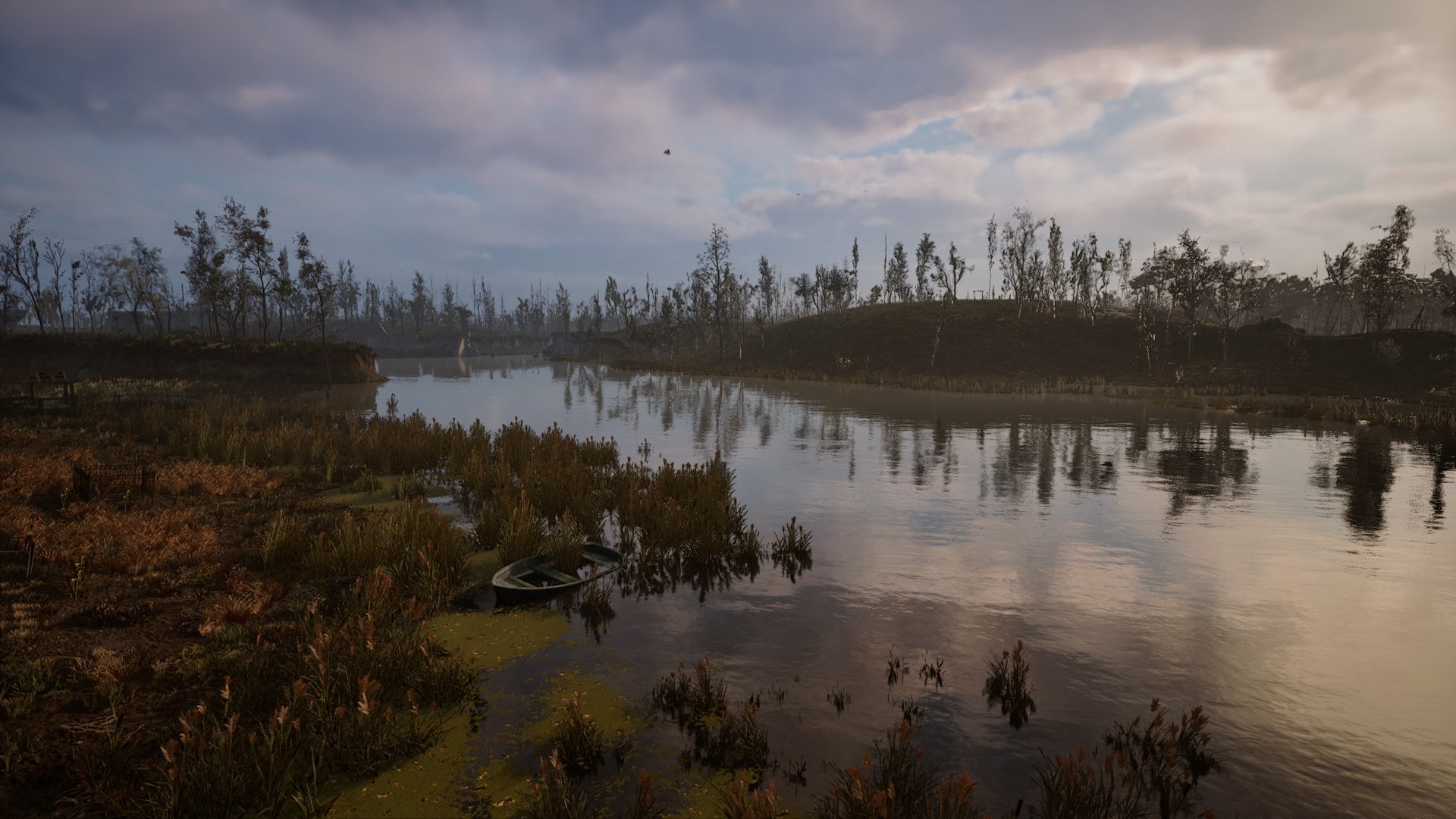 The Zaun Exclusion Zone encompasses a large swath of territory East of West Virginia. While the exact size of the zone is generally unknown the territory of the city of Zaun ITSELF is large enough to be split into 5-6 sections known as City-Zones
City-Zones, are sections of the city of Zaun that have been split into various different districts each run by a gang formally known as Chem-barons. Following the military's abandonment of Zaun, many Barons looked to once again take back what they believed to be their portion of the city.
As a result many Chem-barons split the city into pieces and began fighting for control over the power of their respective district, leading to mass infighting and territorial disputes causing the entire suburban district to erupt into a civil war between gangs. Typically each section of the zone is named based around the area of the map they are located on: Center zone, North zone, South zone, East zone and the West zone. Multiple other sections of land and much smaller groups also make up bits of the Zone, but are generally considered a part of the main 5. There are rumors of there being a Sixth section of the zone, but it is generally unclear since the movements of the particular faction said to run it tend to be highly secretive.
The Zaun Exclusion Zone encompasses a large swath of territory East of West Virginia. While the exact size of the zone is generally unknown the territory of the city of Zaun ITSELF is large enough to be split into 5-6 sections known as City-Zones
City-Zones, are sections of the city of Zaun that have been split into various different districts each run by a gang formally known as Chem-barons. Following the military's abandonment of Zaun, many Barons looked to once again take back what they believed to be their portion of the city.
As a result many Chem-barons split the city into pieces and began fighting for control over the power of their respective district, leading to mass infighting and territorial disputes causing the entire suburban district to erupt into a civil war between gangs. Typically each section of the zone is named based around the area of the map they are located on: Center zone, North zone, South zone, East zone and the West zone. Multiple other sections of land and much smaller groups also make up bits of the Zone, but are generally considered a part of the main 5. There are rumors of there being a Sixth section of the zone, but it is generally unclear since the movements of the particular faction said to run it tend to be highly secretive.
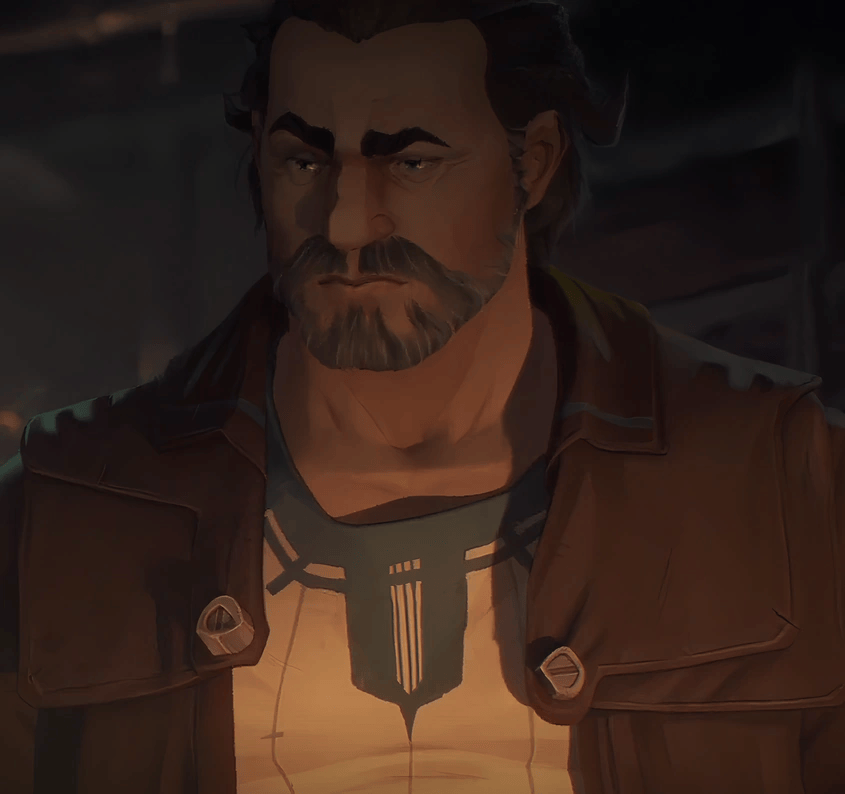
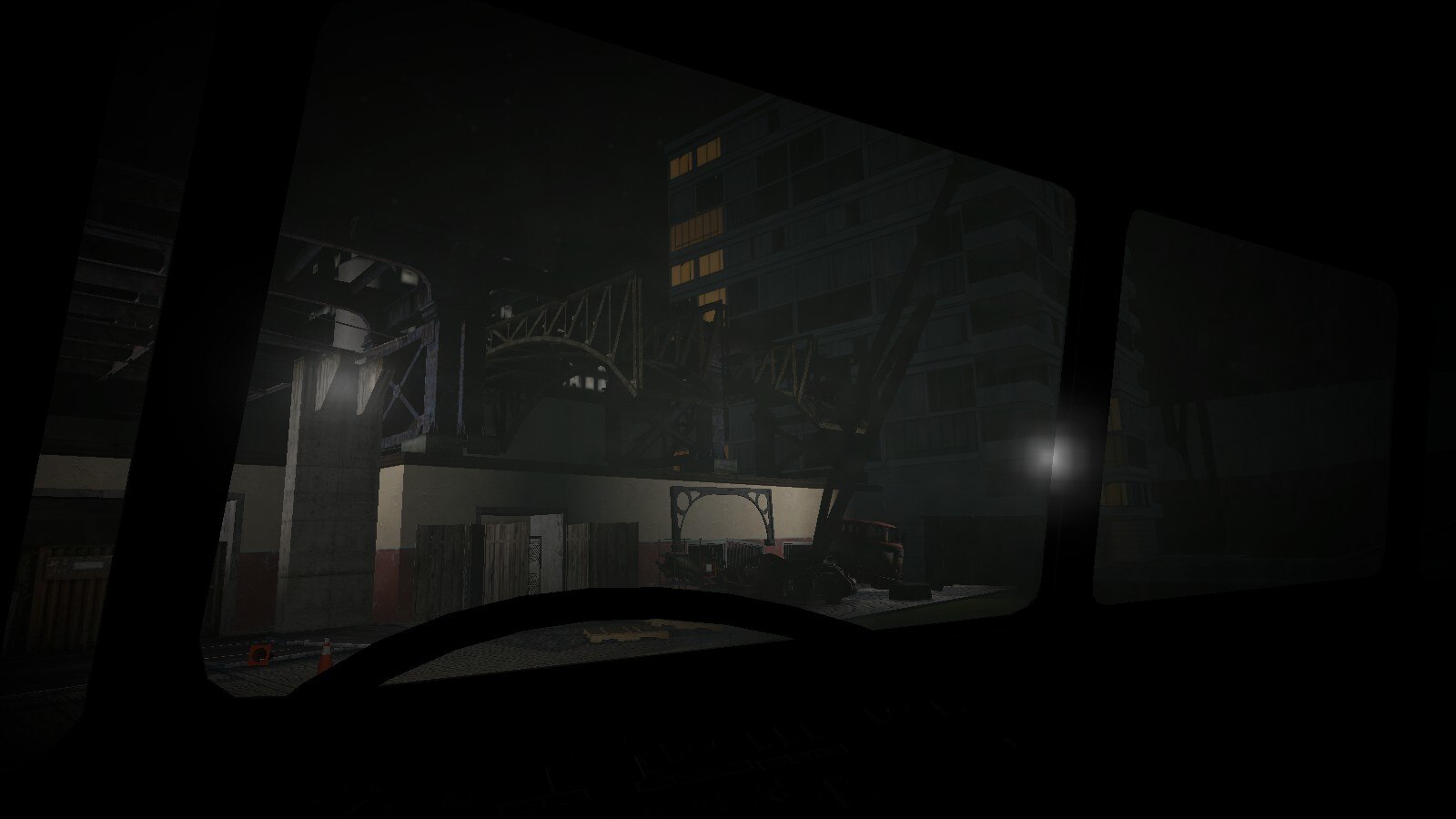 The South City-Zone, also known by people as the Scrapyard, lies as the name suggests at the southernmost part of Zone just outside the outskirts of the city. Aside from being the burial grounds to heaps of junk vehicles, scrap and other refuse, it is home to the Chem-Baron Smeech and his group the Scrap Hackers; who reside in one of the old factory buildings and seem to have an unhinged obsession with anything having to do with metal.
Ruthless scavengers, Scrap Hackers are genius' in engineering and often make their living by scavenging parts of old disused equipment to use in various experiments. Though very recently it is rumored that they have crossed paths with military-grade equipment.
What they plan on doing with it is unknown, but given that the South Zone is one of only 2 parts of the zone not completely connected to the city, rumor has it Smeech has plans far beyond his own territories and interests
The South City-Zone, also known by people as the Scrapyard, lies as the name suggests at the southernmost part of Zone just outside the outskirts of the city. Aside from being the burial grounds to heaps of junk vehicles, scrap and other refuse, it is home to the Chem-Baron Smeech and his group the Scrap Hackers; who reside in one of the old factory buildings and seem to have an unhinged obsession with anything having to do with metal.
Ruthless scavengers, Scrap Hackers are genius' in engineering and often make their living by scavenging parts of old disused equipment to use in various experiments. Though very recently it is rumored that they have crossed paths with military-grade equipment.
What they plan on doing with it is unknown, but given that the South Zone is one of only 2 parts of the zone not completely connected to the city, rumor has it Smeech has plans far beyond his own territories and interests
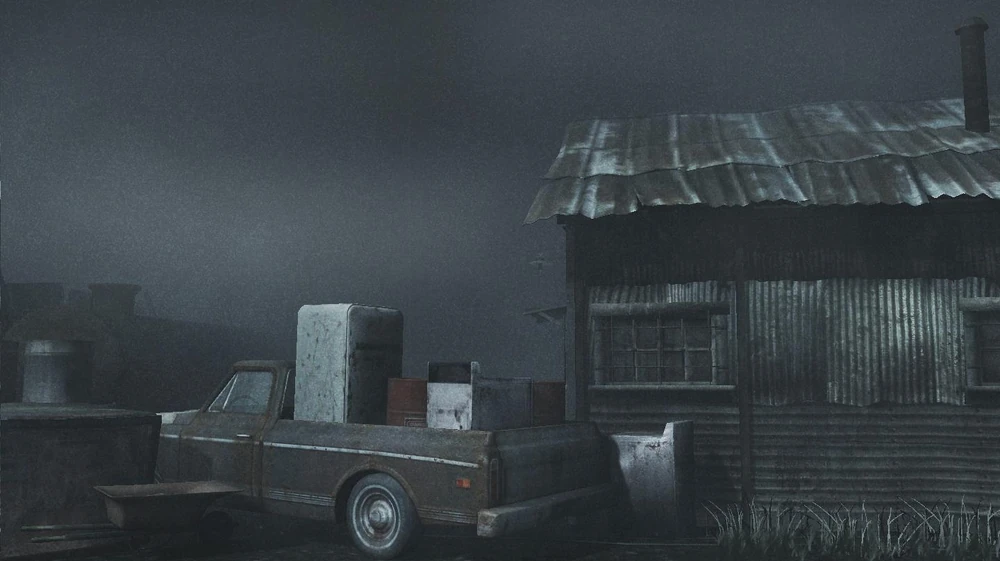 The North City-Zone also known as the Hush Zone, is a massive complex located within an Eastern mountain range on the outskirts of Zaun. The factory that makes up the main bulk and territory within this Zone was originally constructed in the late 19th century and appears to have originally been a coal mine. However the mine went dry and the factory shut down sometime in the early 20th.
Since then, the mine and factory both became an historic tourist attraction before being officially shut down due to safety concerns in the late 20th. It was originally scheduled to be torn down shortly before the shutdown of the town , but now instead is home and base to Chross the boss of the Hush Company.
While many of Chross' and Thus Hush's dealings are of the informative type, Chross is a well-loathed man for many reasons. He is well known to prey on those less fortunate and despite carrying himself as a "proper" business man, is known to dabble well and deep in the Slave Trade, exploiting those to work for him regardless of age race or creed.
As a result many of those working under Chross present as individual slavers operating on commission for slaves. Because much of the region is vast and mountainous between towns, those on their own or towns with few protections are often ripe for the pickings. However, the number of slaves present compared to the number of slavers is actually remarkably low, implying greatly that those captured are being used for something else elsewhere.
Currently, Chross is in conflict with the East Zone, or the "Red Light District".
The North City-Zone also known as the Hush Zone, is a massive complex located within an Eastern mountain range on the outskirts of Zaun. The factory that makes up the main bulk and territory within this Zone was originally constructed in the late 19th century and appears to have originally been a coal mine. However the mine went dry and the factory shut down sometime in the early 20th.
Since then, the mine and factory both became an historic tourist attraction before being officially shut down due to safety concerns in the late 20th. It was originally scheduled to be torn down shortly before the shutdown of the town , but now instead is home and base to Chross the boss of the Hush Company.
While many of Chross' and Thus Hush's dealings are of the informative type, Chross is a well-loathed man for many reasons. He is well known to prey on those less fortunate and despite carrying himself as a "proper" business man, is known to dabble well and deep in the Slave Trade, exploiting those to work for him regardless of age race or creed.
As a result many of those working under Chross present as individual slavers operating on commission for slaves. Because much of the region is vast and mountainous between towns, those on their own or towns with few protections are often ripe for the pickings. However, the number of slaves present compared to the number of slavers is actually remarkably low, implying greatly that those captured are being used for something else elsewhere.
Currently, Chross is in conflict with the East Zone, or the "Red Light District".
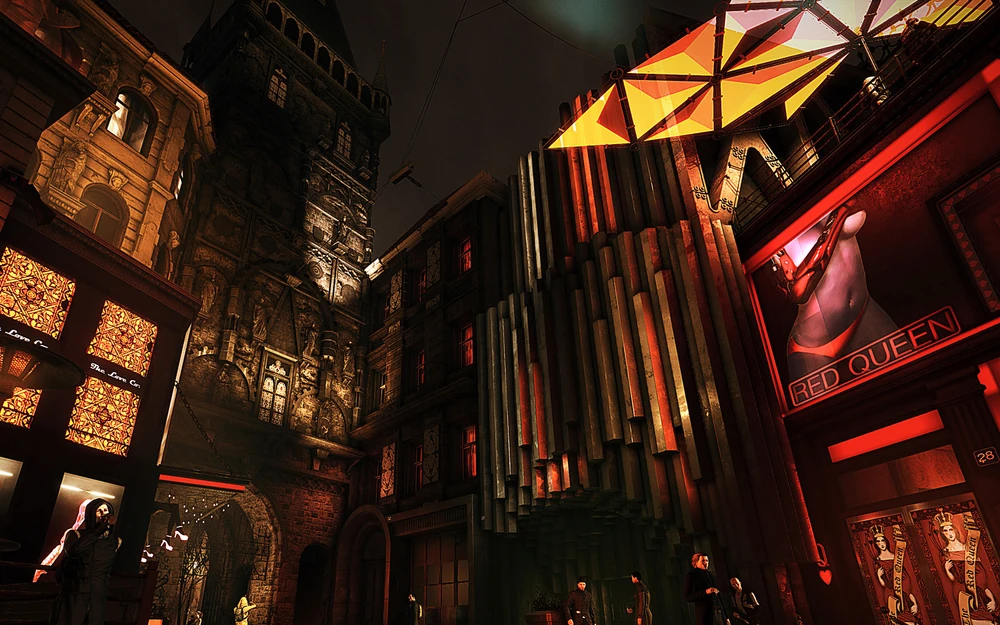 The East City Zone, also known as the Red Light District, Redline Zone, Rapture Road or Vyx's Road is a district located on the Eastern Side of the city and home to the city's strip clubs, night bars and Vyx-controlled territory.
It is different from others as it is only accessible at night and the district is home to many businesses that cater to natures of the flesh. Madame Margot is the baron who runs it all, however compared to the other Barons, Margot appears to be the most level headed and calm of the bunch. Unlike the others, she tends to stay on her side of the city and never interferes with the businesses of others or attempts territory pushes, more likely to negotiate then start turf wars.
However, again unlike the other Barons, Madam Margot also seems to be on good terms with the Lanes District. Mutual respect between the two has led to an easy-going partnership and has thus proven highly beneficial to both parties. In addition, mutual respect also seems to stem due to a shared hatred both have for Chross and the Hush Zone and their doing with Slavery/trafficking.
In fact Margot's hatred for Chross is said to be so strong that even in the beginning before the official shutdown, tensions have been drastically high between the two factions. So strong in fact that even now Vyx-Road has been in a shadow war against the Hush with the aim of liberation.
However, due to a recent series of retaliatory kidnappings and raids on several of their safehouses and former headquarters, sometime during and prior to events of the game, Margot is said to have brokered a peace deal between the leaders of the Lane's and herself in exchange of the protection of someone Margot thinks highly of, who was afterwards sent to stay at the lanes over Margot fearful of her safety due to the increasing hostilities between the two factions.
The East City Zone, also known as the Red Light District, Redline Zone, Rapture Road or Vyx's Road is a district located on the Eastern Side of the city and home to the city's strip clubs, night bars and Vyx-controlled territory.
It is different from others as it is only accessible at night and the district is home to many businesses that cater to natures of the flesh. Madame Margot is the baron who runs it all, however compared to the other Barons, Margot appears to be the most level headed and calm of the bunch. Unlike the others, she tends to stay on her side of the city and never interferes with the businesses of others or attempts territory pushes, more likely to negotiate then start turf wars.
However, again unlike the other Barons, Madam Margot also seems to be on good terms with the Lanes District. Mutual respect between the two has led to an easy-going partnership and has thus proven highly beneficial to both parties. In addition, mutual respect also seems to stem due to a shared hatred both have for Chross and the Hush Zone and their doing with Slavery/trafficking.
In fact Margot's hatred for Chross is said to be so strong that even in the beginning before the official shutdown, tensions have been drastically high between the two factions. So strong in fact that even now Vyx-Road has been in a shadow war against the Hush with the aim of liberation.
However, due to a recent series of retaliatory kidnappings and raids on several of their safehouses and former headquarters, sometime during and prior to events of the game, Margot is said to have brokered a peace deal between the leaders of the Lane's and herself in exchange of the protection of someone Margot thinks highly of, who was afterwards sent to stay at the lanes over Margot fearful of her safety due to the increasing hostilities between the two factions.
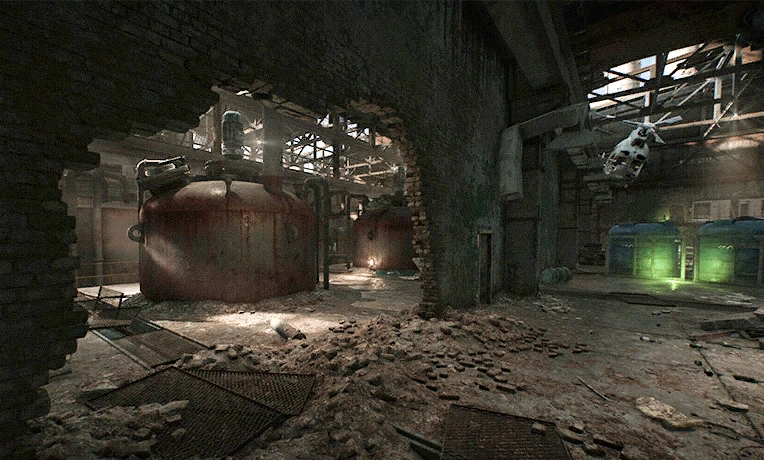 The West City Zone is what remains of Chemical Plant No. 16. It is a large industrial complex located just west of the Zaun-City District and is one of the many publicly-known facilities in the area.
Before the shutdown, the military had created numerous "camouflage" facilities over the years; buildings that looked like one thing but were simply a facade prop for another. Whatever this plant in particular was used for is greatly unknown because it was one of the last ones created and had remained greatly unfinished.
Despite that, during the advent of the Revo Wars, the plant had become the scene of numerous firefights between The Military and Survivors, that ultimately determined control over this side of the industrial district of Zaun. Later on, in the wake of the chaos, the reigning champions who would ultimately take over the plant and its surrounding territory turned out to be the Sludgerunner faction with their leader Renni. What they do exactly in this plant is generally unknown. However given Renni's long extensive history involving the cultivation, manufacture, distribution and sale of varying illicit substances, many of which can be classified as chemical warfare, it's safe to say she has gone back to her old habits.
The West City Zone is what remains of Chemical Plant No. 16. It is a large industrial complex located just west of the Zaun-City District and is one of the many publicly-known facilities in the area.
Before the shutdown, the military had created numerous "camouflage" facilities over the years; buildings that looked like one thing but were simply a facade prop for another. Whatever this plant in particular was used for is greatly unknown because it was one of the last ones created and had remained greatly unfinished.
Despite that, during the advent of the Revo Wars, the plant had become the scene of numerous firefights between The Military and Survivors, that ultimately determined control over this side of the industrial district of Zaun. Later on, in the wake of the chaos, the reigning champions who would ultimately take over the plant and its surrounding territory turned out to be the Sludgerunner faction with their leader Renni. What they do exactly in this plant is generally unknown. However given Renni's long extensive history involving the cultivation, manufacture, distribution and sale of varying illicit substances, many of which can be classified as chemical warfare, it's safe to say she has gone back to her old habits.
 Beyond the protective walls of the city lie what are known as the Outer Limit Zones. The Outer Limit Zones are a series of sections of the Exclusion Zone that don't include the city but are instead made up by the surrounding outer limit environment. The Outer Sections of the Zone are divided into 3 sections: The Inner Zone(A), Mid zone(B), and the Far zone(C).
The Outer limits of the Zone remain much of a mystery to many within Zaun due to the increased dangers that accompany attempts to traverse them: While home may be familiar to many, it's simply not the same anymore.
Zaun-City resides in the upper Inner Zone area of the Exclusion Zone, making up a large inhabited portion of this section of land. However, despite efforts, escape attempts to leave the Zone entirely and head to Piltover or any safe-haven have only resulted in survivors making it to the upper limits of the Middle zone or Zone B.
What lies between the lower half up until the beginnings of the Far Zone or Zone C are greatly unknown and all attempts of fleeing have remained highly unsuccessful.
Beyond the protective walls of the city lie what are known as the Outer Limit Zones. The Outer Limit Zones are a series of sections of the Exclusion Zone that don't include the city but are instead made up by the surrounding outer limit environment. The Outer Sections of the Zone are divided into 3 sections: The Inner Zone(A), Mid zone(B), and the Far zone(C).
The Outer limits of the Zone remain much of a mystery to many within Zaun due to the increased dangers that accompany attempts to traverse them: While home may be familiar to many, it's simply not the same anymore.
Zaun-City resides in the upper Inner Zone area of the Exclusion Zone, making up a large inhabited portion of this section of land. However, despite efforts, escape attempts to leave the Zone entirely and head to Piltover or any safe-haven have only resulted in survivors making it to the upper limits of the Middle zone or Zone B.
What lies between the lower half up until the beginnings of the Far Zone or Zone C are greatly unknown and all attempts of fleeing have remained highly unsuccessful.
History
However, the mining industry, which had made it famous in later years much like it did for many other parts of the region,
was also often the cause of much of its grief and strife.
Zaun’s long history of problems dates back to the beginning of it’s years as a Coal-Superpower. The mining industry that had settled into West Virginia and much of the Appalachian region was often extremely vulnerable to economic downturns, and booms and busts were often frequent throughout its history. Major booms were noted to have occurred during between World War I and II, and the worst bust occurred around the time of the Great Depression; lasting nearly as long as it had. In addition, Mining corporations around this time had also gained considerable influence in state and municipal governments, especially since they often owned the entire towns in which the miners lived, with Zaun becoming one of the largest coal towns to be built during the boom that began in the 1880s, with it peaking somewhere around in the 1920s.
Mining-related accident’s injuries and deaths were not uncommon. Mining activities often lead to ailments such as black lung disease which afflicted miners throughout the 20th century. Other health problems, including respiratory diseases such as black lung (pneumoconiosis), asbestosis, and lung cancer, as well as hearing loss, skin diseases, and cardiovascular issues plagued many workers. Older mine workers were often long subjected to long term toxic gas exposure coupled with cut-costing work hazards intended to save companies an extra penny on the dollar. Between the 1890s and the 1930s, The Appalachian mining industry began to see some of the nation's bloodiest labor strife’s during what was known as the West Virginia Coal Wars (1912-1921), which arose out of a dispute between coal companies and miners, with miners demanding better pay, better work conditions, the right to trade where they pleased (ending the practice of forcing miners to buy from company-owned stores), and recognition of the United Mine Workers (UMW) union. While Zaun was indeed one of the lucky few who managed to obtain some rights out of these skirmishes, the damage had already been done. Mass exposure to toxic chemicals and heavy metals flooding the drinking water had affected a majority of the population. In addition, the creation and use of coal had virtually ended with the coming of the Great Depression (1929 to 1939) when the availability of other forms of energy—namely, oil, gas, and hydroelectricity—had drastically reduced the demand for coal. Lack of work thus caused the unemployment rate to skyrocket and Zaun became a stagnant impoverished town for much of it’s later life.However being owned by big corporations rarely ever ends well as many of us know and this led to problems for many towns and Zaun sadly was not spared the heartache.
Many politicians and businessmen throughout the region often took advantage of the region's natural resource industries, such as mountaintop coal mining. Appalachian laborers were also often heavily exploited, which prevented the region from significantly developing socially or gaining economic independence until much much later on in its history. However in addition, severe poverty and desolation were often paired with the necessity for careful cultural sensitivity. During the old years, Appalachian people often feared that the birth of a new modernized Appalachia would lead to the death of their traditional values and heritage. Because of the isolation of the region, many Appalachian people had been unable to catch up to the modernization that lowlanders had achieved year's prior. Coal operators and plantation bosses also often discouraged education and civic action, allowing for workers to become indebted to plantation stores, live in company housing, and generally make themselves vulnerable to exploitation. In addition, Community members who often experienced a justifiable fear of punishment for speaking out against the corruption of the status quo developed a habit of compliance rather than social change. Fearful of punishment, many middle class residents allied themselves with the elites rather than challenging the system that colored their everyday lives. Thus burdened by the choice between exile and exploitation, the actual and potential middle class often left the region in droves, widening the gap between the poor and those in power. Many politicians and businessmen throughout the region often took advantage of the region's natural resource industries, such as mountaintop coal mining. Appalachian laborers were also often heavily exploited, which prevented the region from significantly developing socially or gaining economic independence until much much later on in its history. However in addition, severe poverty and desolation were often paired with the necessity for careful cultural sensitivity. During the old years, Appalachian people often feared that the birth of a new modernized Appalachia would lead to the death of their traditional values and heritage. Because of the isolation of the region, many Appalachian people had been unable to catch up to the modernization that lowlanders had achieved year's prior. Coal operators and plantation bosses also often discouraged education and civic action, allowing for workers to become indebted to plantation stores, live in company housing, and generally make themselves vulnerable to exploitation. Community members who experienced a justifiable fear of punishment for speaking out against the corruption of the status quo developed a habit of compliance rather than social change. Fearful of punishment, many middle class residents allied themselves with the elites rather than challenging the system that colored their everyday lives. Thus burdened by the choice between exile and exploitation, the actual and potential middle class often left the region in droves, widening the gap between the poor and those in power. As a result of this division, Piltover's political and economic landscape shifted away from its frontier roots and mining but remained still plagued by many of the same problems. Although mining remained a major part of its economy, Piltover soon experienced a boom in other sectors, including ever-lucrative tourism, cutting-edge robots, defense, and many more.However, social and economic stratification of Appalachia and Zaun often came largely as the result of classism.
This classism lead to an increasingly noticeable disconnect between the successful region of Piltover and the struggling region of Zaun, which was primarily inhabited by the working class and those who have been left behind by Piltover's advancements. As the years went by, Piltover became the industrial anchor of Appalachia; becoming officially and highly recognized for the city’s cultural, educational, healthcare, and technological resources, and became one of the largest cities in Appalachia. A beacon of hope for all and a cultural center that’s known for its trade, craftsmanship, and forward-thinking, Piltover was thought by many to be the ideal city. Unsurprisingly however, much like Zaun throughout the years, Piltover was not immune to exploitation despite its success. In fact it was the cause of it. On it’s own Piltover thrived relatively well, with influence in the productions and sales of cosmetics, chemicals, pharmaceuticals, industrial machine production, consumer products, health foods, the transportation industry and tourism. Once a city dedicated to the betterment of mankind, Piltover’s idea of what the term “betterment” meant however, became very obscure, no thanks in part given due to their “partnership” with a very-ruthless cut-throat nor the seeder underbelly and inner workings of Piltover’s higher up society. However, prior to the events of Silent Frontier, Piltover did indeed seem to have had a change of heart over it’s relationship with its sister city. Over the years it appeared that Piltover was sympathetic toward the city, as it began to aid it in it’s economic strifes. Urbanization took off rapidly in the late 1960s, and with the economic boom aided by Piltover’s continued investment in the city way into the 1980s, the company town had expanded far beyond its 1950s limits and was fast becoming a tourist spot, taking in out-of-state hikers, and the subway had expanded to encompass eight stations. The city however suffered heavily from the 1990-1991 recession, that of which it seemingly never fully recovered from. Overtime Major companies all under Piltover’s banner also once again soon began to exert influence in Zaun, especially once again it’s mining industry, which Piltover had once again taken an interest in due to the natural resources buried within the expansive mountain range Zaun was surrounded by. However, this seemingly intended “good faith” toward Zaun was indeed a ploy. Piltover became responsible for much of Zaun’s financial success infrastructure only because they wanted a way to keep the city in their pocket, controlling much of it’s infrastructure and income. While time’s were not as dire as they once were for the city, they still weren't great. Much of the companies Piltover inserted into Zaun quickly became corrupt and as a result the working class once again began to suffer. Unsafe working conditions, little pay and businesses cheapening out resulted once again in mass economic strife and broken infrastructure, which also seemingly resulted in Zaun’s full financial reliance upon Piltover, with many believing that without Piltover, Zaun was ultimately doomed to fail. In the background of all this however, Piltover seemed to flourish nicely. As it’s various businesses boomed over the years, so did Piltover’s popularity in both it’s trade AND craftsmanship, with a contributing factor to Piltover’s success often thought to be their non-lethal commercial products. However, Piltover’s large array of subsidiaries once often thought typical for large-scale corporations, were in actuality purposely built to cover up illegal activities-which in turn caught the attention of many unscrupulous characters/groups, the most famous of these groups being NOXUS. Soon after the opening of its pharmaceutical subsidiary, Piltover Pharmaceuticals, Piltover began developing biological weaponry for militaries across the world and of all the nations interested in what Piltover was creating, none seemed more popular than the region of Noxus. Though Piltovians had a slight distrust toward Noxus, knowing their imperialistic tendency, it quickly became clear that Noxus was a big-spender. And where money goes so does loyalty.However, social and economic stratification of Appalachia and Zaun often came largely as the result of classism.
Noxus and Piltover and Zaun
How the fuck do you shut down a city?
Zaun Exclusion Zone
General Information about the Containment of the Zone
- According to details: Originally quarantined under the pretext of containing an anthrax/viral outbreak.
- Piltover and NOXUS engaged in a brutal suppression campaign following the weeks of it's containment as they attempted to both contain the flow of information and keep the American public and the world from knowing what had happened.
Containment efforts took such forms as:
- Plan "Troy": A secret order created ordering the execution of "uncooperative" members of the press
- Operation Hellfire: A wide-reaching effort at locking down areas under the Zone; preventing movement by the populace into or out of restricted areas, and suppressing media content "not in the public interest"
- Setting up roadblocks to block and otherwise control the flow of traffic, shooting to kill if anyone tries to get past.
- Imposing heavy martial law on areas included under the Zaun Exclusion Zone, and shutting down telephone/radio/internet communications to prevent those inside quarantine zones from contacting the outside world.
- Imposing silence on the press, going so far as to station soldiers in local radio and television news stations and preparing texts for media personnel to read.
Geography
City-Zone
Central City-Zone
The Central City-Zone, is generally what is generally considered to be the Lanes District. The largest of all the districts known, it was originally run by Vander during the first half of the shutdown. However now it is currently run by his adoptive daughter and her boyfriend. Compared to all other zones within the city-limits of Zaun, The Lanes District is often said to be the safest as well as the best fortified from Aberrants. While they have often tried to stay out of most of the infighting between other factions, the Lanes have tried their best to remain diplomatic; attempting to convince other Zones of unity and not division. However this has yielded few results except for peace between it and the East City Zone.South City-Zone
North City-Zone
East City-Zone
West City-Zone
Outer Limit Zone
Whatever is down there, it does a great job at keeping people in.
Trivia
- It is heavily implied that the Mayor of Zaun at the time of the shutdown was the reason that Piltover got away with so much. Throughout the course of the game, it is revealed that the Mayor was laundering government money through his apparent "modernization campaign" and taking bribes to overlook the activities of Piltover, which was involved in illegal research on Bio Organic Weapons in conjunction with the American government. This collusion also allowed the company to spread its influence within the city and virtually control it. However his neglect of Piltover's actions would cause a series of events that would later destroy the city.
- Despite the "help" given, it is shown throughout the city that all the financial and infrastructural help given to Zaun by Piltover was mostly in the form of the bare-minimum. Despite wanting the city in their pocket, it quickly becomes clear that Piltover only cared just enough about making sure the city functioned well enough to ensure people stayed and that the status quo of it remained intact as opposed to making it thrive. One instance of this seems to be Zaun's sewer/water system which seemed to have been plagued by a multitude of issues such as sewage backups which resulted in flooding. In game as well many portions of the city seemed to be under "Boil Water Advisory" as shown by fliers and it is implied heavily throughout that Piltover Mining Companies operating within Zaun also contaminated the water-supply with run off, refusing to properly consult water quality firms and Regulatory agencies.
- Zaun's containment went under the radar mostly due to Government coverup. According to the US government, Zaun had been successfully evacuated following its shutdown when it really wasn't and was closed for an indefinite amount of time due to health concerns. Originally it was stated that the city had been quarantined under the pretext of containing a mass anthrax/viral outbreak and that the Government had also stated that its evacuation plan was multi-staged; calling it " a complex operation requiring careful planning and execution. The parts that were covered up however and kept from the public was that the shutdown was entirely Piltover's fault, and that as it turns out the US government was already aware of Piltover's illegal bio-testing's.
- Since the shutdown, the Government has since been suppressing the details regarding bioweapons and Zaun's mysterious circumstances from the public. A no fly-zone was established soon after the town shutdown. Apparent exposés were often quickly discredited as nothing more then conspiracy theories and any other footage or photography was likely but not confirmed confiscated and destroyed
- City-Zone 6, while not on the map, is heavily implied to be Finns section. However because his company, the Slickjaws, specializes in elimination services and purveying both weaponry (including poisons) and manpower for large-scale operations, it's implied that the scale of his operation may be too big for his territory, or that he just tends to move around a lot. Members of his gang can be seen roaming the streets from time to time as special NPC's; though when talked to they will refuse to say where they're stationed when questioned and may even become hostile if pressured into talking by repeatedly asking them.
- Chross may not be working alone and may have a inside man hiding within the walls of the Lane's
- Margot's bargaining chip with the Lanes can still be found roaming the city, and will often talk about her from time to time if the opportunity calls for it.
Margot will often do the same as well if prompted too
- Rapture Road is the only Zone that opens at night and closes in the morning, while others close at night and open in the morning. Because most zones lock their gates at night denying entry, Rapture Road is considered a safe-spot for the night to players who are trapped outside and are just a little too far away from the Lanes to make it back safely.
- In addition to poisons, Renni is also implied to be the reason why there is a thriving drug market in Zaun. When one examines the labeling when checking through certain Shimmer products, it seems to imply that she seems to specialize in variants of Shimmer. Whether she works in Artificial Shimmer or not remains unsure, as all her products seem to tend to be based around Pure products.
- All City-Zone Factions have a special weapon/series of weapons tailor-designed to their respective faction. While they tend to become weak compared to later stage weapons, you will gain an achievement if you collect them all.
- Despite being hostile, aiding a hostile City-Zone Faction during an aberrant raid will result in the Neighborly Bonus. The Neighborly Bonus prevents specific hostile City-Zone Factions from attacking you within their territory until the day-after. However they will still become hostile if you attempt to break into their locked safe-houses, kill or steal from them.
- Slickjaw's will only appear outside of the Lane's; roaming the unclaimed lands between the Lane's and all the other factions. They will never enter under any circumstances, and when talking to Slickjaw NPC's, when asked about it they seem to imply that the gang have an apparent fear of Sevika due to a past incident with her. Though they often refuse to specify or elaborate what that incident is, one can piece together with what they DO say that it had something to do with Finn.
- NPC's may occasionally make fun of the Scrap Hackers, more specifically their name. While it is shown that many NPCs are scared of Smeech, once in a while they may attempt to tell the player that they don't think the gang's name is scary so much as they think Smeech is scary.
- Because of Chross' habit of kidnapping, it IS possible to save NPC's during random events.

Comments