
THE NAVAL BASE
Castra Classis · District · Portus Lacus
"The naval base is not accessible to civilians and is administered with the specific thoroughness of an institution that has been doing the same job in the same location for nine centuries and has refined every procedure to the point where efficiency is indistinguishable from ritual. I have been admitted twice, both times with official escort and both times for shorter periods than I would have preferred. What I observed: the fleet in operational configuration is genuinely impressive. The chart room is the most complete surface navigation resource available in any military installation on the primary continent. The Admiral's morning briefing is the most professionally rigorous intelligence assessment I have attended outside of the Senate's military committee. The gap in it — the source ambiguity in the navigation intelligence — is visible once you know to look for it."
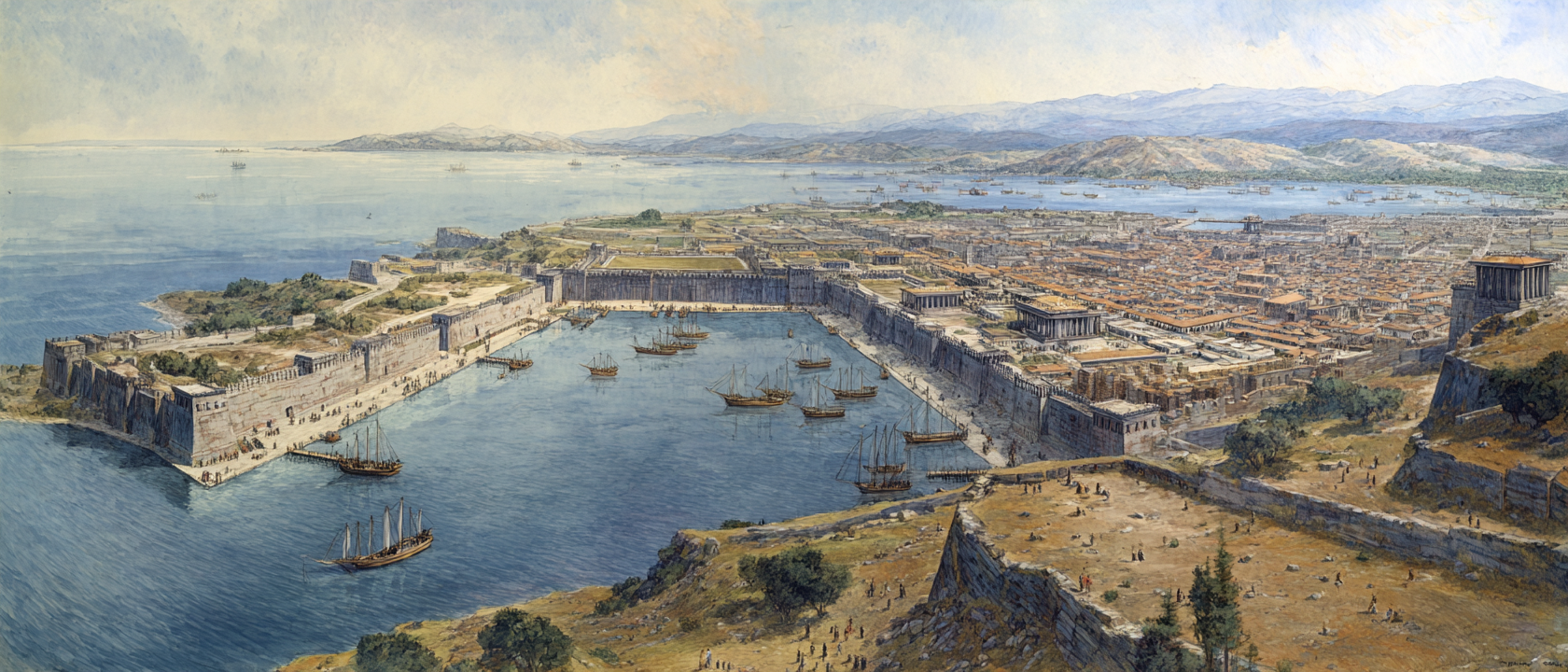
The naval base precinct is the secured core of Portus Lacus — the fleet's operational infrastructure, command facilities, and residential quarters for the naval complement, separated from the civilian town by a perimeter wall and a gate that is staffed at all hours. The precinct's organisation reflects nine centuries of naval operational practice refined to the point where the base's physical layout encodes the fleet's operational priorities: the harbour is central and maximally accessible, the command buildings are positioned for maximum sightline coverage of the harbour, the provisioning and repair infrastructure is positioned for minimum time between resupply and departure.
Demographics
Four thousand naval personnel — officers in the Officers' Quarter, enlisted sailors in the base's residential barracks, the technical specialists in the repair and provisioning departments who are naval personnel rather than civilian contractors. The base is the most institutionally homogeneous population in the province: everyone in the secured precinct is in the Classis, subject to naval discipline, and organised around the fleet's operational schedule.
History
The base was established in the third century. Its current physical form is primarily fifth-century rebuild. The chart room has been maintained continuously since the fifth-century establishment and contains navigation records going back to the base's founding — the most complete archival record of Inland Sea surface conditions available in any single location. The fleet's composition has been adjusted in every significant generation. For full chronological detail, see: Annales Mundi.
Points of interest
The Admiral's morning briefing — conducted in the operations room at the seventh hour, attended by the fleet's senior officers and the base's department heads — is the base's most significant daily event. The briefing covers sea lane conditions, fleet positions, provisioning status, and the intelligence assessment that synthesises commercial traffic data, weather reports, and threat assessments into the operational picture the fleet uses to direct its patrol schedule. The intelligence section of the briefing is prepared by the base's intelligence officer, Centurion Decimus Notus, forty, whose assessment of his own sources' reliability is accurate about everything except the ultimate provenance of the navigation intelligence that arrives through the 'commercial intelligence collation' channel. He believes this channel represents a network of harbour agents that the base maintains in Lacusum. The network exists. It provides approximately forty percent of what arrives through the channel. The rest comes from the Council's harbour master's office and is routed to look like harbour agent reporting.
Architecture
Standard Legion construction in the stone that the northern shore provides — darker and harder than Lacusum's limestone, the buildings lower and thicker than the commercial city's structures, designed for the specific requirements of a naval base rather than commercial functions. The chart room is the most technically equipped space in the base — its chart tables, instrument collections, and current condition boards constitute the primary physical resource of the Classis's operational intelligence. The operations room is adjacent, its connection to the chart room designed so that the Admiral can move from the intelligence assessment to the operational direction without leaving the building.
Geography
The base occupies the harbour's northern half — the half with the deepest water for the heavy triremes' berths, the longest quay frontage for maximum simultaneous loading capacity, and the most direct sea lane access for rapid deployment. The inner harbour wall separates the base's secure berths from the outer harbour where commercial repair customers and visiting officials are received. The command building's tower is the tallest structure in the settlement and the highest observation point on the northern shore, providing the sightlines across the Inland Sea that the Admiral's morning briefings require.
Access
Secured military precinct — naval personnel and authorised officials only.
Outer harbour — commercial repair customers by arrangement.

Comments