
MEREN-DÛR
The Archive District · Lith'sera · Ael'sethana
"There is a question I have wanted to ask an elf for thirty years and have never found the right moment to ask. The question is this: what do you do when you have been keeping a record of something for fourteen hundred years and you begin to understand that the record will outlast the thing it records? I do not know what they would say. I suspect they would say they keep the record. I suspect that is the correct answer. I am not sure it is a consoling one."
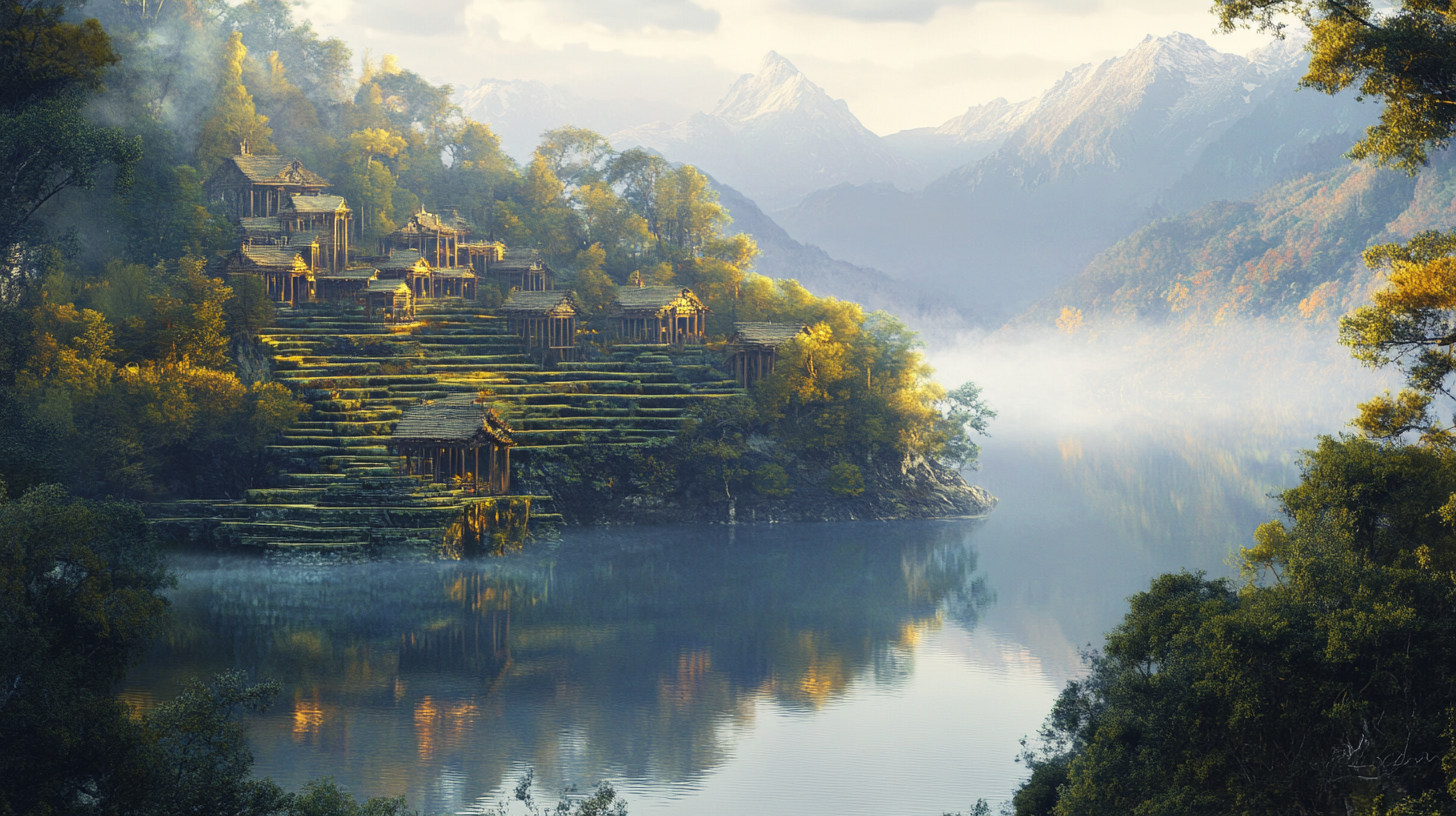
Meren-Dûr is the archive district of Lith'sera: the upper-slope zone where the forest's canopy character gives way to the mountain's rocky terrain, and where Aeveth Lith'sera has been constructing, for a century, the complete record of Ael'vari knowledge, history, and magical tradition. It is the most functional district in any of the three havens — its structures designed for preservation rather than beauty, its character defined by purpose rather than aesthetics. It is nearly complete. What happens when it is complete — who will eventually receive it, and under what circumstances — is the question that Aeveth has been managing for years through indirect channels that the other Triumvirs do not know about.
Demographics
Meren-Dûr has no permanent residential population beyond the archive's working staff: the practitioners and documentarians who have been engaged in the archive project for the past century. This is a small community — perhaps several hundred individuals whose work is the systematic capture of what the Ael'vari know, have known, and have practised. They are not archivists in the Roman sense; they are practitioners whose practice has been redirected toward documentation, and who bring to the archival work the same quality of sustained attention that elvish practice applies to everything. They are also, in Aeveth's judgment, the most psychologically prepared of Lith'sera's inhabitants for what the archive's completion will mean.
Government
Meren-Dûr is directly administered by Aeveth Lith'sera in a way that the other districts are not — the archive project is her project, and the working staff report to her rather than to any elder council or intermediate authority. She visits the archive regularly, reviews the project's progress, and makes decisions about its scope and organisation that no one else in the haven questions because no one else in the haven knows what the archive contains in enough detail to question it. The dwarven archivist correspondence is managed from Aeveth's Anel-Thira quarters, not from Meren-Dûr itself; the archive's staff know the project is intended for external placement but have not been told with whom.
Defences
Meren-Dûr's position at the upper margin of the forest gives it the most exposed location of the three districts. The forest's defensive capacity begins to thin here as the canopy gives way to mountain terrain, and the northern approach — from the lake and the mountains beyond — is less fully covered than the haven's interior positions. The archive's own structures are designed with preservation in mind, which produces a different kind of defensive consideration from the other districts: the primary threat to the archive is not incursion but time, and the structures have been built to address time rather than conflict.
Infrastructure
Meren-Dûr is connected to Anel-Thira below by the upper path that rises from the highest residential tier. The archive's preservation infrastructure is its primary distinctive feature: temperature-stable chambers built into the rock, materials selected for longevity over comfort, the specific organisation of the repository that Aeveth has designed to be navigable by someone who has not been trained in the elvish archival tradition — by a dwarven archivist, for instance, who will need to understand what they are housing and how to maintain it without elvish guidance. This design consideration has shaped the archive's organisation in ways that the working staff have noticed and not questioned.
History
Meren-Dûr did not exist as a distinct district before Aeveth began the archive project approximately one hundred years ago. The upper slopes of Lith'sera were used for practice by those whose work required the mountain-adjacent elevation, but there was no concentrated settlement here. The archive project created the district by creating the need for it: as the scope of what Aeveth intended became clear, practitioners relocated to the upper slope to work on it, and the structures followed the work. The district is, in the most literal sense, the product of one elf's conclusion and one elf's century of work. See Annales Mundi · 1100 A.P. (Aeveth begins the archive project, approximate).
Points of interest
The archive repository itself — the primary preservation chambers built into the rock face — is the district's defining feature and has its own article. Within it, the specific section containing Aeveth's own assessment of the Silence's cause is not separately marked or distinguished from the surrounding material. It is, by design, findable by someone who reads carefully and is not findable by someone who does not.
Tourism
Section omitted. Meren-Dûr is closed to all non-elven visitors.
Architecture
Meren-Dûr's structures are the most austere in Lith'sera. The archive buildings integrate the mountain's rock into their construction more fully than any other part of the haven — here, at the forest's upper margin, the stone and the living wood are in a different relationship than on the lower slopes, the rock more dominant and the grown elements more functional. The preservation chambers are built into the rock face itself in several cases, using the mountain's thermal stability to maintain the conditions the archive requires. The structures are not ugly; they are built by people with an aesthetic tradition fourteen hundred years deep. But the aesthetic has been subordinated, here, to the archival requirement, and the result is buildings that look like they know what they are for.
Climate
Meren-Dûr is the coldest district in Lith'sera, its upper elevation exposed to the mountain climate above the canopy's moderation. The northern mountains are visible from the district with a directness that no other part of the haven achieves — not framed by the lake below, but simply present, immediately above the treeline, their peaks at eye level on clear days. On still nights, the sound from the northern mountains — the cosmological frequency that Aeveth identified as Rift XIII five years ago — is most audible from Meren-Dûr, carried by the cold air from the terrain beyond the forest. The archive staff have heard it without identifying it. Aeveth has heard it and said nothing.
Natural Resources
Meren-Dûr's mountain-adjacent position provides the stone that constitutes the primary construction material of the archive's preservation chambers. The elevation yields a quality of cold clear air that benefits the archive's preservation conditions. The sparse canopy at this elevation admits more direct light than the lower districts, which the archive's working staff find useful and which the preservation chambers are designed to exclude.

Comments