
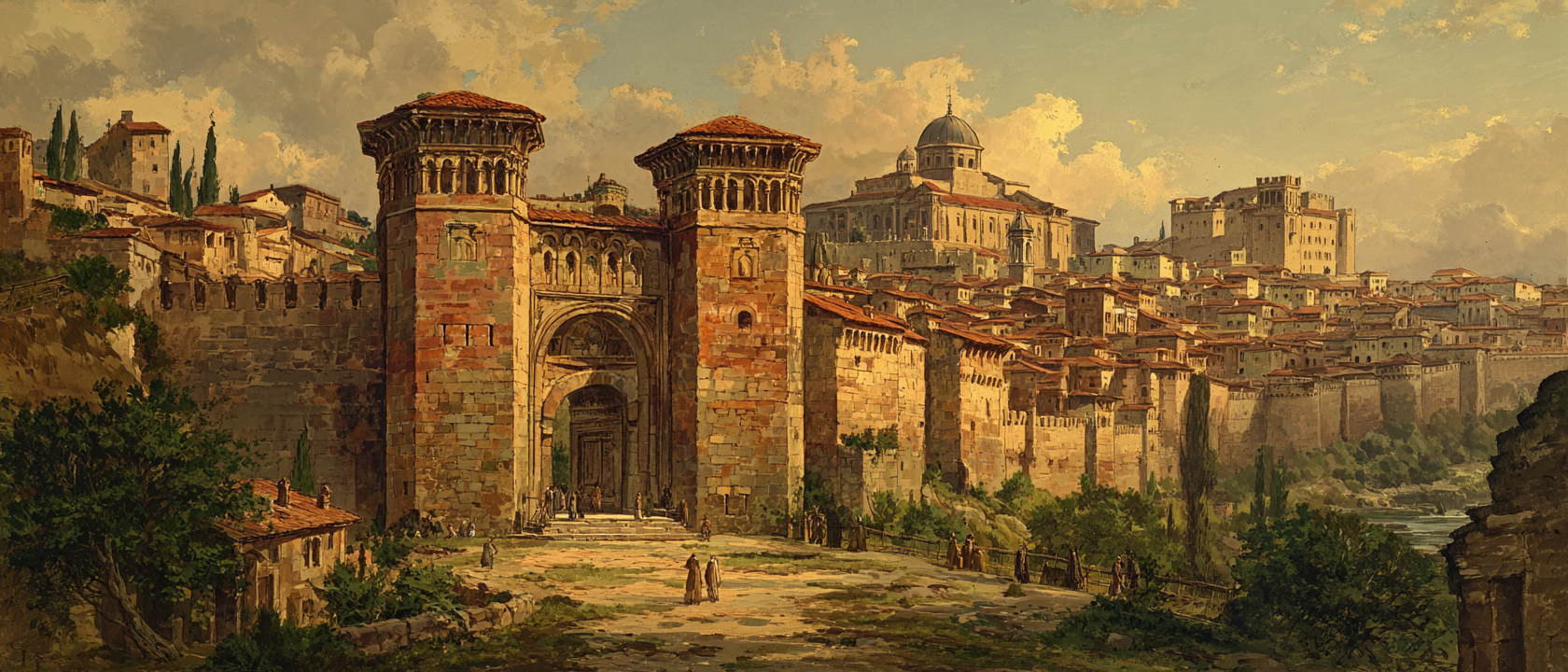
AULA VETERANORUM
Veterans’ Hall · Frontier Legions Veterans’ Association · Vicus Militaris, Castellum Magnum
"The Veterans’ Hall’s membership includes the city watch’s senior officers, several frontier family council heads, and the informal network of people whose expertise and relationships make them the first call for any problem that requires capability rather than paperwork. I have been told that the Association has no formal authority. I have also been told that the Association has resolved three situations in the past year that the Governor’s office was glad not to have had to resolve officially, and that the Governor’s office was aware of this. Neither source was the Governor’s office."
The Aula Veteranorum is the Frontier Legions Veterans’ Association’s meeting hall and operational centre: the building through which the Association’s membership — former Legion personnel who have remained in Castellum Magnum after service, frontier family heads, and the senior city watch officers who bridge both categories — manages the informal governance functions that formal institutions cannot perform or will not acknowledge performing. The Association has no formal authority and considerable practical influence. It has been operating from this hall since the fifth century, 492 A.P., and has developed, over seven centuries, the specific institutional competence of an organisation that has been doing necessary work for long enough to have stopped needing to justify doing it.
Purpose / Function
Veterans’ social institution and informal governance body. The Association’s formal function is the welfare of former Legion personnel and the preservation of frontier military tradition. Its actual function extends into every domain where the formal institutions’ reach is insufficient and the situation requires people whose capability and judgment have been tested by the frontier rather than the capital. Three situations in the past year that the Governor’s office was glad not to have resolved officially: two involved intelligence that the Speculatores could not act on without compromising their sources, and one involved a frontier family dispute whose resolution required someone who understood the families’ twelve-century relationship with the wall.
Design
The hall occupies the Vicus Militaris’s northern edge, its building the most solid private construction in the district: dark sandstone at the wall specification’s thickness, built by a frontier family that donated the structure in the fifth century, 492 A.P., as the founding act of the Association. The main hall is a single large space, its walls carrying the Association’s rolls of membership going back to the founding, its far wall displaying the Legion standards of the three regiments that the frontier has disbanded over twelve centuries whose personnel transferred or remained. The private meeting rooms at the hall’s northern end are where the non-formal governance happens.
Denizens
Association Chapter Master Quintus Bellator Terminus , sixty-three, nine years as chapter master, thirty-one years total Legion service: the Association’s effective leader and the person through whom the informal governance network flows. Has been watching the current goblin diplomatic situation develop from the signals in the Vicus — the specific way certain conversations stop when he enters a room, the pattern of Via Obscura operator rotations that has been faster than normal for the past year — and has developed an accurate general picture of the situation without knowing the specific details. Will speak with parties who can fill in the specific details. Has already identified the parties most likely to be able to do this.
History
The Frontier Legions Veterans’ Association was formally constituted in the fifth century, 492 A.P. The Aula Veteranorum has been the Association’s meeting hall since the founding. The Association’s membership rolls document twelve centuries of the province’s institutional memory in the form of the people who chose to stay when their service ended. The three disbanded Legion regiments’ standards on the hall’s far wall are from the sixth century, 578 A.P.; the ninth century, 891 A.P.; and the eleventh century, 1087 A.P. Each disbanding corresponds to a period when the frontier’s strategic situation changed enough that a regimental reorganisation was required. See Annales Mundi for full chronological detail.
Access
Main hall: members and invited guests.
Private meeting rooms: chapter master’s discretion.

Comments