

Nazair
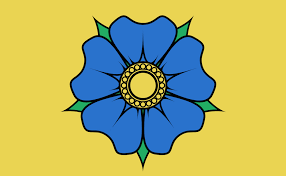
Nazair was a beautiful land, much like Touissant. Some years ago, Duke Adam of Nazair decided to change the course of the Sansretour River, not keeping in mind that the river runs through countries other than Nazair—in fact, not taking into consideration that that river runs through the Sansretour Valley, the most prized wine region in Nilfgaard. The result was that many vineyards and orchards turned into inhospitable bogs and swamps. More recently, Nilfgaard took the country in an unusually difficult battle. Since then there have been multiple uprisings, and the radical element still schemes in the taverns, wearing the blue rose of Nazair. This dazzling azure rose is found only in Nazair. Cuttings are in great demand and are often smuggled out of Nazair to be sold for outrageous prices. One of the most attractive places in Nazair is Lake Muredach. There are several beautiful summer homes of the nobility on the lake, most built to be defensible. One wonders what they had in mind. Nazairian ceramics are skilfully detailed and make reliable trade goods in large cities.
Structure
Clan Mareno
Clan Dykari
Clan Kaero
Clan Lokena
Clan Roha
Clan Turi
Clan Maera
Clan Isar
The clan families also maintain associations with wandering groups that are part of their respective family, roaming folk who have a somewhat transient and rebellious nature. These groups act as the eyes and ears for the family's interest... and sometimes their fists.
Culture
Throughout most of their history, the Nazairians were split between the nobility and royalty, residing at the coastline and along the rivers, and the highlander clan families independent from the royal/noble power. The nobles had their beautiful summer houses in the interior as well, especially near Lake Muredach, however most of them were built to be defensible. The Nazairi cuisine is described to consist of "fancy meals".
After the rebellion, the Nazairians were forbidden to carry swords. Because of it, they are often equipped with elven messer, which are technically not swords but huge knives.
History
Nazair is a land located south of the Amell Mountains, adjacent to the Great Sea. It used to be an independent kingdom with political and dynastical ties with the Northern Realms, these ties were however severed by the Nilfgaardian occupation and desolation of the capital city of Assengard.
Early history
Before the Nilfgaardian invasion, the royal power was concentrated mostly along the rivers and coastline, while the rocky, hilly interior was inhabited by independent clan families of highlanders competing each other for resources. These clan families had their own roving groups that promoted each clan family's interest. This interior was mostly avoided by merchant trails, while the nobility participated in cultural contacts with the North. The royalty occasionally intermarried with Nordling dynasties, like in case of Princess Becca, wife of king Cerbin of Cintra. Dukes from Nazair controlled even parts of modern-day Toussaint. The most famous of them was probably Adam of Nazair, who - in attempt to irrigate the Nazairian part of his realm - unwillingly created the famed Sansretour Marsh.
Nazair's relation with Cintra was severed by King Corbett of the latter. At least one war took place in the heart of Nazair, when Assengard was sacked by people from as far north as Redania; one of them was Nivellen's grandfather who took a bathtub and blue rose seedlings from the city. Another war took place in 1233 when Nazair invaded Cintra for loot, but was defeated by Queen Calanthe's troops at the Battle of Hochebuz.
Nilfgaardian province
The conquest of Nazair by the Nilfgaardian Empire, though cruel, was described as unusually difficult. The capital city of Assengard was desolated, but many of the interior highlander clans avoided subjugation and still cause troubles for imperial forces.
In 1260s Nazairian nobles and highlander clans rebelled against the Empire. Emperor Emhyr var Emreis tasked Major General Markus Braibant to handle the situation. Braibant's forces, including an unit commanded by Dacre Silifant and Ola Harsheim, did indeed calm the rebellion - in a massacre.
During the Second and Third Northern War, the Empire formed its own units out of the Nazairian, consisting of arbalestiers and a large cavalry brigade. Emperor Jan Calveit bore the moniker "Nazairi Avenger".
Trade & Transport
The country is famous for its silver and cinnabarite mines. Local artisants specialize in the production of refined silver vases and skillfully detailed ceramics. The cinnabarite is used to dye inks.
Nazair is particularly known for its cultivation of azure roses found only in this region, with faint purple shades at the tips of the petals. Cuttings are in great demand and are often smuggled out of Nazair to be sold for outrageous prices.

Comments