Topography:
Balan can be divided into two sections: the hills in the west, and the flatlands in the east.
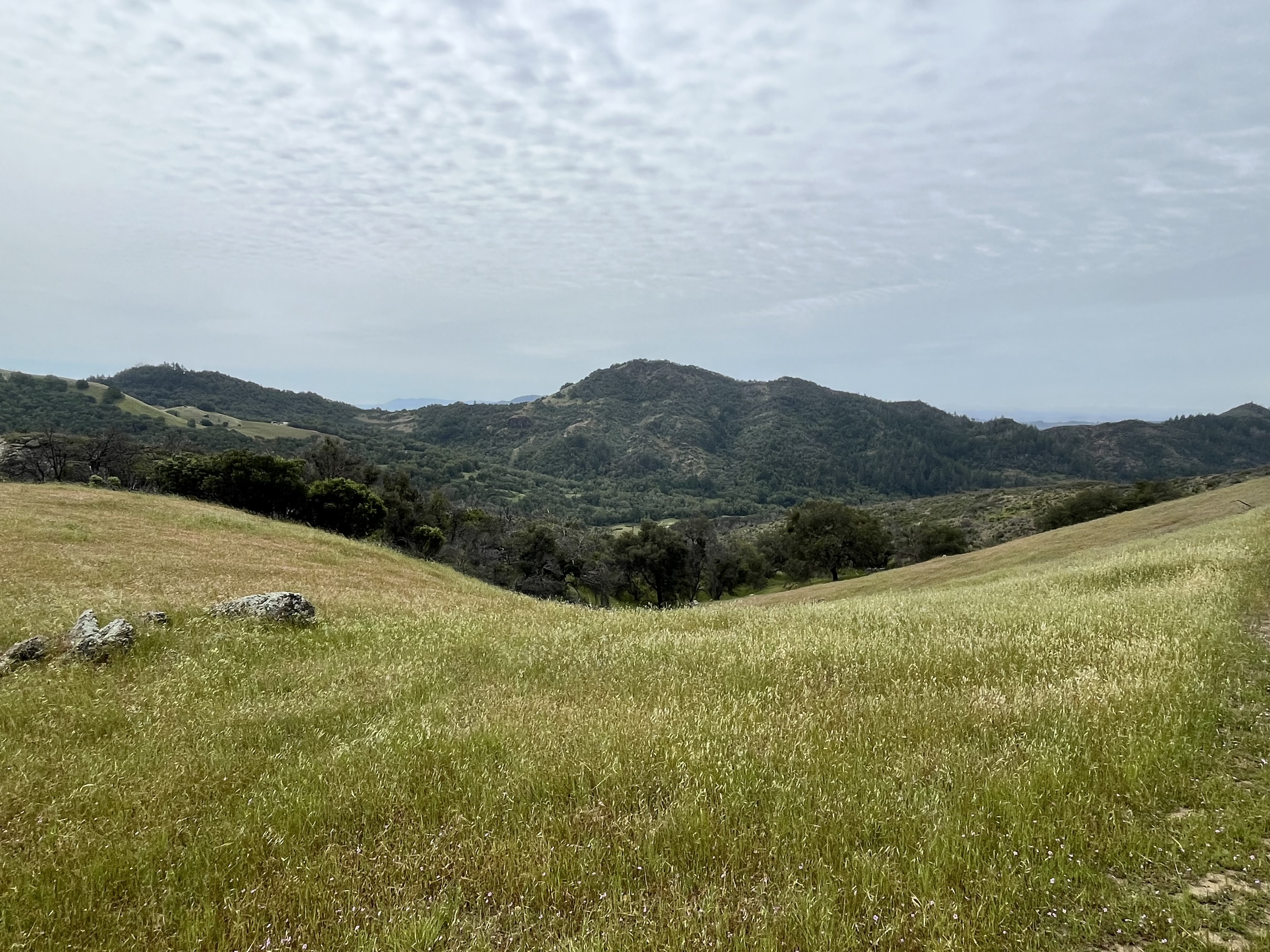
Mist-drenched green hills rumble across the terrain of western Balan.
In the east, prairies stretch to the horizon, broken up only by splatters of deciduous forests. This terrain is far drier than Talamh, except where the rivers run.
The Drant River separates Balan from
Triberol, and the Drant’s offshoot, the Ptonam River, serves as a boundary between the two halves of Balan.
Another river is the Aboken in the north.
Flora and Fauna:
The flora and fauna of western Balan is very similar to
Talamh-Draoichta.
In east Balan, one can still find the deer and squirrels of Talamh, but they are joined by rabbits, foxes, and porcupines: animals like squirrels covered in a thick layer of spikes. These spikes can be launched at attacking predators
A unique species of rabbit which can only be found in Balan is the Miralin, known for its single horn.
In the Ptonam and Drant river swim beavers, mallards, and salmon.
In the north of Balan stride beasts known as moose, creatures like massive deer.
Lumbering above even the heads of moose are dinosaurs such as the Dilophosaurus.
If one journeys to the deciduous forests in eastern Balan, they may be lucky enough to capture images of Sasquatches. These are large primates with a unique ability- there are tiny reflective threads on their hairs which both reflect and refract light. This has the effect of cloaking the Sasquatch in the images of its surrounding area. However, it is still possible to see Sasquatches, but as blurry shapes wading through the forest.
One of the most important animals in Balan are the dragons, as they serve spiritual significance to Maegists.
In Balan, the oaks and elms which also grow in Talamh are joined by sycamores, a species endemic to Balan.
People:
81% of those who live in Balan are humans. 11% are
Elves, 5% are
Goblins, 3% are
Eotunn Orcs and about .02% are Mothlings.
Mothlings are parasitic moths which dwell in the eastern part of Balan. Their appearance is not too different from a normal moth, but their activities are very unusual.
They lay their eggs in the mouths of humanoids, usually as they sleep. These eggs will eventually hatch with caterpillars, who travel to the human’s brain and emit long, thin tendrils which sink into the human’s brain and control the motor functions of this brain. This allows the caterpillar to guide the human to somewhere secluded.
Once there, the caterpillars will emit silk which shoots out of the human’s orifices, gradually forming a cocoon around them. When the human emerges from the cocoon about two weeks later, they will be in the form of a Mothperson. Mothpeople are giant moths with human legs and large, glowing, red eyes. Mothpeople proceed to lay eggs of Mothlings.
Mothlings are sapient, their consciousness a mix between the human and the caterpillar.
They are reclusive, not even preferring to live with one another.
For many years, the Balanian government has attempted to exterminate Mothlings, but have been unable to do so. In some communities in eastern Balan (particularly among the Kainshon) people are regularly given out as sacrifices to Mothlings.
There are a variety of different ethnicities of humans in Balan. The largest population descend from the Triberolese, often having brown hair and eyes. The second largest human ethnic group is known as the Kainshon, who first immigrated from Talamh in the 2000s after the fall of Abnia. Their appearance is similar to the Draoin.
The third largest are the Arthains, who have been discussed previously. There are also a few humans of Pahadit descent, having immigrated to the region in the mid 2000s. These people are generally known as Myronese. Lastly, there are the Huals, also known as the Flower Heads. They have pale hair, and skin a muted grey-ish colour.
Due to Balan often serving as a trading hub, there are some in Balan who can also trace their lineages to Ferrodrill, Diqui, Nokotu, Sasargia, Badawan, Hurjiat, and many other locations.
Culture:
It’s rather difficult to discuss Balanian culture, as it is more so a mashing of dozens of different cultures.
Balan is one of the most industrialised countries, which is something most Balanians will tell you.
A common mode of transportation among the cities of Balan are AutoInsectoids. These are large metal pods with six legs that move through the streets of Balanian cities. Their legs are tall enough to step over some buildings and other vehicles.
Other city wide transportation includes Subwhales. These are whales that also function as submarines. You see, tubes filled with water run through cities, and these whales run through them. Through the use of Magae magic, one can enter these whales.
Control over these whales is similar to the way the Akawans control Terramopods. A version of the Subwhales were used by the Huals, who were similar to the Akawans in culture.
Balan is less steeped in tradition than many of its neighbours. If you enter a Balanian city you will not see it covered with shrines or massive sculptures to legendary heroes. Instead, one will find street vendors and walls covered with moving graffiti and Neon Street performers. Neon Street Performers are people covered in paint that constantly shifts and moves and changes colour. There are also Shapeshifting Street Performers, whose whole bodies shift, but there aren’t that many of them
Balanian cities are also known for its street food, which is often very greasy but still delicious.
There is a sharp contrast between those living in urban and those living in rural areas. Those in rural areas often have a similar culture to the Draoins, with an emphasis being placed on strength and family loyalty.
Government:
Balan is a democracy led by a president. In order to vote for a president, one must be a male landowning human.
The president will appoint various people to lead 12 different offices. These are the Office of Law, which controls the courts.
There’s also the Office of Enforcement, which controls the police.
It’s pretty obvious what the offices of Education, Infrastructure, Agriculture, Economy, and Foreign Relations do.
The Office of Committee Connections is in charge of making sure that the various committees work together, and that none of them get too much power.
The Office of Anti-Bureaucracy makes sure the government is working efficiently. It often clashes with the office of Committee Connections.
The job of The Office of Security is to monitor the population, as well as the goings on of the government, to make sure no treason is ever being committed.
The Office of Magic monitors magical activity, and works with
The Order of Mages.
The Office of War leads the army, and controls the production of the
Umagiza.
Originally created by the city of
Llahomara in the 1000s, the
Umagiza are a group of elite mechs. Through the power of Anima
Magic, these 20 meter tall biological constructs are created. Soldiers can enter and bond with the Umagiza, their bodies and minds melding with the mech. The defensive capabilities of the Umagiza come from their ability to fly and to launch massive spikes from their body. The way to make Umigaza was thought to be lost during The Sacking of Llahomara until a few decades ago, when an ancient scroll was found in a ruined castle in eastern Balan, believed to have been brought by a merchant.
Religion:
68% of Balanians follow Triberolese
Pentonism, which will be discussed later.
26% of Balanians follow
Maegism, the religion dedicated to the worship of the goddess Imaegon, sometimes also known as Eldrithen. She is the goddess of Maegi, the energy which allows magic to happen.
They also worship Imaegal, who is said to be the future child of Imaegon with Snaulkor.
6% practice a variety of different religions such as the elven religion or
The Lavone Belief System.
Maegists will meet on every moonless night in a tabernacle. A priest will lead the community in a variety of different prayers to Imaegon, who will be represented in the church by a massive statue of dragons, as dragons are seen as symbolic of Imaegon.
During this ceremony, and on the day leading up to this ceremony, Maegists will wear a ribbon around their necks, red if they’re a man and white if they’re a woman.
Maegists will usually have a small idol of a dragon. Every night before falling asleep, the Maegist will place a finger on the head of this dragon and silently pray.
Some Maegists will also often have a necklace with a dragon pendant attached to it.
Dragons are so important to Imaegon as it is believed that it was she who created dragons.
There are only priests in the Maegist religion, and they are not allowed to marry, as they are considered to already be married to Imaegon.
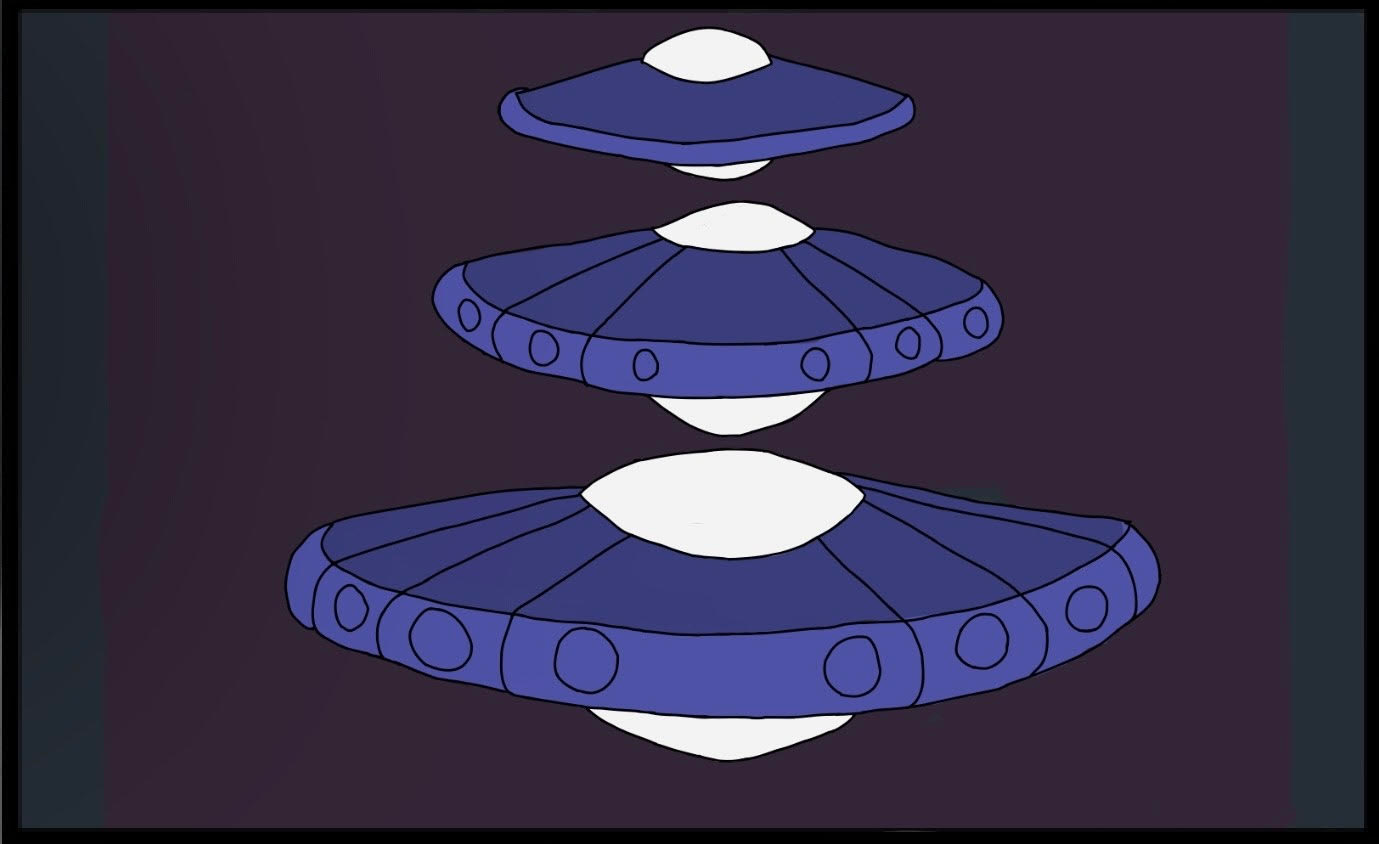
There are many mythological creatures common in Balanese legends, such as Nymphs, Pyxies, and Leprechauns. Pixies are beings said to consist of floating layers of discs covered in eyes, mouths, and arms. Many stories concerning them portray them positively.
Leprechauns are said to be the evil versions of Pyxies, often depicted as heads with long tendrils sticking out of their necks.
Apparently, Nymphs are neutral creatures. They look like trees with their branches replaced with the upper torsos of green humanoids. These humanoids all exist within one hivemind, apparently.
Among the miners in north-west Balan, there are legends of creatures less than half a metre high with reddish skin and large feet like a duck known as Wickwals. They are said to mine with their long claws in an effort to intimidate humans. However, not having any use for materials, they will simply eat them. As such, it's important for miners to beat them to these materials by working efficiently.
Another legend with a moral is of Sawtongues. These are said to be creatures with the appearances of plump old women, until they open their mouths, revealing long tongues covered in spikes, making them look like chainsaws. These creatures are said to feed on naughty children.
A very similar folktale is that of Snaketongues. They are the same but instead of tongues like saws, they have many tongues that look like snakes. When a Snaketongue finds its prey, one of these snakes will attach, and then enter the mouths of their victims. The snake will then control the movement of the person, leading them to the lair of the Snaketongue.
One last legend of note is that of household spirits, this one being common among Kaishons. Household Spirits are said to be small, furry creatures who dwell in houses. When a house is clean and well kept, the Household Spirits are strong, and will bless the dwellers of the house with good luck.
Art:
Balanian art is mostly abstract. There are lots of floating cubes that change shapes. There’s also a massive face made out of obsidian that’s in the middle of some farmland and people say that it sometimes winks at that- but, no one knows how it really got there.
Balans make use of Cinemagraphs, with many theaters dedicated to them. Recently, scientists have figured out how to use Scrying Screens to show Cinemagraphs, allowing them to be used as viewing stations. Currently, there are attempts to make usage of this be commercial, but this may take awhile, as scrying screens are rather difficult to make.
Also popular thanks to Skyloan trade are comic strips, which are mixes between drawings and texts telling stories.





Comments