
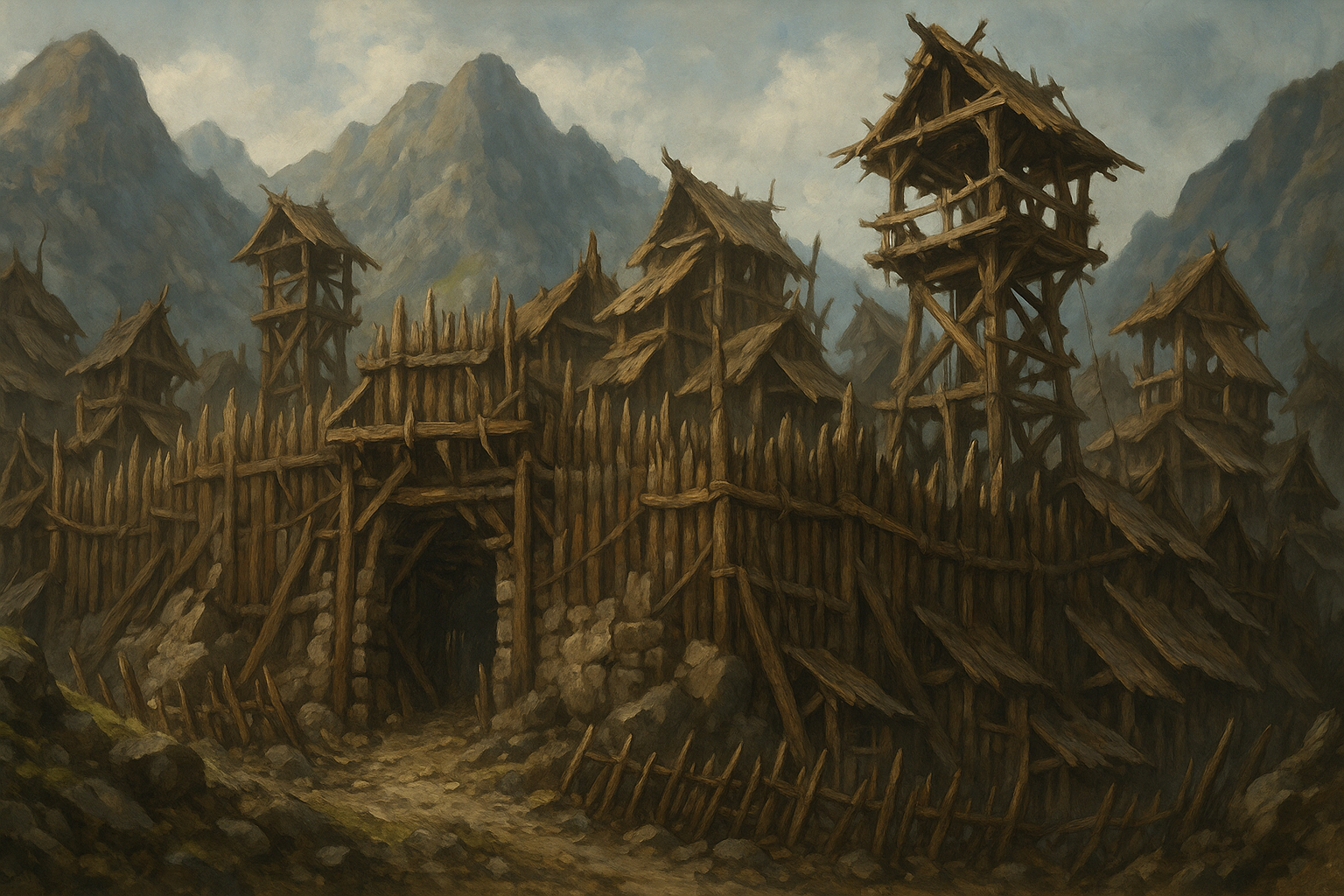
Krashnakhul
The kobolds of Teramore have long been regarded as furtive tunnel-dwellers, known more for their traps and resourcefulness than for territorial ambition. That reputation changed dramatically just over two decades ago, when several kobold clans united to seize the southwestern third of the Ironveil Range—an area historically ruled by goblin tribes. The fall of Zug’krash, the former goblin stronghold, marked the beginning of a new kobold ascendance, and the region has been known as Krashnakhul ever since.
Territory
Krashnakhul occupies the rugged southwestern arc of the Ironveil Mountains, an area of steep ravines, narrow passes, and ancient volcanic stone. The fortress-city of Zug’krash, once a chaotic goblin warrens, is now a labyrinthine kobold capital threaded with new tunnels, choke-points, funneling corridors, and mechanical defenses.
The surrounding territory is laced with mines—some new, many stolen—along with a growing network of subterranean roads connecting scattered clans. The region’s position on the southern flank of the range gives the kobolds access to valuable trade routes into Thrix and limited but strategic paths toward Verdantia.
Society and Hierarchy
Kobold society is rigorously hierarchical, with rank determined by cunning, magical talent, or control over key territory. The strongest or most manipulative individuals rise as chieftains or sorcerers, their authority maintained through schemes and political games rather than brute strength alone.
While each clan maintains its own identity, most pay allegiance—begrudging or otherwise—to the ruling council of Zug’krash, whose authority is enforced through a delicate balance of intimidation, alliances, and practical necessity.
Tribal Life
Kobolds prefer enclosed spaces, and their settlements reflect this instinct. Mines, narrow tunnels, repurposed goblin halls, and cleverly engineered dens form the backbone of Krashnakhul. Communal living is the norm, and loyalty to one’s immediate clan or tunnel-group is paramount.
Subterranean life has shaped their culture: whisper-based communication systems, painted cavern markings, and coded trap-patterns allow tribes to signal safe passages—or set deadly ambushes—with remarkable efficiency.
Economy and Craftsmanship
Mining remains the core of kobold life. They excel at extracting ore others overlook, often uncovering veins too deep or unstable for human or dwarven operations. Scavenging, repurposing, and opportunistic salvage fill out their economy, turning discarded scrap into weapons, traps, tools, and complex mechanical devices.
Krashnakhul kobolds have elevated trapcraft into a cultural art form. Each clan favors its own designs, ranging from pressure-plates and deadfalls to advanced mechanical snares whose ingenuity rivals early Verdantian engineering.
Religion
Kobolds across Krashnakhul worship draconic deities, particularly those associated with cunning, ambition, secrecy, and trickery. Their rituals are steeped in superstition, involving whispered chants, offerings of gemstones or scrap metal, and elaborate trap-performances meant to demonstrate devotion.
Omens—especially those involving fire, smoke patterns, or tunnel collapses—are interpreted as signs of draconic favor or wrath. Chieftains often claim spiritual authority through fabricated visions, though a few truly gifted sorcerers hold genuine power.
Cultural Traits
Cunning, adaptability, and opportunism define kobold behavior. They avoid direct confrontation whenever possible, preferring ambushes, coordinated swarms, and the strategic use of terrain. Within their own society, however, they are surprisingly cooperative, bound together by the constant need to survive larger threats—from dwarves and goblins to mountain beasts and collapsing tunnels.
Relations with Other Peoples
Relationships with neighboring realms remain tense.
• Dwarves regard them as dangerous pests at best and territorial threats at worst.
• Verdantians treat them warily, acknowledging their ingenuity but never fully trusting their motives.
• Thrixians maintain a pragmatic stance, engaging in occasional trade when mutually beneficial.
Despite the distrust of others, Krashnakhul kobolds have become a force in the Ironveil—unpredictable, underestimated, and steadily expanding their influence from within their maze of tunnels and hidden forges.

Comments