

Ma'drun-Thar
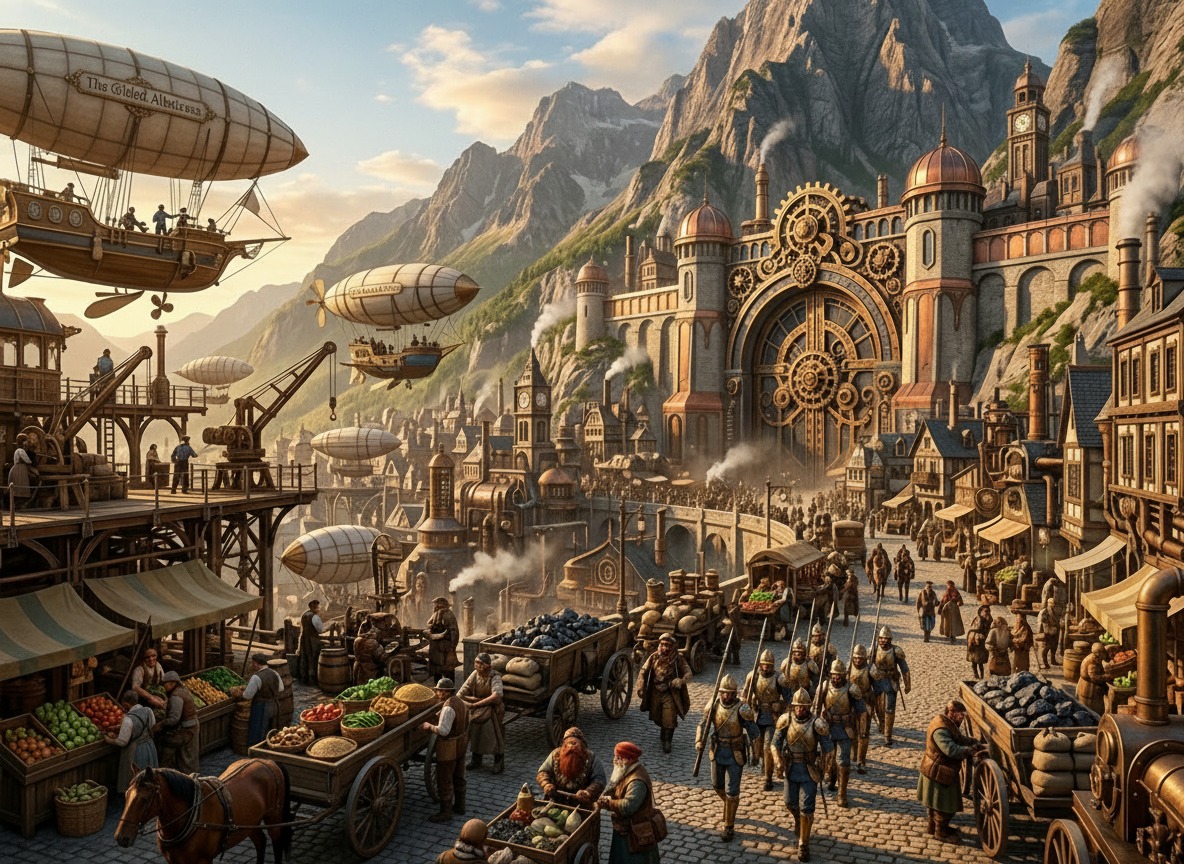
Strategically positioned at the primary entrance to the mountain trade routes connecting The Empire of Mori and the Dwarven cities of the Kingdom of Kazad'Zar, Ma'drun-Thar is a crucial nexus in the region's geopolitical and economic landscape. A more recent addition to the trade network, Ma'drun-Thar is a vital hub that facilitates commerce, cultural exchange and political interaction between these powerful entities. The city's establishment was a calculated effort to secure the trade routes and extend the Empire’s influence into the dwarven domains, while also providing a buffer and administrative centre for the region. This report provides an in-depth analysis of the city's history, governance, economy, infrastructure, demographics and cultural significance, contextualising it within the broader political and economic landscape of the Empire of Mori and Kazad'Zar.
History
Ma'drun-Thar was founded in response to the need for a secure trade route connecting the Empire of Mori with the ancient dwarven city of Kazad'Zar. Compared to the long-standing dwarven strongholds, the city’s establishment is relatively recent, reflecting the Empire’s expanding influence and economic ambitions. A pivotal moment in the city’s development was the construction of the Grassland Gates, a key defensive structure controlling access to the trade routes. Designed to regulate commerce and secure the city against potential threats, the gates reflect the dual needs of facilitating trade and ensuring defence. While the city’s fortifications were lighter than those of older dwarven cities, they were augmented by the presence of Imperial Army patrols, providing a mobile and responsive defence force. This reliance on imperial military support highlights Ma'drun-Thar’s status as a protectorate of the Empire of Mori, balancing local governance with imperial oversight. Thus, the city emerged as a critical node in the trade network, enabling the Empire to project power and maintain economic control over the mountain passes and subterranean trade routes.
Government
The governance of Ma'drun-Thar is characterised by a dual authority structure that reflects its position as both a dwarven settlement and an imperial protectorate. At the local level, the city is governed by the Dwarven Thane, Grabor Grandbeard, whose authority is rooted in traditional dwarven leadership and the dwarves' hierarchical social structure. The Thane oversees local affairs, maintains order and represents the interests of the dwarven community. Running parallel to the Thane's authority is that of the Imperial Governor, who is appointed by the Empire of Mori and is based in the Hall of the Greenland Governor. The Governor's role is primarily administrative and symbolic: they represent the Empire's interests and ensure compliance with imperial policies. However, the dwarves often view the Governor as an outsider with limited understanding of their culture and subterranean needs. This creates a complex dynamic of cooperation and tension between the local and imperial authorities. This dual governance model ensures that, while the Empire of Mori maintains a political and military presence, the dwarven leadership retains significant autonomy in managing the city’s internal affairs. The balance of power between the Thane and the Governor is crucial for maintaining stability and facilitating the city’s role as a trade hub.
Economy
Ma'drun-Thar’s economy is fundamentally tied to its role as a trade hub. The city’s strategic location enables it to control and facilitate commerce between the Empire of Mori and the dwarven cities, which are rich in minerals and crafted goods. The city’s economic infrastructure is organized around several key locations:
Demographics
Ma'drun-Thar’s population is a diverse mix of humans, dwarves, and gnomes, each contributing to the city’s unique cultural and political landscape. The dwarves, led by Thane Grabor Grandbeard, maintain strong traditional governance and cultural practices, emphasizing technology, durability, and a preference for dealing with gnomes over humans or elves. The gnomes, while fewer in number, exert influence through their advanced technologies and trade partnerships with the dwarves. Their political agenda often differs from that of the dwarves, adding complexity to the city’s governance. Humans, primarily associated with the Empire of Mori, are present mainly as administrators, traders, and soldiers, representing the imperial presence. The Constitutional Monarchy of Kazad'Zar, a powerful dwarven kingdom, influences Ma'drun-Thar’s political dynamics. The dwarves’ strong national identity and resistance to outside control shape the city’s governance and social interactions. The gnomes’ role as trade partners and technological innovators further enriches the city’s cultural fabric.
Regional Relations
Ma'drun-Thar exists as a protectorate of the Empire of Mori, which maintains a Governor and military presence in the city. This relationship is characterized by a balance between imperial control and local autonomy, with the dwarven leadership maintaining significant power. The city’s position between the Empire and Kazad'Zar creates a complex political environment. The dwarves’ historical ties and economic partnerships with gnomes and humans influence the city’s governance and trade policies. The Empire’s interest in securing trade routes and projecting power is balanced against the dwarves’ desire for self-governance and cultural preservation. Tensions and alliances with the Deep Republic of the Gnomes add another layer to the political dynamics. The gnomes’ different political agenda and cultural outlook create both opportunities and challenges for Ma'drun-Thar’s governance and economic stability.
Districts
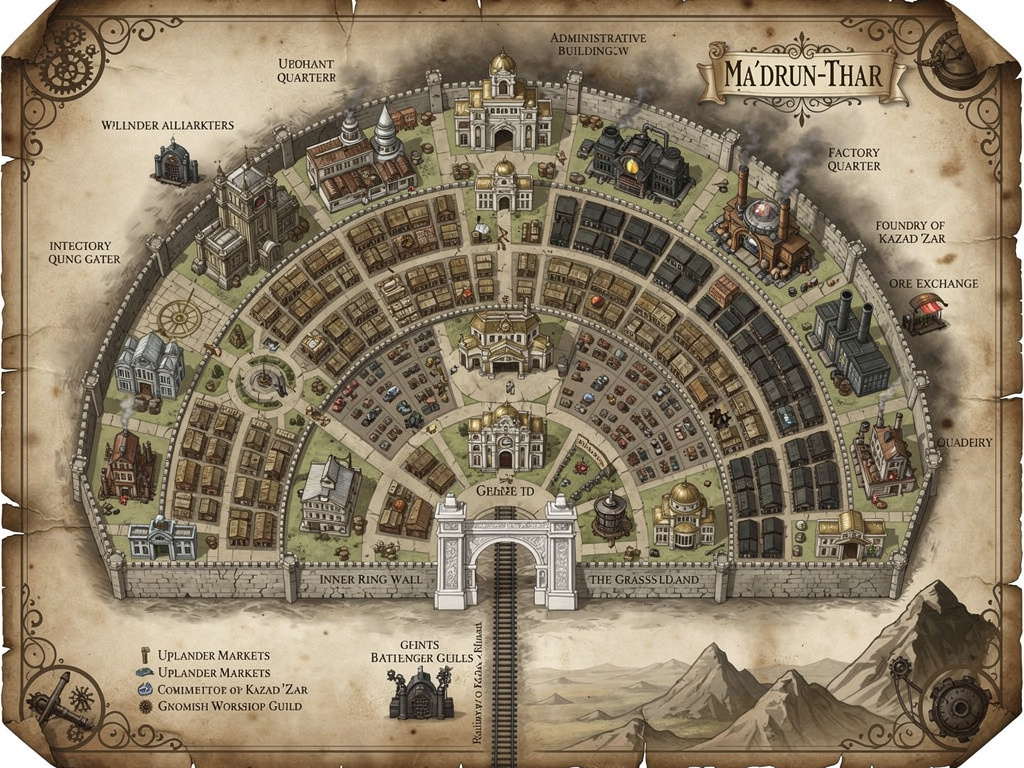
The Grassland Gates
- Location: The heart of the city, marking the boundary between the grasslands and the underground.
- Description: Iconic white stone arches, their surfaces softened by lichen and moss, symbolize the threshold between the surface world and the depths of the Range. The gates are both a defensive choke point and a welcoming monument to travelers.
- Function: Primary entrance for trade caravans, patrols, and visitors. The gates are manned by Dwarven guards and Imperial soldiers, ensuring the flow of goods and people is regulated and secure.
The Inner Ring Wall
- Location: Directly behind the Grassland Gates, encircling the city’s core.
- Description: A sturdy but not overly fortified wall, designed more for customs and trade regulation than for withstanding sieges.
- Function: Houses the Hall of the Greenland Governor, the Ore Exchange, and key administrative buildings. The wall also serves as a market hub for high-value goods.
The Merchant Quarter
- Location: Between the Inner and Outer Ring Walls.
- Description: A bustling labyrinth of shops, warehouses, and trading halls, where merchants from across the continent barter in the finest Dwarven craftsmanship and Gnomish inventions.
- Notable Locations:
- Uplander Markets: The largest market complex in the city, specializing in agricultural goods, textiles, and luxury items from the Empire.
- The Great Bazaar: A covered market where exotic goods from the Deep Republic and beyond are traded.
The Factory Quarter[
- Location: Adjacent to the Merchant Quarter, near the railway.
- Description: A district dominated by the clatter of forges, the hiss of steam engines, and the hum of machinery. Here, dwarves and gnomes collaborate on industrial projects, from refining ores to crafting airship components.
- Notable Locations:
- The Foundry of Kazad’Zar: A massive smelting complex where mithril and gold are processed before being sent to the Ore Exchange.
- Gnomish Workshop Guild: A collective of inventors and engineers, constantly pushing the boundaries of steam-powered technology.
The Living Quarter
- Location: Between the Factory and Outlander Quarters.
- Description: A residential district where dwarves, humans, and gnomes live side by side. The architecture is a mix of Dwarven stonework, human timber-framed houses, and - Gnomish clockwork towers.
- Notable Features:
- The Hearthstone Tavern: A popular gathering spot for laborers, traders, and off-duty soldiers.
- The Clan Halls: Traditional Dwarven meeting halls where clan leaders and Thane Grabor Grandbeard hold council.
The Outlander Quarter
- Location: Near the Outer Ring Wall, closest to the grasslands.
- Description: A district for visitors, mercenaries, and non-citizens. It is the most diverse part of the city, with a transient population and a reputation for both opportunity and danger.
- Notable Locations:
- The Wandering Caravan: A permanent camp for traveling merchants and performers.
- The Iron Anvil Inn: A rowdy establishment frequented by soldiers, smugglers, and adventurers.
The Outer Ring Wall
- Location: The outermost defensive barrier of the city.
- Description: A tall, crenellated wall with watchtowers and ballistae platforms. While not as imposing as the fortifications of older Dwarven cities, it provides a first line of defense against raids and invasions.
- Function: Guards the Terraces and regulates entry into the city from the grasslands.
The Terraces
- Location: Beyond the Outer Ring Wall, stretching into the grasslands.
- Description: A series of stepped farmlands, where grains, vegetables, and livestock are raised to feed the city and supply the uplander food trade into the mountains.
- Notable Features:
- The Harvest Festival Grounds: A site for seasonal celebrations and trade fairs.
- The Aqueducts: Gnomish-engineered channels that bring water from the mountains to irrigate the fields.
Important Locations


Comments