

The Stone
For more information on all deities, see: Deities
The dwarven faith holds that they are “children of the Stone”. They are born from it, serve it in their deeds, and feel its impact upon their lives. Seen as a living and shifting will that surrounds and guides their society, the Stone is more akin to a natural law than a deity. Its presence is omnipotent and omnipresent, watching over the dwarves through the eyes of the ancestors that have long since returned to the Stone.
Physical Description
The Stone is a formless concept, present in both the smallest pebble and the largest mountain. It defies personification, as this would be the same as asking a dwarf to personify gravity itself. Most religious depictions instead focus on the Paragons; dwarves celebrated for major achievements and contributions to dwarven society.
In rare secular interpretations, the Stone is depicted as a stern, muscular dwarven woman using a chisel to chip away at her own body, symbolizing the belief that for dwarves to prosper, the gangue—the waste and unstable rock—must be cut away from the raw stone. In this way, the Stone demands that each dwarf must carve the worst of themselves away.
Divine Realm
Dwarves claim the Stone lives wherever earth is found, whether on the Material Plane or the planes of the multiverse.
Tenets of Faith
- She is our guide and sustainer. Show reverence for her blessings.
- Honor the ancestors and strive to join with their spirits. Preserve tradition.
- Remember and hold accountable, like a rock that bears every chip and crack.
Worshipers
Dwarves overwhelmingly identify with the faith of the Stone, which is deeply tied to their culture and leaves no place for non-dwarven followers. Scholars of other races debate the Stone’s true nature, speculating its power derives from the ancestral spirits themselves or an unknown entity rather than a disembodied ideal—claims that dwarves dismiss with scorn. Referred to as “she”, the Stone is not worshiped as a goddess, an act most dwarves mock with incredulity. Instead, she is venerated with practical respect for sustaining and sheltering the dwarves. They believe the worthy return to her after death, becoming guiding ancestors and strengthening her, while the Paragons are thought to join the Stone as living examples of dwarven ideals. Conversely, the unworthy—such as surface dwarves or the casteless—are rejected, ensuring their flaws do not weaken her.
The Engravery
The Engravery is a revered dwarven institution responsible for documenting lore, history, and events in the Stone. Using magical ore that imbues the runes with the thoughts and memories of the author, the organization maintains an organic library called the Memories. A vast archive spanning tens of thousands of years, the Memories include genealogies, marriages, deaths, and historical records. These records focus on objective facts, omitting subjective reasoning or intent. Engravers, often nobles or gifted individuals from other castes, serve as historians, judges, philosophers, and scholars, overseeing records, tracing lineages, and exploring lost settlements to preserve forgotten lore. They also oversee local developments, such as approving places of worship for other entities and presiding over significant ceremonies. While the Engravery oversees many aspects of dwarven society, certain responsibilities, such as sensitive cases like noble murders or declaring a paragon, remain under the purview of local governance. The Engravery is divided into four branches: Memories (history and genealogy), Runes (enchantments), Stone (domestic records), and Dwarvenkind (comprehensive archives). Each branch is led by a Lord Engraver, and local assemblies maintain critical archives for their communities on their own Wall of Memories that dwarves of any caste can access. Though apolitical and respected, the Engravery faces criticism for selectively shaping dwarven history. It omits records of casteless dwarves, exiles, and other “unworthy” events, sometimes succumbing to noble influence. Despite controversies, it remains central to dwarven culture, education, and governance.Paladins of the Stone
Paladins sworn to the Stone are dedicated to protecting the dwarven people, preserving traditions, and upholding her sanctity. Seen as extensions of the Stone’s will, they defend settlements, escort caravans, and reclaim lost outposts while also serving as judges and moral exemplars. Working closely with the Engravery, they safeguard assemblies, accompany expeditions, and ensure decisions align with the Stone’s teachings. Respected and sometimes feared, they are vigilant against corruption, tasked with “purging impurities” to safeguard dwarven society. As all paladin orders do, the children of the Stone adhere to a rigid oath, reflecting the core beliefs of those who follow her:- Stand Unyielding: Like the Stone, I am unwavering in my duty. I will not not falter in the face of adversity.
- Guard the Heritage: I will protect the traditions and lore of the dwarven people, ensuring the Memories remain untainted.
- Shield the Worthy: I will defend those who honor the Stone and its teachings. I will safeguard the lives of the worthy and the sanctity of their deeds.
- Purge Impurity: I will root out corruption and weakness within yourself and your community, ensuring the Stone remains strong and pure.
- Embrace Endurance: I will endure hardship and challenge as a test of my faith and strength. Through endurance, I grow closer to the Stone.
Holy Books & Codes
The Annals
The holy “book” of the Stone, The Annals, is a collection of engraved tablets, metallic scrolls, and runic inscriptions. Each year, the Engraveries send updated records to the Engravery of Dwarvenkind, where high-ranking Engravers etch them into a vast underground vault, creating one of the realm’s most comprehensive historical archives.The Emnities
Kept alongside The Annals, The Emnities are a testament to the saying “a dwarf never forgets”. This infamous record catalogs every grievous wrong against dwarvenkind, with each name inscribed signifying an offense of the highest magnitude. The Emnities are overseen solely by the Lord Engraver of Dwarvenkind, who uses the same magical ore as all Engravers mixed with their own blood for the carvings. Only a select few outsiders in all of dwarven history have ever glimpsed this record, and even those instances are shrouded in secrecy.Table of Contents
General Information
Alternative Name(s)
Lady of the DeepSlate of the Ancestors
Alignment
LNFollower Alignment(s)
LG, LN, LETier of Divinity
Faiths & PhilosophiesPantheon(s)
Faiths & PhilosophiesArea(s) of Concern
Ancestors, dwarves, earth, heritage, traditionSacred Animal(s)
BadgerSacred Color(s)
Brown, gold, graySymbol
Dwarven face in the shape of a gem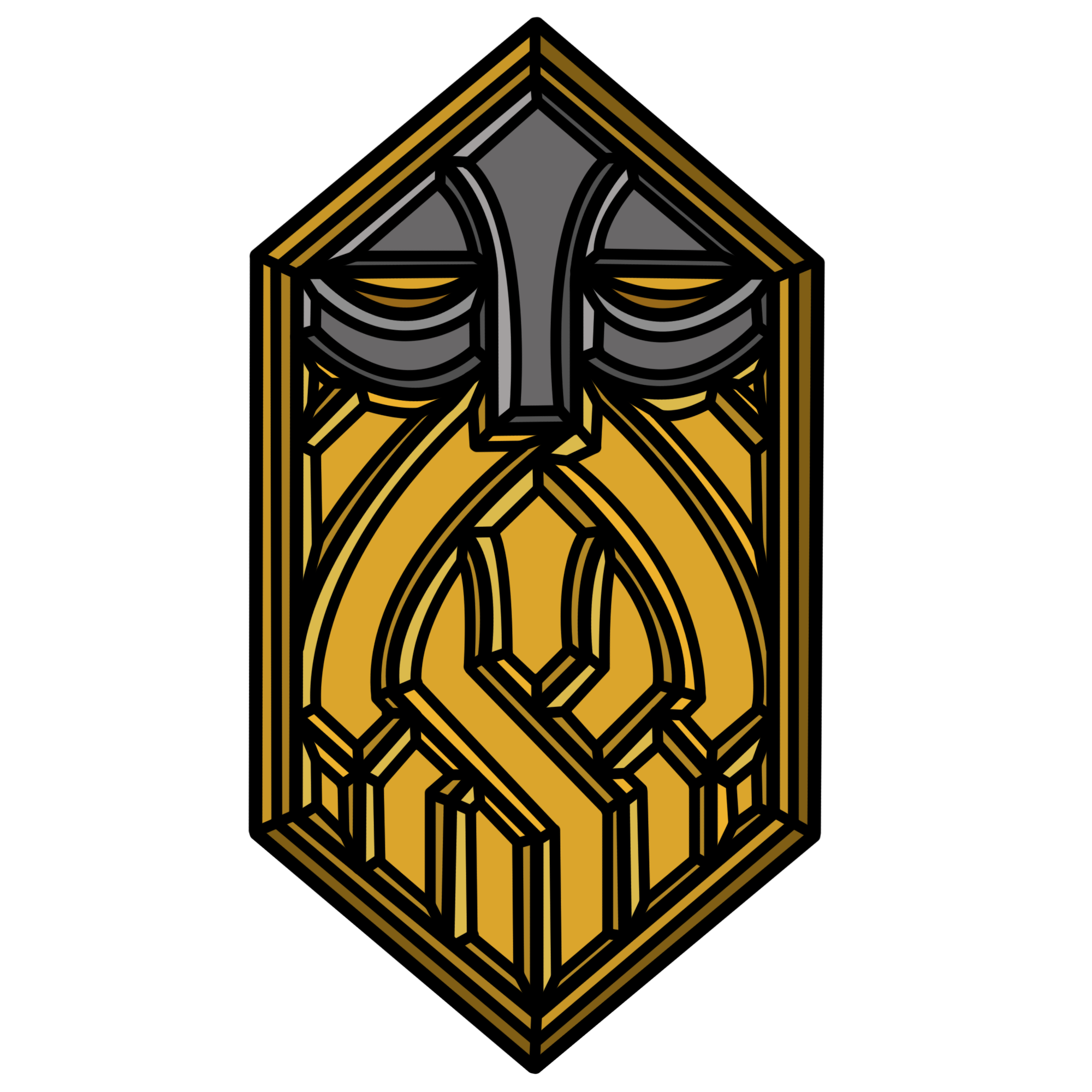
Worshipers
DwarvesWorshipers' Adjective(s)
NoneDivine Realm
NonePathfinder 1e Traits
Domain(s)
Artifice, Community, Earth, Law, ReposeSubdomain(s)
Ancestors, Caves, Construct, Family, Home, Industry, Judgment, Loyalty, Metal, ToilFavored Weapon(s)
Heavy pickPathfinder 2e Traits
Domain(s)
Creation, Duty, Earth, FamilyAlternative Domain(s)
Metal, ToilDivine Ability
Constitution or WisdomDivine Font
HealSanctification
Must choose holyDivine Skill
CraftingFavored Weapon(s)
PickCleric Spells
1st: Interposing Earth3rd: Earthbind
4th: Creation
5th: Engrave Memory
Children

Comments