
Evernight
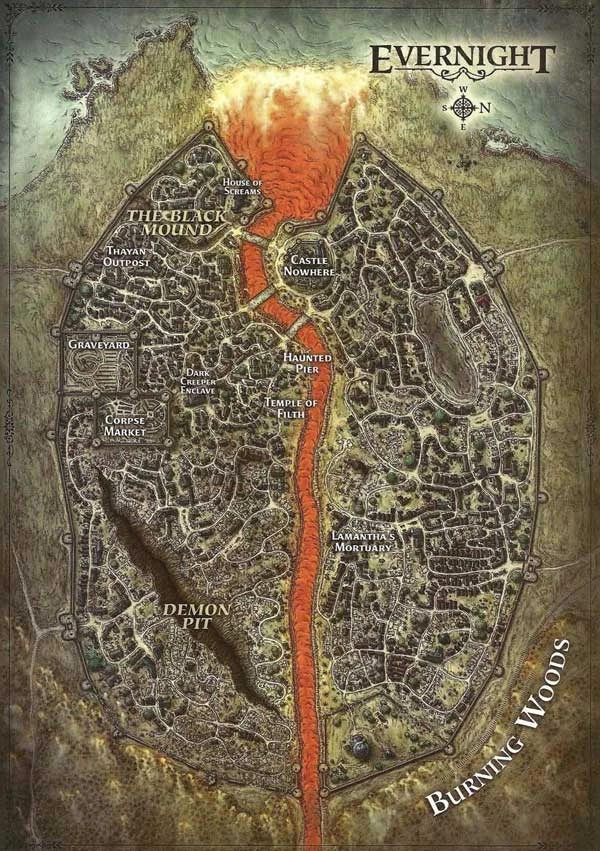
Evernight was the dismal echo of Neverwinter located in the Shadowfell. It was a city of the undead and those that trafficked with them—unhinged necromancers, slave traders, and followers of dark deities.
Description
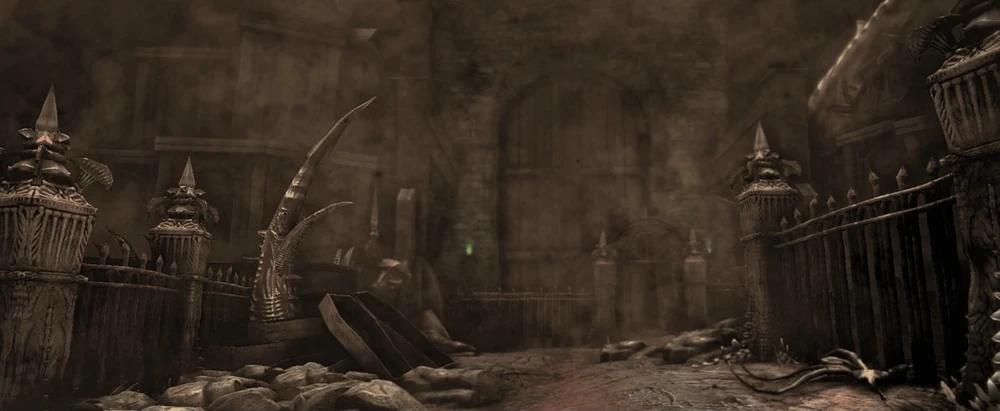
The whole city was in disrepair, as if the wood and stone that held the buildings together had the life leeched out of them, becoming rotten and crumbling. The few streets paved with cobblestones were cratered with potholes, and the rest were lanes and alleys filled with grave-dirt trodden and scuffed into a fine dust. The atmosphere was damp and humid, with a chill wind under a perpetually gray sky. Much of the city was relatively silent save for sporadic screams of pain and terror.
Certain places throughout the city were bursting with necromantic power that made lights dimmer, the air colder and more still, attracted the undead, and drained mortals of their stamina. The ambient energies around the city also had the effect of blunting the undead citizens' appetites for flesh and blood, allowing them to carry on with daily unlife.
Evernight had a few portals and many "dimensional gaps" that connected it with Neverwinter in the Material Plane, allowing for easy passage between the two planes. This provided ample opportunity for the undead to snatch living victims from Neverwinter, and in turn, led to many of Neverwinter's urban legends of hauntings and disappearances.
Geography
Evernight was located on the coast at the mouth of a once fast-flowing and treacherous river, that had been replaced by a lava flow following the events of the Ruining. The western end of the city was often shrouded in mist and fog from the lava where it met the sea. Not far beyond the eastern city walls was the Burning Woods.
Government
The closest thing to a city hall or courthouse in Evernight was the House of Screams. The city was controlled by a ruling caste of intelligent ghouls, and was governed by a tribunal of particularly powerful and/or ancient ghouls, ghasts, and living followers of Orcus, usually spellcasters. This tribunal had the power to declare specific living people to be citizens of the city, thus making them off-limits to the population as a food source. They also dictated foreign policy, and insisted that Evernight remain a neutral zone.
Law and Order
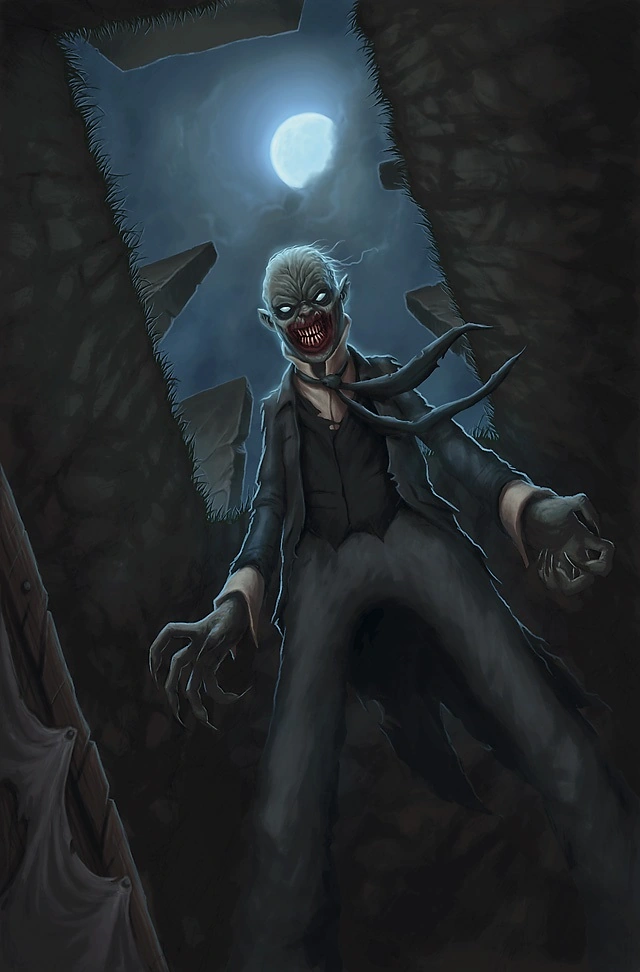
There were no formal laws in Evernight, although starting a fight or attempting to free slaves or captives was generally grounds to be swarmed and/or eaten. When a conflict was brought to the tribunal to be resolved, its members proclaimed their verdicts by eating whichever party they found unworthy of their time. Because of that, few citizens petitioned the tribunal unless there was no other option. In some cases, disputes might be resolved without the tribunal's involvement, either by a sanctioned battle to the death in the basement of the House of Screams or by petitioning for intervention from the priests of the Temple of Filth, who generally demanded to be repaid for their judgments with services to the temple.
Living beings who had not been declared citizens by the tribunal usually were fair game for the undead unless they had a powerful citizen as a patron, were widely considered useful for the city to function properly, or carried special tokens afforded to visiting merchants. That said, living people were not usually attacked on-sight because the undead assumed no one would be dumb enough to walk around Evernight without legitimate business, however any undead citizen could demand proof of a mortal's right to be in the city on even the flimsiest of pretenses. Living humanoids who were captured within Evernight were rarely eaten right away, and were instead killed slowly by being buried alive in an elaborate "funeral" service.
Inhabitants
The majority of Evernight population was undead, and almost any kind of corporeal undead creature could be found there whether intelligent (such as the ghouls, ghasts, pale reavers, vampires, and wights) or non-intelligent (such as zombies). A minority of inhabitants were living individuals of varied races, usually those of evil-alignments or those who had been captured to serve as food for the undead. It was also home to a few creatures of pure shadow as well as the occasional cadaver collector.
The ambient energies around Evernight had the effect of curbing the appetites of the city's undead, thus allowing them not to be ruled by their hunger (at least, not all the time). This meant that they had few basic needs, although many of them maintained a macabre facsimile of the patterns of behavior which they had followed in life. Although they did not need coin, some still worked as crafters, merchants, or soldiers. Likewise, they could not enjoy luxuries, yet some still lived in opulent homes and strove to hold onto their possessions. If not by habit, the sentient undead predominantly were motivated either by ambition—leading them to work or to seek the favor of more powerful citizens—or by boredom, leading to a demand for entertainment (such as mock combat that would usually turn bloody, games of hide-and-seek with living prey, puppet shows with humanoid bodies as props, or sports with limbs for equipment) or to spending their time cavorting and playing games. Meanwhile, the mindless undead merely roamed the streets until given an order to do something else. Whatever the undead did, it was predominantly done in silence as even those who could speak rarely felt the need to do so.
The undead worshiped Orcus and Doresain. They paid homage to these entities by engaging in profane rights at the Temple of Filth, singing triumphant songs, and sacrificing living creatures to the Demon Pit.
Notable Inhabitants
The Glumguts family, a community of dark creepers. Their leader was Blackclaw.
Katrice Ansar, the leader of a small force of Thayan representatives.
Lamantha, a near-mad Human necromancer and mortician.
The Resurrectionist, a mysterious old man known to wander the town's markets.
Sanjos Irridan, a vampire necromancer and surgeon who sold undead grafts.
Ursuntos, the Grand Disciple of Orcus at the Temple of Filth.
Trade
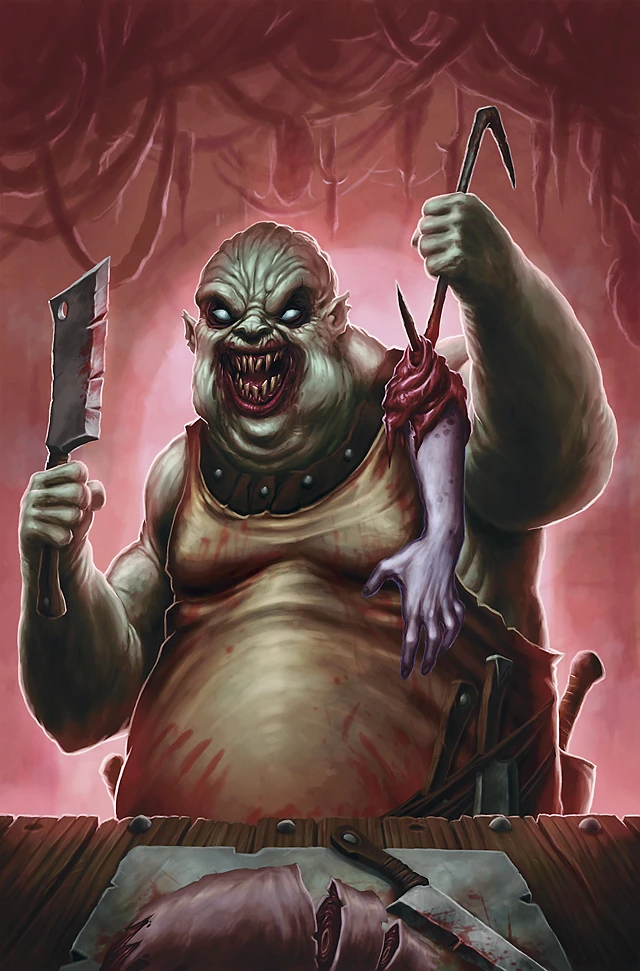
Evernight lay at the western end of the Shadowfell Road and was located at a crossroads in the Shadowfell, making the city a center of commerce in that plane. Evernight imported live meat: those that were lucky became slaves, those that were unlucky became meals. The center of the city's commerce was the Corpse Market, a place that almost seemed like any normal busy marketplace except that it sold body parts, blood, slaves, zombie servants, and all manner of unnatural goods. A district of workshops and storehouses was located nearby the Market, and was jealously guarded.
Transactions in Evernight generally involved the exchange of gold pieces, but occasionally favors or flesh might be exchanged instead.
Defenses
A hungry population of flesh-eaters and blood drinkers was enough of a threat to put off most living adversaries. For enemy undead or necromancers however, the priests of the Temple of Filth had a secret doomsday weapon hidden away in case their own people were not enough to defend the city. This weapon was said to be a magical artifact that had the ability to project radiant energy equivalent to the light of Toril's midday sun. Only strong undead creatures were capable of handling it without being instantly destroyed, but even they suffered crippling pain. Once wielded against enemy undead however, hundreds were sure to be destroyed all at once, even under the pall of the Shadowfell. The artifact itself was protected by a shrine in the Temple of Filth, hidden by ritual magic, behind trapped and cursed doors.
History
Prior to the Time of Troubles, Bhaal and Myrkul had once been worshiped in Evernight. However, by the late 15th century DR, only the very oldest of the city's undead still recalled a time when this was the case. None could recall a time before the appearance of Castle Nowhere, and many assumed that it had simply always existed.
The shadovar had an ambassador to Evernight even before their Return to Faerûn in 1372 DR. Evernight also maintained a diplomatic relationship with Thay after it became a nation of necromancers and began to take interest in the Shadowfell Road during the 15th century DR. In exchange for humanoid slaves and corpses, the Thayans purchased the right to set up an outpost in the city.
In 1451 DR, when Mount Hotenow erupted on the Material Plane, so did its Shadowfell mirror. On the Shadowfell though, rather than a pyroclastic flow like the one Neverwinter suffered, Evernight got a slow and perpetual stream of lava that was contained and channeled by the riverbed, evaporating the river water but otherwise not damaging the city save for a few piers. Evernight became a thriving city after this event, to the chagrin of some living individuals who wanted to see Evernight destroyed.
By 1479 DR, the tension between the Netherse and Thayans was a source of concern for the ghouls of Evernight, and so they forbade these factions from open conflict within the city walls. However, this did not stop the two sides from engaging in cloak-and-dagger battles.
Races: Primarily undead (e.g., ghouls, pale reavers, vampires, wights, zombies)
Religions: Doresain, Orcus
Commerce:
Imports: Slaves, prisoners (for food)
Politics: Oligarchy
Ruler: Ghoul tribunal

Comments