

Myth Drannor
Myth Drannor, formerly known as the city of Cormanthor (pronounced: /kɔːrˈmɑːnθɔːr/ kor-MANTH-or14), the City of Song,4 or the City of Love among other names,5 was the former capital city of Cormanthyr in the forest of Cormanthor.113 It was considered by many to be the pinnacle of shared knowledge, culture, and civilization in Faerûn, as well a beacon of serenity and solidarity in the chaotic Realms.515
For hundreds of years after the Weeping War, Myth Drannor languished as fiend-infested ruins.16 After hundreds of years the city was reclaimed by the elves of Evermeet in the late 14th century DR. It enjoyed a century-long renaissance,13 before falling to ruin once more.
Defences
Beyond its namesake mythal, Myth Drannor owed its defense to the great Cormanthyrian army of Akh'Velahr along with its many great and powerful mages of the Akh'Faer.15 The fabled amrathors of the Coronal Guard served as the city's elite protectors, some of whom practiced a unique form of sword magic.5152
Service in the military was a life-long dedication, symbolized by the permanent tattoos inscribed upon a soldier or mage's hands and forearms.1
Throughout its history, Myth Drannor enjoyed bolstered protection from the War Wizards of Cormyr along with contingents of the kingdom's Purple Dragons.
History
Myth Drannor was founded as Cormanthor in the −3983 DR by the Coronal Kahvoerm Irithyl.5758 For over four thousand years, the city prospered with little incident.5960
Glory of Myth Drannor
Coronal Eltargrim Irithyl decided that if Cormanthyr was to survive, its people must make peace with the other races, so Eltargrim set about organizing the elf wizards to create a mythal.2 It was completed in the Year of Soaring Stars, 261 DR,3 and its construction marked the "Opening". The Coronal opened the city of Cormanthor to all non-Tel'Quessir, and the city was crowned Myth Drannor.61
The Opening marked the beginning of the Golden Age of Myth Drannor, when the city prospered and many races flourished amid its towers. Many demihuman groups came to the city during this time, including dwarves, gnomes, and halflings.62 Myth Drannor reached a peak of influence and culture in the Year of the Bloody Tusk, 661 DR, and all the races living within flourished under a sense of unity.63
Following the death of Eltargrim in the Year of the Bloody Tusk, 661 DR,6465 the city was left without a leader. By Midsummer in the Year of Austere Ceremonies, 667 DR, the Council of Twelve was in control of Cormanthyr and Myth Drannor.506466 This council soon forgot the dreams of the Coronals, focusing on actions that favored their own families and influence. With Myth Drannor failing as a capital, the next 40 years saw Cormanthyr dissolve into city-states rife with divisive in-fighting that poisoned the city's council and the guilds.67
Fall
Main article: Weeping War
In the Year of Despairing Elves, 711 DR, the Trio Nefarious entered the northern woods, attacking some eladrin outposts and moving closer to the capital, and starting the Weeping War.68 The elves of the city were aided in its defense by the men of the Dalelands and some Cormyrean War Wizards.53 Unfortunately by the Year of Doom, 714 DR, Myth Drannor was overrun by the Army of Darkness.68697071
Myth Drannor's former residents scattered across the Realms. Some elves found new homes in the land of Tethyr by the grace of Strohm II.7273
The fall of Myth Drannor began an event that came to be known as the Retreat – the great migration of elves from the continent of Faerûn to the isle of Evermeet.74 Among those that were known to have returned to the Green Isle were the elven houses of Durothil, Silverspear,75 Symbaern, Nightstar,76 and Nierdre.77
Interim years

For over six centuries, the elves kept the place hidden and sealed for the most part, refusing to let any into the ruins save dragons, whom the elves hoped would guard the city against interlopers as they would their own lairs78 The city became a legend, one of the most dangerous adventuring sites in all of Faerûn.79
During the 13th century DR, the deity Lathander appeared before a group of his clergy that came to be known as the Seekers of the Dawn. He tasked them with the formation of a Lathanderite temple within the ruins of Myth Drannor and bestowed upon them the Dawnstone to aid them in their endeavor.80
In the same year that the elves' Retreat reached its apex,79 in the Year of Moonfall, 1344 DR, the Cult of the Dark Naga were lured to Myth Drannor by the lich Druth Daern. The nagara were slain by the phaerimm, and subsequently raised as bone nagas as servants. With the undead army at his disposal, Druth had power that rivaled the fiends and undead illithids that dwelled within the ruins.8182
A mere two years later, in the Year of the Bloodbird, 1346 DR, the alhoons had manipulated the church of Bane into opening a portal to Avernus within the ruins in an effort to set ther devils upon their phaerimm enemies.7883 The archdevil Malkizid intervened however, keeping the portal open for hordes of baatezu to pour forth into the Realms.84 The Banites quickly erected magical wards to contain the fields, hoping that adventurers would slay some of their number.84
The Seizing
Over the next ten years, the followers of Bane spread rumors about the great riches that could be obtained from within Myth Drannor.84 Many adventuring bands made forays into the city's ruins,85 in search of wealth and glory. Notable among these groups were the Company of the Catlash,86 and the Masked Marauders.87 Other groups were more benevolent in their motivations. The Knights of the Shadow Sword made regular patrols in the city, seeking to rid it of its evil denizens,88 while the Knights of Myth Drannor relocated there in the years prior to their retirement.89
In the Year of the Prince, 1357 DR, an avatar of Moander marched on Myth Drannor from Yûlash; while it was prevented from reaching its destination,90 the destruction it caused formed a path in the forest called Moander's Road.9192
A few months later in Marpenoth, the entity known as Tyranthraxus briefly took over the city by means of a pool of radiance and established itself within the temple of Labelas Enoreth. With the assistance of a disguised Elminster, a group of adventurers found passage through Myth Drannor's barriers and drove the possessing spirit out of the ruined city.93
The following month in Uktar, the Knights of Myth Drannor managed to close the portal established by the followers of Bane a decade before. Unfortunately, scores of devils remained within the ruins.84
Twelve years after that, in the Year of the Gauntlet, 1369 DR,84 the Cult of the Dragon gained a foothold in the city, under the leadership of Kya Mordrayn.94 They had discovered a newly formed pool of radiance inside Castle Cormanthor and wished to bathe the dracolich Pelendralaar in its waters to grant him more power. Once again, the malevolent plans of those seeking to exploit Myth Drannor were foiled by adventurers of the Realms.84
Reclamation and Reconstruction
In the Year of Wild Magic, 1372 DR, the return of the Netherese to Faerûn led to the expedient destruction of the phaerimm that dwelled within the city's ruins. The returned arcanists erected a shadowshell that prevented their escape and nearly eradicated the aberrations from within the ruins.95
Two years later, in the Year of Lightning Storms, 1374 DR, the forces of the daemonfey managed a feat that so many others could not – they conquered the ruined city by force. In turn, Seiveril Miritar and the Elven Crusade returned to Faerûn from Evermeet to reclaim Myth Drannor for the Tel'Quessir from the fiendish plague.96 Seiveril's daughter Ilsevele became the new coronal and efforts to restore the city began.979899 The elves of the region began to clear the ruins of Myth Drannor, in order to build the city anew.100
By the following year, Myth Drannor became a flourishing city-state that garnered influence over several Moonsea and Dalelands settlements.13 Unfortunately, that was also the year in which agents of returned Netheril managed to recover the Nether Scrolls from Windsong Tower. The restored City of Song and the returned Empire of Netheril entered into a non-warring conflict with one another,13 that hearkened to the original discovery of the Nether Scrolls and their abandonment of the magic taught to them by the elves of Eaerlann.101
After over a century of tension and conflict, war broke out in the Eastern Heartlands.102 The Netherese enclave of Thultanthar took to the air directly over Myth Drannor as the Netherese shades sought to take control over its mythal. During the struggle, Thultanthar crashed down upon Myth Drannor, leveling both of the cities upon impact.103 Coronal Ilsevele managed to survive the catastrophe, and her subjects fled to the formerly abandoned settlement of Semberholme.
Geography
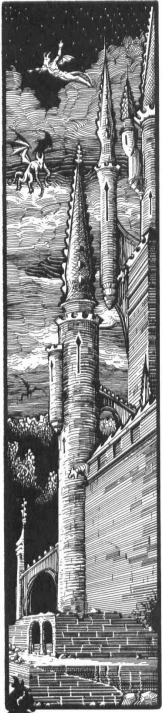
The stone towers of Myth Drannor were predominantly tall and graceful in appearance, though some of those used by wizards took the shape of fantastic creatures or forms found in nature.4 The "naturally-grown" structures of wood and plant life, formed by the Oacil'Quevan ritual of complement,19 were among the most breath-taking in all the Realms.4
Cobbled streets wound through the city, running in-between the ground-level buildings of elven design and picturesque glades and city parks.1320 Embedded within the roads were markers for the levitation pillars, shafts of magical energy that could lift an individual to the skybridges and elegant treetop dwellings set within the canopy of Cormanthor.21
There was an expansive set of Dwarven Dungeons that ran underneath Myth Drannor,6 that was inter-connected with many of the subterranean dwellings that were built by the city's non-elven residents.20
Magic
As per its name, Myth Drannor partly defined by its protective mythal that was raised under the guidance and leadership of the legendary spellcaster Mythanthar.2223 While the mythal's made the lives of its citizens more safe and convenient during its existence,24 and even held secret powers known only to its creators.25 Following its destruction, the mythal leaked magical energy that greatly affected the ruins and the surrounding forest of Cormanthor, in regions that came to be referred to as "Edgelands".526
Magical enhancements were prevalent throughout Myth Drannor to the point of being excessive. The city's skyways were illuminated by subtle magic fields of light resembling that reflected by the moon and spellfields that functioned for its citizens' amusement. The villas of elven nobles eschewed the use of "normal" glass, preferring theurglass that could be altered by mere touch.2127
The excessive use of High magic and portals in the city, combined with the actual mythal itself, weakened the "planar fabric" of the region, granting easier access to other planes of existence and crystal spheres. Most notable among these were the Feywild, the lower planes,28 the demiplane of Dread, along with the planet Krynn.29 Myth Drannan portals linked the city to other destinations such as the portal nexus referred to as Abarat's folly, located within his namesake tower in the Moonsea,3031 the warrior's gate connected to the kingdom of Delimbiyran,32 and most importantly, the Gate Halls nexus that link the castles of the all the great elven kingdoms. The Silversgate connected Myth Drannor to Eaerlann, while the Honorsgate led to the Forest of Mir in Tethyr.33
Technology
The dwarves of the House of Gems established a complex network of underground pumps, called Lifespring Wells, that provided its citizens with a reliable source of fresh water, and many of the city's beautiful fountains guarded by naiads.34 Among other wonders of technology created by the city's dwarves was the sophisticated air vent systems that ran through all the levels of the Dwarven Dungeons and the House of Gems itself, called the Channels of the Earthborn Wind; the many winding walkways around the Castle Cormanthor and Windrider Glade; as well as the ingenious "liquid fire", used to illuminate the Dwarven Dungeons and Elven Catacombs and other city districts.
Myth Drannor was one of four old communities of Cormanthyr, alongside the Elven Court, Semberholme, and the Tangled Trees.36
Myth Drannor was constructed around two tributaries that came together to form Oacenth's Stream, which flowed south through Tilver's Dam to Glyryrryl's pool in the southern end of the city.3738 Just north of the city proper was the Polyandrium, a network of crypts and tombs built beneath an old battlefield,39 and the Shrine of Mystra.40
As of the late 15th century DR, two notable landmarks stood in stark contrast to the restored City of Song: the mold-covered fortress known as the Citadel of Fungi, and the Shadowfell-corrupted Demon Estate of the Fey'ri.13
Geographical Features
Myth Drannor was built in such a way that its layout resembled the head of a battleaxe, with the blade pointed to the west.37 The western half of Myth Drannor was the older of the two, home to the "Old City" of elves as well as the "Temple" and "Lake Wards";414243 while the eastern half, named Dlabraddath for its designer Labrad, featured numerous parks, gardens, and other sites of natural beauty, along with the homes of non-elven citizens.4445
The two approximate halves were linked by the large curved bridges that spanned the streams that ran through the city in a north-south direction.
Climate
Due to the magic of its mythal, Myth Drannor enjoyed exceptionally pleasant weather. It remained free from extreme heat or cold, and was immune to natural disasters such as storms and forest fires.
RUINED SETTLEMENT
714 DR

Comments