Vichy
Allard Noielles was a high-ranking cardinal within the City of Painted Glass’s complex orthodoxy, and one of a handful among the uppermost clergy who dictated Vichy’s wider governmental policies—particularly ones pertaining to the military and social welfare. !e former was a point of pride for Noielles, as he often used his authority to silence political rivals at home and abroad, and to further cement his power as the foremost voice of authority within the church. The cornerstone of his social politics was the observation of dogmatic rituals and pro-church propaganda that inspired his followers to commit acts of violence against anyone who spoke out against Noielles’s ever-tightening grip.
Over time, his hunger for power grew insatiable. Eliminating members of the provincial government and rival clergymen in what would later be known as the Gilded Coup, Noielles reigned as king in all but name, until the population of Vichy fell almost completely under his sway. Eventually, he sought to spread his influence even farther by weakening neighboring nations, such as Corbel, through blackmail thinly disguised as religious tithes, while re-instigating long-settled military conflicts with the Caoimhe Clan-Lands and Cathia to spur a cancerous nationalism among his followers.
Yet, when he attempted to assume the mantle of an Erebosian god-king in earnest, Noielles ultimately failed. Vichy’s large but uncoordinated military faltered on the Caoimhe and Cathian fronts, and his incomplete coup attempt left just enough opponents to undo his gains in seizing vast swaths of the government. Noielles’s sudden disappearance left Vichy struggling to fill a massive power vacuum, in addition to dealing with a nigh-brainwashed populace and multiple, unwinnable, costly wars. Stand-in leaders struggled to maintain what little order they could as the country began to unravel.
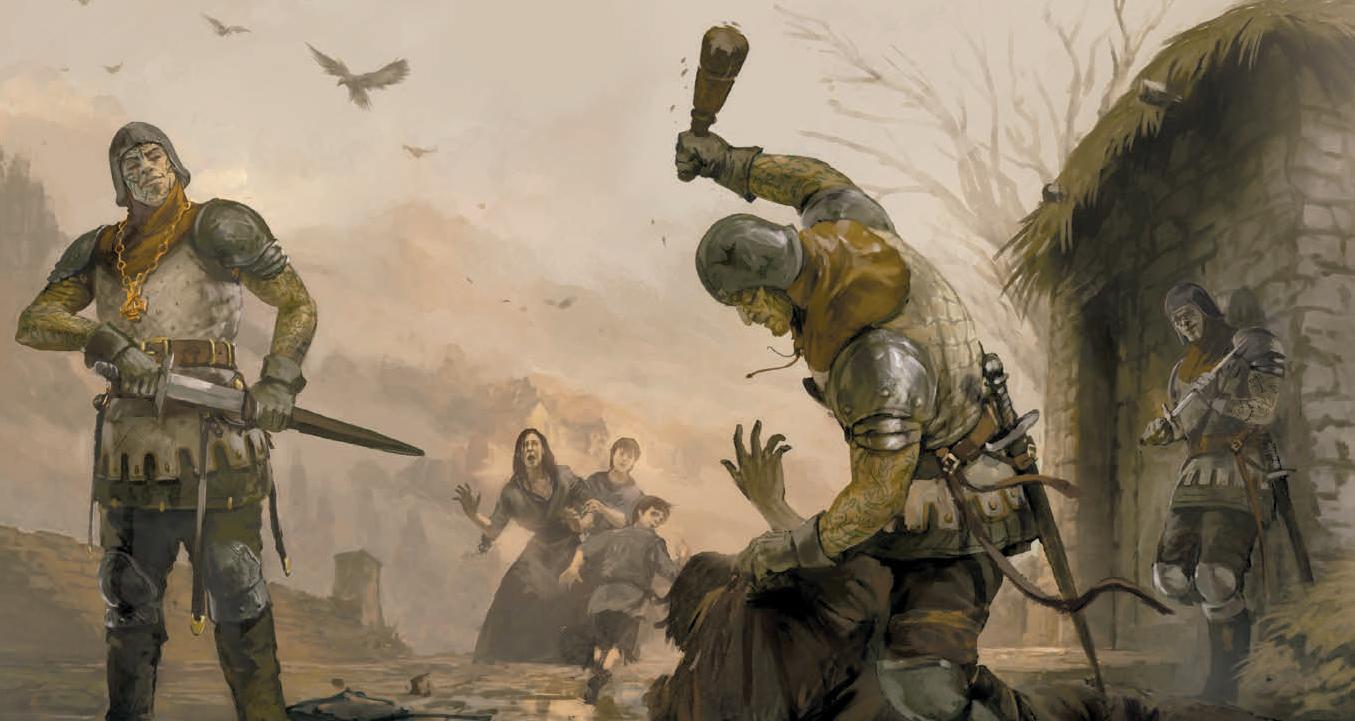
Suddenly, everyone in Vichy started to experience miracles and powerful visions, from the filthiest peasants to the most powerful regional governors. Farm animals and produce suddenly turn to glittering gold, the sky parts and golden light descends in otherworldly auroras over quaint hamlets, or all the people of a town wake up hearing a Golden Messiah speak about the nature of faith and destiny. These religious experiences serve to ignite the word of a living, physical god, and as the Fervor spreads, doubters either come to experience the miracles themselves or are brutally slain by their former friends and neighbors.
Within the City of Painted Glass, a massive religious surge has overtaken the population, most of whom were already susceptible to idolatry. Daily citywide prayers are extended to the Messiah, and mortal leaders either quickly fall in line or face the wrath of an intransigent, bloodthirsty citizenry. There are no cults or religious offshoots, only the rapid takeover and conversion of the orthodoxy to solely spread the gospel of the Messiah.
Ironically, the effects of the Gilded Coup are still felt. Few effective leaders remain, with the church reduced to sniveling cowards or careerists pragmatic to a fault, who can only watch as crude chapels and heathen symbols are erected across their lands.
Foreign Relations
Vichy has been at a state of war with Cathia and the Caoimhe Clan-Lands for almost two decades. Relations with the Splendid Kingdoms are stable and the Five Families of Corbel have been generous to the Sigilist church to keep it that way. The church is also highly influential in Thule.