The Splendid Kingdoms
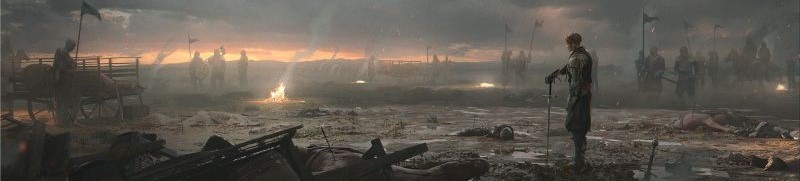
Look upon The Splendid Kingdoms, that collection of nations, each sovereign, that nestle like lesser jewels around the brightly shining diamond that is Corbel. As the precious spirit of that diamond wanes, its light dimming as the War of Empty Thrones proceeds, see how the supposed lesser gems sparkle with their own unique and colorful auras.
The question is, certainly, what would make anyone refer to this collection of minor nations and city-states as “splendid?” Someone lost to the mists of time, perhaps just a scholar and no monarch in their own right, a mere maker of maps, referred to the region as such and the name stuck. Anyone studying the area would have found news and hearsay dominated by the nation of Corbel. Perhaps the moniker was laid because great Corbel itself could not be surrounded by mere dross; even the aspiring castoffs who toiled to produce wealth for that infamous hive must be elevated above the savages of the Caoimhe Clan Lands, or the fanatics of Hyperitus.
The physical land area is actually somewhat limited. Bordered by mountains to the north and east, and troublesome seas to the south, the only potentially flexible border has been to the west, marked by the River Muse. It is a strong border, as The Splendid Kingdoms’ military strength can be focused upon it without need for concern for their other three boundaries. The people of Vichy have not always been enemies, but they have always been considered strangers, speaking a different dialect and following a different faith.
Culturally, the region east of the Muse is more or less homogeneous. Politically, the lands are marked by ever-shifting borders. Some leaders are powerful enough to style themselves as monarchs, such as Queen Corinthia of Baerald, or King Maddthew III of Gaillard. With established wealth, secure boundaries and a legacy family in power since the days of the Republic, these are monarchs with equivalent majesty to any similar-sized kingdom found in western nations. Some lands are more like city-states, centers of local power but with limited reach geographically. Often, these city-states are ruled by those who style themselves with alternative titles, such as the Prince of Harpa, the City Father of Rupea, or the Councilors of Vulg. Upon a time, during the days of the Republic, naming oneself “king” was unthinkable – that title could only be inherited. But the War of Empty Thrones doesn’t bear that name by accident. New thrones will rise, lest the moniker “Carcass Nations” becomes true.
Culture
The culture of The Splendid Kingdoms is the best explanation of why they bear that particular name. It is a culture marked by appreciation for knowledge and innovation, mixed with a deep sense of pride for accomplishment, particularly in engineering. This appeal for creative invention is also closely intertwined with an affinity, or perhaps a knack, for what is known as the art of eyes-and-whispers, that is, spycraft.
Several hundred years ago, general rivalry between the rulers of these lands (who are all related by blood and intermarriage, by the way) led them to embrace and promote the works of scholars and engineers who developed the best, most practical and flashy ideas. This practice became an established, formal custom, with annual festivals and prizes grand enough to fund expensive prototypes and projects, along with a generous level of income. These days, a noble at any level will be willing to at least hear a pitch for a new idea and investment, and the return on investment is generally measured in glory and bragging rights, on top of mere money. Yes, a mechanical wheat processor is sure to be met with wide acclaim, but so is a bejeweled astro-clock that tells you what the weather was fifteen years ago, as long as the investor is sufficiently enchanted with how complex and ornate it is, as well as the fact that none of his peers owns one.
In other words, unique and useless can be just as important as mass-producible and practical.
When outlanders visit any place in the kingdoms, they are sure to be amazed by the very best that a host can produce. An innkeeper might display pride in his finely worked spinning spice rack, while a noble will be sure you will see his silver-chased automaton in the courtyard. A king might possess a scrivener’s desk that makes a copy of original writing, but even the lowliest farmer in these lands seems to have some object of wonder, even if just a gilded sundial with glass jewels. Something to encourage some variant of the exclamation, “how splendid!”
In terms of politics, this affinity for the wondrous has fostered a culture of one-upmanship among noble houses, but generally, the mood is amiable and there are several varying degrees of expressing jealousy. Nobles who are on friendly terms with each other will admit their envy with admiration, and perhaps a toast to the winner’s favor. Others, not on such good terms, have raised backhanded verbal praise to an art form. Only one thing is certain – expressed envy and concession of a win are always expected. The worst snub one can commit is to refuse to comment on whatever item is in question; that is, to pretend that it is in fact mundane.
Over centuries, the art known as eyes-and-whispers has developed concurrently with this culture of splendiferousness. It’s hard to say if the art developed as a result of the fierce competition among inventors, or if it always existed and was hammered into a new shape by the Splendid Kingdoms’ love of gadgetry and technological tricks. But like a creeping vine growing through a hedgerow, they have merged into a unique new form, one that can be as beautiful as it can be deadly.
Spies and Lies
The Splendid Kingdoms have developed the most sophisticated and intricate spy networks the world of Erebos has ever seen. Intelligence tradecraft has reached a pinnacle among these lands, with techniques, tools and theurgy that enhance the profession above that in any other land. Where other countries have just figured out how to use lemon juice as invisible ink, Corbellian spies have ink that will rearrange itself into a new message under the right gesture. Where the clans of Caoimhe send coded messages via trained pigeons, a Rupean spy uses a mechanical ferret automaton capable of navigating the local city’s sewer lines by itself. Spycraft is ahead in the Splendid Kingdoms by an order of magnitude.
There are no guilds for spies; actual trade in secrets is very, very rare. Information belongs to those nobles who hold it secret, and those who ferret it out to their advantage – emphasis upon their advantage.
In the past, there were attempts at collecting spies into independent bodies, or an occasional commonwealth agreement among those who found they had more in common with each other than their masters in faraway towers. Without fail, these guilds were infiltrated and destroyed with heavy prejudice by the nobility. These days, nobles demand loyalty from those in their networks. Betraying the noble means immediate death or banishment, and being identified as the spy of another means losing one’s profession. Once identified, a spy loses any usefulness they might have, and is banished. No one will hire them again, which leaves either turning to a thieves’ guild or taking on the lowest stratum of arduous scut work among the peasantry.
Accusing someone of spying is a severe matter, sure to be pursued by formal investigation, and if the accuser is found to be wrong, terrible punishments can be applied, depending on the nation. The Queen of Baerald is known to expose false accusers by having them flogged in a public parade in which they are subsequently tarred and feathered, to the rollicking musical tunes of comic troubadours, before they are banished in humiliation. On the other hand, those false accusers caught in Vulg are simply sent to mines where they never again see daylight.
Every kingdom, duchy, barony, nation-state, city council and trade guild has some sort of spymaster. The ones with political power are subject to slightly different rules and customs than a common spy. A spymaster serves the local authority, and manages his or her network of agents, as well as information received. A noble spymaster is a delicate position, and is usually a very secretive affair for obvious reasons, but it is neither illegal nor immoral, as they ostensibly serve the welfare of their lord. It is rather awkward, however, to be publicly named as one, and more than one duel has been fought over the accusation.
The world of a spy is driven by coin, as one must acquire informative assets. Blackmail can also be used in place of coin, but it generally takes resources to winkle out an asset’s weakness and more resources to exploit it. Spies in the service of nobility generally get a budget to work with and the result is that the ever-moving cycle of coin, secrets and payoffs keeps part of the economy in motion, as the money mostly remains within the Splendid Kingdoms.
Counterespionage
The nobility of the Splendid Kingdoms aren’t stupid. If a Duchess maintains a household with fifty servants, she expects at least half may be on the payroll of rivals or enemies, and at least five will be employed by people the Duchess calls “friend.” The idea that servants are treated with disdain by the nobility, rendering them effectively invisible, does not exist in the Splendid Kingdoms. Therefore, locked doors, secret drawers, and encoded journals are de rigueur among castle folk of all levels. It can be tiresome, perhaps exhausting, but what else can be done? The laundry won’t wash itself, nor will the hounds carve up the day’s chine of venison for the Lady’s table.
As a result, there are staffers among the household whose job it is to identify spies, and either arrest them, or at the noble’s discretion, feed them just enough lies or useless information to keep them in a place where they can do no damage.
Industrial Espionage
Eyes-and-whispers isn’t limited to noble households. While the regular intricacies of politics are obviously appealing to the typical spy, there is also a brisk business to be done trying to gain the secrets about the latest projects and prototypes being fostered by one’s rivals. In fact, this use of tradecraft may have been the original source of eyes-and-whispers. This is where that perfidious art does tend to resemble more of a game than deadly, politically-motivated action. At no time is this seen better than during the annual Great Fair.
Territories
There are a number of sovereign “states” that occupy the lands between the mountain range known as The Brim and The Sea of Opal. A few – specifically Baerald, Gaillard and Corbel – are well-established with wide-ranging power that has lasted for centuries, even under the Republic.
Other, smaller areas have come and gone over the years. Some, like Vulg, have staying power but exist in the shadow of greater thrones. Others have borders that blend and merge with various alliances, weddings and treaties over the years, giving birth to new iterations of the countries on the map. There’s a reason that nobles address each other as “cousin” in these lands – it’s often literally true.
In the wake of the War of Empty Thrones, these borders are once again on the move. Opportunity exists for new alliances and noble marriages to clear the canvas for new artistic expression vis-à-vis eyes and whispers.
Religion
Most kingdoms (for want of a single word) in this region are nominally Sigilist in their faith, meaning that the cities and larger settlements will have a church that acts as a local authority in Sigil matters. Small towns and burgs will likely have a priest-level member of the church in residence, while cities will have a figure at the Bishop level in addition. Capitol cities generally have an Archbishop, who also acts as a royal advisor as well as an adjudicator of church-related political matters.
Outside of the cities, it is a different matter. The further one gets from a populated area, the more tolerance there seems to be for the Old Gods. The Saints of the Sigil are still respected in these areas, yet there is a practicality to everyday life that keeps the Old Gods’ names on the lips of the farmers, huntsmen, tanners and charcoal burners who live far from the refinement of populated areas. These folk will pay an honest nod to the saint said to watch over the area, but when they’ve had a bad harvest, taken a dire illness, or suffer other hardships, their first prayer goes to the Old God whose name was always upon the lips of their grandparents. The backwaters remember the old ways.
It’s worth noting that people who live along the coastlines of Baerald, Harpa and Corbel tend to preserve a reverence for the Rider that will likely outlast all Sigilist attempts to erase it. Sailors are a superstitious lot, and while there are saints who are affiliated with the seas, when the mast cracks and the anchor’s lost, most of those names are forgotten quickly in favor of calling upon the Rider.
A familiar and educating tale is that of Saint Hary-’pon-the-Hill, one of the more commonly derided saints along the coastline. As he is otherwise known, Saint Harrald of the Sigil was made a martyr, famous for his glorious attempt to save ten Vichian merchant vessels from a storm by wielding his faith as a weapon and daring the Rider to strike him down. His body was found after the storm, lying facedown upon a pile of horse dung at the top of a cliff overlooking the Gulf of Echoes, with absolutely no tracks or other signs of equine presence. To this day among sailing folk, someone deemed to have made a horrifically unwise mistake might be said to have “Hary’ed the hell out of that one."
It is also worth mentioning that the marshlands of eastern Corbel are notably hostile to Sigilist outsiders. The City of Corbel is predominantly Sigilist, and there are a few priests of the Sigil in the hamlets found upon the eastern shore of the Gulf of Echoes. But there are no large settlements of note, ergo not enough population, commerce, or intrigue to occupy a Bishop or a Archbishop.