
Shadowfell
Shadowfell — The Plane of Shadow
The Shadowfell, often called the Plane of Shadow, Shadowland, or Shadow Deep, is a bleak and desolate reflection of the Prime Material Plane. In stark contrast to the vibrant Feywild, the Shadowfell drains life, emotion, and color, leaving behind a realm of shadows, decay, and sorrow.
Overview
The Shadowfell exists as one of the parallel planes mirroring the mortal world. Where the Feywild amplifies life and emotion, the Shadowfell magnifies loss, gloom, and the passage of death. Mountains, forests, rivers, and cities have counterparts here, but all are twisted, faded, or corrupted — as though viewed through a dim, lifeless glass.
Travelers who enter the Shadowfell often report an overwhelming sense of unease, isolation, and quiet despair, as though the plane itself feeds on hope and warmth.
Nature of the Plane
The Shadowfell is defined by its stark qualities:
- Color is nearly absent — the landscape is dominated by black, white, and shades of gray, with little to no natural light or warmth.
- Light and fire are weakened, making illumination and heat more difficult to cast or sustain.
- Shadow and necrotic magic are enhanced, though their effects often feel eerie or unnatural.
- Time and gravity function similarly to the mortal realm, but the atmosphere can age visitors psychologically, dulling emotion over long exposure.
Unlike the Feywild’s vibrant magic, the Shadowfell’s force is one of entropy and desolation, where landscapes continually shift and decay as if the plane itself is slowly unraveling.
Accessing the Shadowfell
Crossings between the Material Plane and the Shadowfell can occur in several ways:
- Shadow crossings — naturally weak points in the veil between worlds, especially in places of deep shade, crypts, or sites steeped in death.
- Shadow walk and plane shift magic, which can transport spellcasters into the Plane of Shadow when properly cast.
- Rifts created by death or sorrow, where intense necrotic energy tears the boundary between planes.
These passages may be fleeting or difficult to navigate, and arriving at a specific mirrored location is rarely precise.
Landscape and Phenomena
The Shadowfell’s terrain mirrors that of the Material Plane — but always in a bleak, distorted form:
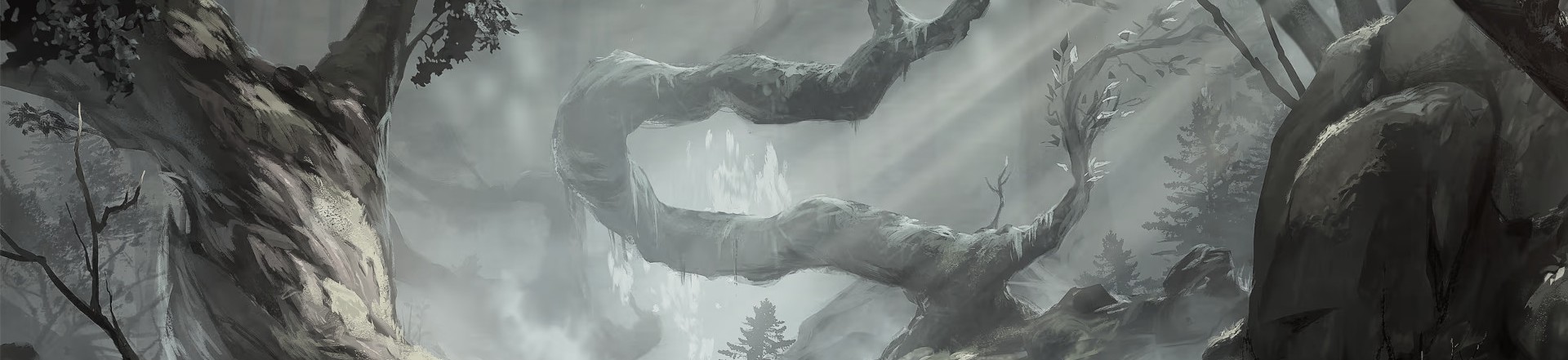
- Forests become skeletal and gnarled, with trees that seem to reach out like grasping fingers.
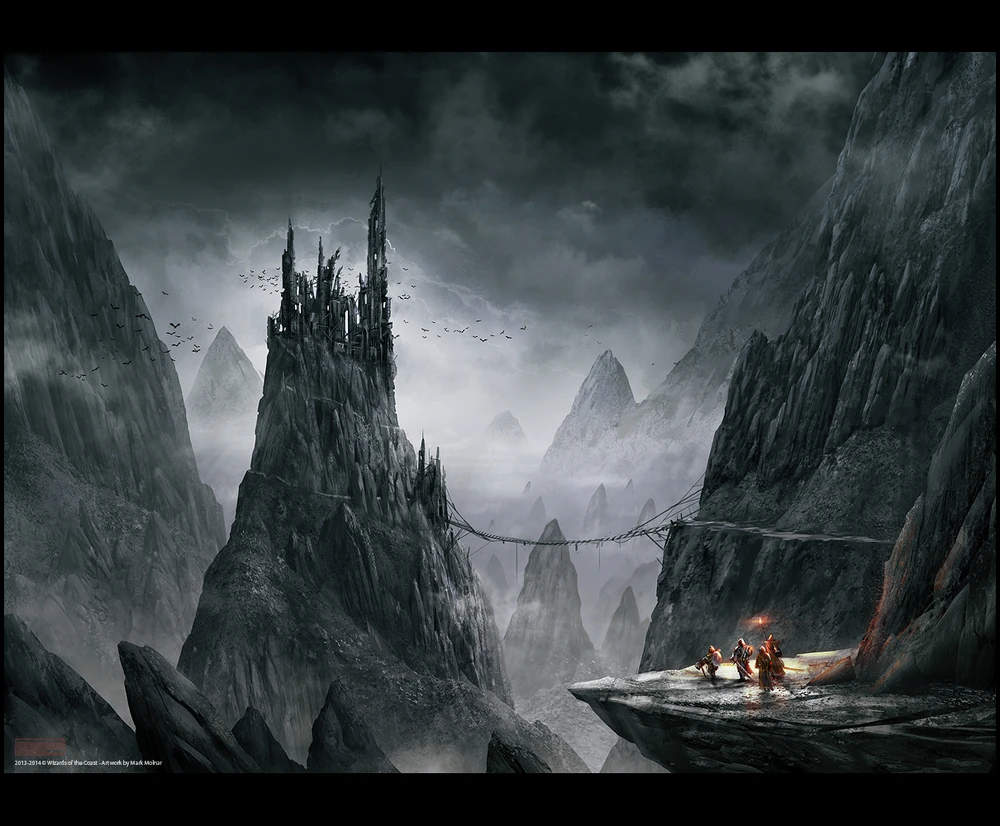
- Mountains erode into crumbling, jagged silhouettes that resemble jagged ruins rather than solid peaks.
- Rivers and swamps ooze thick, foul water that barely supports life.
These features, called shadow-analogues, shift over time, making navigation difficult and geographic mapping unreliable.
Inhabitants
The denizens of the Shadowfell are as grim as the plane itself:
- Shadar-kai — enigmatic humanoids adapted to the plane’s gloom, often serving the Raven Queen.
- Undead and shadow creatures — including shadows, wraiths, spectres, shadow mastiffs, and shadow Dragons.
- Shadowborn — mortals born in the Shadowfell whose physiology has adapted to the gloom.
- Other eerie beings — darkweavers, ephemeras, and strange life forms that thrive in the perpetual twilight.
Emotion and color are muted here, and even the plane’s residents often appear solemn or detached.
Realms and Power
The Shadowfell is shaped by powerful forces that reflect its nature:
- The Raven Queen — a dominant figure associated with fate, death, and winter shadows.
- Domains of Dread — isolated pockets of the Shadowfell warped by tragedy and curse, such as Ravenloft, where fear and horror reign.
These realms act as centers of influence and often appear more solid or historic than the rest of the plane’s shifting gloom.
Legacy and Influence
Legends say the Shadowfell was born as a dark echo of the Prime Material Plane, its form shaped by necrotic energies and the absence of light. It stands as a planar reminder that where there is life and color, there can also be death, loss, and shadow — a place where the echoes of mortal fear and despair leave lasting marks.

Comments