

Infernal
Infernal
Infernal is the ancient, potent tongue of the Nine Hells and the ancestral language of the Tieflings of Enderlin. It is a language of contracts, hierarchy, intent, and consequence, designed to encode obligation, power, and meaning with absolute clarity. Harsh to untrained ears yet unnervingly precise, Infernal excels at expressing dominance, binding agreements, ritual authority, and layered implication.
Among tieflings, Infernal is more than a relic of fiendish ancestry—it is a cultural inheritance reclaimed. While born of the Hells, its use in Enderlin reflects resilience, memory, and self-definition rather than submission. Spoken carefully, Infernal is respected; spoken recklessly, it is feared.
Origins and Development
Infernal originated in the Nine Hells, shaped by the minds of Devils whose existence revolved around hierarchy, law, and eternal contracts. The language evolved not to express emotion freely, but to define responsibility, enforce obedience, and eliminate ambiguity—a necessity in a realm where every word could bind the soul.
During the Middle Dragon Age, when planar rifts tore open the barriers between Enderlin and the Hells, Infernal entered the mortal world in force. The great tiefling exodus known as the flight of Ashenveil, led by Tharion Ashveil, carried the language into Enderlin alongside its people. Though severed from the Hells, Infernal endured as a shared tongue among tiefling communities.
Over generations, Enderlinian Infernal softened slightly in tone and cadence, adapting to mortal breath and culture. While its core grammar and symbolism remain unchanged, modern tieflings often omit certain infernal honor-forms or hierarchical markers when speaking among equals.
Castes of Speech
Infernal is divided into distinct registers, originally reflecting the infernal hierarchy. All share a common foundation, but differ in structure, vocabulary, and intent.
- The Low Infernal Cant
A blunt, aggressive register once used by lesser devils. It is sharp, direct, and suited for commands, threats, or battlefield communication. Some tieflings still use fragments of it colloquially, often unconsciously. - Mortal Infernal (Common Infernal)
The most widely spoken form among tieflings and scholars. It is capable of abstract thought, philosophy, and emotional nuance, and is the variant most mortals learn when studying Infernal. - High Infernal
A formal, layered, and deliberately misleading register once used by greater devils. Sentences are structured to delay meaning, embed contingencies, or obscure intent. True fluency is rare among mortals. - Arch-Infernal
A court language of the archdevils, considered dangerous even to hear. Its patterns are said to erode hope and impose despair through rhythm alone. No confirmed mortal fluency exists in the modern age.
Most tieflings in Enderlin speak Mortal Infernal, with fragments of Low or High Infernal appearing in ritual, poetry, or emphasis.
Written Form
Infernal is written using the Infernal Script, a precise, angular system designed for contracts, laws, and ritual binding. Unlike Khuzdul runes, Infernal glyphs are meant to be drawn, inscribed, or etched, rather than carved deeply into stone.
Characters are sharp-edged and symmetrical, favoring vertical strokes and hooked terminals. Each glyph is designed to remain legible even when distorted, burned, or partially erased—an intentional safeguard against tampering.
Infernal writing is most commonly found in:
- Contracts and legal texts
- Arcane circles and summoning diagrams
- Ceremonial records and genealogies
- Tiefling historical archives
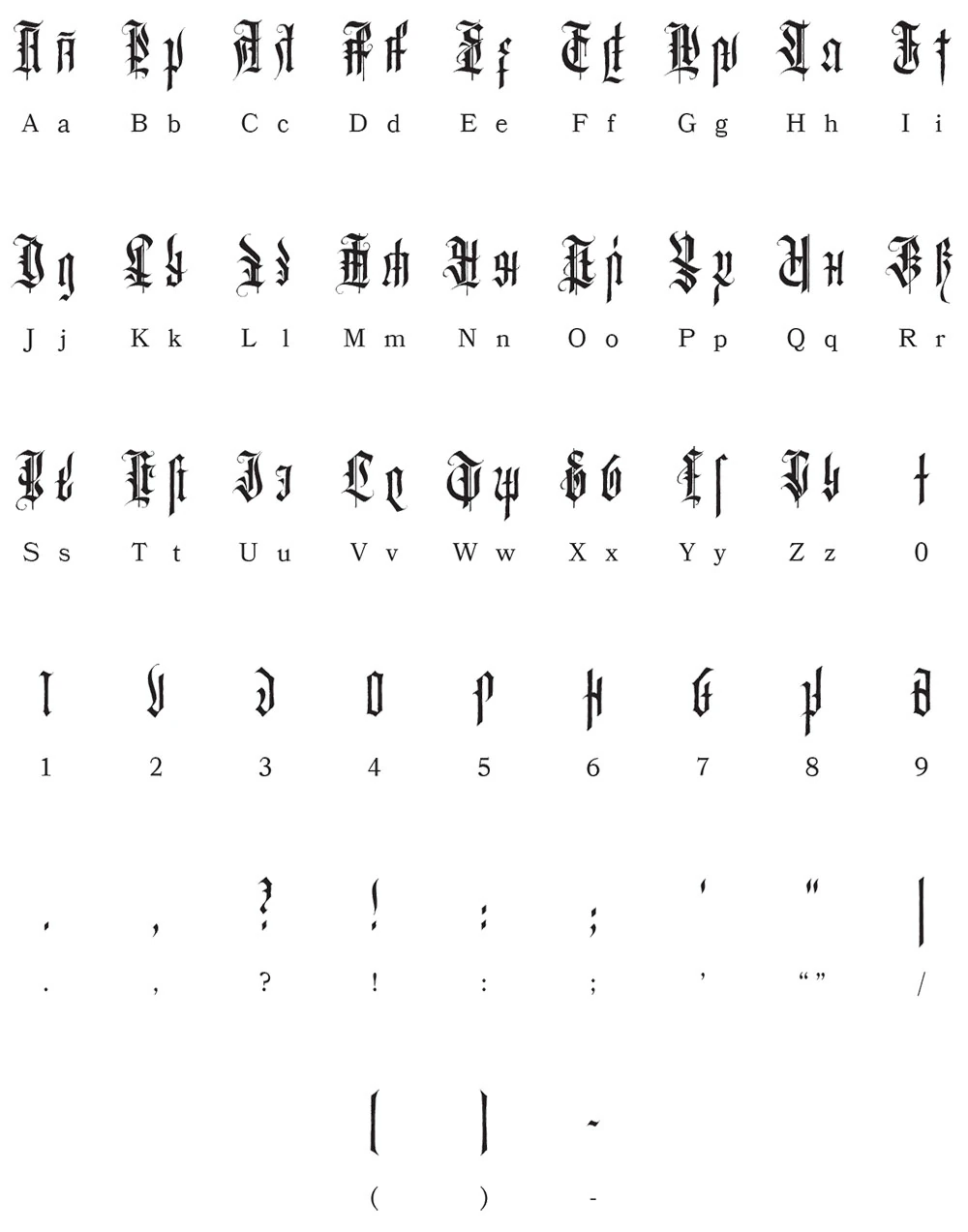
Infernal Script — Infernal to Common Translation
Alphabet and Structure
Infernal uses a phonetic glyph system augmented by binding marks—small strokes or sigils that modify meaning, intent, or obligation. These marks can alter whether a statement is:
- Descriptive
- Binding
- Conditional
- Deceptive by omission
Capitalization exists in the form of dominance markers, indicating authority, superiority, or legal primacy. Improper use of such markers is considered deeply offensive—or legally dangerous—in formal contexts.
Punctuation is functional rather than expressive. Clauses are separated by angled ticks, while completed bindings or finalized statements are sealed with a terminal sigil, indicating that the statement is no longer open to reinterpretation.
Numerals
Infernal numerals are written using base-10 sigils, but unlike Common numerals, each value carries an implied weight of obligation. Numbers used in contracts often include a secondary mark indicating whether the value represents time, service, quantity, or debt.
Dates are written as cycle–span–count, reflecting infernal concepts of eternal time rather than mortal calendars. In Enderlin, tieflings commonly adapt Infernal dates to Common reckoning when dealing with outsiders.
Symbols and Contract Marks
Infernal possesses an extensive system of symbol-glyphs, representing:
- Oaths and obligations
- Authority and hierarchy
- Punishment, service, or reward
- Binding entities or individuals
These symbols are central to infernal contracts and rituals. Even partial or decorative use can carry unintended meaning, which is why many cultures ban Infernal script from casual signage or art.
Among tieflings, these symbols are sometimes repurposed as protective marks, historical references, or cultural emblems, stripped of binding power through careful alteration.
Artistry and Emotional Expression
Though often perceived as cold or cruel, Infernal is capable of profound emotional weight. Emotion is conveyed not through softness, but through structure, restraint, and implication. A carefully phrased Infernal lament can carry more grief than a shouted Common dirge.
In tiefling art and poetry, Infernal is used to explore themes of:
- Ancestry and exile
- Choice versus fate
- Power reclaimed from oppression
- Endurance through knowledge
Use in Modern Enderlin
Infernal is most commonly used within tiefling communities, particularly in:
- The League of the Emerald Coast, where it appears in trade, scholarship, and civic life
- Ashenfire, blended with local dialects and ceremonial speech
- Cosmopolitan centers such as Portavira
Its primary uses include:
- Cultural identity: Communication among tieflings
- Scholarship and magic: Arcane theory and planar studies
- Ritual and ceremony: Rites of passage, oaths, and remembrance
- Legal precision: When exact meaning is paramount
All tieflings are fluent in Common, and Infernal is rarely used with outsiders unless intent, tradition, or secrecy demands it.
Cultural Perception
To non-tieflings, Infernal is often associated with the Nine Hells, giving it a bad name. To tieflings, it is a language survived, not a curse embraced. Speaking Infernal fluently is seen as a sign of education, discipline, and self-mastery.
Those who understand Infernal well recognize that its danger lies not in sound, but in meaning—and that meaning is controlled by those who choose their words carefully.
Names in Infernal
To a tiefling, a name is a statement of identity forged in defiance of fate. Infernal names are traditionally meaningful, symbolic, and deliberate, often reflecting ancestry, personal struggle, or aspirational traits rather than inherited status.
Most tieflings possess multiple names:
- A birth-name, given by family
- A chosen name, adopted in adulthood
- An optional Infernal name, used in ritual or among kin
True Infernal names are rarely shared with outsiders, as names in Infernal carry strong connotations of identity and intent.
Common Tiefling Given Names (Male)
Akmenos
Balthazar
Corvex
Ishkan
Malcer
Nerion
Rhazek
Tharion
Zarek
Common Tiefling Given Names (Female)
Akta
Calistra
Ilyra
Nemeia
Ravessa
Sephira
Tazriel
Virexya
Common Tiefling Family Names
Ashveil
Blackbrand
Cinderfall
Emberclasp
Hellscar
Ironpact
Nightbound
Sablemark
Vowchain
These Common forms often represent simplified translations of longer Infernal names. A tiefling known as Ashveil might bear a full Infernal family name meaning “Those Who Walked Through Fire and Did Not Kneel.”
Native Name: Infernal
Script: Infernal Script (angular glyphs and binding marks)
Primary Speakers: Tieflings; Nine Hell natives, scholars, warlocks, clerics, and mages
Geographic Spread: Tiefling communities across Enderlin and in the Nine Hells; strongest in the southern realms
Status: Ancestral and ceremonial language; used for contracts, ritual, and arcane study
Origin:
Originated in the Nine Hells as the language of devils and infernal law; brought to Enderlin during the Middle Dragon Age through planar rifts and the Flight of Ashenveil.
Dialects:
Structured registers rather than regional dialects, ranging from common mortal Infernal to highly formal and dangerous high forms.
Ease of Learning:
Difficult — precise grammar and layered meaning; improper phrasing can alter intent or consequence.

Comments