

Livewood
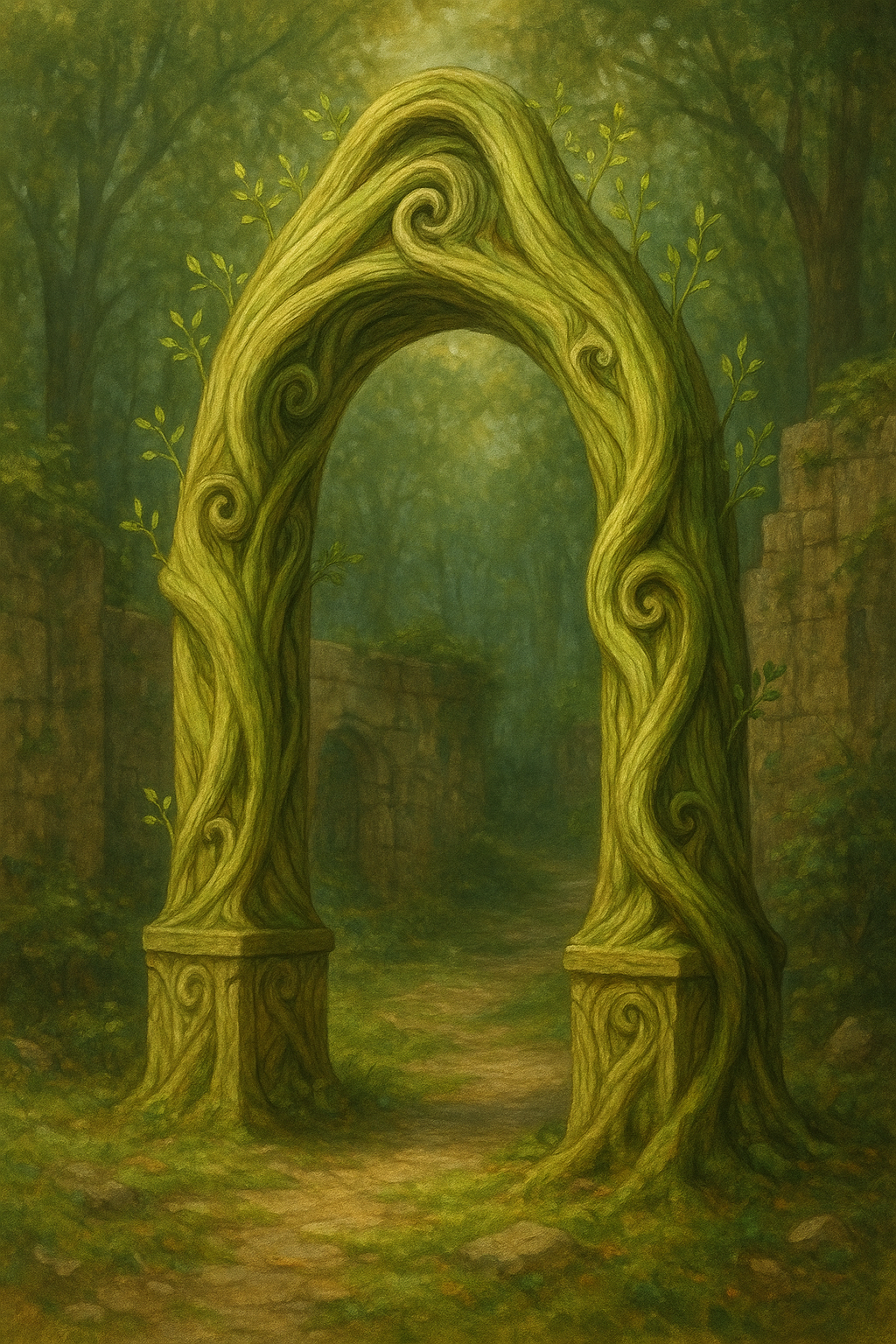
Livewood is a green-hued hardwood native to the ancient forests of Aerenal, remarkable for the fact that it remains alive even after being felled and fashioned into worked form. Once cut, the wood ceases to grow, but its tissues continue to live, circulate sap, and respond to certain magical influences. To the touch, livewood feels warm and slightly pliant, with the faint scent of fresh leaves persisting for years after shaping.
Properties
Material Characteristics
Livewood ranges in color from pale verdant green to deep moss-tone, with subtle streaks of gold or brown in the grain. It sands and carves like normal hardwood, and once finished, the surface remains smooth and faintly warm. Livewood possesses hardness 6 and 10 hit points per inch of thickness, making it durable yet not significantly harder than ordinary timber. What distinguishes it is not resilience of structure, but persistence of life.
Physical & Chemical Properties
Livewood remains biologically active. It can circulate moisture, respond to druidic magic, and, under rare conditions, sprout new leaves or small branchlets. The material is not conscious and does not possess awareness, but it is receptive to plant-affecting spells. Some spells affect livewood differently than typical wood:
- Plant growth can cause small, living shoots to appear along worked surfaces.
- Speak with plants allows communication, though the responses reflect plant-level perception, not memory or intelligence.
- Blight damages livewood as if it were a plant creature, bypassing its hardness.
- Tree stride and similar magic can treat a livewood object as a valid destination if it is sufficiently large.
- Animate plants can grant motion to a livewood structure, though control of such animation is limited.
A livewood object does not die unless destroyed; it retains a quiet, enduring presence.
Geology & Geography
Livewood trees are found almost exclusively in Aerenal’s oldest forest groves, many of which are tended by deathless guardians, druids, and ancestral caretakers. The trees are slow-growing and long-lived, and the decision to harvest one is not made lightly. When felled, the tree ceases growth but remains alive indefinitely, often requiring periodic watering or soil contact to sustain long-term vitality.
Origin & Source
According to elven lore, livewood was a gift from the Undying Court, granted so that elven craftsmanship could bridge the gap between nature and eternity. Whether by divine intervention or the lingering energies of the island’s ancestors, livewood is a material that embodies continuity rather than mere survival.
History & Usage
History
Elven artisans first harvested livewood during the Age of the First Courts, discovering that it could be shaped into homes, furniture, and vessels that healed minor damage over decades. Its export was once forbidden, but limited trade was later sanctioned as diplomatic offering to select Khorvairian houses. The Tairnadal use livewood to craft shrines and memorials that pulse faintly when the honored spirits are near.
Cultural Significance and Usage
To Aereni elves, livewood represents the endurance of life beyond decay—the ideal state of existence for a people who venerate undying ancestors. Homes built of livewood are not shelters but companions, tended like gardens and spoken to as living presences. Ships made from livewood are said to “remember” their voyages, subtly adjusting their balance to familiar waters.
Dryads who dwell within livewood structures are treated as holy custodians, living manifestations of the balance between artifice and nature. Among outsiders, owning livewood is often seen as a sign of elven favor or a relic of lost craftsmanship.
Industrial Use
Livewood has limited industrial application due to its sensitivity to magic and its spiritual significance. It is occasionally used for living architecture, spell-channeling constructs, and ritual furniture. It cannot replace metal or stone for most structural purposes but is prized where both endurance and natural energy are desired.
Refinement
Harvesting livewood requires ritual permission and the aid of druidic magic. After felling, the wood is immediately treated with sap-based oils and wrapped in silver-threaded cloth to preserve its living essence. Improperly handled wood may "sleep," losing its vitality and becoming inert hardwood.
Manufacturing & Products
Common products include:
- Elven ships, responsive to currents and subtle winds.
- Living homes, whose walls breathe faintly.
- Ornamental furniture, warm to the touch and slow to burn.
Magical artisans sometimes craft doors keyed to command words, using the tree’s natural awareness to recognize the speaker.
Byproducts & Sideproducts
Sap extracted during carving is mildly luminescent and used in alchemical ink and ritual candles. Once dried, the sap loses its glow but retains symbolic value in Aereni funerary rites.
Hazards
Working livewood without the proper rituals may provoke faint magical backlash—minor psychic dissonance or creeping nausea in those attuned to natural magic. Dead livewood, when burned, releases a faint keening sound that unnerves even seasoned elves.
Environmental Impact
Livewood cultivation is sustainable when guided by elven foresters, as each harvested tree leaves behind a magically fertile seedbed that can sprout again. Unauthorized harvesting, however, can destabilize the grove’s magical ecosystem, killing surrounding flora for miles.
Reusability & Recycling
Livewood is eternally recyclable, though reworking it without reverent ritual often leads to loss of vitality. Properly reawakened wood can serve new purposes indefinitely, maintaining memory of its previous form.
Distribution
Trade & Market
Trade in livewood is restricted by Aereni law. Only a handful of licensed exporters, sanctioned by the Undying Court, may sell or gift livewood items. Most pieces that reach Khorvaire are heirlooms or relics, and those who own them are expected to treat them with ritual care.
Storage
Livewood must be kept in humid, temperate environments, away from long exposure to sunlight or anti-magic effects. Extended desiccation can cause the living essence to fade.
Law & Regulation
Possession of livewood in Aerenal without appropriate sanction constitutes spiritual theft and is punishable under temple law. Outside Aerenal, smuggling and resale are technically legal but culturally offensive—akin to grave robbing in Thranish or Karrnathi lands.
Livewood
Cost 1.5x market priceWeight Normal
Hardness 6
Hit Points 10/inch