Kutti
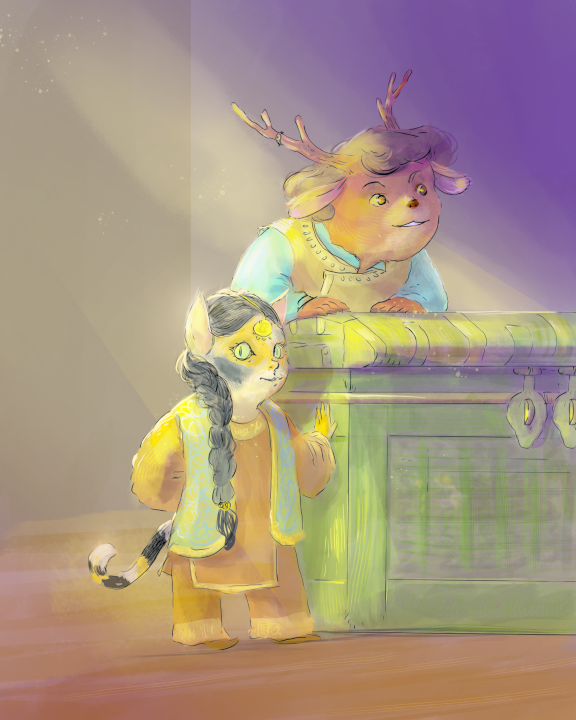
In the heart of the Realm of Kings, where the spirits of the stone sing to the spirits of ore, kutti are born. Kutti means "small and cute" in the native tongue, and when kutti were first encountered by miners they were found to be unbearably adorable.
Origins
The miners who discovered the kuuti were trapped behind a collapsed tunnel. They prayed, bargained, threatened, and begged to any spirits who would listen and kutti answered. To soothe the terrified miners, kutti appeared as cute and small creatures. When the miners named the creatures, their first nature was fixed. Because they had rescued the miners, everyone in the mining village believed them to be helpers, thus cementing the second nature of the kutti. The local children found the small spirits and believed them to be strange little children. The mischief they got up to together became the third nature of kutti. These three natures can be bent but not broken.
Behavior
Kutti take on the form of whatever the viewer finds cute. They often appear as small childlike spirits with animalistic features such as scales, ears, or tails. They stay true to their three basic natures—cute, helpful and mischievous— but for their own entertainment they take liberties in interpreting these natures. Kutti conform to the expectations of the viewer. If the viewer believes them to be liars, then kutti will lie more. If they are perceived as aggressive, they become more menacing.
Habitat
Kutti are primarily found near the Realm of Kings, manifesting where there is great need. They are known to appear in other parts of Drintera, but such instances are rare and only happen when people make desperate prayers to the spirits. Kutti do not dispense their help based on the enormity of need but only on the strength of emotion of the ones calling to them. Mining communities have small shrines built for Kutti that look like stacked rocks where they leave small offerings of food and drink.
Abilities
Kutti travel in packs and can blend well into their surroundings. They are also capable of becoming invisible for a short amount of time. They are mischievous and love playing pranks on people. They swap food items around (for example, putting salt in a sugar bowl), steal little trinkets, delay the timing of magical spells and effects, and appear suddenly out of thin air to scare people. They are good at helping with minor tasks, and they will seek out adventurers to ask for help when they cannot provide the aid that is asked for.
Roles
Kutti are spirits but they need to eat and drink. The offerings left for them are distributed as equally as possible to all kutti. They do not have a strict social hierarchy. Any conflict between kutti is settled by distance: They move away from each other and let time smooth over their differences.
Running Kutti
Game masters can mirror player characters' reactions to determine Kutti's behavior within the range of their three natures: cute, helpful, and mischievous.
The three natures are merely guidelines that can be role-played to suit the mood and narrative goals of the scene and can be interpreted in different ways depending on GM needs.
Kutti mimic the player characters' perception of them. If there are multiple views their behavior becomes erratic and strange. If PCs approach with no preconceived notions, the Kutti revert to the three natures.
GMs can use Kutti as quest-givers in situations where the affected NPCs can't ask for help directly (for example, if the NPC is being held against their will) or as unlikely sources of help if players are stuck.