

TITUS AURELIUS SEVERUS
Emperor of Rome, 782 to 819 A.P. · Founder of the domus Aureliana · Deceased, four centuries before Plinius's own time
Let it be recorded that I did not seek the throne against my brother, but that I accepted it when the Senate and the People judged the succession settled, and that I have governed since in the hope of proving their judgement sound rather than merely final.
Titus Aurelius Severus was the younger son of the Emperor Lucius Cassius Severus, the victor of the fourteen-month succession crisis that followed his father's ambiguously worded will, and the founder of the domus Aureliana, the house from which the current Emperor, Gaius Aurelius Maximus, directly descends. Plinius, writing some three hundred and eighty years after Titus's death, has no direct knowledge of the man and relies entirely on the surviving Palatine statuary, the Tabularium's administrative record of his thirty-seven-year reign, and the considerable secondary literature the Academia Imperialis has produced on a reign every historian agrees mattered enormously and few agree on the character of.
DM ONLYPhysical Description
General Physical Condition
No description survives from anyone who knew him in life; the Palatine statuary, carved in the idealised civic style standard to Imperial portraiture of the period, depicts a man of unremarkable build and composed bearing, which tells Plinius rather more about how the sculptor wished Titus to be remembered than about how he actually looked.
Body Features
No description survives from anyone who knew him in life; the Palatine statuary, carved in the idealised civic style standard to Imperial portraiture of the period, depicts a man of unremarkable build and composed bearing, which tells Plinius rather more about how the sculptor wished Titus to be remembered than about how he actually looked.
Facial Features
The Palatine bust depicts a long, composed face with a deliberately unreadable expression, the standard register for Imperial portraiture of the era, offering the viewer authority rather than character.
Identifying Characteristics
No physical identifying characteristic survives in any record; what identified Titus to his contemporaries was, so far as the administrative record suggests, his manner rather than his appearance, a controlled, deliberate calm that colleagues and rivals alike are recorded remarking on.
Apparel & Accessories
No physical identifying characteristic survives in any record; what identified Titus to his contemporaries was, so far as the administrative record suggests, his manner rather than his appearance, a controlled, deliberate calm that colleagues and rivals alike are recorded remarking on.
Mental characteristics
Personal history
Born in 745 A.P., five years into his father's reign, Titus was raised within the Palatine complex alongside an elder half-brother, Quintus, whose military career on the frontier stood in deliberate contrast to Titus's own education in law and administration. When Lucius Cassius Severus died in 781 A.P. leaving a will whose central clause could plausibly be read as naming either son, Titus found himself, at thirty-six, the Senate's and the Collegium Pontificum's preferred candidate in a crisis neither he nor Quintus had sought. The fourteen-month settlement that followed gave Titus the throne and the title of Pontifex Maximus, and gave Quintus a lifetime honorific and a provincial command without succession rights, a resolution Titus is recorded as having accepted with visible relief rather than triumph.
DM ONLYEducation
Titus was educated in law and administration at the Palatine under tutors his father selected specifically for that purpose, a deliberate contrast to Quintus's military upbringing that later observers have read, not unreasonably, as evidence Lucius Cassius Severus may have intended a division of responsibility between his sons rather than a single unambiguous heir.
Employment
Before his accession, Titus held minor administrative posts within the Senate's provincial oversight committees, unremarkable in themselves but sufficient to give him, by the time of the succession crisis, a working familiarity with Imperial administration that his military brother did not share and that arguably tipped Senate and Collegium sentiment in his favour.
Accomplishments & Achievements
Titus's thirty-seven-year reign is credited with stabilising an Empire that had come within weeks of civil war at its outset, establishing the administrative precedent by which the 782 A.P. settlement's terms were honoured without further contest for the remainder of his life, and founding the domus Aureliana, which has held the Imperial title, with the current Emperor Gaius Aurelius Maximus as its living representative, for over four centuries since.
Failures & Embarrassments
Titus is generally not credited with any major military achievement of his own, a gap contemporary critics attributed to temperament and later historians have more generously attributed to a deliberate choice to consolidate rather than expand, though Plinius notes both readings likely contain some truth.
Intellectual Characteristics
The administrative record consistently credits Titus with careful, deliberate judgement rather than any particular brilliance, a ruler who is remembered for rarely acting quickly and rarely, once he had acted, needing to reverse the decision.
Morality & Philosophy
Titus's recorded conduct throughout the succession crisis and his subsequent reign suggests a man who valued stability and settled process above personal vindication, evidenced most clearly by his private offers to share power with Quintus even after the Senate had ruled decisively in his favour.
DM ONLYPersonality Characteristics
Motivation
Publicly, Titus framed his acceptance of the throne as service to a Senate and Collegium judgement he had not sought to influence. His sustained, careful management of the relationship with Quintus after the settlement suggests a more practical motivation operating alongside the stated one: an understanding that the throne's legitimacy depended on the settlement being seen to hold, indefinitely, not merely being won once.
DM ONLYSavvies & Ineptitudes
Titus's evident strength lay in patient, administrative consolidation; his clearest limitation, by his own contemporaries' account, was a corresponding discomfort with the kind of decisive, visible action a military crisis would have demanded of him, a gap the settlement's terms fortunately never tested during his lifetime.
Virtues & Personality perks
Consistency, patience, and a genuine willingness to share credit and security with a rival who had more reason than most to resent him mark Titus's reign favourably in every account Plinius has read, including several written by historians with no particular reason to flatter the Aurelian line.
Vices & Personality flaws
A reluctance to act decisively without extended deliberation, tolerable and even useful in a stable reign, is recorded by at least one contemporary critic as a genuine liability during the two brief provincial crises Titus's reign did produce, both eventually resolved but neither resolved quickly.
DM ONLYPersonality Quirks
No personal mannerism survives in any record detailed enough to reproduce here; what does survive is the broader impression, consistent across multiple independent sources, of a man who took visibly longer to speak in council than his office might have excused, and was rarely wrong often enough that no one thought to complain about the wait.
Representation & Legacy
Titus is remembered, where he is remembered distinctly from the broader Aurelian line he founded, as the Emperor who kept Rome from a civil war it very nearly had, a reputation the domus Aureliana has maintained carefully across four centuries as the foundational legitimacy claim underlying its continued rule. His public image, stable, deliberate, conciliatory, and the private uncertainty the surviving fragments suggest he carried about his own legitimacy are not, so far as Plinius can determine, in serious tension; if anything, the private uncertainty appears to explain the public caution rather than contradict it.
Social
Reign
Titus ruled for thirty-seven years, from the 782 A.P. settlement to his death in 819 A.P., a reign remembered chiefly for its stability rather than for any singular defining event, precisely the outcome the fourteen-month succession crisis that preceded it made valuable simply by being achieved at all.
DM ONLYContacts & Relations
Titus's most consequential relationship was with his half-brother Quintus, managed across nearly four decades with a careful generosity that kept the 782 A.P. settlement from ever being seriously contested. His relationship with the Collegium Pontificum, which had favoured his claim from the outset, remained close throughout his reign, formalised by his own tenure as Pontifex Maximus.
DM ONLYFamily Ties
Titus's mother, of gens Aurelia, gave her son's branch of the family the name by which his descendants have been known ever since; his father, Lucius Cassius Severus, remained gens Cassia throughout, meaning the domus Aureliana's very name marks a deliberate distancing from the paternal line whose ambiguous will made Titus's own claim possible in the first place.
Religious Views
Titus held the Pontifex Maximus title for the whole of his reign and is recorded as a conventionally devout, unremarkable adherent of Cultus Deorum, with no documented deviation from orthodox practice.
Social Aptitude
Contemporary accounts consistently describe Titus as more comfortable in small, deliberative settings than in public ceremony, a preference that suited the administrative character of his reign better than it would have suited a more martial one.
Mannerisms
The recurring impression across independent sources is of a ruler who listened fully before answering, a habit colleagues found reassuring and at least one frustrated provincial petitioner is recorded describing, less charitably, as maddening.
Speech
No direct transcription of Titus's speech survives; the dedicatory inscription quoted above is the fullest surviving sample of his recorded language, formal and carefully measured, consistent with everything else known about him.
Wealth & Financial state
As Emperor, Titus commanded the ordinary resources of the office; no source suggests any personal fortune or extravagance beyond what the position itself provided, consistent with the administrative rather than acquisitive character his reign is remembered for.
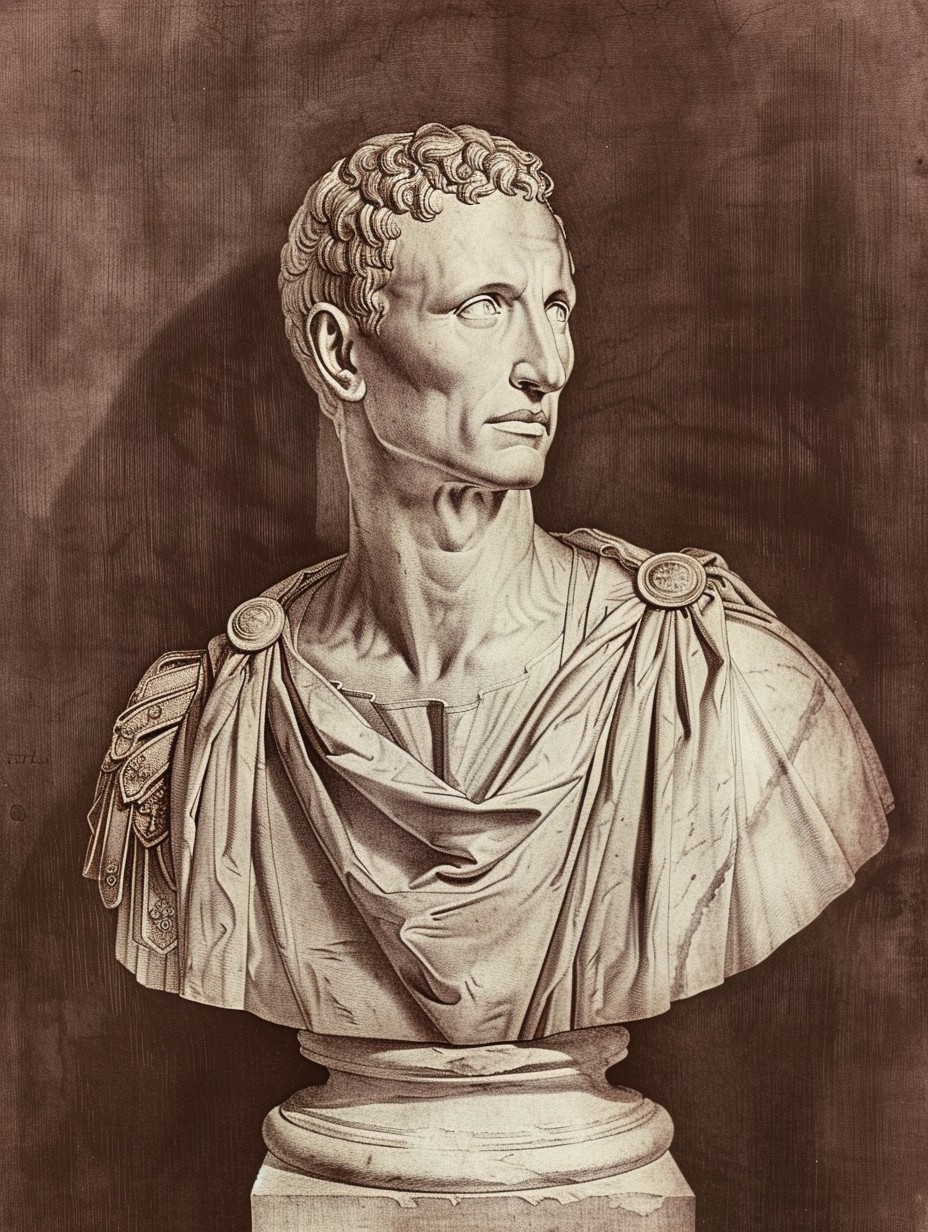
Imperator, Pontifex Maximus, founder of the domus Aureliana
Latin

Comments