

ROMANI
The Romans · Sapient People · First Permutatio · Stable Population · Institutional Magic Use
"Writing a species article about one's own people is an exercise in the particular difficulty of describing what you cannot see because you are inside it. I have spent sixty years studying the peoples of Aethermarch and have, I believe, developed some capacity for the analytical distance that good natural philosophy requires. I am less confident about that capacity when the subject is my own anatomy, my own cognitive tendencies, my own cultural assumptions. I will do my best. The reader who is not Roman — and I hope this document finds readers who are not — will observe things I have missed. This is inevitable and, on reflection, correct."
The Romani are the most numerous sapient people on the primary continent, the first to arrive through the Permutatio sequence, and the only people whose political organisation has expanded across the full range of climates and territories that Aethermarch offers — from the subarctic reaches of Provincia Septentrionalis to the southern coast's Mediterranean warmth, from the river-valley heartland to the mountain frontier and the open ocean crossing to the southern continent. Twelve hundred years of habitation have produced a people substantially changed from whatever they were on their origin world, not in the biological foundations but in the specific ways that environment shapes the expression of those foundations: the diet, the physiology's regional calibration, the cultural assumptions that have absorbed twelve centuries of Aethermarch's particular pressures.
The empire is the Romans' defining institutional achievement and their defining analytical problem — the framework within which twelve hundred years of political, cultural, and economic life have been organised, and the framework whose internal tensions are, in 1200 A.P., more visible than at most points in the preceding centuries. Varro offers this article as a starting point rather than a conclusion, and recommends that the reader treat every generalisation in it as a hypothesis subject to the specific evidence of the individual Roman they are actually dealing with, who will confound the generalisation in some respect that this document has not anticipated.
"Writing a species article about one's own people is an exercise in the particular difficulty of describing what you cannot see because you are inside it. I have spent sixty years studying the peoples of Aethermarch and have, I believe, developed some capacity for the analytical distance that good natural philosophy requires. I am less confident about that capacity when the subject is my own anatomy, my own cognitive tendencies, my own cultural assumptions. I will do my best. The reader who is not Roman — and I hope this document finds readers who are not — will observe things I have missed. This is inevitable and, on reflection, correct."
Basic Information
Anatomy
The Romani are a medium-sized bilateral biped — upright stance, two arms, two legs, a cranium housing a brain of the size and complexity appropriate to their cognitive capabilities. The baseline anatomy is the reference against which Roman natural philosophy has historically assessed the other peoples of Aethermarch, a methodological choice that has produced some useful measurements and some significant interpretive errors, since using your own body as the standard of normalcy tends to classify everything that differs from it as deviation rather than variation.
The most significant anatomical features from a cross-species perspective are scale and relative fragility. Romans are smaller than giants by a factor that makes direct individual physical conflict categorically inadvisable. They are more physically robust than halflings but less so than dwarves. They are comparable in size to elves. Against orcs of comparable height, Romans are typically lighter-built and somewhat less physically powerful, a difference that the empire's military history has addressed through tactical organisation rather than individual capacity. The hands are, by consensus of natural philosophers who study cross-species craft production, among the most dexterous in the known world — finer motor control at the fingertip level than the dwarf hand, greater grip strength than the elf hand, the combination of precision and force that twelve centuries of Roman tool and weapons design have built upon.
Biological Traits
The Roman population shows significant biological variation across the empire's climatic range, twelve centuries of environmental pressure having produced regional calibrations that are not yet distinct enough to constitute sub-species in any rigorous biological sense but are marked enough to be visible to any observant traveller. These variations sit within a continuous population — there are no sharp boundaries, no isolated breeding groups — but the endpoints of the distribution are sufficiently different that a northern provincial and a southern coastal Roman would be physically distinguishable to an attentive observer.
The central provincial type — the river-valley heartland — represents the baseline against which Roman natural philosophy has traditionally measured human variation. Medium build, olive-to-brown skin tones, dark hair predominating, brown eyes most common with hazel and green appearing at meaningful frequency. This is the population that Roman portraiture and sculpture primarily depicts and that the administrative class is disproportionately drawn from, giving it an outsized presence in Roman self-representation relative to its actual share of the total population.
The northern provincial type — Septentrionalis, the mountain frontier, the upper river valleys — shows the cold-climate calibrations that twelve centuries of subarctic winters have reinforced. Taller on average, broader through the chest and shoulders, with the subcutaneous fat distribution that cold environments favour. Skin tones lighter than the heartland baseline; hair ranging from dark brown to the red and auburn tones that appear at higher frequency here than anywhere else in the empire; cold-grey and pale-blue eyes present at rates the heartland considers unusual. The mountain communities show the most extreme expression of this type: generations of high-altitude work have produced the lung capacity and lower-body strength that terrain and elevation develop over sustained time.
The western and frontier type — Provincia Occidentalis and the older frontier settlements — shows the widest range of physical expression of any regional grouping. Long-term contact with the Grakh'tor Orcs across the western boundary has been, across centuries, not only military but commercial and, in some communities, domestic. The mixed-heritage families of the western frontier are a documented demographic reality that imperial administrative records acknowledge with more discomfort than the communities themselves tend to feel. Physically robust, often darker in colouring than the heartland, with the specific toughness of people who have been living on a contested frontier for twelve generations. Their relationship to the empire's central administrative culture is the least deferential of any provincial population, which the Senate sometimes mistakes for disloyalty and which is more accurately described as the independence of people who have been solving their own problems for a very long time.
Arcane practitioners — the approximately one in eight hundred Romans with significant magical aptitude — show a consistent physical marker that Varro has noted across decades of observation and that the Pontifical College's medical records corroborate: the extended lifespan. Where the average Roman now lives to approximately eighty years, practitioners with developed arcane capacity reliably reach one hundred, with some documented cases beyond. The mechanism is not understood. The College's working position is that the arcane working relationship alters some biological process associated with cellular degradation. This position is contested by the reform theologians, who argue that the extension is divine favour rather than biological mechanism, and by Varro, who considers both positions premature given the current state of evidence.
Genetics and Reproduction
The Romani reproduce as the other humanoid peoples do, with the biological parameters that make them the most reproductively efficient people on the primary continent: gestation of approximately nine months, typical offspring of one or two per pregnancy, no biological constraint on reproductive frequency beyond individual health and circumstance. This reproductive rate, combined with the population's broad environmental tolerance, is the primary explanation for the empire's scale relative to the other civilisations of Aethermarch.
Inter-species reproduction with other humanoid peoples is biologically possible and has occurred across the empire's history, producing viable offspring in documented cases with elves and, at the western frontier, with orcs. The resulting individuals occupy a complex social position that varies considerably by province — from full integration in the frontier settlements where mixed heritage is generationally established, to the specific marginalisation that urban Roman culture applies to visible biological difference. The Pontifical College's official position is that inter-species reproduction is a matter of individual circumstance rather than categorical prohibition, a formulation that has been understood differently by different communities across twelve centuries.
Growth Rate & Stages
A Roman infant at birth is fully dependent and remains so for longer relative to adult capability than most of the other humanoid peoples. Physical adulthood is complete by approximately eighteen years, cognitive and social maturity by the mid-twenties in most individuals, though the empire's educational elite — those who progress through the full rhetorical curriculum — are often not considered fully formed adults by their mentors until thirty.
The adult lifespan of approximately eighty years is the Romans' most significant biological constraint relative to the other peoples of Aethermarch. A Roman who lives to eighty has lived a full human life; a giant of the same age is in early adulthood; a dwarf is young; an elf is barely past childhood. This lifespan differential has shaped every aspect of how Roman civilisation is organised — the urgency that Roman political culture applies to achievement, the emphasis on institutional continuity that allows civilisational projects to persist beyond individual lifespans, the specific relationship to legacy and recorded history that produces the Roman written tradition. Arcane practitioners extend the average to approximately one hundred years; the longest reliably documented Roman lifespan on record is one hundred and twelve, a Pontifical College archivist who died in 1041 A.P.
Old age among Romans is marked by the physical decline that begins in the late sixties for most individuals — reduced physical capacity, sensory diminishment particularly pronounced in hearing and close vision, the cognitive changes that affect processing speed while often leaving accumulated knowledge and pattern recognition intact or enhanced. The administrative class tends to peak in influence in their fifties and sixties. The Senate's age distribution reflects the Roman tendency to trust accumulated experience over the vigour of youth in matters of governance — a tendency Varro considers partially correct and partially self-serving on the part of the people who benefit from it.
Ecology and Habitats
The Romani are the most environmentally tolerant of the primary continent's sapient peoples — not the most cold-adapted (that is the Joturvolk), not the most forest-attuned (the Ael'vari), not the most suited to extreme terrain, but the most capable of sustained habitation across the full range of climates Aethermarch offers. This tolerance is not strict biological adaptation but rather the capacity to develop the cultural and technological responses to environmental challenge that make habitation viable where biology alone would not.
The river-valley heartland is the environment in which Roman civilisation developed its foundational characteristics: the agricultural system, the city-planning tradition, the water management infrastructure that makes dense urban settlement viable. The Fluminis Magnus and its tributaries are the empire's productive backbone. The provinces further from the river system — the mountain frontier, the southern coast, the western border territories — have developed regional cultures that are recognisably Roman in institutional structure and increasingly distinct in their specific adaptations.
Dietary Needs and Habits
Omnivorous with strong agricultural foundations. The Roman diet is built on grain (wheat and spelt primary, barley for lower economic tiers and military provisioning), legumes, olive oil in the southern provinces and animal fat in the north, wine diluted to varying degrees by income and preference, and the full range of vegetables, fruit, meat, and fish that the empire's agricultural and trade networks make available. The grain supply is the empire's most politically sensitive infrastructure, managed by the Annona at a level of administrative intensity that reflects how completely the urban population depends on it.
Regional dietary variation is significant and has intensified across twelve centuries. The northern provinces eat more preserved fish, more game meat, more root vegetables through winter; the southern coast eats fresh seafood at a frequency the inland provinces regard as extravagant; the western frontier communities have incorporated food practices from long Grakh'tor contact that the heartland considers eccentric. The military ration is standardised across the empire, calorie-sufficient for sustained physical activity, and universally complained about by everyone who subsists on it. Soldiers who have served long enough to develop opinions report that Halfling Quarter eating establishments in Portus Meridiani serve the best food they have encountered anywhere, a finding that has not entered any official military assessment.
Biological Cycle
No significant biological cycle. The Romani are neither seasonally dormant nor biologically driven by seasonal rhythms. The Roman calendar is agricultural and religious rather than biological: the planting and harvest seasons organise rural life, the festival calendar organises urban life, and the empire's administrative calendar provides a third rhythmic layer that the senatorial and governmental class navigates alongside the other two. Activity patterns are substantially shaped by institutional and cultural rhythms rather than biological ones, which is partly what allows the empire's administrative machine to function continuously across the year.
Behaviour
The Roman behavioural baseline is social and institutional in a way that distinguishes it from the other peoples of Aethermarch. Where the Joturvolk organise by the principle of largest-oldest-most-capable and the Ael'vari by grove consensus, the Romani organise through the layered complexity of institutions — Senate, Emperor, Colleges, Guilds, the legion's command hierarchy, the provincial governor's authority, the family's patria potestas — that have been developing, competing, reforming, and re-competing for twelve hundred years. The first Roman instinct in any situation is to establish which institution has authority over it and what that institution's procedures are. This is not mindlessness. It is the accumulated learning of a civilisation that has discovered, through experience, that unstructured individual decision-making at scale produces worse outcomes than structured collective decision-making, even when the structures are imperfect.
Toward other Romani, the behavioural baseline is competitive and cooperative simultaneously, the proportions varying by class, by province, and by institutional context. Toward non-Roman peoples, the Roman behavioural range is the most variable and the most historically consequential: genuine curiosity, pragmatic cooperation, calculated diplomacy, casual contempt, and genuine respect are all present in the population, distributed by individual experience rather than any reliable social rule. The empire's official posture — that the Romani are civilisation's custodians and that non-Roman peoples are in various states of readiness to benefit from Roman institutions — is believed sincerely by some, used cynically by others, and quietly contested by a third group that includes most of the people who have spent significant time working with non-Roman civilisations.
Additional Information
Social Structure
The Roman social structure is the most formally elaborated of any people on the primary continent — the patrician and plebeian distinction, the senatorial and equestrian orders, the citizen and non-citizen divide, the slave institution, the freed person's intermediate status, the provincial citizen's relationship to the metropolitan norm — all documented in law, contested in practice, and modified continuously by the political pressures of twelve centuries of an expanding empire. The structure is not a simple hierarchy; it is a set of overlapping, sometimes contradictory systems of rank, privilege, and obligation that the Romans have never fully rationalised and that continue to function primarily because everyone knows how to navigate them in practice even when the theory is unclear.
The family — the gens, the household, the web of obligation and support that the Roman kinship system maintains — is the social unit that underlies all institutional structures and that persists when institutions fail. The patron-client relationship extends the family's logic beyond biological kinship: the patron who provides protection and resources in exchange for the client's political support and loyalty is the fundamental unit of Roman political economy, operating at every scale from the Emperor's relationship to the Senate to the neighbourhood landholder's relationship to their tenants.
Uses, Products & Exploitation
The question of what the Romani produce, framed as the other civilisations experience it: agricultural output at scale, the most productive grain-producing system on the primary continent; manufactured goods from the empire's craft industries, particularly ironwork, ceramics, glass, and textile production; and institutional services — legal frameworks, road networks, administrative infrastructure, the security the legions provide — that the peoples adjacent to Roman territory have learned in some cases to depend upon without becoming comfortable with the power relationship that dependency implies.
Facial characteristics
The baseline Roman facial structure — the central provincial type that Roman art has most frequently depicted — is a medium-boned face, oval to angular depending on individual genetics, with the dark colouring that the heartland's sun exposure and founding population genetics have maintained as the statistical centre of the distribution. The nose is the feature that Roman portraiture has treated as most individuating: the strong Roman nose is a cultural preoccupation whose persistence in the artistic tradition is not matched by any particularly unusual nasal biology in the actual population.
The regional variations are most visible in the face. Northern Romans tend toward a squarer jaw and broader cheekbone structure; southern coastal Romans are typically darker-skinned and finer-featured than the heartland; western frontier Romans show the wider range of physical expression that mixed heritage produces. In all cases the variation is continuous rather than categorical — the gradual shift of a geographically distributed population across twelve centuries without significant isolation.
Geographic Origin and Distribution
The Roman origin world is known by name in the founding documents — the world is called Terra, and the displacement event that brought the first Romans to Aethermarch is described as sudden, total, and without observable mechanism. A population of approximately forty thousand arrived at -1200 A.P. on the fertile ground of the central river valley and began establishing the settlement that would become Nova Romae. The founding texts do not describe what was left behind. This reticence is deliberate and maintained across twelve centuries; the subject of Terra is present in Roman culture as an origin rather than a destination, and the nostalgia that characterises some other peoples' relationship to their homeworld is not a prominent feature of Roman cultural identity.
Current distribution: nine provinces of Aethermarch, with population concentrated in the river-valley heartland and established provincial capitals. Nova Romae holds approximately four hundred thousand; the three next-largest cities (Agropolis, Portus Meridiani, Confluentes) together hold another hundred and seventy thousand. The rural population across all provinces accounts for the majority of the total, distributed across agricultural settlements ranging from the large villas of the landed class to the small farming villages of the provincial interior.
Average Intelligence
The Romans are a fully intelligent sapient people. The statement is worth making explicitly because Roman natural philosophy has historically been reluctant to make it about the other peoples of Aethermarch with equivalent clarity and consistency. Roman cognitive capacity is fully humanoid — abstract reasoning, language acquisition, tool use, long-term planning, the full range of capabilities that sapience implies — with the specific strengths and weaknesses that the Roman educational and cultural tradition has cultivated.
The specific Roman cognitive strengths in honest assessment: institutional memory, the capacity to maintain and transmit complex procedural knowledge across generations through the combination of written record and formal education; strategic planning at organisational scale; and rhetoric, by which Varro means the full capacity for structured argument that the Roman educational tradition has cultivated as its primary intellectual discipline. The specific weaknesses: a tendency to privilege institutional authority over empirical observation when the two conflict, which has caused the empire to maintain incorrect positions in natural philosophy for centuries past the point where the evidence was clear; and the arrogance that success at civilisational scale can produce, which periodically causes Roman diplomats to explain their position more loudly rather than reconsidering it when non-Roman interlocutors fail to be convinced.
Perception and Sensory Capabilities
The Romani's sensory range is the baseline against which this document implicitly measures the other peoples' variations. Vision is the dominant sense, calibrated for medium-distance daylight operation. Colour vision is acute; low-light vision is mediocre by the standards of peoples who evolved in darker environments. Hearing is good in the speech-frequency range and less acute at the extremes. The Romani have no non-standard sensory capabilities of the kind documented in the Ael'vari's environmental sensitivity, the Joturvolk's stone-sense, or the Solarhet's photopic acuity.
The magical perception that arcane practitioners possess deserves note here. Those Romans with developed arcane capacity report perceiving the world with an additional dimension of arcane awareness that the non-magical majority cannot access and cannot fully comprehend from description. The Pontifical College's assessment is that this capacity is distributed randomly across the population at approximately one in eight hundred, shows no consistent correlation with family background, region, or social class, and has been present at approximately this frequency since the founding. Whether it was present before the First Permutatio is a question the founding texts do not address.
Symbiotic and Parasitic organisms
The Romans carry the full complement of commensal and parasitic organisms that a dense agricultural civilisation accumulates across twelve centuries — the gut flora adapted to the Roman diet, the agricultural pests that have co-evolved with Roman grain production, the urban disease organisms that the empire's water management and sanitation infrastructure has been in continuous competition with since the founding of the first large settlements. The public bath system is Rome's most significant investment in parasitic organism management, and the correlation between bath density and disease rate in urban populations is one of the clearer empirical relationships in the Roman medical literature, though the causal mechanism remains contested among physicians.
Civilization and Culture
Naming Traditions
Roman names follow the tria nomina system for male citizens of the senatorial and equestrian classes: praenomen (personal name, chosen from a small traditional set), nomen gentilicum (the gens name, inherited), cognomen (the distinguishing name, often originally descriptive and now genealogically maintained). Women of the same classes typically receive the feminine form of the nomen and a distinguishing cognomen. The working and rural population uses simplified versions — praenomen and nomen, sometimes with a locational or occupational identifier. Non-citizen residents and freedpersons navigate the system with the complexity their social position requires. Cross-reference the Latin language article for full naming lists and the Gens register.
Major Organizations
The Senate: the empire's primary legislative and deliberative body, its membership the senatorial class's hereditary right modified by the Emperor's power of appointment and expulsion. The Senate's factions — the Optimates, the Populares, the Mercatorum, the military bloc, the provincial interest groups — are the primary units of Roman political analysis. They are not formal parties but networks of obligation, interest, and association that coalesce around shared positions and dissolve when those positions are satisfied or abandoned.
The Pontifical College: the empire's religious and magical authority, its membership the most carefully selected in Roman institutional life because arcane aptitude is not heritable and does not correlate with social class. The College is the closest thing to a genuine meritocracy in Roman institutional structure. Its constitutional independence from both senatorial and imperial authority makes it the most reliable institutional counterweight in the empire.
The Legions: the empire's military structure and primary instrument of provincial governance. Twenty-two active legions distributed across the provinces, their Legates among the most politically significant individuals in the empire and their loyalty the variable that imperial succession questions most directly turn on. The legion's internal culture — the specific discipline, the professional pride, the officer traditions, the enlisted men's oral culture — is as much a part of Roman civilisation as the Senate's deliberative procedures.
The Guilds: the empire's commercial and craft regulatory framework, from the Bargemasters' Guild's river trade authority to the specialist craft guilds of the provincial cities. Guild charters are imperial grants and Guild authority is legally delimited; in practice the senior Guilds exercise influence considerably beyond their formal charters, most visibly in the Mercatorum faction's commercial-political nexus in Nova Romae.
The Via Obscura: the empire's intelligence network, formally an administrative function of the Praefectura Urbis and practically a semi-independent information operation whose actual scope, funding, and operational priorities are not fully known to any single person in the Roman institutional structure — including, possibly, its own senior directorate.
Beauty Ideals
Roman beauty ideals are inseparable from Roman status ideals, which is a problem the Roman artistic tradition has been aware of and addressed imperfectly since the founding. The idealised Roman body in sculpture and portraiture is the body of a senatorial class male in early middle age — a standard that excludes most of the population by sex, age, class, and the specific physique that desk-based political life produces — and this standard has been applied with the narrowness that elite self-representation always tends toward. The reality of what Romans find attractive is considerably wider, as the literary tradition's candour on the subject suggests.
Regional variation in beauty ideals maps approximately to regional variation in physical type. The northern provinces consider the robust cold-adapted physique beautiful in a way the heartland finds merely functional; the southern coast's assessment of skin tone is more nuanced than the central provinces' tendency to privilege the heartland colouring; the frontier communities have developed aesthetic responses to physical types that the metropolitan tradition either ignores or pathologises. These regional variations are inadequately represented in the surviving artistic tradition, which will lead future scholars to conclusions accurate for Nova Romae and inadequate for everywhere else.
Gender Ideals
Roman law recognises two genders, with a hierarchical weighting that places male civic authority above female civic authority in formal institutional terms while being considerably more complicated in practice. The patria potestas, the legal mechanism through which a male householder's authority is defined, does not describe the actual distribution of domestic authority in most Roman households. The senatorial class's female members exercise political influence through the mechanisms that formal exclusion from the Senate leaves available — family connection, social network, the management of information flows — with a sophistication that the constitutional silence on the subject obscures. The Pontifical College's female members hold equivalent ritual authority to their male counterparts. The Guilds' gender practices vary by guild and by province; the merchant class's practical requirements have consistently produced female participation in commercial activity at all levels, whatever the formal rules of specific guilds specify.
Courtship Ideals
Roman courtship is a family matter conducted with varying degrees of individual participation depending on class, circumstance, and the relative negotiating positions of the families involved. At the senatorial level marriage is a political instrument managed accordingly; the individuals being married are consulted to varying degrees depending on the urgency of the political arrangement. At the provincial middle-class level the family interest remains primary but individual preference carries more weight. At the urban working-class level, where family property and political connection are both limited, individual preference plays the largest role and the formal courtship process is the most attenuated.
Relationship Ideals
Roman marriage law is formal, documented, and terminable — the divorce provisions in Roman law are more accessible than most other legal traditions and have been used consistently throughout the empire's history. This legal reality exists in tension with the Roman social ideal of the stable lifelong partnership. Among the senatorial class, where marriage is political and divorce is diplomatically complex, marriages are ended less frequently than their participants' private correspondence sometimes suggests they deserve to be. Among the working population, divorce and remarriage occur at rates the senatorial class regards as excessively casual.
Average Technological Level
The most institutionally sophisticated technology on the primary continent. The Roman achievement is not in any single domain — the dwarves exceed Roman metallurgy, the Ael'vari exceed Roman botanical technology, the halflings exceed Roman navigation — but in the combination of technologies at scale: the road network connecting twelve provinces, the aqueduct systems supplying urban populations of hundreds of thousands, the agricultural technology feeding nearly three million, the military technology equipping twenty-two legions in continuous operation.
The written tradition is the technology that underlies all others — the capacity to store, transmit, and build upon accumulated knowledge across generations without depending on oral transmission's fidelity. The twelve-century accumulation in Roman archives has no equivalent on the primary continent. The dwarven railway, whose eventual completion will connect the empire to Khazadum's underground network, represents the first time in twelve centuries that Rome has been positioned to import technological infrastructure rather than build its own, a situation the Senate finds simultaneously exciting and uncomfortable.
Major Language Groups and Dialects
Latin is the empire's official, administrative, legal, and literary language, the native language of approximately sixty percent of the population. The remainder speak Latin as an administrative second language while maintaining regional vernaculars that are Latin-derived, pre-Roman in origin, or the hybrid forms that twelve centuries of frontier contact produce. The western frontier communities speak a Latin heavily influenced by Grakh'tor contact vocabulary; the northern provincial communities have absorbed terms from their dwarven commercial contact. Neither is a distinct language; both mark their speakers to a metropolitan ear as provincials, which in Roman social terms is information. Cross-reference the Latin language article for structural detail.
Common Etiquette Rules
Greet your social superiors before they greet you, and your social inferiors after. The Roman greeting protocol embeds the social hierarchy in every social interaction, and the sequence of acknowledgment communicates more about the participants' relative positions than any explicit statement would. Its violation — acknowledging the wrong person first, failing to acknowledge someone who expected acknowledgment — is one of the primary mechanisms through which social friction is communicated.
Do not discuss money in social contexts where money has not been introduced. The distinction between business contexts, where commercial discussion is appropriate, and social contexts, where it is not, is one of the few areas where the patron-client relationship's omnipresence is officially suspended. Do not speak first in a formal assembly unless you hold the rank that permits it. Reciprocate hospitality within a socially understood timeframe — the obligation is one of the most consistently maintained social rules across the empire's class and regional diversity.
Common Dress Code
The toga is the Roman citizen's formal garment and the most immediately recognisable marker of civic status — impractical for any activity involving movement, hot in summer, expensive in quality wool, and worn primarily for formal occasions where its statement of citizenship is the point. The everyday Roman wears the tunica, with the additions and quality variations that class and weather require. The military wears standardised versions with the additions that combat and campaign require.
Regional dress variation is real and used as a class marker in metropolitan contexts. The northern provinces' heavier wool garments look overdressed in Nova Romae's summer; the southern coast's lighter fabrics look underdressed in the capital's formal contexts. The frontier communities' practical adaptations — oilskin garments of the western rain belt, layered mountain gear of the high Septentrionalis passes — are functional and visibly non-metropolitan, which in Roman social terms is a statement the people wearing them have either chosen to make or have never thought to consider.
Culture and Cultural Heritage
The Romans arrived through the First Permutatio with a culture the founding texts describe incompletely — the written record begins with the establishment of the first settlement, not with the displacement event itself, and what was brought through versus reconstructed in the first generation is not fully separable twelve centuries later. What is clear is that the first Romans had Latin, a legal tradition, a religious practice centred on the Capitoline pantheon, and a political culture of senatorial debate. Everything else is the accretion of twelve centuries of life in a world that is not Terra.
The written tradition is the cultural spine — not in the way that the Joturvolk's sagas encode identity in performance, but in the way that a civilisation whose every significant institution is documented in texts becomes, over generations, a civilisation whose primary relationship to its own past is through those texts. The Roman who wants to understand the founding turns to the founding texts; the Roman who wants to understand the law turns to the legal texts. This textual mediation of cultural identity produces a specific conservatism and a specific flexibility, since texts can be copied, distributed, annotated, and argued about in ways that oral tradition cannot.
Common Customs, Traditions and Rituals
The religious calendar is the primary organising structure of Roman communal life — the festivals of the Capitoline pantheon, the agricultural ceremonies marking planting and harvest seasons, the civic ceremonies commemorating founding events. The religious calendar is managed by the Pontifical College and observed at varying levels of sincerity, from genuine piety to social participation by people who observe the forms because the forms are expected.
The triumph is the empire's most spectacular ceremonial form — the military parade of a victorious general through Nova Romae, from the city gate to the Capitoline. No triumph has been awarded in thirty-one years. The absence has not diminished the form's cultural significance; if anything, the rarity has increased the anticipatory weight that its possibility carries in military culture. The patron-client salutatio — the morning ritual at which clients attend their patron's house to present themselves and renew their loyalty — is the most widely observed social ritual in Roman urban life and the daily mechanism through which the obligation network that underlies Roman political economy is maintained.
Common Taboos
Breaking an oath sworn by the gods. The Roman oath tradition is the foundation of the legal, military, and political systems — the oath of military service, the oaths sworn in legal proceedings, the oath formalising the patron-client relationship at its most significant levels. The taboo against oath-breaking is the point at which Roman religious, legal, and social sanctions converge most completely on a single prohibited act.
Failure to observe the burial rites. The Roman relationship to the dead cuts across class differences more completely than almost any other obligation: the poor Roman and the senatorial Roman have different ceremonies, different scales of observance, but both have obligations to their dead that the Roman understanding of cosmic order requires them to meet. Subverting the Senate's process — not its decisions, but the deliberative process itself — is the taboo most clearly articulated in the historical moments where it has been violated, which the Roman historical tradition treats as the most serious crises in the empire's history.
History
The First Permutatio arrived at -1200 A.P. A population of approximately forty thousand Romans found themselves in the fertile river valley of the central continent. The founding records — sparse, practical, focused on immediate survival — describe the first century as the period of consolidation: the establishment of Nova Romae, the agricultural system's development, the first provincial expansion. The Senate in its current constitutional form dates from approximately -800 A.P.; the first Emperor from -340 A.P. The twelve centuries since the Permutatio are the most thoroughly documented period in any civilisation's history on the primary continent, which means they are also the most thoroughly contested, since every significant event has been recorded by multiple parties with different interests and different access to information.
The current era — 1200 A.P. — is a period of institutional maturity and active internal tension. The empire has reached the territorial limits its current military and administrative capacity can sustain; the succession question at the imperial level is unresolved; the Mercatorum faction's commercial interests and the Senate's constitutional conservatives are in the period of managed conflict that precedes either resolution or rupture. The Rift XIII crisis, which the empire's intelligence services are tracking with the specific alarm of institutions that have seen the pattern before, provides the external pressure under which internal tensions always become more dangerous. For full chronological detail, see: Annales Mundi.
Historical Figures
Romulus — the founder, whose historical reality the scholarly tradition has been debating since the third century. The founding texts reference him; subsequent texts treat him as a historical figure; current consensus is that the name refers to a real individual or group whose history has been extensively mythologised by twelve centuries of political use. What is not mythologised is the founding event: the first Romans were here, they organised themselves, they built Nova Romae.
Sulla — the first Emperor, whose assumption of permanent executive authority from the Senate in -340 A.P. is the single most constitutionally consequential event in Roman history. The historical Sulla was a military commander whose victories gave him the power to make the constitutional change he made; the mythologised Sulla of subsequent tradition is either the empire's true founder or its greatest constitutional criminal, depending on which tradition is consulted.
The current Emperor — whose name Varro declines to include in a document intended for long-term scholarly use, given the succession situation — rules in the sixty-third year of the current dynasty. His health is the subject of court speculation that the court officially suppresses and that the Senate's factions are unofficially organising their positions around.
Common Myths and Legends
The founding myth that Aethermarch has produced is the story of the Permutatio itself: forty thousand people, an unknown mechanism, and the moment when the world they knew was replaced by the world they had to build. The political and religious interpretation of this event has been the most contested space in Roman theology since the founding, with the Pontifical College's official position — that the gods permitted the Permutatio for reasons consistent with subsequent Roman achievement — contested by reform theology movements that argue the gods did not permit it but caused it, and for reasons that human action can and should attempt to understand.
The legion myths — the accumulated oral tradition of Rome's military history, present in the legions' internal culture in a form considerably more vivid and less accurate than the written historical record. Every legion has its founding stories, its great commanders, its decisive battles refined by repetition into something emotionally true and factually approximate. The XIV Gemina's Mons Conspectus tradition is the most currently active, because the event it commemorates is recent enough that its consequences are still operational and its narrative is still being shaped by people whose professional interests are affected by how the story is told.
Interspecies Relations and Assumptions
Khazadum (Dwarves).
The most extensively documented bilateral relationship in Roman diplomatic history, twelve centuries of commercial contact producing a framework of mutual understanding and mutual frustration. The Roman assumption is that dwarves are reliable, technically superior in their domains, and institutionally conservative to a degree that Roman commercial culture finds exasperating. The dwarven assumption, as reported through diplomatic channels, is approximately reciprocal: Romans are reliable in commercial contexts, institutionally flexible to a degree that dwarven culture finds alarming, and capable of reorganising their entire political structure in a timeframe no dwarf would consider adequate. The railway negotiation is the current expression of this characteristic dynamic.
Ael'vari (Elves).
Cautious mutual respect mediated by the difficulty that the Triumvirate's diplomatic posture creates for Roman institutional culture. The Roman assumption is that elves are long-lived to a degree producing a different relationship to urgency, politically organised in ways Roman analysis consistently underestimates, and culturally sophisticated in the domains the grove tradition has cultivated. The elven assumption — inferred from Triumvirate communications rather than stated directly — is that Romans are interesting in the way short-lived civilisations that build at scale always are, slightly alarming in their ambitions, and worth maintaining careful distance from. The treeline as physical boundary and diplomatic fact is the most honest expression of where the relationship currently stands.
Grakh'tor (Orcs).
The most complicated bilateral relationship in the empire's diplomatic landscape, complicated because it is not primarily a diplomatic relationship. Rome and the Grakh'tor share a contested western frontier, a history of military conflict the 480 A.P. campaign's inconclusive conclusion did not resolve, and cultural assumptions about each other that are more negative, more persistent, and less grounded in current reality than either side's treatment of any other people. The Roman assumption contains genuine military respect and civilisational condescension poorly evidenced by sustained contact. The orc assumption contains a corresponding structure. Both sides are making the same assessment error about the other. Neither has found this observation useful.
Joturvolk (Giants).
Pragmatic management of a relationship that neither side has found it necessary to develop into anything more. The Roman assumption about giants is shaped by the scale differential — it is difficult to maintain species-level condescension toward people who are physically seven times your mass — and has settled into respectful wariness that acknowledges Joturvolk competence while maintaining comfortable distance from any situation requiring direct competition in their domains. The military relationship established at the Bellum Glaciale is the most stable bilateral arrangement in the empire's diplomatic history.
Insulae Brindala (Halflings).
The most commercially integrated bilateral relationship in the empire. The Roman assumption about halflings is the one most directly in tension with observable evidence: the persistent underestimation of halfling institutional sophistication, commercial intelligence capacity, and political planning horizon. Footharbour in Portus Meridiani, Vara Swiftledger in Lacusum, and the Merchant Council's central operations are executing a decades-long strategic repositioning that Roman diplomatic intelligence has not yet fully characterised. The halfling charter renegotiation, arriving at the Emperor's desk in the next six weeks, will be the most consequential moment in the bilateral relationship in a century.
Zrek'vali (Goblins).
Officially non-existent as a diplomatic relationship; practically the subject of more active covert management than any relationship the Senate has formally acknowledged. The goblin presence in Mercatus Terminus, the Via Obscura's logistics operation, Livia Corva's draft in the locked drawer in Castellum Magnum — these are the actual state of the relationship in 1200 A.P., and none appear in any Senate document formally presented to the full chamber.
Hava'keth (Centaurs).
An alliance twelve centuries old and currently under the specific strain that long-standing alliances develop when one side's institutional memory has shorter reach than the other's patience. The Roman assumption is that the relationship is stable, because it has been stable throughout the careers of everyone currently managing it, and that Arrak of the Stonehoof's patience is inexhaustible, because it has been extended four times already. Cornelia Fides Camporum's eleven reports represent the most sustained attempt to correct this assumption the diplomatic system has produced. The Foreign Office's nine acknowledged and zero actioned responses represent the system's characteristic response to information that would require it to change its behaviour.
Solarhet (Tabaxi).
A commercial relationship mediated by distance and the halfling crossing. The Roman assumption about the Solarhet is the least developed of all bilateral assumptions because direct contact is the most limited — the diplomatic missions to Solara are rare, the personal audiences with the Living Goddess rarer still, and the commercial relationship is conducted primarily through halfling intermediaries who have their own characterisations of the Solarhet to sell. What Varro can say from personal experience — the private audience in Solara remains in the locked notebook — he declines to say in a document intended for general scholarly circulation.
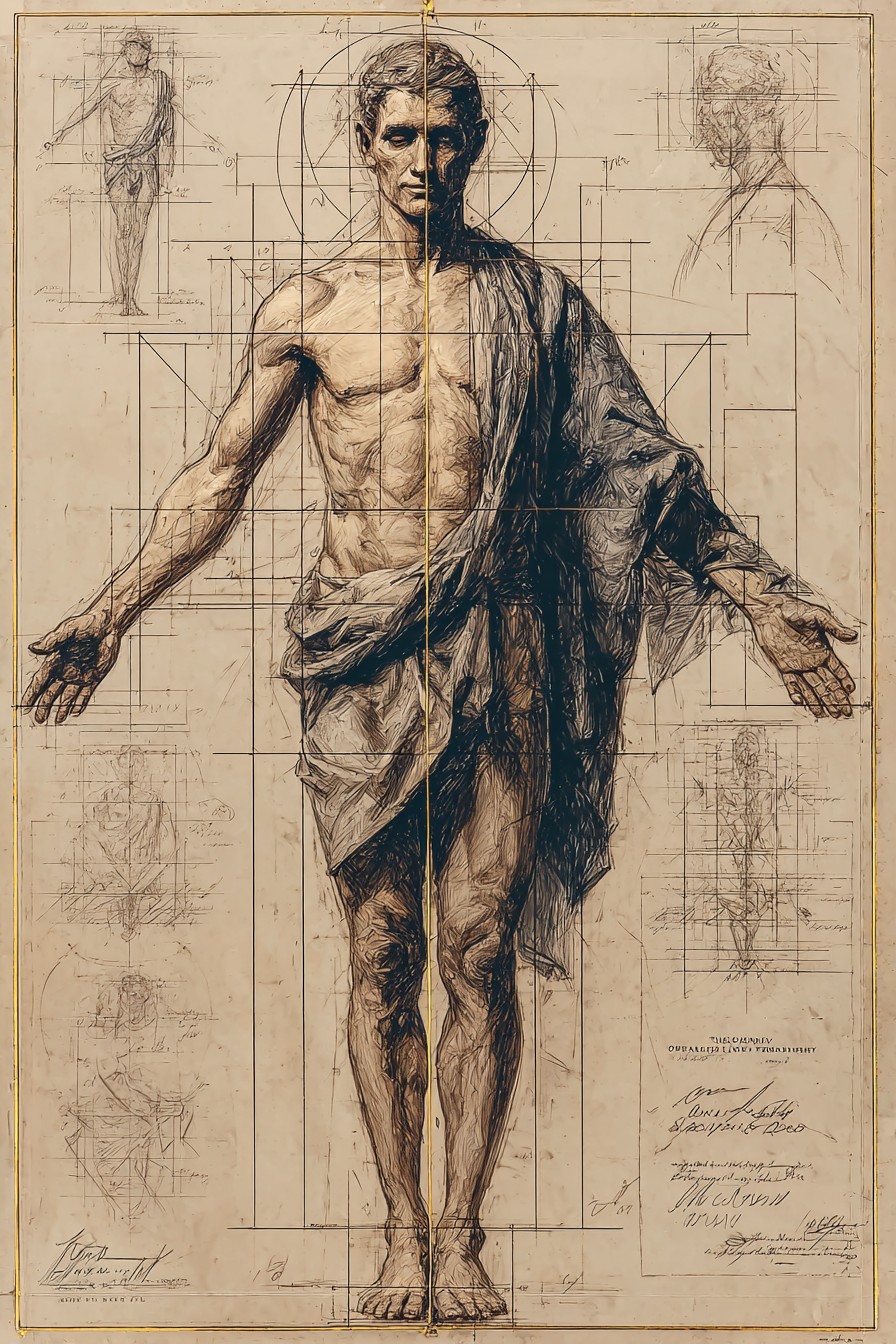
150–185 cm. Regional variation significant: northern provincial type trends taller; see Biological Traits.
55–95 kg. Occupational and regional variation significant.
Moderate. Northern type: heavy. Frontier western type: heavy. Southern type: lean.
Central provincial baseline: olive-to-brown skin, dark hair, brown eyes predominant. Northern type: lighter skin, higher frequency of red and auburn hair, pale grey and blue eyes. Western frontier: widest range, including mixed-heritage expression.

Comments