

The Unknown Keep and Forgotten Halls
This Forgotten Realms adventure caters to a party of four to six, ninth to twelfth-level characters (approximately 50 total levels). Because of the amount of magic and traps present within the adventure, the party should include at least one mage and one thief character. A party lacking a wizard and a thief might complete the adventure, but it will be a much harder adventure.
Several of the rooms are near geothermal regions, creating temperatures near the maximum of human endurance. Lacking sufficient magic to protect themselves from such extremes of temperature, the characters could suffer damage from dehydration and exposure to extremely high temperatures followed by ambient underground temperatures. The DM may desire to use alternate rules for tracking the characters’ exposure to high and low temperatures and dehydration, as there are no sources of potable water within the complex.
Although there are several Drow NPCs within the adventure, the party does not have to include a Drow character, but a party consisting of character races or types tolerant of Drow works best.
The book I, Tyrant, would be useful for obtaining an exact understanding of the gauth, but is unnecessary for play. The Drow of the Underdark sourcebook details the drow deities and explains renegade drow. This volume supplied much of the material for the adventure, so the DM should have a copy handy, though it’s not essential for running it.
The adventure includes several creatures from Greyhawk Adventures, even though it does not take place on Oerth. Many other creatures are from the Forgotten Realms Monstrous Compendium Appendixes. Some Dragonlance sourcebooks were used such as DLS4 Wild Elves, but are not required for play. A DM lacking these volumes may substitute creatures suitable for his campaign.
The magical candles are taken from Dragon Magazine #147, “Magic for Beginners” by Gregory W. Detwiler and Dragon Magazine #179, “Unique Magical Candles for Your Campaign” by Gregg Chamberlain. Other magical candles suitable for their campaign can be substituted by the DM.
Other portals appropriate for the DM’s campaign can be used instead of the dread portals from Dragon Magazine #102, “Open Them if You Dare” by Ed Greenwood.
The god Goibhnie1 is from the Celtic mythos found in the original hardback book Deities and Demigods2, his worshippers are predominantly blacksmiths that fervently seek all forms of weapons. Worshippers fill temples and shrines dedicated to Goibhnie with weapons left as offerings, and a devout worshipper or one desiring the deity’s favor might leave a magical weapon.
The city of Bartlesville3 is purposely left vague, allowing the DM to drop this adventure into an existing Forgotten Realms campaign. Situated in the North region, the tower would fit in any fantasy world.
The city’s mostly human population is about 1,500. Its major industries are smithing, fur trading, wagon, and barrel making, and leather production. This city boasts the largest temple in the Realms dedicated to the god Goibhnie, the blacksmith of the gods. Flanking this temple are two temples dedicated to the other two deities that comprise the triad of craftsman-gods: Luchta, and Creidhne.
For the Players
Read or paraphrase the following to the players:
While traveling through the small trading city of Bartlesville, you hear a town crier announcing that the temple of Goibhnie is seeking to hire adventurers to complete the search of a nearby ruined tower. The crier’s sales pitch suggests that someone recently discovered this tower, partially searched it, but did not recover a large amount of gold. However, they recovered a magical sword, and it now rests in the temple of Goibhnie’s treasury. Adventuring bands interested in this endeavor should consult Gharri of Goibhnie, the high priest of Goibhnie in Bartlesville.
The town crier performs his duties. He has no further information and makes no more money if someone volunteers to perform this adventure.
Pumping him for information without coins reveals nothing. A few silver pieces reveal that a large group of orcs attacked a small, mounted patrol of about seven fighters from the city. Fleeing from the orcs, with several members wounded, they discovered this ruined tower. Only three members of the patrol returned to the city, bearing a magical, glowing sword taken from the tower.
Goibhnie’s temple healed the survivors. While healing, they tell some wild rumors about a “floating, many-eyed, round glowing beast with a gaping mouth full of fangs that slew several of the fighters and chased the survivors from the tower.” Somehow, they eluded the orcs and made it back to the city.
For the DM
When the patrol fled from the orcs into the tower, they discovered the gauth, the unwitting door guard for a small band of renegade drow. The third floor of the ruined tower contains a magical teleporting mirror to a fixed location in the Underdark.
The drow hides the mirror in an extra-dimensional space, and they know the command word that recalls it. The renegade drow is using the area near the destination the mirror teleports to, and knows of the gauth, although the gauth does not know of the drow, nor is it aware of the mirror.
Madame Nova, a female fighter/mage/cleric of Vhaeraun4 leads the drow. Although males mostly worship Vhaeraun, Madame Nova has displayed excellent service to the deity, and Vhaeraun has seen fit to grant her spells in his service.
The Drow, although of evil alignments, if approached with respect and politeness, will gladly trade information with the characters and even some minor articles as decided by the DM. The orcs knew that a terrible creature lived within the tower and were not foolish enough to risk their lives; they figured the creature would destroy the patrol and left. Unless the DM desires, the orcs are not part of this adventure.
The DM should make this adventure seem like a straight “bug hunt and kill” adventure and should not dissuade the players from making assumptions about the gauth. Most likely they will assume it is a beholder and may prepare to encounter a beholder, which may not help them much against a gauth. Gauth are particularly dangerous to mages. Some experts believe breeders created these beholder-kin to deal with mages who threatened a hive. The particular gauth in this tower is a solitary beholder-kin but is otherwise a normal example of its species.
The tower once housed an eccentric, reclusive mage; when the gauth moved in, magical items sustained it. Lately, the magical items have been running low, and the gauth is hunting the nearby forest and road for items to eat. The renegade drow occasionally “drops” a magical item for the gauth to eat, hoping to keep their door guard. The drow only occasionally uses this entrance because of the danger of the gauth and keeps it for emergencies.
The Temple of Goibhnie
The DM should modify the temple layout and description to fit your campaign. Some suggestions for decorations are groves of apple, oak, and yew trees (far from the buildings, the vapors can stun people), flocks of guardian geese and magic item retrieving ducks5, casks or offerings of various food items and perhaps a few real or fake snakes (a symbol of fertility to the ancient Celts6).
The clergy of Goibhnie specialize in the crafting of fine weapons. Those weapons that are not magical receive a +1 to both damage and to strike because of their exceptional balance7. For church members of high status and for the slaying of dreadful enemies, the clergy of Goibhnie specialize in the crafting of soul-eating weapons and weapons of wounding. These are almost exclusively for use by church members and almost unheard of outside of the church.
The high priest of Goibhnie is a short, balding human male with a large gut and enormous arms with rippling muscles and prominent veins. His hands and face bear the telltale marks of a blacksmith, and his harsh voice is used to screaming over a forge.
He wears a soot-stained, rough cotton tunic, a thick leather apron, leather trousers, and large leather boots. A thick, braided iron and gold torque8 encircles his neck. The ends of the torque each have a pair of Janus heads inset with small precious gems where the eyes should be.
He introduces himself as Lord High Smith Gharri (Jar-ee) of Goibhnie and motions for the adventurers to take a seat. After taking a seat behind a scarred and stained plain oak desk, he turned to business. If the characters are interested, he pulls a simple map from the desk and points to the general location of the tower and explains the temple’s need for the adventurer’s services.
Read, print, or paraphrase the following to the players:
An attack upon one of the city’s mounted patrols by a superior force of orcs happened in the mountains north of the city. Wounded, outnumbered, and running for their lives; the orcs chased the patrol for two days. By accident, they came upon a large, ruined stone tower set in the center of a small grove of fir trees. Seeking shelter inside, to their amazement, the orcs did not follow them into the tower and soon left, never to be seen again.
While searching for the tower, the patrol uncovered a handful of gold coins and a magical, glowing sword on the third floor. Near the sword sat a large oak chest that resisted all their efforts to open, and they believed it was probably magically sealed. They also noted an odd, ten-foot diameter vertical hole that went through all three levels of the tower.
While standing on the third floor, a terrible round beast with several eyes floated up from the basement and attacked, slaying several members. The survivors fled from the tower, taking the sword with them. They returned to the city and entered the temple where we healed them, and they donated the sword to our treasury, since our faith collects unique weapons.
I would like you to return to the temple, slay this beast if possible, and retrieve any more magical weapons that may be there. Any coins or other magical items retrieved from the ruins are yours to keep, but the temple receives any unique and all magical items and weapons.
Gharri gives the adventurers a simple overland map to the tower and a rough schematic of the tower’s internal design. Several spots on the tower’s internal map remain blank. He states that the horseback journey to the tower requires roughly three days.
If the adventurers are reluctant to undertake the adventure, he offers each character 500 gp for completing the task, payable upon return with proof of the creature’s death.
If they cannot slay the creature, then a decent description and location earns each character 250 gp. Depending on the number of magical items the characters are carrying, Gharri might offer some minor healing magic items such as potions, scrolls, or two Acorns of Healing (treat as a Potion of Extra Healing) per character that accepts this adventure.
High Smith Gharri of Goibhnie: AL LG; AC 6; MV 11; P16; THACO 10; #AT 3/2; Dmg by weapon; S 19 (18/38 without the torque), D 16, C 15, I 16, W 17, Ch 11; ML 15; Torque of Hill Giant Strength. Gharri is a cloistered cleric and does not actively keep spells memorized unless traveling. When traveling, he wears Plate Mail +4 and wields a Warhammer +3; and other spells as befitting the DM’s campaign.
Characters who desire to receive the blessing of Goibhnie may leave an offering of a weapon or coins in the temple. Leaving an offering in all three of the god’s temples incurs the greatest chance of receiving a blessing upon the adventure.
The nature of this blessing, determined by the DM according to his campaign, should not make the adventure easier or absolve the players of skillful role-play and problem-solving. The characters may remain within the temple for up to three days free, preparing for the adventure. Staying longer in the city reveals nothing further about the ruins.
Travel to the Ruined Tower
The tower is about three days’ travel from the city through very mild, temperate terrain. With pleasant, warm, and dry weather, but not hot. The journey unfolds through low, rolling hills blanketed in thick pine and hardwood forests. The DM should roll once per day for random encounters.
Temperate Forest Random Encounters
| Roll | Creature(s) |
|---|---|
| 1 | Wyvern (4): Int. 5-7 Low intelligence; AL NE; AC 3; MV 6, Fl 24(E HD 7+7; hp 33, 2x35, 41; THAC0 13; #AT 2; Dmg 2-16/1-6 (poison stinger SA Poison (save vs. poison or die, if save take 1d6 dmg SZ G; ML Elite (14 XP 1,400. |
| 2 | Wolfwere: Int. High to Exceptional (13-16 AL CE; AC 3; MV 15; HD 5+1; hp 20; THAC0 15; #AT 1; Dmg 2-12 and by weapon; SA Singing brings on lethargy; SD Iron or +1 or better weapon to hit; SZ M; ML Elite (14 XP 1,400. |
| 3 | Bear, Brown: Int. 2-4 Semi-intelligent; AL N; AC 6; MV 12; HD 5+5; hp 23; THAC0 15; #AT 3; Dmg 1-6/1-6/1-8; SA Hug (2d6 SZ L; ML Average (8-10 XP 420. |
| 4 | Dog, Wild (5): Int. 2-4 Semi-intelligent; AL N; AC 7; MV 15; HD 1+1; hp 2x8, 7, 4, 2; THAC0 19; #AT 1; Dmg 1-4; SZ S; ML Unsteady (5-7 XP 35. |
| 5 | Leucrotta, Greater (2): Int. 11-12 Very intelligent; AL NE; AC 4; MV 18; HD 8; hp 30, 35; THAC0 13; #AT 1; see below; Dmg 3d6; see below; SA See Below; SD See Below; SZ L; ML Champion (15-16 XP 2,000. |
| 6 | Hobgoblin (8): Int. 8-10 Average (human) intelligence; AL LE; AC 5; MV 9; HD 1+1; hp 7, 3x9, 2x6, 2x3; THAC0 19; #AT 1; Dmg By weapon; SZ M; ML Steady (11-12 XP 35. |
| 7 | Griffon (2): Int. 2-4 Semi-intelligent; AL N; AC 3; MV 12, Fl 30(C HD 7; hp 32, 34; THAC0 13; #AT 3; Dmg 1-4/1-4/2-16; SZ L; ML Steady (11-12 XP 650. |
| 8 | Skulk: Int. 8-10 Average (human) intelligence; AL CE; AC 7; MV 12; HD 2; hp 5; THAC0 19; #AT 1; Dmg By weapon; SA Backstab; SD See below; SZ M; ML Unsteady (5-7 XP 120. |
| 9 | Troll, Giant: Int. 5-7 Low intelligence; AL CE; AC 4; MV 12; HD 8; hp 39; THAC0 13; #AT 1; Dmg club (2d6+7 SD Regeneration (2hp/rnd except fire dmg), takes at least 10 pts fire dmg to kill; SZ L; ML Fanatic (17-18 XP 1,400. |
| 10 | Hippogriff (2): Int. 2-4 Semi-intelligent; AL N; AC 5; MV 18, Fl 36(C HD 3+3; hp 12, 16; THAC0 17; #AT 3; Dmg 1-6/1-6/1-10; SZ L; ML Average (9 XP 175. |
The Ruined Tower
As you approach the tower, you realize that without the map, you would have missed it. The tower is hidden well by two lightly forested rolling hills. You can see that Gharri spoke correctly when he described the condition of the tower. The tower itself is a squat, square construction made of smooth, mortared blocks of native stone. Several parts of the tower have fallen, and the tower’s perimeter buildings have been destroyed.
The four majestic fir trees that surround the tower almost conceal it, and it would be easy to miss in the dark without the map. You notice an odd thing: a new, crude thatched roof covers the stables, while the rest of the tower seems ancient.
Attached to the tower on the southern side is a large square stable that has a decent roof. In the southern end of the stable, shut, are two large, rusty, iron-reinforced wooden doors. These doors are unlocked, but a person has barred them from the inside.
On the north wall, lying on the ground outside, is a pair of identical doors. The tower lacks internal light; sunlight filters through arrow slits, dimly illuminating the interior.
The DM should have the characters make a notice roll, giving rangers and elves a slight bonus, to see if they notice the complete lack of animal noise in the surrounding forest. Searching the perimeter of the tower reveals that about 25 mounted horses entered the area. Only seven horses approached the tower on the northern side. Riders picketed these seven horses among the trees and entered the tower, leaving the horses behind. The other horses milled around the area outside the grove, and although some of their riders were dismounted. Searching the waste left in the fire ring and latrine reveals orcish riders9. The orcs departed shortly thereafter, never entering tower nor grove.
All dimensions of the tower are 25’ square, with a 10’ high ceiling unless otherwise noted.
T1. Tower, First Floor.
The inside of the tower is lit from the outside by sunlight filtering in through the arrow slits. A jagged 10’ diameter hole is in the center of the wooden floor. An identical opening exists in the wooden ceiling, which serves as floor for dwelling upstairs. Looking up through the hole reveals that the third floor also has a hole in the floor. The hole's edge remains firm, its floor capable of holding multiple characters concurrently, though not steeds. Magic or a large tool, not force, appears to have cut the hole.
A rickety flight of wooden stairs climbing the eastern wall allows access to the upper floors. The western wall features a small fireplace, filled with cold ashes and tiny pieces of burned wood. A broken stone-topped table lies in the southeastern corner of the room near the stairs. Set in the center of the southern wall is a pair of rusty iron-reinforced wooden doors, shut tightly. The dead pine-needle-strewn wooden floor bears the jumbled and smeared tracks of several humanoids wearing boots. A few of these tracks enter the stable.
The stone-topped table was once a fine piece of marble, six feet long, with oak legs and brass bracing. Besides a few pieces of moldy parchment, water-damaged but usable, the ruined table has nothing of worth. The double doors, which are not locked, will open on rusty, protesting hinges and reveal the stables.
Descending 30’ from the tower’s center, a 10’ diameter hole leads to room #T5, the gauth’s lair’s foyer. A character dropping through this hole is likely to encounter the gauth, although the gauth would rather wait until the intruders are within the stables where it has prepared its trap; it will attack anything that enters its lair.
While the characters search the first floor, if they are not careful and quiet, the gauth has a 90% chance of detecting their presence. The gauth will then silently watch the characters, attempting to identify any spellcasters before attacking. It will cast Invisibility upon itself and watch silently as the characters search the tower. The gauth notes characters using spells and will attack them first, preferably in the stables. When the characters head for the stables, the gauth will float through the underground chasm, rising under the false hay pile using several eyes to watch the progress of the characters. If discovered, the gauth immediately attacks.
T2, The Stable.
This dry stable is dark, 25’ wide by 50’ long and appears empty. The crude thatched roof seems to hold most of the weather out. Within the stable are ten wooden stalls along the western wall and a ten-foot-high pile of dry straw on the eastern wall. To the south hang a pair of rusty iron-reinforced wooden doors that are barred by an equally rusty iron-reinforced wooden crosspiece set into rusty iron rings on the doors and walls.
Searching the stalls reveals that four of the stalls each contain a different stone statue.
Stall number one has a large owlbear statue standing on its hind legs with its head raised as if to look at something. A large white-tailed buck, frozen mid jump, is in stall number two.
Stall number three has a male human warrior dressed in scale mail with a bastard sword raised over his head in a two-handed strike and a frozen look of utter terror on his face.
Stall number four has a human female dressed in coarse robes, half reclining on a pile of blankets on the floor with her hands covering her eyes while her mouth is open in a silent scream.
The gauth will wait until the characters are all looking at the statues, which puts their backs towards him. He will then rise slowly from the hay, cause himself to glow brightly and blasts the characters with his eyes, trying to keep as many characters within the effective range of his central eye as possible.
Gauth 9+9 HD: Int. 15-16 Exceptionally intelligent; AL NE; AC 0; MV 0, Fl 9(B HD 9+9; hp 51; THAC0 11; #AT 1; Dmg 3-12; SA Magic; SD Regeneration; SZ L; ML Champion-Fanatic (15-18 XP 9,00010.
The Gauth is a relative of the beholder that feeds on magic. At the front of the gauth, in the middle of its hemisphere, lies a big central eye ringed by smaller eyes shielded by tough flesh ridges. These secondary body eyes provide the creature with normal vision in lighted areas and infravision to 90 feet. A crown of six eyestalks adorns the top, and on the underside is the beast’s fearsome mouth with its accompanying cluster of four feeding tendrils.
Attacks on the creature hit as follows:
| Roll | Location | AC | Hit Points |
|---|---|---|---|
| 01-85 | Body | 0 | As listed |
| 86-90 | Central Eye | 7 | Part of Body |
| 91-00 | Eyestalk/Tendril | 2 | 6 hit points |
When a gauth moves into combat, it glows, much as if it were the object of a faerie fire spell, to attract the attention of its foes. A creature that meets the gaze of the central eye must roll a successful saving throw vs. spell, with a -2 penalty, or be affected as if the victim of a Feeblemind spell.
If a gauth bites with its great maw, the sharp fangs inflict 3d4 points of damage. The four tendrils around the mouth can grab and hold victims as if they had a Strength of 18, but they can inflict no damage.
A gauth in combat can also employ its six eyestalks. These eyes have the following powers:
1. Cause serious wounds (as spell, 30-foot range)
2. Repulsion (as spell, 10-foot-wide path, 40-foot range)
3. Cone of Cold (as spell, inflicts 3d4 points of damage and has an area of effect five feet wide at the start, 50 feet long, and 20 feet wide at the base; this eye can be used only three times per day)
4. Lightning bolt (as spell, inflicts 4d4 damage with an 80-foot range; this power can be used up to four times per day)
5. Paralyzation (as wand, 40-foot range, single target; only a dispel magic or the beholder’s death can free the victim)
6. Dweomer drain (see below)
Dweomer drain permits the gauth to drain charges from magical items. It has a 40-foot range and targets one individual per round.
Besides preventing one object from functioning for the duration of that round, this power drains one charge from a magically charged object.
This ability renders permanent objects, such as magical swords, powerless for one round. The dweomer drain does not affect artifacts.
The eye does not affect spells that wizards have memorized (but not yet cast), and it will not break a wizard’s concentration. It neutralizes any spell cast by its target that round; however.
A Dispel Magic spell cast on any of the gauth’s eyestalks prevents its use for 1d4 rounds. The central eye, any fully retracted eyestalks, the body’s ability to glow, and the gauth’s natural levitation are not subject to injury by such a spell.
A slain gauth’s magical energy dissipates. Usually, this is a harmless event, but there is a 2% chance that it is catastrophic, inflicting 4d4 points of damage to all creatures within 10 feet (no saving throw). Gauth are immune to their own powers and to those of other gauth. They have an unusual physiology that enables them to regenerate 1 hit point every two turns.
Gauth Saving Throws:
| Creature hit points | Saves as |
|---|---|
| 45-49 | 10th level warrior |
| 50-59 | 12th level warrior |
| 60-69 | 14th level warrior |
| 70+ | 16th level warrior |
If the battle goes against the gauth, it will flee plummeting through the hole under the hay pile, scattering an immense cloud of dry hay, retreating into its lair in room number #T6.
If the adventurers have a source of open flame such as torches, the loose cloud of hay may combust causing 4d6 points of damage.
The statues are normal stone statues carved from fine black granite by a master craftsman with morbid tastes. To an interested collector, each statue might fetch 5-10 gp, but the weight of each statue (between 5,000 and 15,000 lbs.) and the trouble of transporting them are not worth the effort.
T3, The Tower, Second Level.
This room is almost identical in size and layout to the one below it; however, in this room the stairs run up the southern wall. A large, moldy and badly stained rug lies in a crumpled heap under the stairs. A fireplace fills the center of the western wall with a ruined chaise lounge in front of it.
On the left side of the fireplace, a small wooden nightstand lies on its side against the wall, its twin doors ripped off. Lying on its side in the southwestern corner of the room is a small wooden table with three legs. A few dead pine needles rest on the table’s edge.
The wooden roof is badly warped and water-damaged, and has a fierce case of mold and rot. The floor in this room shows signs of water damage and the beginning of rot and mildew. Occasionally a small drop of water falls through the roof.
Closer inspection reveals that the tabletop has several bad gouges and punctures, and someone may have used it for target practice. Searching the nightstand reveals that it is empty and worthless.
Under the nightstand is a small secret trapdoor that is locked but not trapped. Inside the small wooden recess in the floor is: a unique, small Bag of Holding (175 pounds) that contains 40 Gold Dragons (Waterdeep mint, 1355 DR), 30 brilliant rubies (exquisite fakes that appear to be worth 40 gp each), and two delicate pink crystal vials of Extra-Healing Potions (each poisoned with a single Invisible throat leech).
Leech, Throat (2): Int. 0 Non-intelligent or not ratable; AL N; AC 10; MV 1, Sw 1; HD 0+1; hp 2x1; THAC0 20; #AT 1; Dmg 1-3; SA choke; SZ T; ML Unsteady (6 XP 35.
T4, The Tower, Third Level.
Entering this room, you would assume that it would be very similar to the two previous rooms; with the exception that most of this room and the rest of the tower have fallen to the ground below. A short flight of stairs ending in space runs briefly along the western wall. Small puddles of water dot this room, and the floor makes ominous noises when stepped on.
A gaping hole in the western wall is all that remains of the fireplace, and small birds have roosted in some of the remaining stones. Much of the north and eastern walls survive.
Lying on its side in the northeast corner is a large, iron-bound chest that is badly scratched and dented but seems sound. The chest has an iron lock set into it. The area around the lock has suffered the most abuse, but it seems to no avail.
The chest has a 10th-level Wizard Lock spell upon it as well as a rusty padlock, effectively welding the chest shut.
Opening the chest requires dealing 75 points of damage to it or using strong acid or other means that allow access. The DM should reward creative players who gain access to the chest without damaging the contents. Opening the chest reveals 15 gp, 15 Shields (Silverymoon mint, 1350 DR), and three gold trade bars (Waterdeep mint, 1349 DR) each worth 150 gp.
Three scrolls are in a cracked leather case that crumbles when opened. The scrolls bear the spells Knock, Wizard Eye, and Fireball.
Under the scrolls is a pair of matched, decent quality non-magical throwing daggers.
Under the daggers are nine vial bombs11. To use them, you must speak the command phrase: “From mine, unto thine, may you suffer the ills of my gift” the night before use. This phrase magically fills the activated vial with Firewater12 creating a magical grenade.
Searching the chest for secret compartments reveals a false bottom. Searching the false bottom for traps reveals a complex poisoned needle trap, of such design that the thief attempting to disarm the trap suffers a -25% chance of success. Failure to disarm the trap triggers the poison needle, which is coated with a class D poison13.
Opening the secret compartment reveals a small silvery cloth bag and an ivory scroll case sealed with red wax. Inside the bag are four large, magical candles. Three candles are Candles of Defense14. One candle is a Candle of Flame, which may be mistaken for one of the other three candles.
A 12th-level Sepia Snake Sigil spell protects the scroll case. Opening the scroll case reveals a single piece of parchment with a short riddle on it:
“I am the twin faced-god of beginning,
My name starts the new year.
All doors and gates fall under my protection.
Open my door in time of war,
Close my door in time of peace.
Speak my name so that what was hid shall be revealed.”
The answer is Janus15. Speaking the deity’s name aloud causes a small magical vortex to open, depositing a large mirror in the northeast corner of the room.
Suddenly, a magical vortex erupts within the room and deposits a large, body-sized mirror mounted to the wall in the northeast corner. A thick, gilded iron frame holds the mirror, which seems to be made of a single pane of glass.
The mirror and its frame are quite shiny and appear as if freshly made. Apparently stored within some extra-dimensional space, the magic within the area prevented that portion of the tower from collapsing.
Casting a Detect Magic spell upon the mirror reveals it is quite magical. Tossing anything into the mirror causes it to disappear instantly.
The mirror is a one-way Mirror of Travel16 that sends one man-sized and smaller object entering the mirror to a fixed location within the Underdark per round. The location is room number one in the Forgotten Halls.
The mirror will remain on this dimension for one turn, after which it disappears again until called forth by the command word. As a relic, the mirror is indestructible and cannot be removed.
If the characters have not encountered the gauth, and they have discovered the mirror’s properties (which the gauth may have observed), it will immediately attack.
Another option is holding the gauth’s attack back until part of the party has passed through the mirror and attacking those remaining.
The third feasible course of action is that the Invisible gauth will follow the characters into the mirror without attacking them. The appearance of a gauth following the characters will not thrill the renegade drow.
T5, The Basement of the Tower.
The vertical hole through the floor appears to be the only means of accessing the basement. Something must have destroyed another way if it existed.
The 10’-diameter vertical shaft descends 30’ through the rock and earth to end in an expertly hollowed-out basement under the tower.
A smooth stone landing that is 15’ wide and 20’ long lies at the center of the shaft within a room that is 25’ wide and 30’ long.
At the northern end of the room, a large stone arch permits access into the next room. A pair of ruined iron-reinforced doors lie just outside the room; the remains of the hinges are still hanging upon the stone walls.
The walls are very smooth. The room’s stale, still air is musty with a thick, poignant aroma, like rotting vegetation. Surrounding the landing on all sides is a thick patch of fungi that completely covers the floor and ends at the stone arch. Several of the fungi are nearly five feet tall. Bones lie scattered among the fungi.
The gauth has carefully tended and cultivated this patch of fungi, even carrying water to it from the forest within its mouth. The gauth dumps the carcasses from its meals and any other handy matter within the fungi to feed it.
There are ten shriekers and five violet fungi; the rest of the fungi are normal, if large specimens.
Fungus, Shrieker (10): Int. 0 Non-intelligent or not ratable; AL N; AC 7; MV 1; HD 3; hp 2x10, 11, 16, 17, 6, 20, 18, 23, 5; THAC0 17; #AT 0; Dmg Nil; SD Noise; SZ M; ML Steady (12 XP 120.
Fungus, Violet (5): Int. 0 Non-intelligent or not ratable; AL N; AC 7; MV 1; HD 3; hp 19, 14, 10, 11, 6; THAC0 17; #AT 1-4; Dmg Special; SA Rot flesh in one round unless save vs. poison; SZ M; ML Steady (12 XP 175.
Unless the character’s battle with the fungi is completely silent, the shriekers will alert the rogue Drow who have a 16th-level Alarm spell cleverly hidden.
Someone forced the ruined doors from inside this room with the fungi. No obvious tool marks on the doors suggest how someone forced them. Lifting the doors reveals a broken oak crosspiece lying on the stone floor beneath them.
T6, The Living Quarters of the Gauth.
This large, rough-hewn cavern has a roof 15’ high, and the room is approximately 48’ wide and 60’ long. The walls are rough with the cracks and crevices left from excavation. The room is dark, musty, and dotted with piles of debris.
Most of the debris is what you would expect to find in a large storeroom under a keep: barrels of provisions, crates of supplies, and other usual material. Ransacking had left several crates and barrels open. Someone had scattered some of the material about the room.
Towards the back of the room, in the southern part, there is an enormous pile of material making what looks like a nest. Along the western wall are piles of hay bales and sacks of molding grain, along with several ruined saddles and other pieces of tack.
The DM should adjust the description of the room to match the events that have happened so far. If the gauth is already slain, its larder will be running loose within the room and make sure you mention the movement.
A wounded gauth would retreat here, and the last battle could end within this room. Or the wounded gauth could flee into the uncharted caverns which connect to the Underdark.
If the gauth somehow remains alive, its larder will still be frozen, containing three mule deer, a large black bear, and a winged owlbear. The deer and black bear are too confused for the characters to worry about, but the enraged owlbear will attack.
Winged Owlbear: Int. 5-7 Low intelligence; AL N; AC 3; MV 12; HD 7+2; hp 44; THAC0 12; #AT 3; Dmg 1-8/1-8/3-12; SA If hit with 18 or better, victim is drawn into hug (2-16/rnd auto hit SZ L; ML Steady (11-12 XP 420.
Bear, Black: Int. 2-4 Semi-intelligent; AL N; AC 7; MV 12; HD 3+3; hp 19; THAC0 17; #AT 3; Dmg 1-3/1-3/1-6; SA Hug (2d4 SZ M; ML Average (8-10 XP 175.
The deer are AC 7 and each has 8 hp but they are non-combatants. A Ranger character has a slight chance of pacifying the deer, but with the scents of so many predators around, it will be difficult. A Druid or other character speaking to the deer provides no useful information; the deer do not know how much time has elapsed.
Searching the room reveals several crates of torches beneath torch sconces along both walls, from which 15 usable torches are recovered.
Searching the crates reveals several brass-hooded lanterns and several gallons of lamp oil. Underneath the false hay pile are the remains of a large dumbwaiter, once used to raise and lower supplies from the storage area.
In the center of the room, among the enormous pile of debris, are two large pieces of art that would fetch 1,198 gp (the Dynamic Release) and 776 gp (the Exultant Motion) respectively from an interested collector. In the wrong market, both objects might fetch one-eighth of their value.
The DM may use the art pieces for hooks into other adventures. Perhaps one or both of the artworks are stolen? What happens when the PCs try to sell stolen artwork? Maybe a lich seeks the artwork?
Buried in the center of the pile is a large, open, and unlocked chest of coins. The chest contains 81 unicorns (Silverymoon mint, 1244 DR), 2,099 cp (mixed coins), 41 gp (mixed coins), and four glass vials filled with liquid.
Under the coins is a metallic flask with a bronze stopper, filled with a viscous orange fluid. The four glass vials are three Potions of Extra-Healing and one Potion of Superheroism.
The metallic flask contains a Potion of Rainbow Hues with enough for seven careful draughts.
The Forgotten Halls
While the characters are exploring the Forgotten Halls, the DM should check twice per day and once per night for random encounters. A DM desiring to expand these halls may wish to create new encounter tables.
Underdark Random Encounters
| Roll | Result |
|---|---|
| 1 | Troglodyte (11): Int. 5-7 Low intelligence; AL CE; AC 5; MV 12; HD 2; hp 12, 6, 3x14, 3x11, 2x8, 7; THAC0 19; #AT 3; Dmg 1-2/1-2/2-5 or 2-8 weapon; SZ M; ML Steady (11 XP 120. Troglodyte, Guard (5): Int. 5-7 Low intelligence; AL CE; AC 5; MV 12; HD 3; hp 18x3, 17, 15; THAC0 17; #AT 3; Dmg 1-2/1-2/2-5 or 2-8 weapon; SZ M; ML Steady (11 XP 175. Troglodyte, Sub-chieftain (4): Int. 5-7 Low intelligence; AL CE; AC 5; MV 12; HD 4; hp 29, 21x2, 23; THAC0 17; #AT 3; Dmg 1-2/1-2/2-5 or 2-8 weapon; SZ M; ML Steady (11 XP 270. |
| 2 | Lizard, Subterranean (5): Int. 0 Non-intelligent or not ratable; AL N; AC 5; MV 12; HD 6; hp 32, 31, 29, 22, 17; THAC0 15; #AT 1; Dmg 2-12; SA If hits with a 20, take double dmg (2-24) and 2-12 each rnd (no attack roll SZ H; ML Average (8-10 XP 650. |
| 3 | Spider, Huge (3): Int. 1 Animal Intelligence; AL N; AC 6; MV 18; HD 2+2; hp 14, 10, 16; THAC0 19; #AT 1; Dmg 1-6; SA Poison, leap; SZ M; ML Average (8 XP 270. |
| 4 | Tren (10): Int. 8-10 Average (human) intelligence; AL CE; AC 4; MV 12, Sw 9; HD 3+3; hp 18, 2x13, 2x14, 9, 10, 12, 23, 11; THAC0 17; #AT 3 or 1; Dmg 1d3/1d3/1d6+1 or by weapon; SA See Below; SD See Below; SZ M; ML Elite (13-14 XP 175. |
| 5 | Ghoul, Ghast (4): Int. 11-12 Very intelligent; AL CE; AC 4; MV 15; HD 4; hp 18, 17, 14, 24; THAC0 17; #AT 3; Dmg 1-4/1-4/1-8; SA paralyzation (5-10 rnds), save vs. stench (-2) or retching & nausea; SD immune to sleep & charm, take double dmg from cold iron weapons; SZ M; ML Elite (13-14 XP 650. Ghoul (10): Int. 5-7 Low intelligence; AL CE; AC 6; MV 9; HD 2; hp 2x13, 14, 8, 2x10, 2x11, 15, 4; THAC0 19; #AT 3; Dmg 1-3/1-3/1-6; SA Paralyzation (3-8 turns SD immune to sleep & charm; SZ M; ML Steady (11-12 XP 175. |
| 6 | Mongrelman 4 HD (10): Int. Low to Average (5-10 AL LN; AC 5; MV 9; HD 4; hp 15, 20, 23, 2x14, 2x16, 19, 26, 12; THAC0 17; #AT 1; Dmg 1-10 or by weapon type; SD Camouflage, Mimicry; SZ M; ML Steady (12 XP 175. |
| 7 | Carrion Crawler: Int. 0 Nonintelligent or not ratable; AL N; AC 7; MV 12; HD 3+1; hp 15; THAC0 17; #AT 1 or 8; Dmg Either bite for 1-2 or 8 tentacle attacks for paralysis; SA Paralysis; SZ L; ML Fearless (20 XP 420. |
| 8 | Giant, Fomorian (4): Int. 8-10 Average (human) intelligence; AL NE; AC 3; MV 9; HD 13+3; hp 63, 62, 64, 66; THAC0 9; #AT 1; Dmg 2d4 + 8 or by weapon (2x normal damage + 8 SA Surprise; SD Only surprised on a 1; SZ H; ML Elite (14 XP 6,000. |
| 9 | Xorn: Int. 8-10 Average (human) intelligence; AL N; AC -2; MV 9, Br 9; HD 7+7; hp 44; THAC0 13; #AT 4; Dmg 1-3/1-3/1-3/6-24; SA Surprise, pass through stone; SD immune to fire & cold, half dmg from edged weapons & electrical attacks; SZ M; ML Champion (16 XP 4,000. |
| 10 | Orc, Shaman 6HD: Int. 8-10 Average (human) intelligence; AL LE; AC 6; MV 9; HD 6; hp 36; THAC0 11; #AT 1; Dmg 1-8 (weapon SA spells as 6th level priest; SZ M; ML Steady (11-12 XP 675; Memorized: Light, Cure Light Wounds (x2), Cause Light Wounds, Shillelagh, Hold Person, Cloak of Fear17. Orc, Subchief: Int. 8-10 Average (human) intelligence; AL LE; AC 4; MV 9; HD 1d1+10; hp 11; THAC0 19; #AT 1; Dmg 1-8 (weapon, +1 damage SZ M; ML Steady (11-12 XP 35. Orc, Leader: Int. 8-10 Average (human) intelligence; AL LE; AC 4; MV 9; HD 2; hp 16, 10, 12, 8, 4; THAC0 19; #AT 1; Dmg 1-8 (weapon, +1 damage SZ M; ML Steady (11-12 XP 35. Orc assistant: Int. 8-10 Average (human) intelligence; AL LE; AC 6; MV 9; HD 1d1+7; hp 15x8; THAC0 19; #AT 1; Dmg 1-8 (weapon SZ M; ML Steady (11-12 XP 15. Orc with sword and flail (10-15): Int. 8-10 Average (human) intelligence; AL LE; AC 6; MV 9; HD 1; hp 4, 8, 2x1, 3x5, 2, 6, 3; THAC0 19; #AT 1; Dmg 1-8 (sword) or 2-7 (flail SZ M; ML Steady (11-12 XP 15. |
Speaking the correct answer to the riddle found near the arch activates the two teleporting arches found within the Forgotten Halls. Answer the riddle in the language it was written. Other than trial and error, there is no way to discern whether or not an answer was correct.
Tossing items such as copper coins or small stones into the arch and seeing if they disappear is probably the safest way to test the validity of an answer. After speaking the correct answer, the arches will transport up to 12 individual items one way. For game purposes, consider an adventurer and all carried gear as one item. Each arch is usable once per day and remains activated for a turn before shutting off.
A mage who has carefully studied portals, gates, and similar devices, or has consulted with sages (or other knowledgeable beings) about these devices, may have a chance (determined by the DM) to possess some knowledge of the workings of portals. The DM, according to his campaign, determines the results of casting such magics as Legend Lore upon the gates.
Room #1, A Hot Arrival.
You arrive in a dark, dry, hellishly hot room that is 15’ wide and of unknown length. Smoothed stones mined from the rock form the walls, which rise nine feet to support a smooth, slightly arched roof. Behind you is a blank stone wall; ahead of you (facing south) the hallway ends in a pair of stone doors shut tight.
The temperature within this hallway is about 155° Fahrenheit, which renders infravision useless. Proceeding south, the temperature lowers slightly.
The native stone twin doors are devoid of any knobs, handles or latches. Both doors are Wizard Locked by a 16th-level mage.
Dispelling the Wizard Lock spell allows the doors to open into the next room. No wards are upon the doors, preventing other magic. Using spells such as Dimension Door and Teleport allows the characters to pass through.
Room #2, A Strange Doorman.
On the other side of the double doors, the hallway continues for another 20’ ending in another pair of double stone doors identical to the previous doors. However, standing in front of these new doors is a ten-foot-tall earth-brown humanoid.
Midway through the hall, a faint red light emanates from a large glowing symbol upon the floor, dimly lighting the hallway. The temperature is noticeably cooler here than in the previous room (about 109° Fahrenheit).
The roof starts at nine feet high at the door but rises sharply to about 12’ high at the new pair of doors. As you enter the hallway, the large humanoid begins a slow, lumbering walk towards you.
Placed here to defend these doors from intruders, the tall humanoid is a clay golem commanded to let drow pass only. If the adventuring party includes drow, the golem ignores these adventurers and attacks only the other adventurers. Its command word is “abbil” (drow for comrade or trusted friend) which returns it to a dormant state and allows access to the doors.
Golem, Lesser, Clay: Int. 0 Non-intelligent or not ratable; AL N; AC 7; MV 7; HD 11; hp 49; THAC0 9; #AT 1; Dmg 3-30 (3d10 SA Once per day can Haste itself for three rounds after one round of combat, damage from a clay golem can only be healed by a priest of 17th-level or greater; SD Hit only by magical blunt weapons, immune to fear, sleep, hold and charm spells; SZ L; ML Fearless (19-20 XP 8,000.
Casting a Detect Magic spell upon the symbol reveals it is very magical. A Legend Lore spell reveals it serves as a magical beacon for teleportation.
Protected by two 16th-level spells, Wizard Lock and Wyvern Watch, the doors are otherwise identical to the first pair of doors.
Room #3, A Deadly Trap.
Upon opening the second set of double doors, you see a dark hallway 25’ long. For the first 10’ of the hall, its width is 15’, but then it narrows to five feet wide. At the same spot that the hall narrows, the roof height also drops from 12’ high to six feet.
This room is noticeably cooler than the previous rooms (subterranean ambient temperature) and ends in a single blank stone door, like the previous double doors.
This door also bears two 16th-level spells: Wizard Lock and Wyvern Watch. A 16th-level Alarm spell covers the area where the hall narrows, and the roof height drops.
Searching for secret doors or traps reveals a small pressure plate under the door. Stepping upon the plate or moving it sets off a two-part mechanical and magical trap. The trap’s first part slams shut and locks the doors at either end of the hall (or just locks them if they are already shut).
Once the doors shut and lock, occupants inside the room cannot unlock them. However, magic users can still escape the hall using spells like Dimension Door and Teleport because the room has no magical wards against them.
Upon completion of the first part of the trap, the second part of the trap lifts the cover to a modified Eversmoking Bottle19 vented into the hallway that emits sleep smoke instead of the usual variety of smoke. Smoke fills the room within one round, and all characters within the room must save versus poison each round with a -2 penalty. Those characters failing their saving throw fall asleep for 1d4 days.
The drow, alerted by the Alarm spell, lies in wait for the sleep smoke to take effect (about a round or so) at which time Madame Nova will cast a Wizard Eye20 spell, sending it into the room to find out what the trap has caught.
Any character still awake, causes Madame Nova to wait for the effect of the smoke before opening the trap. When all characters are asleep, she speaks the command word (“nepo” known only to Madame Nova) that shuts the stopper of the Eversmoking Bottle. After closing the bottle and allowing time for the smoke to dissipate, she orders the trap open and the prisoners taken into custody.
Characters caught by Madame Nova wake up in the stockade stripped of all items but their clothing, including magical or precious clothing. The DM should skip ahead in this adventure to room #6. Evading this trap possibly warrants an experience point bonus determined by the DM.
Room #4, A Maiden in Waiting.
This hallway is five feet wide and 30’ long and has a six-foot-high vaulted ceiling. This hall ends in a single stone door with an inset, intricate iron lock. As you approach the southern end of the hall, the temperature climbs rapidly and quickly becomes uncomfortable.
Searching for secret doors reveals a single secret stone door on the eastern wall, about five feet from the entrance. A magical and mechanical lock secures this door. Searching for traps upon the secret door reveals the two kissing maiden traps21 hidden in the roof, triggered by attempting to pick the lock.
Rendering the trap inoperable requires hammering some spikes into the surrounding stone, preventing the kissing maiden from falling or finding and pulling the secret deactivation lever beside the door.
Triggering the trap releases twin, metal-spiked, roughly shaped like a human female kissing maidens. The maidens strike any man-sized or larger creature in front of the door, doing 4d8 points of damage. Because the spikes carry type E22 poison, those stricken must save against poison.
Creatures smaller than man-sized and any creature under five feet tall, such as gnomes and halflings, escape harm because they are below the reach of the trap.
Finally, after disarming the trap (hopefully or suffering its effects) and picking the lock (with a -30% penalty to success because of its intricacies), the door still bears a 16th-level Wizard Lock spell.
An intricate iron lock secures the southern door. This door also features an identical pair of kissing maidens, like the secret door, as a trap. Attempting to pick the lock or opening the door, such as with a Knock spell, triggers the kissing maidens.
Deactivating this kissing maiden trap works the same way as the previous one. After disarming the trap, picking the intricate iron lock suffers a -10% chance of success.
Room #5, Grisly Welcome.
Upon opening the secret door, you see a 15’ wide, 35’ long room lit with several floating glass globes of light. The roof is six-feet high, vaulted and pierced with murder holes.
A single iron-reinforced oak door on the northern wall leads from this room. The room reeked of decaying flesh. Shuffling around near the center of this room are 17 undead.
Four undead from the milling group catch your eye. Two were large human males, who were obviously fighters and twin brothers. They have gray skin and rotting flesh and appear a little more intelligent than the other zombies.
Two of these undead are male humans dressed in fine robes with good chain mail underneath. Both wore sheathed long swords hanging from leather baldrics. You realize they must have been identical twins in life. The pair bow to you and say in unison, “Welcome to Madame’s foyer, may we see your invitations please?”
These undead are Madame Nova’s door guards. Her consort animated them, who is presently absent from the complex and not part of this adventure. The DM could use him later for future adventures that might tie into this one.
Politely talking to the two Ju-ju zombie brothers causes one of them to politely leave, unlock the door, and enter the following room. The rest of the zombies wait with the remaining brother until the zombie returns, asking that they please remain here because Madame Nova would like to speak with them.
Madame Nova will enter the room escorted by two drow females and two males and politely converse with the characters, offering what help she can, perhaps in exchange for something.
If attacked or treated rudely, the twin brothers attack while screaming for help. Underneath this room, accessed by a large secret trapdoor, is a large compartment within the floor that contains several more undead. Within this lower compartment are two more twin brother Ju-ju zombies (the consort likes to collect twin brothers).
The zombie lords observe the characters’ entry and dealings with the first two Ju-ju zombies and will command the rest of the undead from the secret compartment to attack the characters along with the zombies in the room above. The two zombie lords will not enter combat unless forced to but will get close enough so that their stench reaches the characters.
Zombie, Lord23 (2): Int. 8-10 Average (human) intelligence; AL NE; AC 6; MV 6; HD 6; hp 46, 41; THAC0 15; #AT 2; Dmg 2-8/2-8; SA odor (save vs poison SD Spell immunity; SZ M; ML Fearless (20 XP 650.
When forced into combat, zombie lord relies on the great strength of its two crushing fists. The odor of death surrounding the zombie lord is so potent it causes horrible effects in those who breathe it. When a character enters within 30 yards of a zombie lord during the first round, they must save versus poison or experience some effect.
The following results are possible:
| 1d6 Roll | Effect |
|---|---|
| 1 | Weakness (as the spell). |
| 2 | Cause disease (as the spell). |
| 3 | -1 point of Constitution. |
| 4 | Contagion (as the spell). |
| 5 | Character unable to act for 1d4 rounds because of nausea and vomiting. |
| 6 | Character dies instantly and becomes a zombie under the control of the zombie lord. |
All zombies within sight of the zombie lord are subject to its mental instructions. Further, the creatures can use the senses of any zombie within a mile of it to learn all that is happening within an extensive area. Once per day, the zombie lord can Animate Dead to transform dead creatures into zombies.
This works as described in the Player’s Handbook, except that the zombie lord can use it on the living. The zombie lord’s attack can target any living creature with fewer Hit Dice. A target that fails a saving throw versus death is slain. In 1d4 rounds, the slain creature rises as a zombie under the zombie lord’s command.
Zombie, Ju-ju25 (4): Int. 5-7 Low intelligence; AL NE; AC 6; MV 9; HD 3+12; hp 36, 35, 34, 33; THAC0 15; #AT 1; Dmg 3-12 or by weapon; SD immune to all mind effecting spells and illusions, immune to electricity, magic missiles, fire causes ½ damage, +1 or better weapon to hit, blunt and piercing weapons do 1/2 dmg, turned as specters; SZ M; ML Fearless (20 XP 975; each wears a decent set of chain mail, and wields a decent quality sword.
Zombie, Common (42): Int. 0 Non-intelligent or not ratable; AL N; AC 8; MV 6; HD 2; hp 15, 8x12, 8x11, 17x9, 5x10, 8, 7,4; THAC0 19; #AT 1; Dmg 1-8; SD Spell immunity; SZ M; ML Fearless (20 XP 65.
The murder holes in the ceiling are for intimidation and are not real. Upon the western wall is the large winch for raising the kissing maidens.
Room #6, Madam Nova’s Parlor.
The room where the adventurers awake in area #A is behind a steel portcullis, if the smoke bottle trap captured them. In the center of this portcullis is a small door, approximately three feet tall and four feet wide. Inset within the door is a very intricate padlock.
The adventurers find themselves stripped of all gear and items except for clothing. The renegade Drow will remove anything magical and study it, and they may or may not return it to the owner. Standing on the other side of the portcullis, facing the prisoners, are a pair of Drow fighters with short recurve bows, each with a barbed broadhead arrow nocked on the bowstring.
The DM must adjust the following room description (in blue) to fit in with their campaign and the events that have happened so far in the adventure. The writer did not intend for characters to battle the Drow in this adventure, so the DM must detail the complex’s descriptions to fit his campaign. Players should be made aware by the DM that they are outmatched and that caution is wiser than a suicidal attack on the Drow.
This is a large, opulently furnished room with rich tapestries hanging on the walls. The room is 40’ long and 25’ wide with an arched roof that peaks at 12’ high. Several chandeliers containing glowing glass globes hang from the roof on delicate, fine metal chains, dimly lighting the room.
Several Drow of varying sexes and ages recline on padded couches, which are covered in dark leather and scattered throughout the room, watching you intently.
Upon three throne-like couches recline three female Drow, each dressed in exquisite clothing and displaying a substantial amount of jewelry, weapons and skin.
The central female Drow is older than the other two, who sit in a posture suggesting subservience to the older female. Although older, her beauty has not diminished, but the steel of her will is clear in the respectful stance of everyone around her. The older female reaches into her loose robes and pulls out a silver canister, from which she extracts a silver goblet. Holding out the goblet, a young male rushes to fill it with a sparkling light green wine26. She delicately sips.
Fifteen unobtrusive female Drow warriors, scattered throughout the room, wear fine dark chain mail, soft cloaks, and high, soft boots. Some of these warriors are quietly talking among themselves.
When the characters wake, one guard outside the portcullis calls quietly to Madame Nova, who will come to the bars by levitating and says in accented Common that she wishes to talk. She promises that right now the adventurers are not in any danger from her and the Drow.
The other two female Drow follow, but on foot, and remain behind Madame Nova at a respectful distance. Madame Nova does not threaten the adventurers but seeks to unravel how they discovered her band of renegade Drow. She is very interested in their intentions and will listen intently when the adventurers speak.
Madame Nova is a Drow of noble descent, and the DM should play her as such. She has had an excellent education and is from a mid-level, prestigious family. By Drow counting of years, she is middle-aged. She will not be hostile to the adventurers even if there is a character that is of a traditional enemy race.
Once that Madame Nova has determined that the adventurers are friendly (or at least wise enough to realize the weakness of their position), she will order them released and fed but will not have most of their things returned to them until they leave (she is not a fool). The Drow will closely watch the adventurers for any sign of treachery.
If the adventurers are hostile to her, or threaten her, she will have them put back asleep with poison. She will then transport them to the surface in only their clothes. She will ensure she leaves the adventurers far enough away to prevent them from returning to her enclave. The adventurers may also be left within the hunting range of fearsome creatures, such as manticores, a group of trolls, hill giants, etc.
If the adventurers are obnoxious to the point of pissing her off, she may leave them tied to trees. Madam Nova, if sufficiently angered, will have the adventurer’s hands tied behind their backs and let loose with bags of monster attractants27 hung around their necks.
Friendly and well-behaved adventurers will live longer and receive dinner invitations. She introduces her two companions as Darien and Theana, both half-sisters to Madame Nova, and helps her maintain order.
While eating, Madame Nova explains that she is the leader of this band of renegade Drow and that most of them worship Vhaeraun, the Drow god of thievery and furthering the interests of Drow upon the surface world. Although the worship of Vhaeraun28 is done primarily by males, Madame Nova and a few of the females with her has been accepted by the deity. Following the tenets of her faith, Madame Nova desires peaceful trade with the surface world. She desires to arrange a trade mission with the adventurers, but only after they prove they can reach the surface again.
When the adventurers return to the Underdark later, she will meet them in an agreed-upon spot to arrange trade and payment. When meeting Madam Nova again, the adventurers may remain for a few days to rest and heal, and if lacking any of the basic adventuring gear, the Drow may give it to them at the DM’s discretion.
Befriending the Drow yields precious information. Madame Nova explains the dungeon past the enclave portion. She departs the information that there are two teleportation arches that provide access to other parts of the Forgotten Halls.
Riddles that require answers in the riddle’s own language protected the arches, likely made by dwarves. She does not impart the answers to the riddles because she desires to test the worthiness of the adventurers and see if they can survive. Madame Nova explains that while the complex has several natural caverns and chasms, adventurers should stick with the crafted halls. The other sections can be quite dangerous, and explorers have not fully explored them (a great area for the DM to expand further adventures in the Underdark).
She also informs the adventurers about the access to the surface through the last teleportation mirror, like the one that they employed to enter the halls, accessed through a descending natural passageway. The passage ends in a large natural cavern frequently used as a pasture by wild rothé29. The Drow do not know (or will not tell) where on the surface it deposits the travelers. Another method the Drow uses to reach the surface is one they keep secret from outsiders.
A rough map provided by Madame Nova details the complex to the first teleportation arch. She also gives the adventurers the password in the Drow language to safely pass the lightning golem and to deactivate the petrification trap at the bottom of the stairs from room #8.
The Drow will not provide an escort or guide, as that could threaten their anonymity among the other Drow of the region. Depending on whether the DM chooses to use the alternate rules for exposure30, the Drow may furnish the characters with several decanters of fresh water, unless the characters have sufficient means of attaining water by magic.
While remaining within the enclave, the adventurers are free to talk to the other Drow. The other two co-leaders of the enclave, Darien and Theana, keep their motives to themselves but are guardedly friendly. All the Drow are careful not to divulge their full names, houses, or anything else that could give their enclave away. Darien and Theana have experienced the surface before on raids, under the patronage of a mysterious Lord Jack.
They have recently returned to the Underdark and joined the enclave run by their half-sister. Theana worships Mystra, and is a lycanthrope (weretiger), while Darien worships Jiathuli31, and is the most introverted of the sisters and keeps mostly to herself. The male Drow fighters are led by Algorand who secretly plots to wrestle control of the enclave from Madame Nova, and feels resentment that his god has favored her, a mere woman.
As most Drow societies are matriarchal, the followers of Vhaeraun are mostly males who desire to instill a patriarchic society which they see as the natural order. Algorand is patient and while he has not yet swayed enough of the males to his side, he is patient, and willing to wait before attempting a coup. Madame Nova was not truthful about the nature of some of the natural caverns within the area and Algorand may depart this information if he feels that it would benefit him.
The reason that Madame Nova lied about the natural caverns is to protect the Drow’s territory and to prevent the adventurers from discovering other Drow strongholds in the area. The disinformation also protects the Drow from being discovered because the characters may run into other Drow from nearby cities.
Armed with the rough map and information the Drow releases the adventurers back into the halls, but they blindfold them and wrap them in Globes of Darkness so that they cannot find the enclave’s secret entrances. Detailing the rest of the enclave is up to the DM, but the characters are not intended to enter past room #6, where all business dealings will be carried out in the future (if the characters ever return).
Room #7.
Opening the last door on the southern wall reveals a wide room that is 15’ square. The room has a ceiling that is 10’ high and is very hot and dry. In the center of should have been the southern wall, there is empty space and a narrow 5’-wide stone bridge without a handrail.
This bridge spans an immense cavern of indeterminable depth but is only 60’ wide. Relentless waves of intense heat rise from the depths of the chasm, and a miasma of sulphur washes over the bridge filling the room. Apparently made of solid stone, the bridge arches gently in the center. Faint dwarven runes engraved upon both sides of the bridge ask for the blessing of Dumathoin32 (unimportant unless you have a dwarven character in the party like I did).
The adventurers can safely cross the bridge quickly, reaching the landing upon the other side, which is identical to the previous room. The heat over the center of the bridge is intense (around 145° Fahrenheit) and dawdling adventurers might suffer some damage.
A dwarven character reading the runes along the bridge aloud and in the mountain dwarven tongue enacts a special Bless spell that protects everyone crossing the bridge, prevents damage from the heat, and gives a +1 bonus to all saving throws for 1d4 rounds.
At the bottom of the chasm is a large pool of lava, and characters (and items) falling off the bridge are lost forever.
Room #8, Opposite Landing.
This landing is identical to the one that you just left except reversed. Upon the southern door is another single stone door shut tightly. Painted in black ink directly in the center of the door is the Drow word “sreen.”
The door bears a 16th-level Wizard Lock spell. Sreen is a common Drow word to indicate danger. The door is trapped with a poisonous gas globe trap. Opening the door without disarming the trap releases four glass globes from the roof that shatter upon the stone floor, releasing a poisonous gas cloud that affects everything within 15’ of the door. Characters caught within the poisonous gas cloud must roll a successful save versus poison or suffer 4d6 points of damage.
Room #9, Danger Apparent.
Opening the door reveals a 10’ long and 15’ long wide room with a ceiling 12’ tall. This room has a descending flight of stone stairs on the southern wall. Standing in front of this door is a large eight-foot tall, golden humanoid that glows with a crackling light like Saint Elmo’s fire. Occasionally you see bright bolts of electricity arc from the trunk of the figure to strike its upraised arms.
This creature is the lightning golem that Madame Nova warned the adventurers about, and it has been here a very long time. How the Drow figured out the password is unknown, and it is quite possible that the dwarves constructed the golem and placed it here as a guardian.
Speaking the password (which is the command word for the golem as well) allows the characters to pass the golem safely by accessing the stairs. Since the golem contains a large amount of gold, the characters might get greedy and attack the golem anyway despite the Drow’s warning. Although the characters might have said the command word, attacking the golem causes it to retaliate.
Repeating the command word after attacking the golem has no effect, and the golem will continue to attack the characters until they either are killed or flee the room across the bridge. The golem will not chase the characters across the bridge or down the stairs, and characters that rush past the golem and although suffering the attacks of the golem, reach the safety of the stairs, are safe and may continue to the bottom of the stairs.
Lightning golem: Intelligence 2-4 Semi-intelligent; AL N; AC 0; MV 12; HD 11; hp 55; THAC0 9; #AT 1; Dmg 4d8; SA See Below; SD See Below; SZ L; ML Fearless (19-20 XP 2,004.
The lightning golem moves much more quickly than one might expect an automaton to move. Because of this, it gains a +2 bonus to all initiative rolls that it is called upon to make.
When in close combat, the lightning golem lashes out with its metallic arms, trying to strike its enemies. Anyone hit by the being suffers 4d8 points of damage from the blow and its associated electrical shock. Anyone making a successful saving throw vs. spells or with some immunity to electrical damage suffers only half damage. Persons who fail their saves may be required (at the DM’s choice) to make saving throws for some or all the items they are carrying.
If possible, the golem begins combat by unleashing a powerful stroke of chain lightning at its enemies. This attack is like that of the sixth-level wizard spell of the same name and has a range of 50 yards. The stroke inflicts 6d6 points of damage to the first target that it strikes. Because of the inorganic nature of this being, the lightning golem is immune to all manner of life affecting magic or psionic powers.
Thus, attempts to put it to sleep or cause disease fail. Spells and powers that influence the mind are similarly useless against this automaton. Attacks that depend upon heat or fire affect the golem normally, causing its golden skeleton to melt and deform. Those based on cold, ice, lightning, or electricity are ineffective. Spells and abilities that have power over metal, such as crystalbrittle, have their normal effects upon the lightning golem.
Lightning golems are considered greater golems.
The golem is made of about 2,000 pounds of gold and if the characters destroy it, the DM should be strict with encumbrance for greedy characters. I would not allow the characters to attain that much wealth but each DM is free to run this adventure as they see fit.
When the characters commence their descent of the stairs read the following:
The stairs descend 190’ at a gentle 15° angle and as you descend farther into the earth the temperature drops noticeably and at the bottom, the temperature is the underground ambient temperature. The stairs end in a simple plain stone door with an iron bas-relief face of a large bull with great sweeping horns. Swinging from the bull’s mouth through its teeth is a great large iron ring like some sort of subterranean door knocker. As you approach (within 10’), the “doorknocker” bull’s eyes begin to glow with a dark red light.
Casting Detect Magic upon the doorknocker reveals that it is quite magical and a simple (+15% chance of success) successful find traps roll discovers that the bull is also trapped. A simple and successful disarm traps roll (+15% chance of success) removes a single dart trap. The characters have the password to safely pass this trap, which is quite dangerous.
Speaking the passphrase “jal khaless zhah waela” (all truth is foolish) in Drow deactivates the gas trap, and unless the characters miss the simple dart trap, the door opens swiftly upon speaking the passphrase. The eyes of the bull glow with the dark light until the trap is deactivated. The trap is only deactivated for 12 hours each time the phrase is spoken.
Touching any part of the door or the door knocker without speaking the passphrase causes a billowing gas cloud to pour from the bull’s mouth. This gas cloud has the same effect as the breath of a gorgon and affects everyone within 20’ of the door.
Characters caught within the gas cloud must save versus petrification or be turned into stone. The trap will release its gas cloud three times per day and then go dormant for 24 hours, during which time it replenishes its gas supply.
During the time that the trap is dormant, the door is effectively locked and unable to be opened. It is possible to use magic to pass the door or force the door open, requiring 97 hp of damage.
Room #10.
This large, dark musty smelling room is 45’ wide and 35’ long. Apparently, this room must have once been a meeting hall or dining room sometime in the past. In the center of the room is a broken great stone table in numerous pieces. Several rotting chairs scattered about this room, and the debris upon the floor indicates that this room sees little use. The only exit from this room is an odd, rusty iron-reinforced wooden door.
On this side of the door, the entire front of the door bears rusty but still effective spikes and the facing wall towards where the door opens are pitted with indentations from these spikes. The hinges to this door are on the left-hand side and are unusually thick with large hasps and thick barrels.
Searching the room reveals a pair of useless rusty daggers, 2 gp (in mixed coins), and a tarnished silver necklace worth about 5 gp. The spiked door is locked but with such a simple lock that a +45% chance of success applies.
A Detect Magic spell reveals that the door is magical. However, as soon as the door is unlocked it slams open on the spring-loaded hinges, pining man-sized and smaller creatures to the wall unless a successful Dexterity check is rolled. The door resets itself the next melee round after pining something to the wall. Damage done to creatures struck by the door is 4d6 points.
A detect traps roll identifies the trap, but there is no way to disarm it other than destroying the door requiring 76 hp of damage to be done to the door. Magic may be used to bypass the door, but the nature of its enchantment prevents spells like Knock from working upon the door, but spells like Dispel Magic deactivates the door for one melee round per level of the caster.
While the door is deactivated, it may be picked and then pulled open by grasping the spikes. Characters that attempt to unlock the door from the side and let the door slam open must roll both a successful pick locks and Dexterity check to avoid damage from the door.
Characters upon the side of the door attempting to pick it that failed their Dexterity check only suffer one-fourth damage from the door. Opening the door reveals another flight of stairs descending at a gentle 17° angle.
Room #11, The snail’s trail.
When the character reach midpoint upon the stairs read the following:
There appears to have been a small earthquake recently as there is cracks within the stone and two gaping holes in the walls. The holes reveal a natural chasm running north and south. Every surface of this cavern glistens with a faint iridescence. The southern portion of this cavern extends past the limits of your sight and is lost in the gloom of the underworld. A strong odor of sulphur emits from the chasm.
If the characters ignore the Drow’s well-meaning misdirection and explore the chasm, they discover a strange kind of lichen that emits a strange amount of faint light. Collecting some of this lichen the characters can fashion torches and lamps that emit no heat and last 1d6 turns since harvesting. Storing lichen in containers like Portable Holes, Bags of Holding, etc. results in the lichen lasting longer.
While searching the lichen-covered chasm, the characters discover a small brackish water stream running through the center of the chasm. Unfortunately, the water contained within the stream is unfit to drink; it is heavily polluted with heavy salts, minerals, and sulphur. Characters can collect the water and purify it utilizing magic, but not enough water produced in this manner will support up to six characters under heavy exertion.
Contently munching on lichen along this is a huge snail with four round balls on its tail. Unless the characters molest the snail, it continues to feed peacefully. Attacking the snail causes it to relentlessly retaliate.
Flail snail 6 HD: Intelligence 5-7 Low intelligence; AL N; AC 4 (flail), -8 (body MV 3; HD 6; hp 36; THAC0 15; #AT 5 (1 per tentacle Dmg 1d8; SA Nil; SD See below; SZ L; ML Elite (13-14 XP 1,000.
A hit by a single tentacle causes 1d8 points of damage and can smash a one-inch-thick piece of wood. A four-tentacled snail makes four attacks as a 4 Hit Die creature; a three-tentacled snail makes three attacks as a 3 Hit Die creature, and so on. These attacks may be against one or two opponents. Both opponents must be in front of or to the side of the snail.
Flail snail tentacles have 1 Hit Die apiece. Treat each tentacle as a separate creature. When a tentacle is reduced to 0 hit points, it is useless. Flail snails attack until all of their tentacles are dead. Once this happens, the monster withdraws into its shell and dies ld3 turns later. During these turns the snail utters pitiful cries that are 50% likely per turn to attract a wandering monster.
The body has hit points equal to the combined total of all the tentacles, but it is nearly impossible to attack because it is protected by the creature’s shell. The effective Armor Class of the body is -8.
Flail snails are protected against magic by their colorful shells. Whenever the snail is attacked by magic, the effects are variable-40% chance of the spell malfunctioning, 30% chance of it functioning normally, 20% chance of it failing to work at all, and a 10% chance that the spell is reflected back at the spellcaster. A spell that malfunctions has its effect altered slightly (DM discretion). The altered spell then affects the creature nearest to the snail (saving throw if applicable).
Flail snails are immune to fire and poison, but they shun bright light.
Searching the chasm takes a full day; during which time other denizens of the deep, including other Drow attracted by the ruckus of a battle, attack. There are other passages leading from this cavern and the characters could take any of these exploring the Underdark more.
Revealed by searching the chasm are 36 gp, and 4 sp in mixed coins, and a single rusty iron sword. All the items retrieved come from a Drow corpse that probably did not heed the warning about staying on the path.
Returning to the stairs and continuing down reveals that they end in a plain, untrapped, and unlocked stone door that opens easily.
Room #12.
Opening the door into this room reveals a large, dark room 30’ wide and 15’ long with a cathedraled roof that arches to a point 15’ high. Dust-encrusted spider webs fill the room. Hacked through the webs is a trail leading to the only apparent exit. Near the center of the room, a dried hacked corpse of a huge spider lies on the floor.
Searching the room reveals nothing of interest but some useless rusty armor and weapons. Several desiccated cadavers of various underground species still cocooned in dusty spider webs.
Searching these cocoons reveals nothing since they were ransacked long ago. The spider is quite dead and probably slain by dwarves or other subterranean explorers since Drow revere spiders so much.
The door from this room is unlocked, untrapped and opens easily revealing a flight of stone steps rising at a steep 55° angle. As the characters reach midpoint upon the stairs, the air gets noticeably warmer and then returns to ambient underground temperature at the top. At the top of the stairs is another simple stone door identical to the previous one.
Room #13, The Landing.
Opening the door reveals a room apparently designed as a landing for several flights of stairs to culminate. Several other flights of stairs lead off into the gloom in several directions. Some of these flights of stairs collapsed; some appear usable but could be dangerous, and others appear sturdy and well used. Upon the north and south walls are a flight of stairs that are each choked with rubble. A clear flight of stairs upon the eastern wall descends at a sharp 55° angle. Within this stairwell is a Drow character painted in dark red paint.
The symbol indicates that this stairwell is safe. The stairwell on the southern wall is artfully choked off, and clearing the rubble takes four rounds (during which time the DM should roll random encounters at least once). At the DM’s discretion, some of the other stairs, although cracked and fallen into disrepair, may lead to expanding this dungeon complex.
Room #14, the first arch.
When the characters enter the room at the bottom of the stairs, read the following paragraph. If the characters did not encounter the Drow, modify the following paragraphs, omitting reference to the characters knowing that there is a riddle within this room.
At the bottom of the stairs is a room that is 15’ square with an arched roof 15’ high at the peak. The dimly lit room has a shimmering arch of fine stone that comprises the eastern wall. This stone arch is 12’ high at the peak and spans eight feet. Between the spans of the arch is a shimmering veil of light that ripples like water. Along the other three walls of the room, are tidy carved stone shelves rising from floor to ceiling.
Filling every shelf are various skulls of every type and size. The arrangement of the skulls is from the smallest at the top to the largest at the bottom. Some of the skulls are from races easy to identify, while others are giant, specimens from species you surely hope no longer resides in these halls. Two odd things strike you as you stand within this room. The first is that there is a small brass plaque nailed to the forehead of each skull. The plaques are smooth, plain, and although polished to a high luster. The other is that there is supposed to be a riddle around here somewhere, but you fail to see one.
Searching the room fails to reveal any riddle, but discovers a small, untrapped lever on the western wall. Pulling this lever causes a section of the floor to open. Read the following paragraph.
After pulling the lever, a small section of the floor in the center of the room opens and a beautiful stone statue rises from the depths of the floor. This statue is of a beautiful woman dressed in long, loose robes with her arms raised as if to embrace a lover. On her head is a rusty iron headdress in the shape of a scorpion. Clinched within the claws of the scorpion is a large diamond (value determined by the DM). At the base of the statue is a short paragraph.
The paragraph is written in an ancient language requiring ancient language proficiency or a Read Languages spell to read. Once translated, the paragraph reads, “Mighty Selket33, protector of the dead.” Searching the statue for secret or hidden things reveals that the scorpion’s tail upon the head of the statue is a lever, and that the diamond is securely mounted.
To free the diamond, the iron scorpion will have to be damaged, possibly ruining it. Casting a Detect Magic spell reveals that the statue, scorpion, and diamond are very magical. The skulls are not magical and may be removed from the shelves.
Pulling down upon the tail of the scorpion causes the diamond to light up equivalent to bright sunlight. The beams of light stream from the gem in a silent barrage of light, striking the brass plaques upon the skulls. This light display causes several lines of verse to float in the air at chest height. Written in the same language as the words upon the base of the statue, these lines of verse and require another Read Languages spell or ancient languages proficiency check to read.
Once translated the lines of verse reveal a riddle:
“What creature walks on four legs in his morning?
Two legs in his afternoon
And three legs in his evening?”
The answer is man, human, or mankind spoken in the same language as the riddle. Speaking the correct answer activates the teleportation arch, and characters stepping into the arch are immediately teleported to room #15.
Characters that destroy more than three skulls (each has seven hp), destroy the statue or scorpion, or displace more than seven skulls render the statue inoperable, and it will not display the riddle. Removing the diamond (worth 25 gp) or destroying the iron scorpion also renders the statue inoperable. Removing more than four plaques from the skulls also renders the statue inoperable.
Depending upon the skill level of the players, the DM might want to hint that greedy players not take the diamond, or the characters will not be able to operate the teleportation arch. An alternative is letting the players destroy skulls, remove the diamond, and any other notion but teaching them that such actions have consequences by deactivating the arch. These characters are going to have to back track and utilize some other portions of the dungeon to work around the inoperable teleportation arch. Using this option, the DM must be ready to expand the dungeon and decide if the characters are going to be able to attain the goals of this adventure after rendering the first teleportation arch inoperable. One more alternative is applying a two percent penalty for each skull or plaque that the characters deface. When the characters activate the statue displaying the riddle, apply the cumulative penalties to the chance that the riddle will be scrambled, missing words, or very faint.
The Forgotten Halls, Level 3
Room #15, a warm welcome.
When the characters arrive in the new room, read the following paragraph. If the characters did not enter this room by going through the teleportation arch, modify the description of this room.
You arrive in a small room identical to the previous one, except that this room lacks a teleportation arch, and the macabre decoration. This room is incredibly hot, rendering infravision useless. A long single flight of stairs descends from the eastern wall at a gentle angle.
The temperature in the room is 165° Fahrenheit. Exiting the room by descending the stairs reveals that the temperature drops to near underground ambient temperature at the bottom of the stairs. Searching the very hot room reveals nothing of interest.
Room #16, the first sleeping room.
Entering this simple stone landing reveals that the room might have been designed as a rest area. The room is 15’ wide and 10’ deep with a ceiling nine feet high. Along the northern wall are several rows of stone benches that appear designed for sleeping. At the end of each bench is a small fireplace displaying heavy use that warmed the sleeping benches, where the smoke exhausts is unknown. Upon the southern wall is a small water fountain containing brackish yellow water that a strong smell of sulphur emanates from. Descending from the eastern wall is another flight of stone stairs descending at a gentle 15° angle. At either end of the room, the remains of twin wooden doors are evident, but the doors and the assumed cross-pieces are missing.
Where and when the doors disappeared is unknown but obviously it was done with great force. Perhaps they were smashed into bits and burnt in the fireplaces under the sleeping benches to warm other travelers. Searching the room reveals nothing of value.
Obtaining water purified by magic (or mundane means) from the fountain is possible. The fountain does not provide enough water obtained in this manner to support up to six characters under heavy exertion and high heat. However, water obtained here and at the previous location in the chasm will retard damage and may reduce penalties suffered, at the DM’s discretion.
Room #17, the second sleeping room.
When the characters enter this room, read the following paragraph.
At one time, this room was identical to the previous room, but it has suffered severe damage in the past. The ceiling has partially collapsed, creating a mound of rubble in the center of the room, revealing a large natural cavern above this room.
A small puddle of yellow brackish water lies in the center of this room around a small rubble pile, fed by a small stream that trickles from the natural cavern along the southern wall. This room has a sharp repugnant odor, similar to rotting old meat mixed with the strong smell of sulphur.
Descending from the eastern wall is another flight of stone stairs. The doors are also missing from this room, and the sleeping benches are probably buried under the rubble in the center of the room.
The natural cavern over this room is home to a female drider35 cleric. She will wait for the characters to give her a chance to attack from the rear by dropping a Globe of Darkness upon the largest concentration of characters. She attacks from cover, with surprise and a higher position giving her a +4 bonus to her initial attack and +2 to subsequent attacks. The drider is more than 50% concealed, forcing the characters to suffer a –4 penalty to their attacks. Other than exiting the room, the characters are unable to gain any shelter within the room. The drider will not chase the characters should they flee.
Drider cleric: INT 17; AL CE; AC –2; MV 12; HD 6+6; hp 45; THAC0 13; #AT 1; Dmg 1-4 or by weapon; SA poisonous bite does 1d4, save versus poison at –2 or be paralyzed for 1-2 turns; SZ L; ML 14; XP 5,000; see Monstrous Compendium; Drow Composite Short Bow +2; Drow Footman’s Mace +2; Drow Chainmail +3; Piwafwi, 23 arrows poisoned with Drow sleep poison (renders victim unconscious unless a successful saving throw versus poison is made with a –4 penalty which lasts 2d4 hours), 14 arrows poisoned by the same poison as her bite; Arrow of Penetration36, Arrow of Harm (Elves)37, two Potions of Healing; one Potion of Extra Healing; Spells: Combine; Cure Light Wounds (x2); Detect Good; Purify Food and Drink; Augury; Slow Poison; Spiritual Hammer; Locate Object.
Stashed within the natural cavern’s roof are 124 pp, and 1,324 gp in various uncut, small semi-precious and precious stones and small pieces of art. A silver hairpin inset with a small uncut amethyst (worth 5 gp), and a silver locket (worth 8 gp, has a painted image of her mother) rest on a small shelf. The small pieces of art are up to the DM, but could include things such as a small black pine statue of a goblin riding a lizard, an ivory sculpture of a cat, etc.
Concealed under a small pile of rocks are a pair of Potions of Extra Healing. Her cleric’s prayer book, and three vials of Drow poison are in a small locked and trapped chest (spring poison needle trap with type E poison).
Madame Nova knew about this drider and purposely did not tell the adventurers about her hoping that either the characters would kill the drider, or the drider would kill the adventurers proving they were unfit to trade with.
Madame Nova traded with the drider in a mutually beneficial relationship that was not friendly, but lately the drider began attacking members of Madame Nova’s enclave and refusing to abide by a previous agreement.
It is unlikely that the characters would ever learn these facts, unless imparted by the DM, but there is possibly more intrigue here that could be expanded to fit the DM’s campaign.
Room #18, southern portion.
After the characters descend on the stairs, read the following to the players:
This large room has had the door smashed in some time in the past, and its crushed, rotting ruin lies upon the floor just within the entrance. The room is 20’ wide and 15’ long with a flat even roof 12’ that has suffered damage and a limited collapse with a large pile of rubble under the damaged area. Scattered within the room are several small items. Three partially used torches, three partially used black tallow candles, a broken iron bone-handled knife, a ripped fancy embroidered scabbard for a large dagger, a rotting stuffed taxidermied black cat, and a dented pewter mug with a small hole in the bottom.
Searching the room and the articles reveals nothing of interest or value. The stuffed animal is similar to what a child would play with, and despite the rot and mold, is in ok shape. The scabbard could still be used, but the leather is starting to rot and would not last long.
Completely digging through the ruined door and its rubble thoroughly takes approximately six rounds (during which the DM should roll for random encounters twice). A thorough search reveals a crushed orc skeleton dressed in rotting leather armor underneath the ruined door and rubble.
Exiting the room upon the north side is a downward sloping smooth passage that descends at a steep 25° angle. At the bottom of this passage is a crossroads where the carved passage bisects a natural cavern (room #19).
Room #19, the natural cavern.
Looking into the depths of this room reveals that it is immense, and some areas of the cavern are beyond the range of your sight. To the east you can hear the faint sounds of trickling water. Surrounding the area where the sound of water comes from is a large fungi forest containing several different species of mushrooms. Some of these mushrooms tower over eight feet high, while others are quite small. The air within the room smells strongly of rotting eggs.
Characters entering the sulphur smelling room notice that the air is damp and cool. Entering the fungi forest, there are several edible species and a character with a botany or underground specialty that the DM determines could be of help could gather enough edible mushrooms to support the characters.
Searching the fungi forest reveals nothing of interest other than the edible mushrooms. However, there are several species of poisonous mushrooms scattered among them. Characters that blindly pick mushrooms are in danger (chance determined by the DM) of eating a deadly mushroom.
Exploring the sounds of water reveals a sluggish, yellow-stained murky sliver of water that winds through the room. The polluted water contains high amounts of heavy salts, sulphur, iodine, and selenium.
Water purified by magic from this river could support the characters if the DM desires, but the adventure is written so that there is not quite enough to support the characters. There is enough water (if purified) to barely maintain life and prevent damage. As the characters explore the muddy edges of the water, four scrags hiding within the mushrooms leap to the attack.
Scrags (4): INT 6; AL CE; AC 3; MV 3; Sw 15; HD 5+5; hp 44, 40, 36, 33; THAC0 15; #AT 3; Dmg 2-5/2-5/3-12; SD regenerate only when immersed in fresh water; MR Nil; SZ L; ML 14; XP 650; Monstrous Compendium.
The scrags are not going to be able to regenerate since there is barely any water and will flee if injured enough to threaten their life.
Searching the area around where the scrags attack reveals numerous semi-precious stones that when all are collected yields 29 gp in various, small-uncut stones.
Searching this portion of the room for secret or hidden items reveals a slightly rotten leather and wooden pack frame hidden under some dead mushrooms.
Searching the pack frame reveals three tin flasks of high-alcohol barely wine sealed with red wax, a Potion of Extra Healing in a glass container clearly marked, three rusty iron spikes, an ornate silver whistle (worth 4 sp), four glass vials of lamp oil, a useable but dented bullseye lantern, a small bronze amulet shaped like a crawling caterpillar (an Amulet of Caterpillar Control38), and a red wax sealed tin box containing tinder and flint.
For further adventures, the DM can expand the natural cavern to the west later. In my campaign it connected to the Underdark.
Room #20.
This room is 25’ long and 15’ wide and appears to be a natural cavern that was squared out. The walls are for the most part made of natural stone while the floor and 12’ high ceiling are worked stone but were left rough with tool marks evident on both. Upon the northern wall is a large, curved stone arch nine feet tall and spanning six feet at the base. The area between the arch and wall contains a shimmering curtain of light. Just in front of the center of the arch, etched deeply into the floor are a series of words in an ancient dialect.
Written in an ancient version of the common tongue that the characters can read with a successful Intelligence check, the short riddle reads:
“What has a face, but no eyes?
Hands, but no fingers?”
The correct answer is a clock, timepiece, or watch spoken in the same language as the riddle is written. Speaking the correct answer activates the teleportation arch by teleporting the characters to room #20.
The Forgotten Halls, Level #4
Room #21, the charnel house.
Upon arriving within this room, the first two things that you notice is the awful stench of death, and that you have arrived in this room standing among the remains of the losers of a large battle. The large dark cool room is 30’ long by 25’ wide and has a smooth flat roof nine feet high. The southern wall has a single opening within it revealing a hallway leading from this room. At one time, there was a door covering this exit on the southern wall, but it disappeared a long time ago. Standing among these dead, some are starting to move.
Within this collection of dead are 6 sword wraiths, 33 skeletons, and 25 zombies. The sword wraiths are the remains of a professional band of mercenaries that died here millennia ago in a forgotten battle. The wraiths attack all who enter this room, and occasionally prey upon the rothe in room #24, and other travelers in these halls.
Wraith, Swordwraith (6): Int. 8-10 Average (human) intelligence; AL LE; AC 3; MV 9; HD 7+3; hp 44, 28, 30, 49, 35, 36; THAC0 13; #AT 3/2 (as 7th level fighter Dmg 1d10; SA Strength drain; SD +2 or better weapon to hit; SZ M; ML Fearless (19-20 XP 650.
Skeleton (26): Int. 0 Non-intelligent or not ratable; AL N; AC 7; MV 12; HD 1; hp 3x5, 4x4, 5x7, 3x2, 3x6, 4x1, 3x8, 3; THAC0 19; #AT 1; Dmg 1-6 (weapon SD immune to sleep, charm, hold spells & cold, 1/2 dmg from P & S weapons; SZ M; ML Fearless (20 XP 65.
Skeleton, Warrior: Int. 15-16 Exceptionally intelligent; AL NE; AC 2; MV 6; HD 9+2; hp 45; THAC0 11; #AT 1; Dmg By weapon type (+3 to attack rolls SA Flee in panic (creatures with less than 5HD SD Only hit by magical weapons; SZ M; ML Champion (15 XP 4,000.
Skeleton, Monster (6): Int. 0 Non-intelligent or not ratable; AL N; AC 6; MV 12; HD 6; hp 24, 36, 29, 21, 22, 25; THAC0 15; #AT 1; Dmg Special; SA Use giant weapons (but no strength bonus SD immune to sleep, charm, hold spells & cold, 1/2 dmg from P & S weapons; SZ L, H; ML Fearless (20 XP 650.
Zombie, Common (23): Int. 0 Non-intelligent or not ratable; AL N; AC 8; MV 6; HD 2; hp 6x6, 2x9, 13, 3x12, 11, 4, 4x7, 5, 16, 10, 14, 8; THAC0 19; #AT 1; Dmg 1-8; SD Spell immunity; SZ M; ML Fearless (20 XP 65.
Zombie, Cannibal Corpse39 “Hungry Dead” (3): Int. 0 Non-intelligent or not ratable; AL NE; AC 8; MV 6; HD 2d10; hp 17, 7, 5; THAC0 18; #AT 1; Dmg 1d6; SD Special; SZ M; ML Fearless (20 XP 350.
Like zombies, they are immune to sleep, charm, hold, and cold based spells. Except in their animation concentrated area, the hungry dead are immune to physical attack. The area of concentration is usually the head but at the DM’s discretion, it could be any part of the body (heart, stomach, etc.).
At first, “to hit” rolls of a natural 19-20 are needed to affect them (simulating an attack to one particular area of the body). After the first attack accidentally succeeds, the PCs should realize the problem and try to aim for the vulnerable area; using called shots, etc.
Clerics have the same chance to turn hungry dead as they do ghouls.
Note: there is such an unnatural hunger that once a victim is slain, 1d4+1 hungry dead will stop attacking to feed on the slain victim. Hungry dead will not eat other undead, only fresh slain corpses.
Found within the room are 13 Waterdeep harbor moons (1344 DR mint), 244 gp, 17 sp, 46 cp, and 245 gp in miscellaneous small uncut gems. Searching the room for secret or hidden items reveals a secret compartment at the base of the western wall.
The secret compartment is locked but not trapped. A matched pair of Throwing Daggers +3 is stashed within the secret compartment. Leaving the room, there is a noticeable rise in temperature, humidity, and the sound of pouring water emanates from farther down the hall. The strong smell of sulphur emanates from the other end of the hall.
Room #22, the boiling subterranean waterfall.
The door to this room disappeared a long time ago, although you can see where the door once sat. The room beyond the door is hidden by a cascading boiling waterfall that falls from a large crack in the roof just inside the doorway. The water pours from the room towards the left through another large crack on the floor although it forms a small wide pool in the area that is shallow. The area around the waterfall is very warm and humid.
The area around the waterfall is stained yellow, and deposits of minerals and salts around the waterfall suggest that the water has been pouring from the holes for a while. The warm water and the mist surrounding the area limits vision, and the noise while not terribly loud is loud enough that hearing is difficult in the area.
You can peek around the waterfall some and determine that the room beyond appears to be very wide and deep, but because of the blocking waterfall, you cannot be sure of the exact size. The room is dimly lit, however, by a faint white light that seems to emanate from the center of the room. The only thing that you can truly determine is that the roof is 25’ high and made of smooth stone.
The water is terribly hot (around 180° F) and characters that brave the water by jumping through it are mildly scalded suffering 2d4 points of damage. Using shields or other items to block the fall of water reduces the damage to 1d4. Using magic to block the water removes the chance of damage.
The mist around the area limits sight to about 10’ and eliminates infravision, but once characters clear the waterfall’s immediate area, infravision returns. The room is approximately 45’ deep in this area but opens up to the north and south beyond the character’s vision. Parts of this cavern are natural, while others are obviously shaped by tools. A large portion of this cavern's roof bears stalactites and a few malagtites dot the floor some of which are quite large.
Relaxing on the other side of this room against a wall is a large band of Drow with slaves and “allies.” With the Drow are nine trained hook horrors carrying heavy loads. In battle, these hook horrors must drop their load taking one round before they can enter the battle.
They are returning from a scouting and looting mission. Because of the noise of the waterfall, they will not have heard the battle between the dead soldiers and the adventurers, but once the characters step through the waterfall; they will be plainly visible to these Drow with no cover to hide.
The Drow, upon discovering the adventurers, will immediately cover themselves with Globes of Darkness and seek to hide within the cavern ordering the “allies” and hook horrors into battle.
Not being fools, the Drow bide their time letting the slaves determine who among the characters are spell casters and clerics and then attack from the roof while Levitating behind Globes of Darkness. The Drow hiding among the stalactites on the roof are 25% concealed, and the characters suffer a –2 penalty to their attack rolls against the Drow.
Alternatively, if the DM desires, these are more renegade Drow although still faithful to Lloth, which might be willing to talk to the characters and may trade information with them for a price. These Drow are not friendly and while they have broken from their city and seek to establish a new city (to be the greatest place of worship to Lloth in the Realms), they will only talk with the characters if they have something worthwhile to trade.
Information about the enclave of non-Lloth worshipping Drow would qualify as material information of worth, or the DM can determine another source of information worthwhile to these Drow.
Led by the female Drow cleric of Lloth, these Drow are seasoned fighters and experienced in warfare within the Under Dark. The cleric sees herself as a Drow version of Eve, desiring to be the mother of a whole city. The cleric may be a little insane, but what may seem insane to others may be quite sane to Drow. It is also possible that the cleric is currently enjoying the favor of Lloth and may be under her influence.
Note that in my campaign I did not intend the characters to fight the Drow so they are not fully fleshed out.
Llothall’rosoth: Dark (drow) elf female C6 S 11, D 17, C 14, I 13, W 16, Ch 12; AL Chaotic Evil; AC 1; MV 12; hp 24; THAC0 18; XP 975; Scroll with the following spells: Undead Focus and Spiderform; Spells: Command, Cause Fear, Cloak of Dark Power, Spider Climb, Spider Eyes, Darkfire, Hold Person, Mindtouch, Dispel Magic, Animate Dead, Prayer, Cure Serious Wounds (for self/allies), Abjure / Divination, Spider Summoning.
Hobgoblin (20): Int. 8-10 Average (human) intelligence; AL LE; AC 5; MV 9; HD 1+1; hp 2x7, 3x6, 5x4, 4x9, 8, 2x3, 3x5; THAC0 19; #AT 1; Dmg By weapon; SZ M; ML Steady (11-12 XP 35; wielding maces, spears, axes, and javelins.
Drow elf males F2 (11): S 11/0, D 7, C 6, I 8, W 17, Ch 10; AL CE; AC 4; MV 8; hp 9, 5, 18, 11, 7, 8, 6, 14, 4, 8, 2; THAC0 19; XP 35; wearing Drow Chain Mail +2, each carries a long dagger and short sword of adamantium alloy, but three bear hand crossbows with poisonous darts.
Muga Foe’s Fiend: Hobgoblin male Sh5 S 15, D 14, C 14, I 14, W 17, Ch 9; AL Lawful Evil; AC 1; MV 4; hp 11; THAC0 18; XP 650.
Hobgoblin, Leader: Int. 8-10 Average (human) intelligence; AL LE; AC 3; MV 9; HD 1d1+8; hp 9; THAC0 17; #AT 1; Dmg By weapon; SZ M; ML Steady (11-12 XP 35; wearing Chain Mail +2, a medium shield and wielding a Bastard Sword +2.
Hobgoblin Sub-chief: Int. 8-10 Average (human) intelligence; AL LE; AC -1; MV 9; HD 2; hp 11; THAC0 19; #AT 1; Dmg By weapon +2 on damage; SZ M; ML Steady (11-12 XP 65; wielding a Hand Axe of Quickness, a medium shield and wearing Banded Mail +3.
Hook Horror (9): Int. 2-4 Semi-intelligent; AL N; AC 3; MV 9; HD 5; hp 23, 2x22, 13, 24, 30, 31, 16, 19; THAC0 15; #AT 3; Dmg 1-8/1-8/2-12; SZ L; ML Steady (11-12 XP 175.
Human, Slave (12): Int. 8-10 Average (human) intelligence; AL N; AC 10; MV 12; HD 1d6; hp 6, 3x2, 4x4, 1, 3x5; THAC0 20; #AT ; Dmg ; SZ M; ML Unreliable (2 XP 15.
The hook horrors are carefully raised and bred by these Drow, a specialty of their previous city, and use them for heavy shock troops. They are too stupid for anything else but fighting, and heavy lifting and are handled with great care since they have been know to turn on their handlers.
The hobgoblins believe that they are the allies of the Drow, a misconception since the Drow viewed them as cannon fodder, and little better than the slaves are.
If the characters battle the Drow and win, searching the cleric’s Bag of Holding reveals several small packets of black cloth. Inside these packets is a fortune in uncut gemstones totaling 4,258 gp. Some of these gems are banded agate, obsidian, moonstone, black onyx, jade, jet, black opals, black sapphires, and several rich blue diamonds.
These gems stolen from the Drow’s previous city are mundane with the exception of the blue diamonds of a unique luster that other Drow from the same city or surrounding area would immediately recognize. The mine that produces these wondrous gems is found only within that city’s realm of influence.
Should the characters keep some of these diamonds and either use them as trade or display them in jewelry, they might have some uncomfortable encounters in the Under Dark when encountering other Drow.
Also found within the bag is the cleric’s prayer book, and two Potions of Extra Healing. Searching the hook horrors’ loads reveals mundane underground traveling material enough to support a group of 15 Drow for a month. The exact materials are up to the DM, but may include fresh water, food, wine, spare clothing, and basic necessities.
Characters with enough magic and material can collect enough purified fresh water from the waterfall to support themselves. The characters will need enough material to collect the water letting it cool and then purify it using magic. The polluted water contains the same elements as the other water sources in this complex.
Room #23.
As the characters exit the previous room, they enter this long winding passageway and travel nearly a mile before they enter this room. The worked passageway slowly descends deeper underground at a very slight angle and possibly, only a dwarven character would notice this.
The passageway suddenly ends in a large natural cavern. The cavern is 15’ wide and 25’ long with a roof of varying heights but averages about 65’ high.
The characters travel about a mile after leaving this room before reaching the entrance to the next room.
Room #24.
You come upon a huge, dark, natural cavern. The cavern extends in every direction past the reach of any vision and light. The densely filled cavern contains several species of lichen, moss, and fungi, some of which are quite large. A large pool of shallow steaming yellow-stained water is not too far from the entrance (near the center of the room). This pool lies at the base of a large mound. Grouped around the mound eating the moss and fungi are many black and brown bison-like creatures. There are nine smaller creatures near them that are under careful observation of the larger creatures, and you assume these are young guarded by their parents. These creatures are alert and wary.
Within the mound is the lair of a drider mage and his familiar a sinister bat that is flying within the cavern and has reported the presence of the adventurers unless they have taken steps to obscure their entrance.
The drider is in possession of the teleportation mirror to the surface. He enjoys the power and status of owning this magical device and in his warped mind; this is a fitting position for him.
With an appropriate bribe, the drider mage allows creatures to use this mirror and has made himself rich, powerful, feared and several enemies one of them Madame Nova, who has occasionally scryed this room to see if the characters managed to reach the mirror. Madame Nova hopes that the characters will slay the drider mage, erasing a problem from her area without her risking any of her people.
The drider alerted to the approach of the characters by his familiar, will climb to the top of the mound and greet the characters first in under common and then surface common. He will attempt to assess their strengths and weaknesses by how they act and respond to his questions. The DM must be careful to portray the drider as cultured and well educated, with excellent manners while still being very dangerous.
If asked he freely admits that he has the mirror and may even boast of it. Depending upon the DM and what the characters are willing to offer as a bribe for the use of the mirror, the drider allows the characters to use the mirror and leave the area disappointing Madame Nova but not enough to sour relations with the characters.
Suitable bribes could be mage’s spell books, gems of sufficient worth (particularly ones taken from other Drow) or all the parties’ gems. However, if a character possesses a Wish spell in either scroll or spell book, the drider will do anything to possess it and will gladly trade the use of the mirror for the spell.
Depending upon how the characters interact with the drider, such as alluding that they have a Wish spell but offering something else instead or are unwilling to trade the spell, the drider may attack the characters anyway or just the one that possess the spell. Remember that the drider is unpredictable because of his chaotic and evil nature.
A favorite tactic since the characters enter the mirror one at a time, is to let part of the party go and attack the remainder preferably once the fighters and clerics have left. He will not chase any characters into the mirror, and once through the mirror the characters are safe from the drider and out of the complex.
Elf, Drider Mage: Int. High to Supra-Genius (14-20 AL CE; AC 3; MV 12; HD 6+6; hp 28; THAC0 13; #AT 1; Dmg 1-4 (+ poison) or by weapon; SA Spells as 6th - 8th level mage; SZ L; ML Elite (14 XP 3,000 Mace of Wreckage40; Sikken41 (+2 dagger Necklace of Mystic Eidolons42.
Bat, Sinister (very intelligent): Int. 11-12 Very intelligent; AL LE; AC 3; MV 3, Fl 18(C HD 4+4; hp 24; THAC0 17; #AT 1; Dmg 2-5; SA Magic use (hold monster once a day SD Energy field (stops missile attacks SZ L; ML Champion (15-16 XP 2,000; Ring of Protection +2 (on a toe).
The 19 rothe are not aggressive and will quickly evade the characters. However, if they attack the rothe form ranks around the young to protect them. The nine young are AC 6, have one HD and five hp.
Room #25, The drider’s lair.
Entering the drider’s lair through a gentle, downward-sloping tunnel with a 16’-high roof, you notice that it is brightly lit and warm.
The tunnel is also trapped twice, which the drider will disarm if the characters are entering the tunnel with him. Both traps contain six thin glass globes, which drop from the ceiling if the pressure plate is stepped upon with more than 25 pounds of force. Three of these glass globes are filled with ascomoid spores, and the other three are flash globes.
Locating both traps is not difficult, but the cunning construction of the pressure plates causes the thief attempting to disarm the traps to suffer a –25% chance of success. Both traps drop their globes and effect an area 10’ in diameter, and all creatures within the area of effect must save versus poison or die within 1d4 rounds from infection.
Those who successfully save are blinded and chocked to such an extent that they require 1d4 rounds to recover. Those who fail are also blinded and out of action (scratching furiously) for 6+1d4 rounds or until their eyes are flushed with fresh water for a full round. The luminous droplets cause an AC penalty of +2 even if the characters save versus poison. Those characters that fail are completely helpless; all attacks against them are at +4 bonus, with no shield or Dexterity bonuses allowed.
Entering the small chamber under the mound reveals it to have the pungent unique smell of a drider, and has been lived in for some time. The room is 45’ deep and 25’ wide and has a ceiling 18’ high. Upon twin ledges on either side of the room, stacked boxes, chests, and bags made of various materials. In the center of the eastern wall is a large, gilt-framed mirror covered in a thick black felt curtain.
Searching the room reveals 12 pp, 148 gp, 137 sp, 267 ep, 3,402 gp in various gems (both cut and uncut, but all unmounted), the drider’s spell books and several scrolls. The spell books contains the spells that the drider has memorized plus the spells Spidereyes, Spider Climb, Hold Portal, and Dark Wings.
Within the chests are old Drow clothes, possibly the drider’s before he was changed. None of the clothing is of real value to the adventurers, but some of the cloth might fetch a fair price determined by the DM in the right market. Stashed within the clothes are a few scrolls of mundane house records that might be of interest to the right sage (the DM can include any adventure hooks and red herrings he desires here). Tucked within the records is a rare Drow spell Protection from Earth and Stone.
Found within the mounds of bags is mundane adventuring gear, such as hooded lanterns, lamp oil, rotting lengths of hemp rope, and other such items of little or no use. However, if the characters carefully search the pile, for at least four rounds they uncover a pair of Bracers of Defense AC 2, a Ring of Feather Falling and a Ring of Armoring.
The mirror requires no words to activate it, is set to the same area, and cannot be shifted. The characters only need to step into the mirror, which will transport an unlimited number of items per day as long as they are ogre-sized or smaller. The mirror is not permanently mounted and can be removed; however, there is no way to utilize the mirror’s power and take it with the adventurers.
Summary.
The DM is encouraged to remember that Drow items disintegrate in normal sunlight and when the adventurers return to the surface, most of the magical items retrieved from fallen Drow are going to be rendered useless in a short time.
Any item exposed to the light of the sun for more than two rounds in at a time any exposure totaling more than five rounds in any five-day period irreversible decay begins. Within 2d6 days, the items lose their magical properties and crumble to worthless dust. Items protected from direct sunlight still lose their magical properties within 1d20+30 days. The DM should make note of what Drow items the adventures carry, especially the Drow cleric’s Bag of Holding since when the bag is destroyed, all items within are lost.
The renegade Drow can become an unusual source of information and commerce in the Underdark region and can become a central focal point for the DM to use as adventure hooks for later forays into the Underdark. The complex may be linked with other such adventures as the U series, and any other adventure set within the Underdark.
- Alternate spelling Goibhniu, and known in Wales as Gofannon, both derived from the word for smith. Part of the triad of craftsman-gods, the others being Luchta (or Luchtain) the wright and Creidhne the worker in metal; Celtic Mythology page #34 by Proinsias Mac Cana, new revised edition ©1985.
- Deities and Demigods page #28. In my campaign, this deity is a minor power with a very small number of worshippers mostly found in the North among barbarians and sea folk.
- Named after Bartlesville, OK in honor of my maternal grandfather who lived there for a while after World War Two.
- Drow of the Underdark, pages #42-44.
- Symbols of the Celts by Sabine Heinz ©1999. Celtic legend refers to ducks that retrieve magical items from bodies of water.
- Symbols of the Celts by Sabine Heinz ©1999.
- Dictionary of Celtic Myth and Legend page #106 by Miranda J. Green ©1992 and The Encyclopedia of Religion Volume #3 page #155 by Mircea Eliade.
- This is a symbol of his office, as well as a magical item, and oaths and promises made while holding a torque are considered binding and no member of this church or the two brethren churches would dare break a promise made upon a torque lest bad luck befall him; Symbols of the Celts page #179 by Sabine Heinz ©1999.
- In my campaign, several orc tribes are advanced enough to maintain horses, and there are large tribes of scro taken from the Spelljammer setting.
- I, Tyrant page #11 and #75.
- Dragon Magazine #149, page #17 “Magic for Beginners” by Gregory W. Detwiler.
- Unearthed Arcana, page #52.
- Dungeon Master’s Guide, Table #51 page #73.
- Dragon Magazine #179, pages #16-19, “Magic by Candlelight” by Gregg Chamberlain.
- Gods, Goddesses, and Monsters, pages #76-77 ©2000 by Sheila Keenan. Janus was the Roman god of beginning and all gates, and doors where under his protection. The origins of Janus may be from the Gauls, contemporaries of the Celts and the Romans might have adopted his worship from conquering these people. His gate on the Northeast side of the Roman Forum was closed in peace and opened in wartime. Another minor deity in my campaign, who fulfills the same role as he did for the Romans, and is allied with Mystra, and Azuth, because magical gates fall within his portfolio.
- Dragon Magazine #145, page #40, "Bazaar of the Bizarre" by J. Jasper Owens. Also found in the Encyclopedia Magica.
- Unearthed Arcana, page #37. Player's Handbook, page #274. Priest's Spell Compendium Vol. 1.
- Drow of the Underdark, page #99.
- Dungeon Master’s Guide, 1st Ed. page #168. Encyclopedia Magica. 1991 TSR Advanced Dungeons & Dragons Trading Cards.
- Player’s Handbook, page #209.
- AD&D 2nd Edition Trading Cards, #160, ©1992 TSR/Wizards of the Coast.
- Dark Sun Monstrous Compendium Appendix II: Terrors Beyond Tyr, ©1995 TSR/Wizards of the Coast. A DM lacking this source, may substitute another deadly poison.
- Dungeon Master’s Guide, Table #51 page #73.
- MC10 Monstrous Compendium Ravenloft Appendix (1991), Monstrous Manual (1993), and Ravenloft Monstrous Compendium Appendix III: Creatures of Darkness (1994), ©TSR/Wizards of the Coast.
- Monstrous Compendium Volume Two, ©1989 TSR/Wizards of the Coast.
- FOR2 The Drow of the Underdark, page #112, ©1991 TSR/Wizards of the Coast.
- MC8 Monstrous Compendium Outer Planes Appendix, under yugoloths, ©1991 TSR/Wizards of the Coast.
- FOR2: The Drow of the Underdark (1991), Monster Mythology (1992), On Hallowed Ground (1996), Demihuman Deities (1998), ©TSR/Wizards of the Coast.
- Monstrous Compendium Volume One (1989), FOR2 The Drow of the Underdark, pages #124-125 (1991), Monstrous Manual (1993), ©TSR/Wizards of the Coast.
- Wilderness Survival Guide (1986, AD&D 1st Ed.) Section 1: "The Environment;" Dungeon Master Guide (1989) Chapter 14: “Time and Movement,” pages #129–130; Player's Handbook (1989) Chapter 5: "Proficiencies;" PHBR11 The Complete Ranger's Handbook (1993), ©TSR/Wizards of the Coast.
- DLS4 Wild Elves, page #7.
- Dragon Magazine #58, page #31, and Demihuman Deities. ©TSR/Wizards of the Coast.
- Ancient Egyptian goddess of scorpions, healing, and protection. See The Complete Gods and Goddesses of Ancient Egypt by Richard H. Wilkinson, Gods of Ancient Egypt by Barbara Watterson, and Ancient Egyptian Onomastica by A.H. Gardiner.
- FOR2 The Drow of the Underdark, page #52, Wizard’s Spell Compendium Vol. #1, page #197. ©TSR/Wizards of the Coast.
- Dragon Magazine #129, pages #30 - 31. "Entering the Drider's Web," Fiend Folio, page # 34, Monster Manual II, page #60. ©TSR/Wizards of the Coast.
- Encyclopedia Magica Vol. #1, The Ruins of Undermountain, Dragon Magazine #135, pages 21-22, "Bazaar of the Bizarre." ©TSR/Wizards of the Coast.
- Encyclopedia Magica Vol. #1, Dragon Magazine #135, page 21, "Bazaar of the Bizarre." Note: I added Elves as a target species not found in the original article. ©TSR/Wizards of the Coast.
- The Dragon #30, page #36, Encyclopedia Magica Vol. #1. ©TSR/Wizards of the Coast.
- Monstrous Compendium Ravenloft Appendix III: Creatures of Darkness. ©TSR/Wizards of the Coast.
- Lore of the Crypt, Book #1 Magical Treasures, Underworld Publishing page ?
- Lore of the Crypt, Book #1 Magical Treasures, Underworld Publishing page ?
- Encyclopedia Magica Volume II, pages #750–751, Haunted Halls of Eveningstar, page #30. ©TSR/Wizards of the Coast.
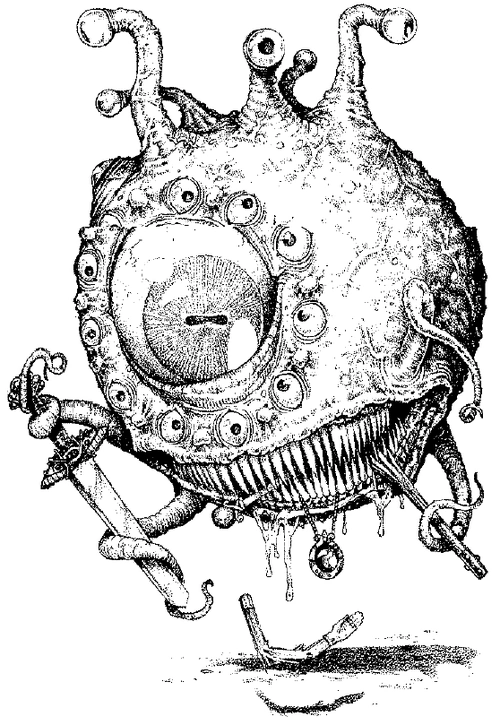
Gauth, AD&D 2nd Ed.

Comments