
GRÖTHMÅ
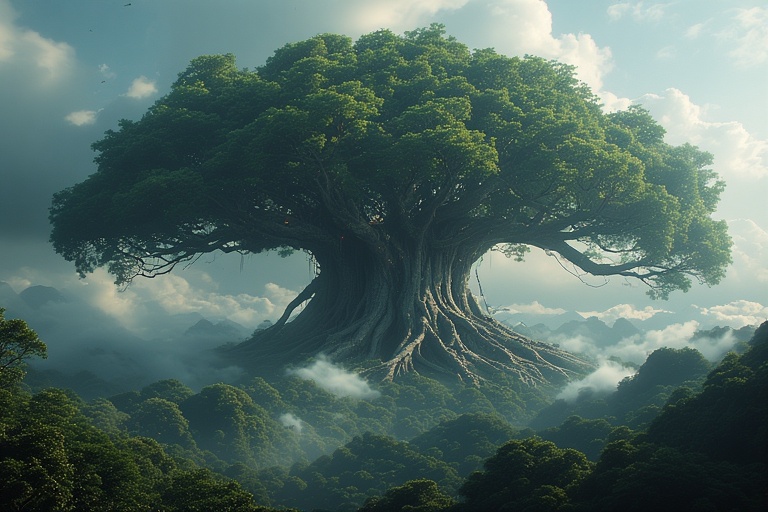
The First Grothulthir. The Sky-Banyan. The Rooted Star.
THE VERTICAL BIOMES OF GRÖTHMÅ
A Living World Column
Gröthmå is divided by Sölmiri scholars into strata, not heights. Elevation alone isn’t enough — light, pressure, oxygen, wind, and biology shift too fast.
STRATUM I — THE ROOTED DARK
(Below ground to +0 m)
Also called: Neggroth — “The Under-Holding”
This is where Gröthmå truly begins.
Environment
Life
Significance
Not because it’s forbidden — because the air alone will kill you.
STRATUM II — THE TRUNK WILDS
(0–300 m)
Also called: Grothfold
This is the realm of bark, moss, resin, and shadow.
Environment
Life
Human Interaction
STRATUM III — THE BANYAN DESCENT
(300–700 m)
Also called: The Hanging World
Here the banyan nature asserts itself.
Environment
Life
STRATUM IV — THE LOWER CLOUD BELT
(700–1,200 m)
Also called: Zölvael — “Shadow-Air”
Environment
Life
Human Experience
STRATUM V — THE CROWN SEA
(1,200–1,800+ m)
Also called: Mojtgroth — “The High Branch”
Environment
Life
STRATUM VI — THE UNMEASURED CROWN
(Above ~1,800 m)
Also called: The Quiet Height
No confirmed measurements. No confirmed returns.
Observations (from afar)
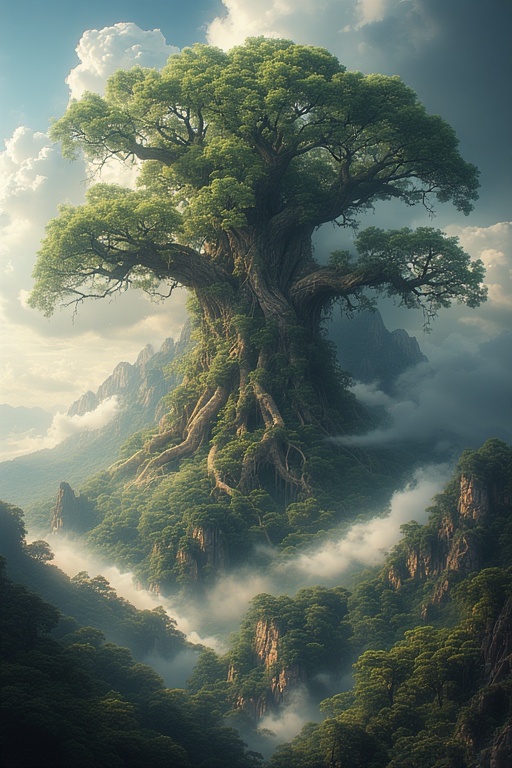
“It does not rise from the land. The land gathers itself around it.”
— Old Negzölir saying
THE VERTICAL BIOMES OF GRÖTHMÅ
A Living World ColumnGröthmå is divided by Sölmiri scholars into strata, not heights. Elevation alone isn’t enough — light, pressure, oxygen, wind, and biology shift too fast.
STRATUM I — THE ROOTED DARK
(Below ground to +0 m)Also called: Neggroth — “The Under-Holding”
This is where Gröthmå truly begins.
Environment
- Permanent darkness except for fungal bioluminescence
- Warm, mineral-rich air
- Extremely high microbial and fungal density
- Oxygen-poor but nutrient-saturated
Life
- Colossal mycelial networks (older than Sölmiri history)
- Root-leeches the size of boats
- Blind amphibians and crustacean analogues
- Resin pools containing extinct spores and pollen
Significance
- All Grothulthir fungal symbioses originate here
- Roots are fused with bedrock — removal is impossible
- Earthquakes dampen or reroute around this stratum
Not because it’s forbidden — because the air alone will kill you.
STRATUM II — THE TRUNK WILDS
(0–300 m)Also called: Grothfold
This is the realm of bark, moss, resin, and shadow.
Environment
- Twilight lighting
- Humidity near 100%
- Constant resin seepage
- Air dense, oxygen-rich, slightly intoxicating
Life
- Bark-forests growing on the trunk
- Mosswolves (rare, larger subspecies)
- Varkhúl sightings are documented but disputed
- Giant beetles, gliders, and resin-feeders
Human Interaction
- Temporary research camps only
- altered circadian rhythms
- vivid dreams
- mild euphoria followed by fatigue
STRATUM III — THE BANYAN DESCENT
(300–700 m)Also called: The Hanging World
Here the banyan nature asserts itself.
Environment
- Massive descending trunks form bridges
- Natural platforms kilometers across
- Constant mist and drizzle
- Stable temperatures year-round
Life
- Entire soil systems suspended mid-air
- Grazing megafauna adapted to vertical migration
- Canopy predators that never touch ground
- Rare medicinal grothfruits
NotesMost Sölmiri cultures consider it “too close to the breath of the First Tree.”
This stratum could support Grothavír cities.
It never has.
STRATUM IV — THE LOWER CLOUD BELT
(700–1,200 m)Also called: Zölvael — “Shadow-Air”
Environment
- Permanent cloud cover
- Sudden wind shears
- Lightning without storms
- Reduced visibility to tens of meters
Life
- Photosynthetic mosses adapted to diffuse light
- Aerial plankton analogues
- Floating seed-mats
- The first exclusive dragon nests
Human Experience
- Disorientation
- Altitude sickness amplified by oxygen spikes
- Sound behaves… incorrectly
STRATUM V — THE CROWN SEA
(1,200–1,800+ m)Also called: Mojtgroth — “The High Branch”
Environment
- Thin, hyper-oxygenated air
- Violent updrafts
- Electrical storms generated by the canopy itself
- Sunlight filtered through kilometers of leaves
Life
- Entire ecosystems floating on limb networks
- Species unknown elsewhere on Aerda
- Apex aerial megafauna
- True dragons in their oldest, largest forms
STRATUM VI — THE UNMEASURED CROWN
(Above ~1,800 m)Also called: The Quiet Height
No confirmed measurements. No confirmed returns.
Observations (from afar)
- Shadows moving above cloud tops
- Thunder with no lightning
- Wing silhouettes larger than valleys

Comments