To write about your world's history, you can use historical events. By using them instead of articles, you can display them in timelines, which makes explaining history very simple and visual.
Note that, while Chronicles also have events, this guide is specifically about timeline events. For more details about Chronicles, check the guide to Chronicles.
Contents
1. Create an event
To create a stand-alone event:
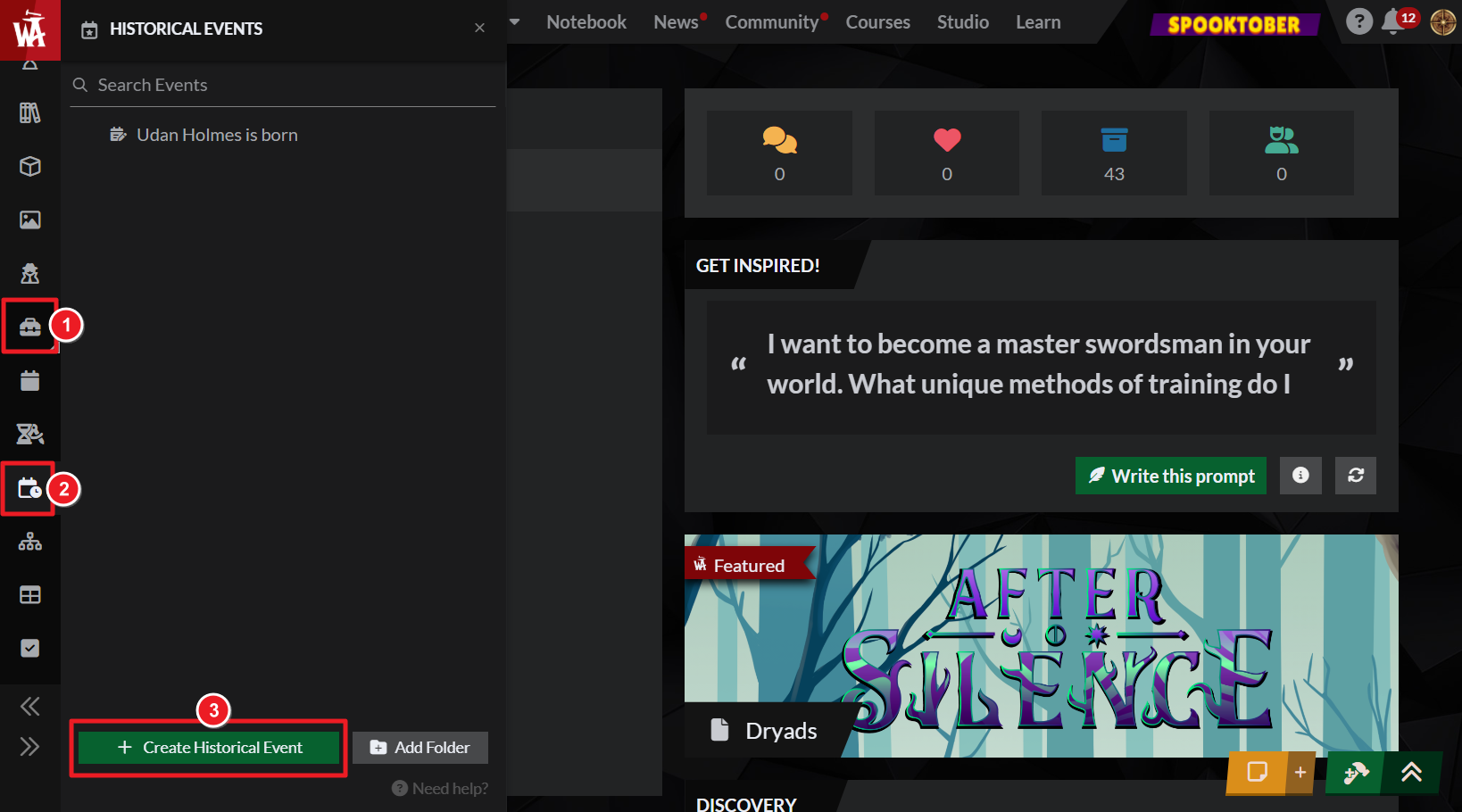
- Open Advanced Tools in the sidebar, and then open the Historical Events side menu.
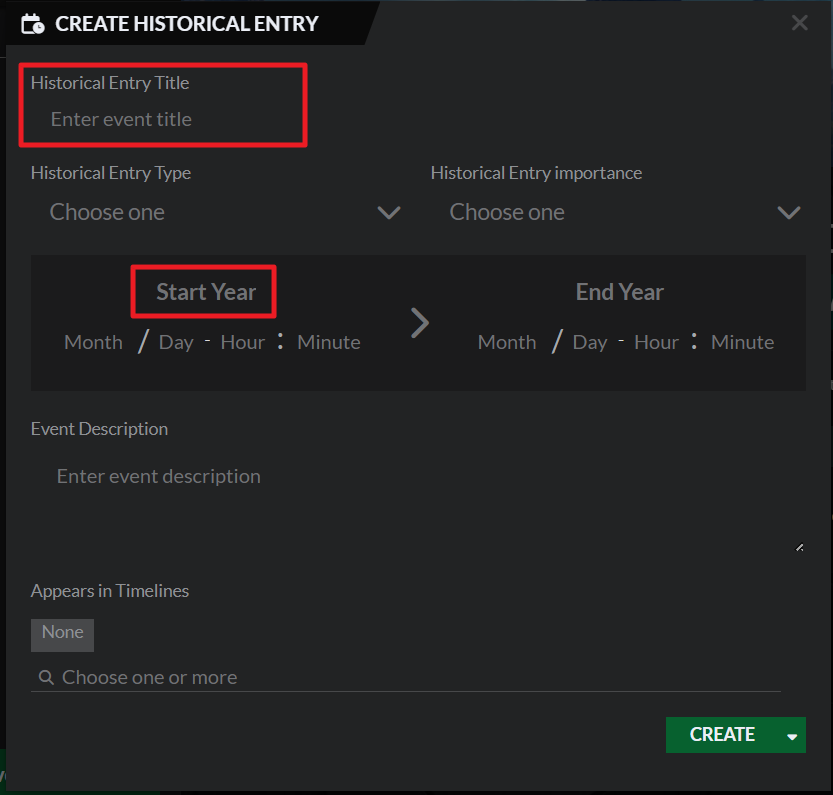
- Click the "+ Historical Event" button at the bottom, and the following modal window will appear. All events must have at least a title and a start year (highlighted in read in the screenshot):
Note that you can also create events while editing a timeline; learn how here.
2. Edit the event
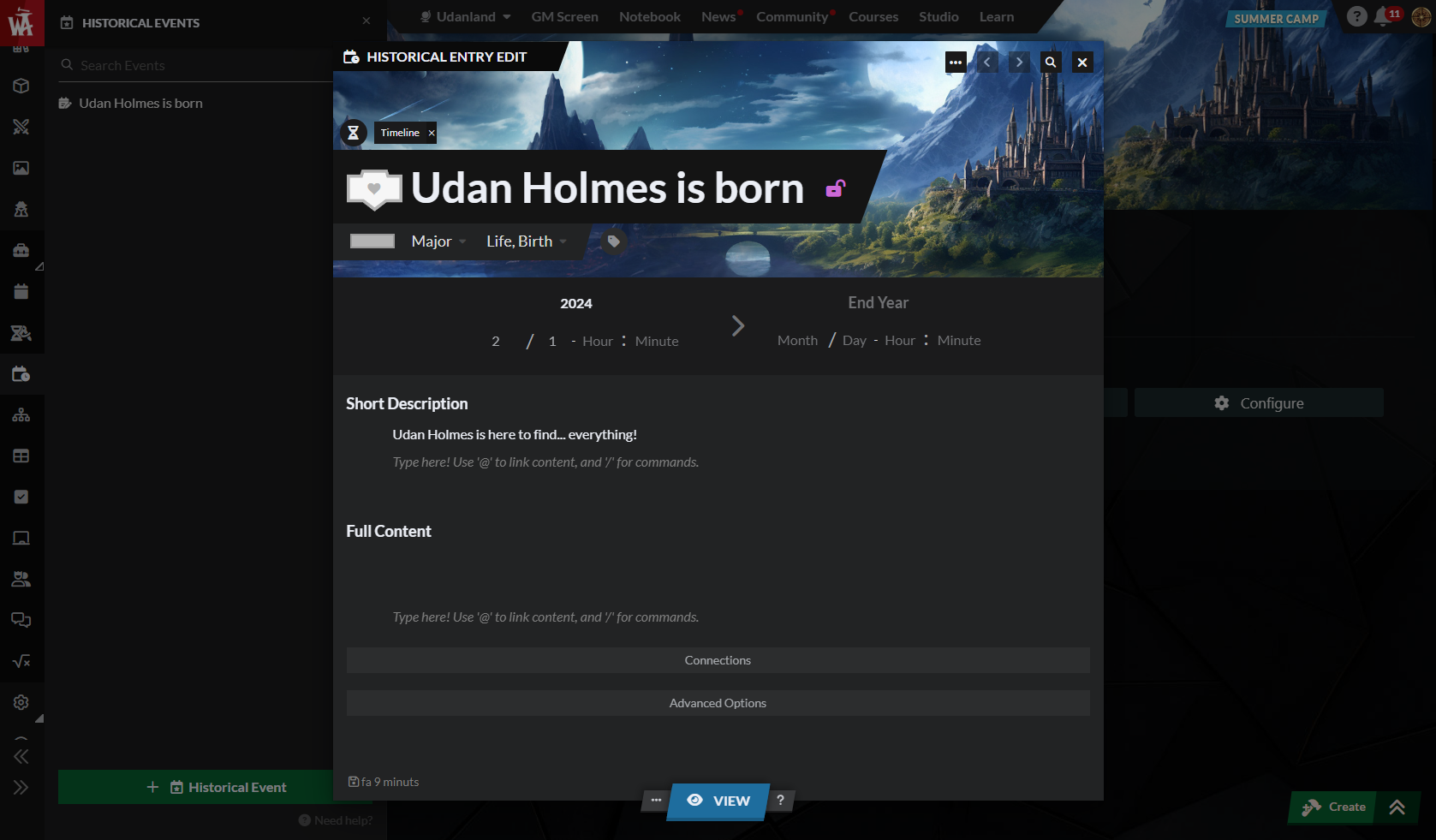
When you edit an event that's added to multiple timelines, changes will be reflected in all of them:
- Open the Historical Events side menu.
- Find the event you want to edit and click it.
- A modal window will open to edit the event. See below for an explanation of all fields.
Note that you can also edit events from timelines. When you do so, changes will also be reflected on all timelines the event is added to.
3. Add the event to timelines
There is a timeline field when you create the event, but you can add (or remove) it from any number of timelines by editing the event:
- Edit the event as described in the previous section.
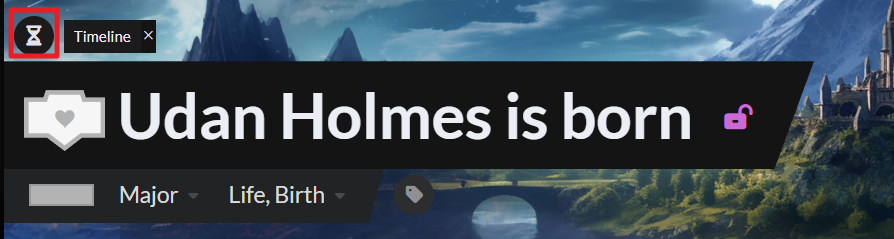
- At the top of the modal, over the event title, click on the timeline icon.
- Look up the timeline in the text box, or click the cross next to an added timeline to remove it.
Editing options
Historical events have several options to customize them in detail. Here are all of them!
Header options
These are all the options available in the header area of the edit modal:
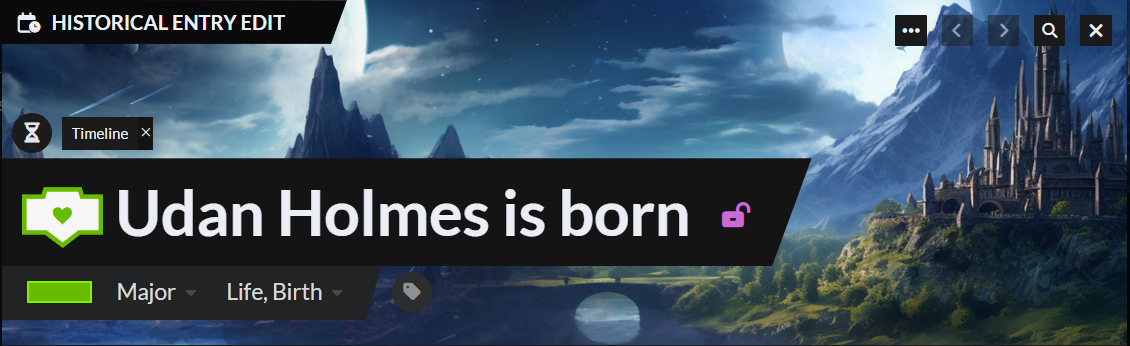
- Title: this mandatory field will be displayed in timelines.
- Add to timeline: See above for details.
- Guild-only Privacy toggle: Click the padlock icon next to the title to toggle the historical event between public and private.
- Color: Clicking on the color rectangle under the title will let you choose a different color, which will affect the event icon.
- Significance: a scale from "Not Significant" to "Era Changing". When viewing the event in a timeline, each importance level has a different pin shape.
- Type: a list of event types that, when viewed in a timeline, gives it a distinct icon.
- Tags: separate tags with commas. You will be able to use them to easily find the event in the timeline.
Main event area
Under the event header, you have these additional options:
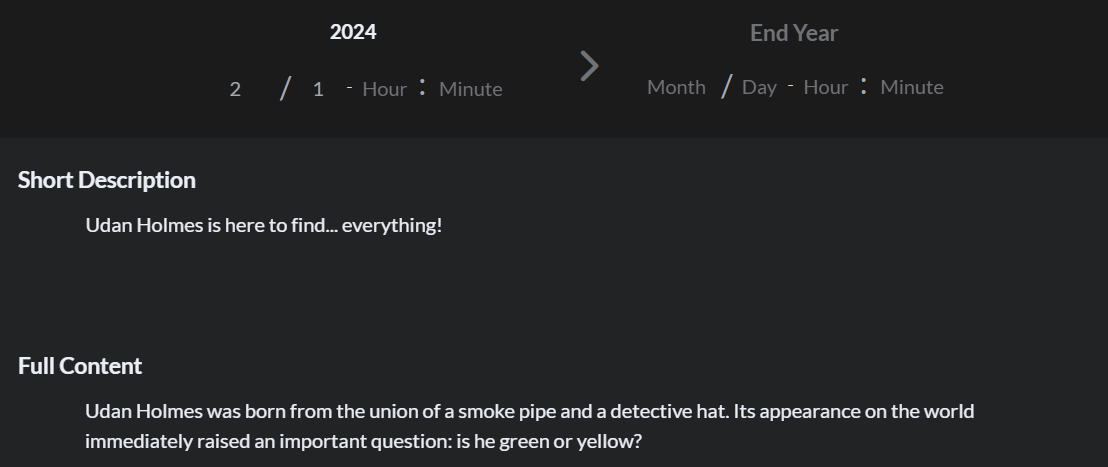
- Date range: Only the starting year is mandatory, but this can be detailed to the minute.
- Short Description: This will be shown in the timeline when clicking on the event.
- Full Content: This text will be displayed when clicking on "full content" after clicking on the event in a timeline.
Bottom area
Under the Full Content text box, there are two buttons you can click to expand and get even more options:
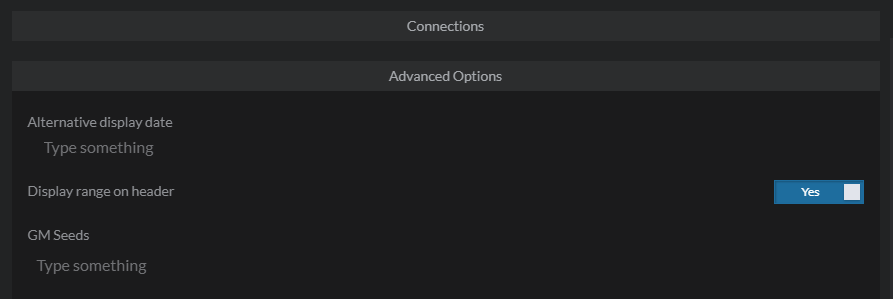
- Connections: Use this section to link the event to articles in your world. If the article you want to link doesn't have a specific dropdown for its template, you can link it manually in the event's content fields.
- Advanced Options: This section includes the following additional options:
- Alternative display date: If you don't want the actual date of the event to be displayed, use this field to override it.
- Display range on header: This toggle will show or hide the date range of the event in the event header.
- Guild-only GM Notes: Anything you write here will be visible to you only!
Link events in articles
Guild-only As a Guild member, on the Advanced BBCode Editor, simply type the [ open square bracket followed by the name of the event and select from the dropdown. A link will then be generated.
If you're not a Guild member, follow these steps:
- Open the Historical Events side menu and find the event you want to link to.
- Click the copy button for the event to add the link code in your clipboard.
- Paste it in an article using the Advanced BBCode Editor.

You can also give the event link a custom name. For example, if the history link code is [history:123], use [history:123]Custom name here[/history].
Deleting an event
- Open the Historical Events side menu and find the event you want to delete.
- Click the delete button.
- Then, confirm the deletion by clicking the checkmark icon.
If you just want to remove an event from a timeline without deleting it, follow these steps.